




Georgian Bronze Candlesticks
Georgian bronze candlesticks are weighty cast metal lighting pieces of the eighteenth and early nineteenth centuries, sought for their rich dark patination and classical forms.
Georgian Bronze Candlesticks
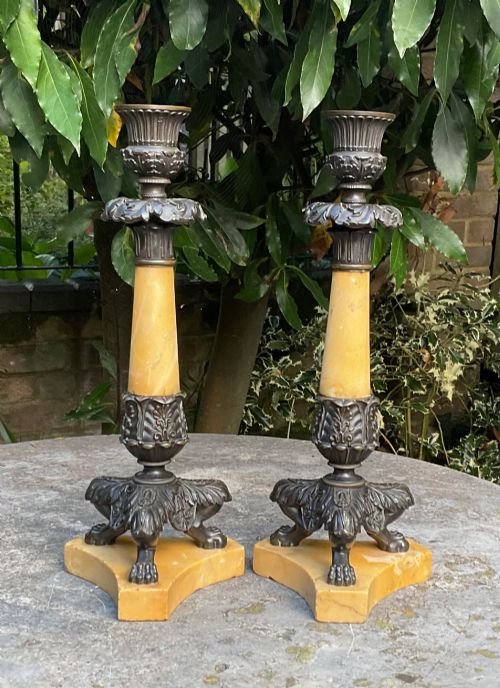
When you search for georgian bronze candlesticks, you encounter heavy metal lighting items originating from the Regency, eighteenth century, and nineteenth century periods. Most examples appear as matched pairs featuring classical or sculptural forms designed for table placement.
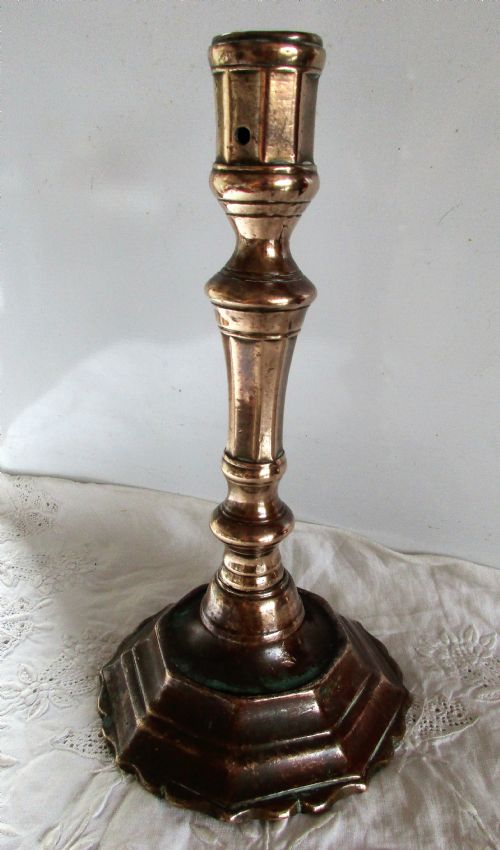
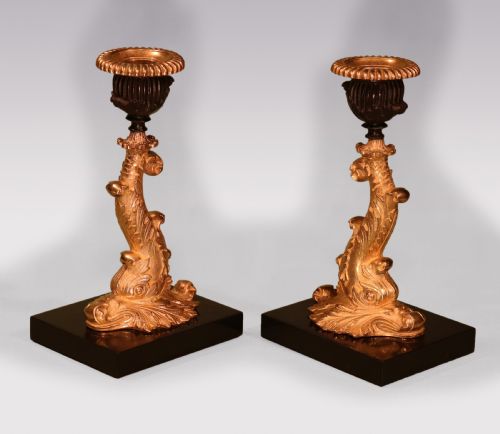
The material inventory spans patinated bronze, ormolu, gilt bronze, and bell metal, often combined with white marble bases or cut glass lustres. Alongside standard candlesticks, the selection includes chamber sticks, multi-light candelabra, and occasional adaptations as table lamps.
Stylistic influences range from restrained Georgian design to exuberant French Chateau aesthetics, Grand Regency styling, and William IV details. Makers and designers utilised squirrels, dolphins, and figures of stags alongside traditional campana sconces.
How they were made
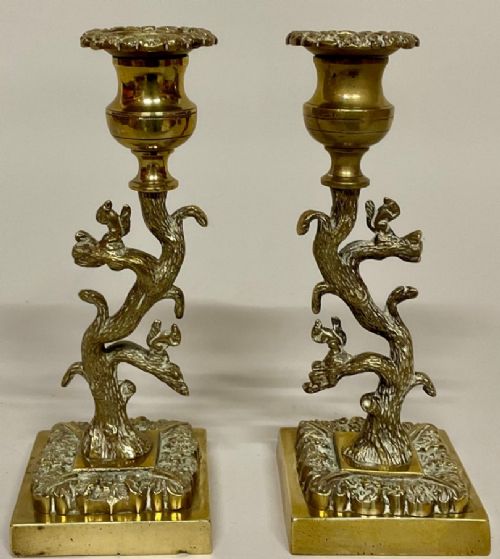
Foundry workers shaped these items through metal casting, employing alloys of bronze and bell metal to achieve solid, durable structures. Molten metal poured into moulds captured intricate details like naturalistic tree branches and animal figures.
Artisans applied surface treatments including chemical patination to darken the bronze, alongside fire gilding or ormolu to create contrasting golden highlights. Components such as marble plinths and cut glass lustres were assembled mechanically with threaded pins or fitments.
Georgian Bronze Candlesticks Retail Price Guide 2026
Typical asking prices for georgian bronze candlesticks among the pieces listed under this phrase on Sellingantiques today, from the lower quarter to the upper quarter. They describe what is for sale here now, not the wider market.
Squirrels clamber through cast bronze tree branches on at least one pair of Regency candlesticks.
What varies in quality
The refinement of the casting work distinguishes superior examples, where animal forms, foliage, and classical drapery display crisp, undercut details rather than soft contours. Superior items maintain sharp definition across both the bronze elements and applied ormolu mounts.
Material integration also dictates merit, seen in the harmonious pairing of patinated bronze with genuine white marble or undamaged cut glass drops. Original surface finishes without excessive cleaning or modern re-gilding preserve the authentic historical character of the piece.
The Georgian Bronze Candlesticks Glossary
- Ormolu
- Finely ground high-carat gold mercury-gilded to a bronze object. This technique produces a rich golden finish that contrasts with dark patinated bronze.
- Campana
- An inverted bell-shaped socket holding the candle. It forms a standard element on classical lighting pieces from this era.
- Lustre
- A glass pendant or drop suspended from a sconce to reflect candlelight. These additions enhance the visual brilliance of the fitting.
- Patinated bronze
- Metal treated with chemical solutions to darken the surface colour. This process creates stable tones ranging from deep brown to near black.
- Chamber stick
- A low candlestick fitted with a broad drip pan and a loop handle. It was traditionally carried by hand to light rooms or pathways at night.
Georgian Bronze Candlesticks: Frequently Asked Questions
Are these items safe for daily use?
Original pieces function adequately with standard taper candles, provided they sit on steady, level surfaces. Dripping wax should be removed carefully when soft.
Converted table lamps require modern electrical rewiring to meet safety standards for contemporary domestic environments.
What is the difference between bronze and brass?
Bronze is an alloy primarily composed of copper and tin, yielding a heavier and darker material. It accepts patination treatments readily.
Brass relies on copper and zinc, producing a brighter golden metal that was often used for earlier bell metal forms.
How can I identify a Regency period piece?
Regency items often incorporate classical motifs, bronze and ormolu combinations, or sculptural animals such as dolphins and stags. Bases tend to be square or mounted on marble.
Proportions reflect early nineteenth-century design principles influenced by French Chateau and classical antiquity styles.