





Antique Bronze Candleholders
These antique bronze candleholders bring together heavy cast metal, marble plinths and gilt decoration to light rooms with classical authority.

Antique Bronze Candleholders
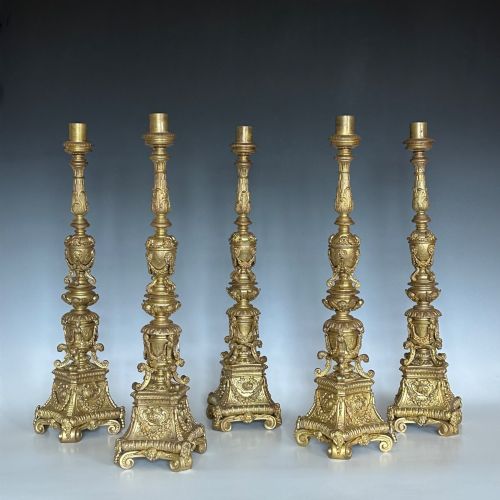
Antique bronze candleholders encompass candlesticks, multi-branched candelabra, wall sconces and table lights created primarily during the nineteenth century. The selection ranges from Regency and Victorian English examples to French Empire, Louis XVI revival and Rococo pieces.
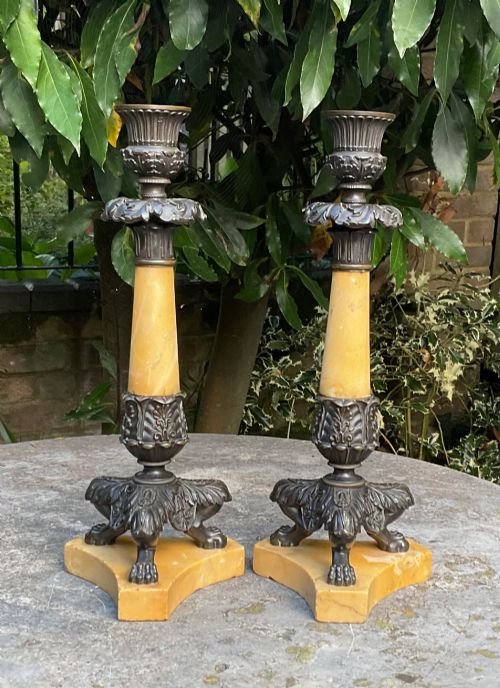
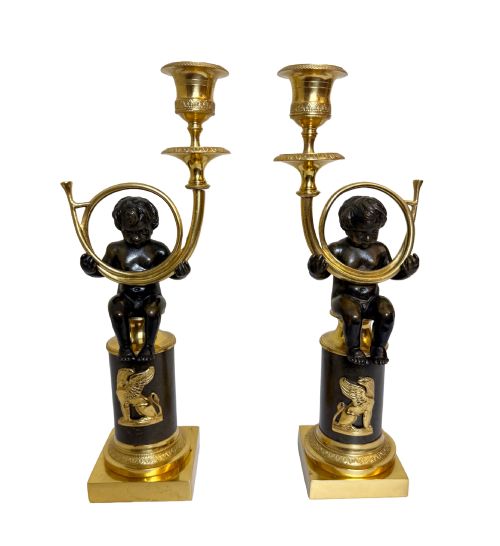
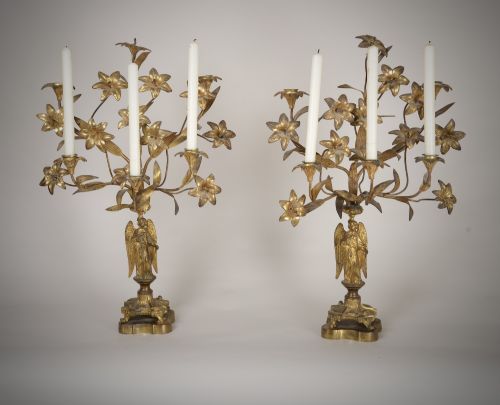
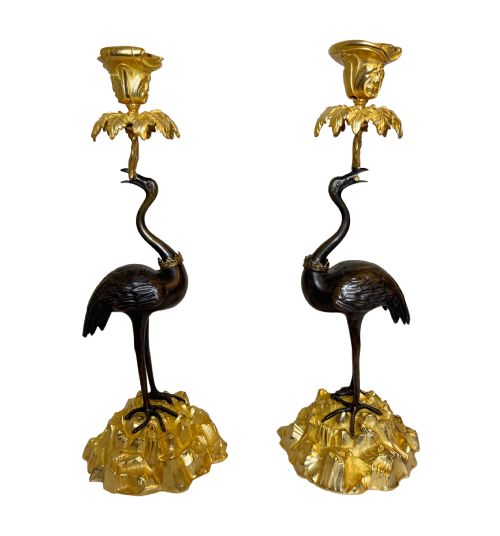
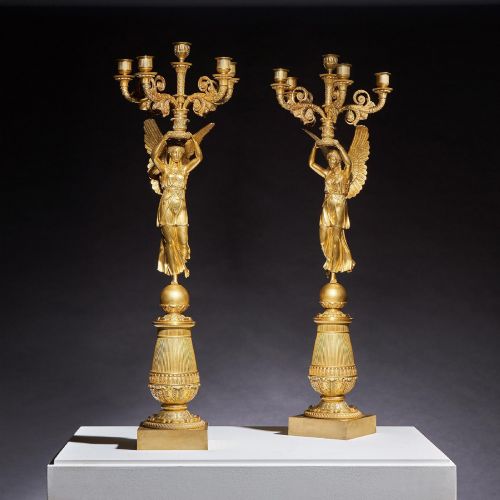
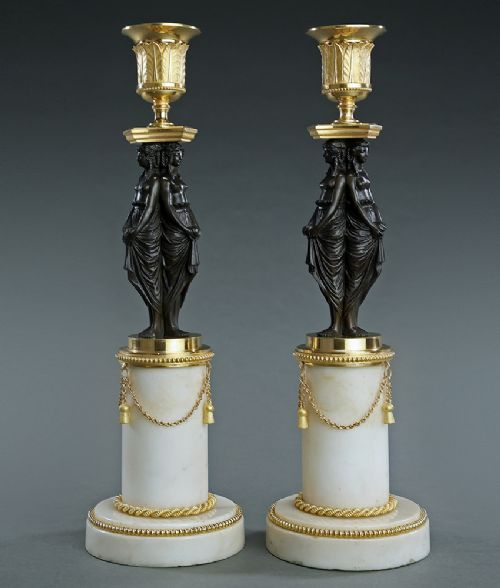
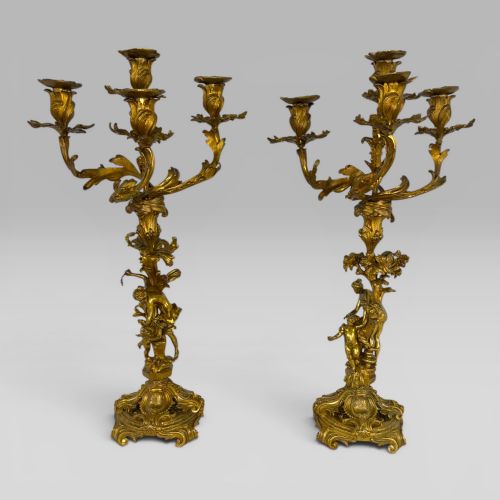
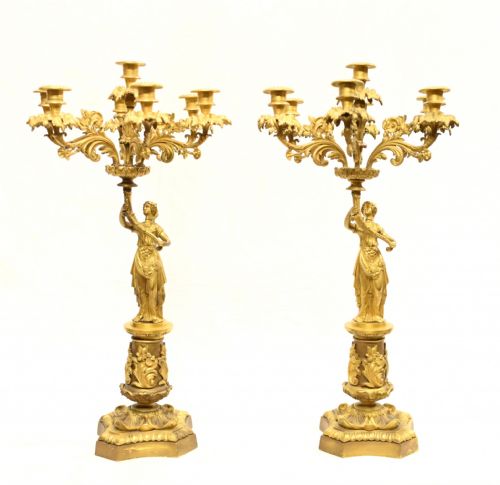
Most items appearing here take the form of pairs, frequently combining dark patinated bronze with bright gilt bronze or ormolu. Figural motifs, cherubs, caryatids and classical columns dominate the forms, alongside animal subjects such as flamingos and cobras.
Makers often drew inspiration from earlier European movements, producing Gothic revival designs, Venetian styles and Grand Tour souvenirs. These lighting pieces served both practical functions on mantelpieces and tables and decorative roles in formal reception rooms.
Materials and Construction
Foundries produced these pieces using traditional sand casting and lost-wax methods, resulting in substantial metal components that required meticulous hand-chasing. Craftsmen then applied mercury gilding or modern electroplating to create the lustrous ormolu surfaces seen on French and English models.
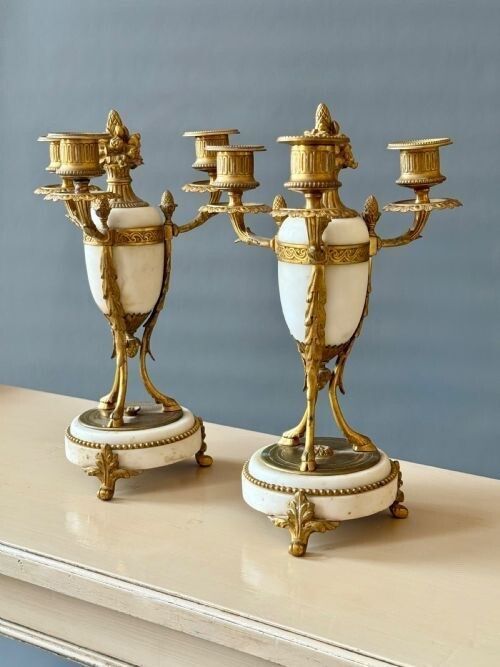
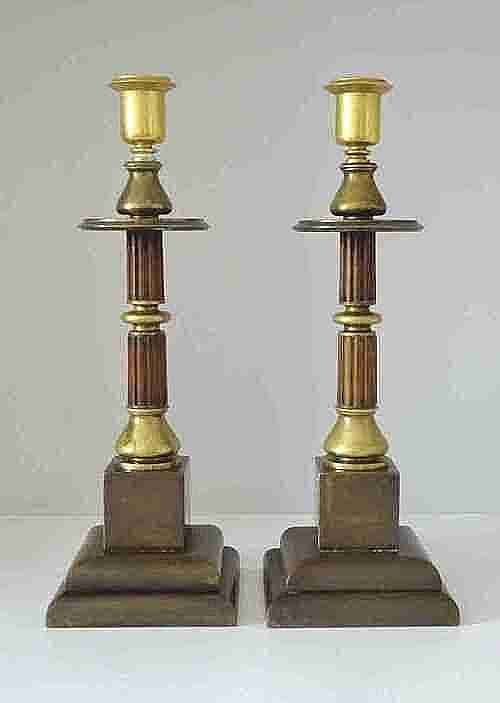
Many candlesticks and candelabra integrate contrasting materials, mounting patinated or gilt bronze upon white, sienna or black marble plinths. Porcelain elements, such as birds or vases, and brass details appear alongside the primary bronze structure to enrich the visual texture.
Antique Bronze Candleholders Retail Price Guide 2026
Typical asking prices for bronze candleholders among the pieces listed under this phrase on Sellingantiques today, from the lower quarter to the upper quarter. They describe what is for sale here now, not the wider market.
Lighting rooms through the centuries involved unexpected companions, from classical caryatids and cherubs to brass cobras and porcelain birds.
Evaluating Craftsmanship
The integration of secondary materials dictates overall refinement, where finely turned marble bases and carefully balanced armatures elevate standard production pieces into exceptional works of interior metalwork.
Pierre Philippe Thomire·Rabiat
The Antique Bronze Candleholders Glossary
- Ormolu
- Gilt bronze produced by applying a mercury and gold amalgam to a bronze base before heating. This technique creates a durable, warm golden finish characteristic of French decorative arts.
- Candelabra
- A branched lighting fixture designed to hold multiple candles simultaneously. These pieces often feature removable branches to convert multi-light structures into single candlesticks.
- Patinated Bronze
- Metal treated with chemical solutions to produce a controlled surface colour ranging from deep brown to rich green. This dark tone contrasts sharply with bright gilt highlights.
- Caryatid
- A sculpted female figure serving as an architectural support replacing a column or pillar. These figures frequently form the central stem of Regency and Empire candlesticks.
- Grand Tour
- Eighteenth and nineteenth-century travels undertaken by young Europeans to study classical antiquities. Souvenirs brought back included bronze and brass replicas of ancient monuments and sculptures.
Antique Bronze Candleholders: Frequently Asked Questions
Can I burn real candles in them?
These pieces were built to hold wax candles safely during the nineteenth century. Ensure the candle fits securely in the socket without wobbling to prevent hot wax from spilling onto the metal or marble.
Extinguish flames before the wax burns down to the metal rim to avoid heat damage. Modern dripless candles help protect delicate patinated and gilt surfaces from residue.
How do I distinguish Empire style from Rococo?
Empire style relies on strict symmetry, military motifs, classical columns and dark bronze contrasted with bright ormolu. This aesthetic reflects nineteenth-century fascination with Roman and Greek antiquity.
In contrast, Rococo designs favour asymmetry, flowing curves, naturalistic foliage, scrolls and playful figural scenes. The metalwork here curves organically rather than adhering to rigid architectural proportions.
Why are marble bases used on these?
Marble plinths added significant weight to the base, improving stability when tall multi-branched candelabra held heavy lighted candles. This prevented the fixtures from tipping over easily on wooden tables.
Visually, the smooth white or sienna stone provided a clean architectural contrast to the dark patination and bright gold of the bronze figures above.