


Napoleon III Candelabra
Napoleon iii candelabra are French ornamental lighting pieces from the nineteenth century that bring sculptural presence and period elegance to a room.
Identifying Napoleon III Candelabra
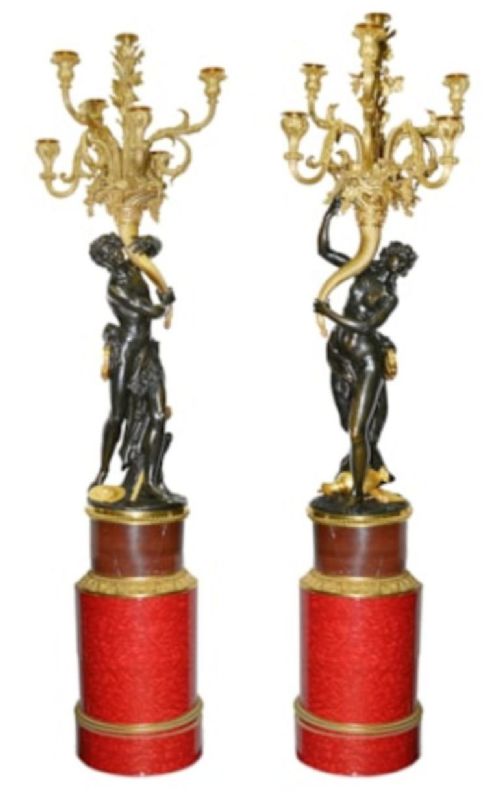
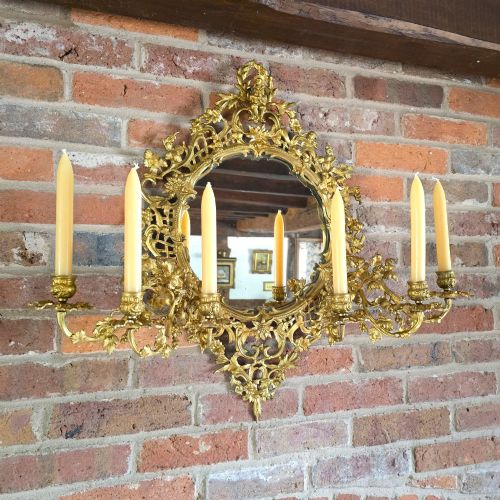
Napoleon iii candelabra are nineteenth-century French lighting fixtures designed to hold multiple candles, originating during the Second Empire and associated periods. You will regularly encounter pairs featuring branch configurations, often displaying cherubs, classical styling, or the influence of earlier French royal aesthetics.
The objects span varied forms within the broader nineteenth-century aesthetic, including models mounted on marble bases or fashioned entirely in metal. Surviving examples frequently reflect Louis XVI style, Rococo revival, or French Empire design, demonstrating the eclectic historicism favoured during the period.
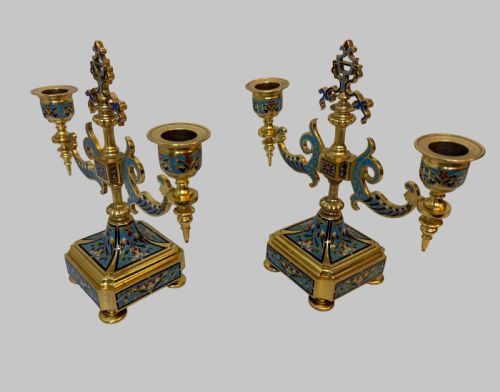
Makers and workshops of the era produced these pieces in multiple branches, from twin branch formats up to three-branch candelabra and candlesticks. Many retain evidence of later conversion for electricity, though their primary identity remains rooted in period metalwork.
Materials and Construction
Foundry work relied heavily on bronze and ormolu, alongside gilt bronze, silvered bronze, and gilt metal. Artisans cast these metals with detailed chasing to render figurative elements like cherubs and decorative foliage with crisp definition.
Natural stone served as a substantial foundation for many designs, with marble bases providing both weight and structural contrast to the metallic upper portions. Porcelain components also appear in the archive, sometimes taking the form of Sevres style inserts mounted within the metal framework.
Retail Price Guide 2026
Typical UK retail prices for napoleon iii candelabra, calculated from the Sellingantiques database of over a million retail prices indexed since 2003. This retail price guide relies exclusively on Sellingantiques data; no external sources or auction records are used, so the figures do not describe the wider market.
Cherubs appear frequently as companions to the candlelight, keeping a watchful, chubby-cheeked eye on the dinner table below.
Assessing Quality
The distinction between standard production and the finest work lies in the crispness of the bronze casting and the precision of the chasing. Superior examples display sharply rendered details in figurative motifs such as cherubs, whereas lesser pieces exhibit softer definition and smoother, less nuanced surfaces.
The integration of materials also dictates the standing of a piece, particularly in the weight of the marble bases and the richness of the ormolu or gilding. Combinations incorporating porcelain or sophisticated patination require advanced technical skill, elevating the visual authority of the finished candelabrum.
The Napoleon III Candelabra Glossary
- Ormolu
- Gilded bronze produced by applying a mercury and gold amalgam to a bronze base and heating it. This technique creates a durable, golden surface characteristic of fine French decorative arts.
- Candelabra
- A branched candlestick designed to hold multiple candles simultaneously. These fixtures often feature a central shaft dividing into two or more arms.
- Louis XVI Style
- A neoclassical design revival drawing on the rectilinear forms, symmetrical balance, and classical motifs of the late eighteenth century. It appears frequently in nineteenth-century French metalwork.
- Patination
- The surface coloration and texture developed through age or chemical treatment on metal. On bronze and brass, it ranges from dark brown to bright highlights.
- Sevres Style
- Ceramic decoration emulating the soft pastes, hand-painted floral scenes, and rich coloured grounds associated with the historic Sevres porcelain manufactory.
Frequently Asked Questions
How were napoleon iii candelabra used originally?
These pieces functioned primarily as functional lighting on dining tables, mantelpieces, and sideboards during the nineteenth century. Their multiple branches allowed them to cast substantial light in formal domestic interiors.
Beyond illumination, they served as prominent decorative ornaments that displayed the wealth and taste of the household. Their sculptural forms made them central visual components of nineteenth-century interior decoration.
Are these candelabra still suitable for candles?
Many surviving examples retain their original configuration and accommodate standard taper candles without issue. Users should simply ensure the fixtures remain stable on a level surface.
Some pieces have undergone conversion for electrical wiring over the decades. Buyers wishing to burn candles should check whether the nozzle fittings remain intact or have been altered for bulbs.
How do I care for gilt bronze and ormolu?
Maintenance requires only gentle dusting with a soft, dry cloth to prevent the accumulation of grit. Avoid abrasive cleaners, polishes, and chemical agents that can strip the delicate gilding from the bronze surface.
Keeping the pieces away from direct moisture and handling them with clean hands preserves the original patination and metal finish. Professional conservation is rarely necessary if basic preventive care is observed.
How do I distinguish between different nineteenth century styles?
Distinguishing styles involves looking at the decorative vocabulary employed across the metalwork. Louis XVI style pieces display straight lines, urns, and classical symmetry, whereas Rococo revival examples feature asymmetrical scrolls and exuberant plant motifs.
Second Empire and Napoleon III designs often combined these historic references freely, sometimes incorporating cherubs or Etruscan manner details. Examining the specific cast ornaments helps anchor each piece within its design lineage.