



Marble Base Candelabra
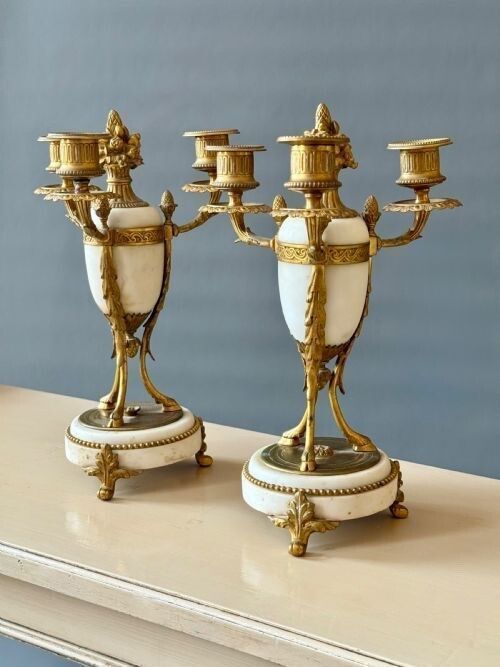
Marble base candelabra combine heavy stone plinths with metal branchwork, bringing nineteenth-century French lighting into domestic spaces.

Marble Base Candelabra
Marble base candelabra are nineteenth-century lighting pieces that pair stone foundations with metal branches for multiple candles. When you search for marble base candelabra, you find pairs featuring cherubs, putti, and classical figures cast in bronze or patinated metals. Most examples date from the mid to late nineteenth century and follow French decorative schemes.
The forms range from single candle holders to multi-branch candelabra and converted table lamps. White marble and standard marble plinths support gilt ormolu, gilt bronze, and patinated bronze figures. These lighting fixtures reflect historical revival movements including Louis XVI style, French Empire, and Rococo revival.
How they were made
Maker workshops cast figures and mounts in bronze, patinated bronze, and ormolu using traditional foundry methods. Metal components were then chased and gilded to create contrasting surface textures. Artisans mounted these heavy metal castings onto turned or block marble bases.
Branch systems were constructed to hold multiple candles, sometimes incorporating glass elements or porphyry details. Parcel gilt finishes and patination were applied by hand to highlight the sculptural details of figures like cherubs and winged putti.
Marble Base Candelabra Retail Price Guide 2026
Typical asking prices for marble base candelabra among the pieces listed under this phrase on Sellingantiques today, from the lower quarter to the upper quarter. They describe what is for sale here now, not the wider market.
The recorded inventory spans the nineteenth century, focusing particularly on the 1860s through the 1890s.
What varies in quality
The crispness of the bronze casting and the depth of the hand chasing set finer examples apart from simpler production pieces. Sculptural elements like cherubs and putti display greater anatomical definition and expressive detail on superior items.
The selection and finish of the marble base influence the overall presence of the piece, with solid white marble or porphyry bases showing superior material quality. The weight and integration of the ormolu mounts relative to the stone plinth determine the visual balance.
Claude Clodion·Thomas Hope
The Marble Base Candelabra Glossary
- Ormolu
- A gilded bronze technique applied to metal mounts and decorative elements. This process creates a rich golden finish characteristic of nineteenth-century French metalwork.
- Patinated Bronze
- Bronze treated with chemicals to produce a darkened surface colour. This technique contrasts sharply with gilded ormolu details on figurative elements.
- Porphyry
- A hard igneous rock with large crystals, often used for decorative stone bases. It provides a dense, speckled foundation for bronze sculptures.
- Putti
- Depictions of small winged infants or cherubs commonly used as sculptural supports. They frequently appear holding candle branches in nineteenth-century designs.
- Louis XVI Style
- A neoclassical design aesthetic revival featuring symmetrical forms and classical ornamentation. Pieces in this style often incorporate strict geometric lines alongside figurative bronze work.
Marble Base Candelabra: Frequently Asked Questions
How do I clean marble and bronze?
Dust the marble base gently with a soft dry cloth and avoid harsh chemical cleaners that can etch the stone surface.
Use a dry microfiber cloth on the bronze and ormolu sections to protect the original gilding and patination from moisture damage.
Were these originally wired for electricity?
Nineteenth-century lighting pieces were designed exclusively for wax candles before electricity was adapted into homes.
Many surviving examples have been converted into table lamps during the twentieth century while retaining their original candelabra branches.
How do I identify Louis XVI style?
Louis XVI style pieces display neoclassical symmetry, straight lines, and classical architectural motifs derived from ancient Greek and Roman art.
Look for restrained ornamentation and formal composition rather than the asymmetrical curves typical of earlier rococo designs.
Are these pieces heavy?
The combination of dense stone plinths and cast metal figures creates substantial weight across most examples.
Placing them on sturdy furniture is recommended to support the combined mass of the marble and bronze construction.