



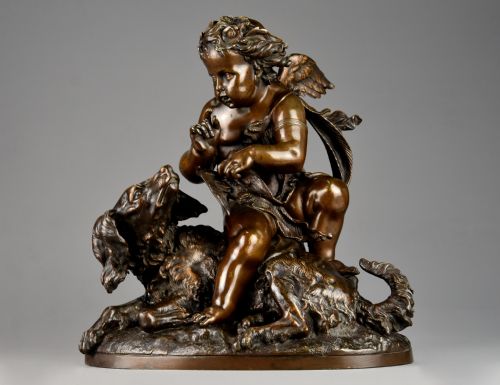
Patinated Bronze Putti
Patinated bronze putti capture winged child figures in classic poses, bringing decorative French and Italian classical style to mantelpieces and tables.
Patinated Bronze Putti
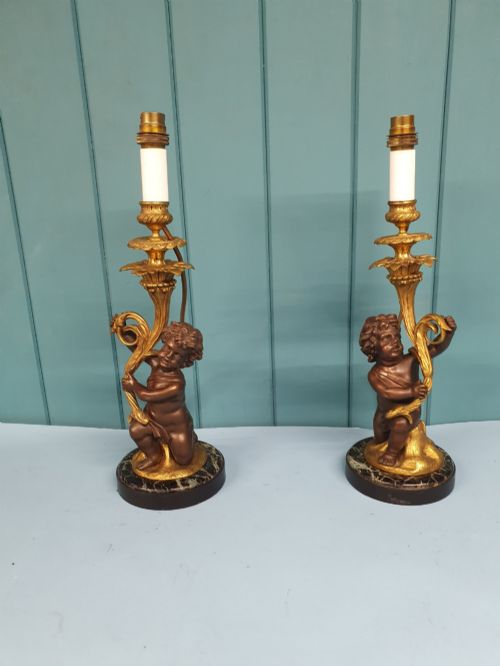
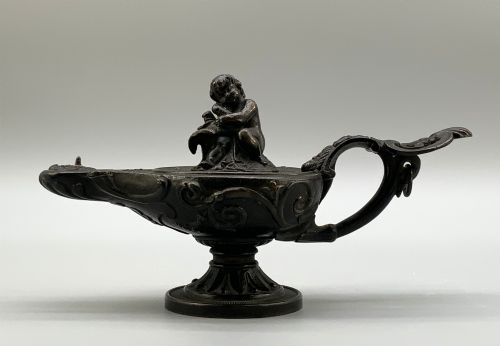
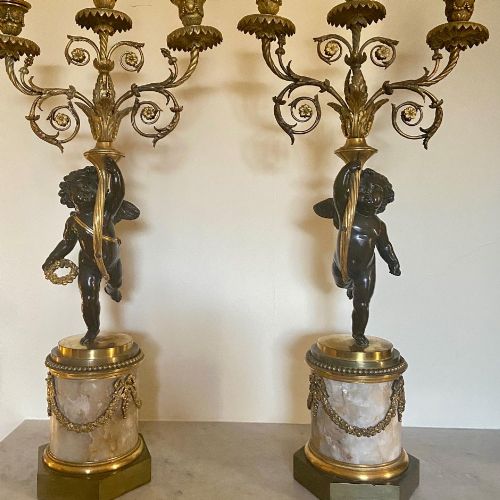
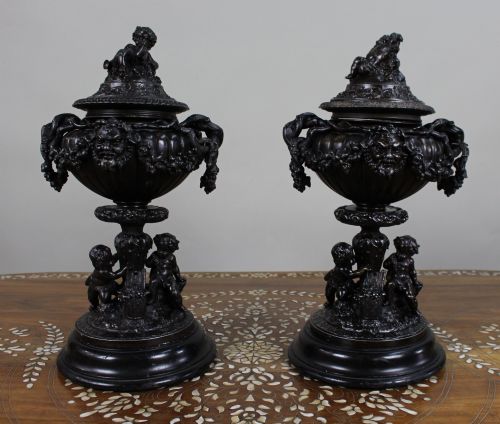
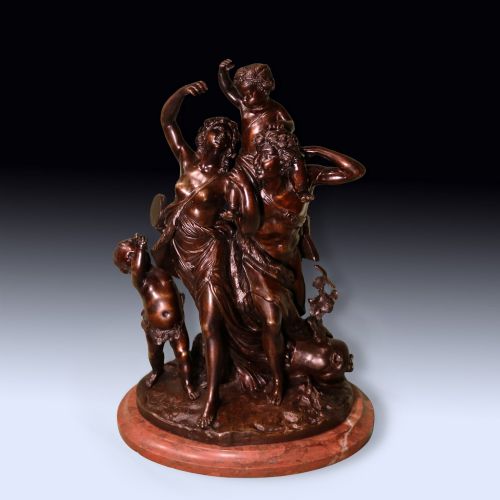
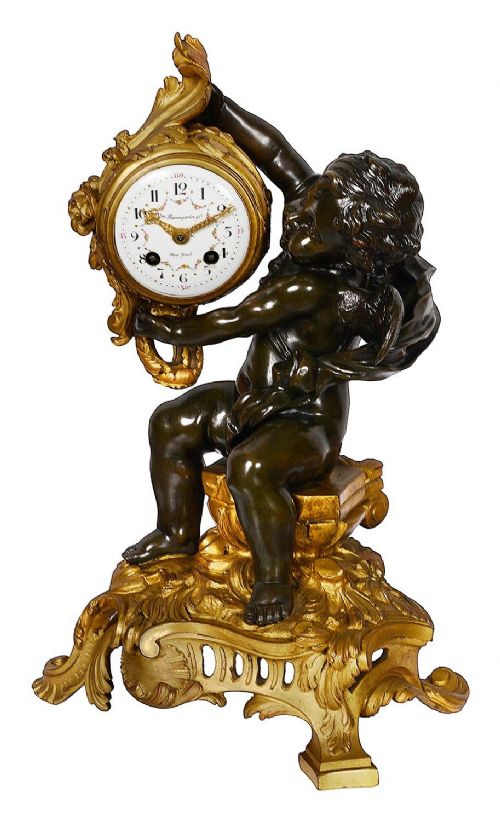
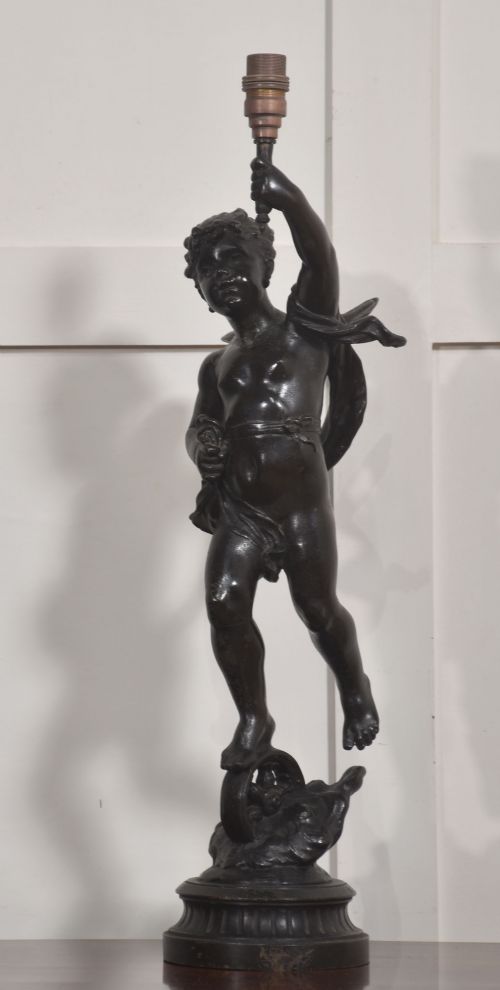
When you search for patinated bronze putti, you encounter sculptural figures of winged cherubs, cupids, and amorini cast in metal and given a chemical or natural dark surface finish. These pieces frequently appear as freestanding figures, candelabra, mantel clocks, and table lamps originating mainly from nineteenth-century French and Italian workshops.
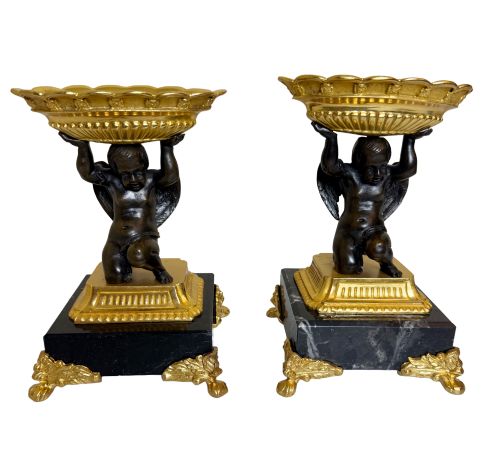
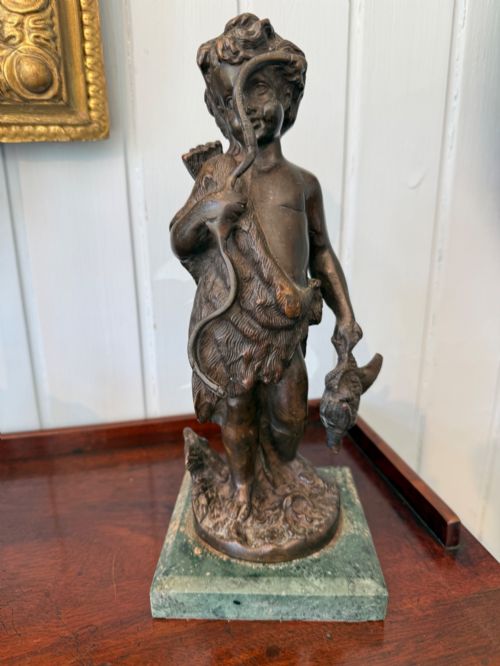
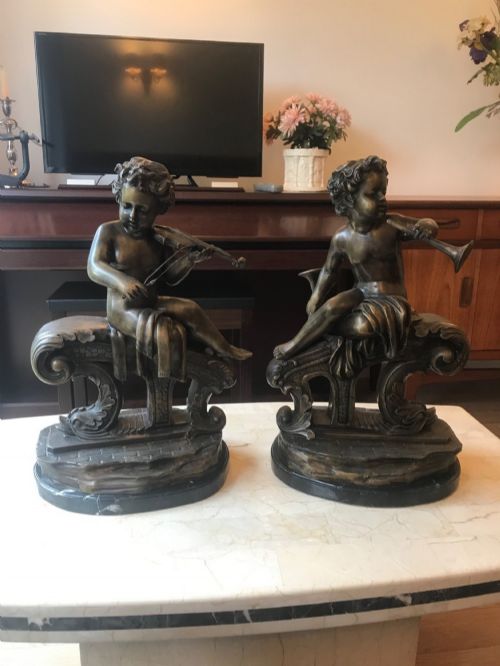
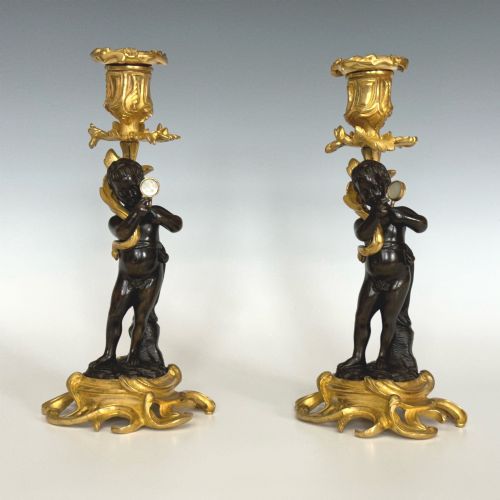
The selections available on this page run from single musical or hunting cherub figures to matched pairs mounted on marble bases or combined with ormolu and gilt bronze. French Empire, Neoclassical, and Rococo Revival styles dominate the offerings, reflecting popular nineteenth-century reinterpretations of classical motifs.
How they were made
These works rely on traditional lost-wax or sand-casting methods to shape the bronze, followed by hand-chasing to sharpen details like feathers, hair, and facial expressions. Artisans applied patination chemicals to achieve dark brown, black, or greenish surface tones, sometimes contrasting these dark areas with bright gilt bronze or ormolu mounts.
Many figures integrate additional materials such as white marble bases, glass shades, enamel dials, or fluorspar candle arms to add colour and structural support. Assembly often involves threaded rods and nuts holding the cast bronze components securely to marble plinths or chenet frames.
Patinated Bronze Putti Retail Price Guide 2026
Typical asking prices for patinated bronze putti among the pieces listed under this phrase on Sellingantiques today, from the lower quarter to the upper quarter. They describe what is for sale here now, not the wider market.
Cherubs double as hunters, musicians, and dog handlers, proving that celestial infants enjoyed earthly hobbies just as much as humans did.
What varies in quality
The choice of supporting materials also dictates standard, with dense marbles, fire-gilt ormolu, and substantial bronze weight marking the upper tier of production. Signature marks from known sculptors or foundries elevate specific items above unmarked decorative foundry output.
Francois Redmond·Clodion·K and O·Dumond·Aug Moreau·Georges Van De Voorde·Charles Cumberworth
The Patinated Bronze Putti Glossary
- Putto
- A plump, often winged child figure derived from classical art. They appear frequently in Renaissance and nineteenth-century decorative bronzes.
- Patination
- The surface colour or chemical oxidation applied to bronze. It protects the metal and creates dark brown, black, or green tones.
- Ormolu
- Gilding technique using finely ground gold mercury amalgam applied to bronze. It creates a bright golden decorative surface.
- Chenet
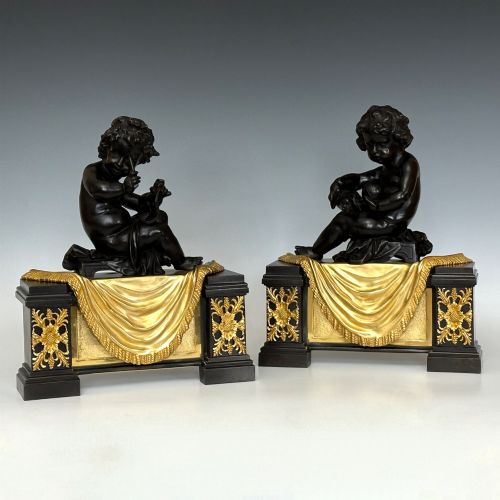
- A firedog used in pairs at the front of a hearth. Many nineteenth-century examples incorporate bronze putti and classical mounts.
- Grand Tour
- Cultural travel undertaken by nineteenth-century Europeans to collect classical antiquities and bronze reductions in Italy.
Patinated Bronze Putti: Frequently Asked Questions
What are patinated bronze putti?
These decorative objects portray winged child figures modelled after classical art, cast in bronze, and finished with a dark chemical patination.
Craftsmen incorporated these figures into clocks, lamps, candelabra, and tabletop sculptures during the nineteenth century.
How were bronze putti used originally?
Households displayed these figures on mantelpieces, desks, and side tables as ornaments or incorporated them into functional items like lighting and clocks.
Paired figures often flanked fireplace openings as chenets or sat symmetrically upon marble bases to illuminate grand rooms.
How do I style bronze putti at home?
Place matched pairs on either side of a mantelpiece or console table to establish classical symmetry and height within a room.
Allow patinated surfaces to contrast against lighter stone or wood backgrounds so the dark bronze details remain distinct.
How do I identify nineteenth-century bronze putti?
Examine the casting quality, mount construction, and patination methods to determine whether a piece belongs to the nineteenth-century revival periods.
Signatures, foundry stamps, and traditional assembly screws often provide clues regarding the maker and approximate decade of production.