


Antique Mantel Candelabra
These antique mantel candelabra bring undeniable focal weight to a room, offering the sculptural presence and ambient light collectors want.
What antique mantel candelabra are
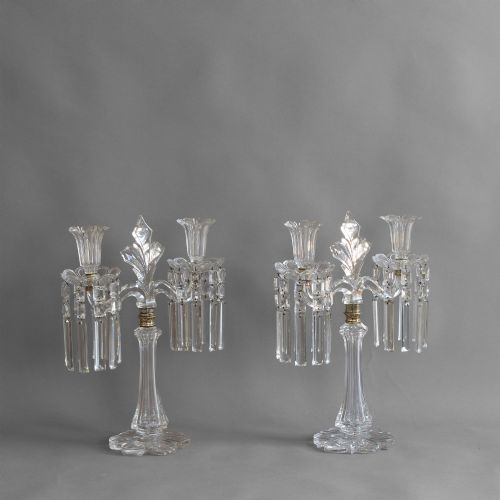
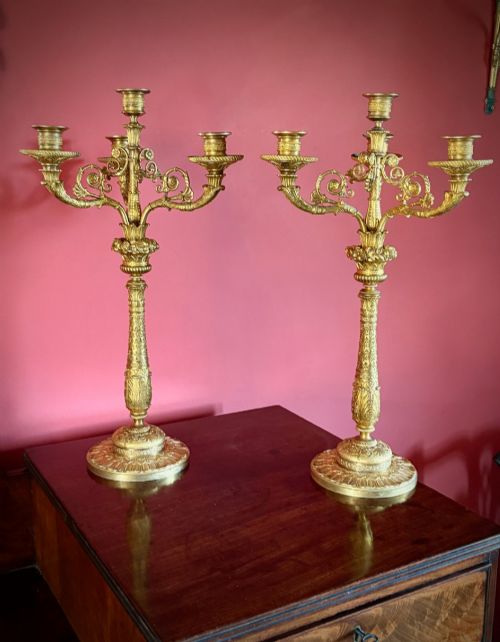
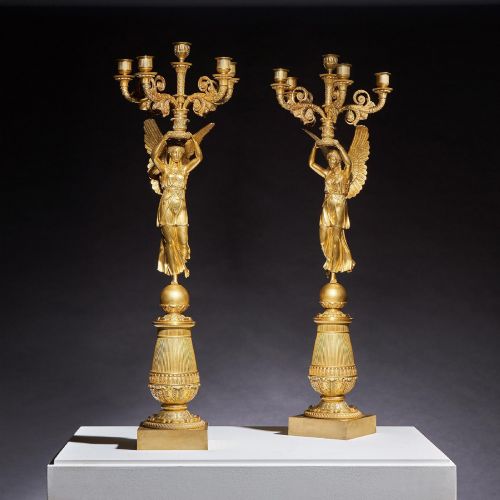
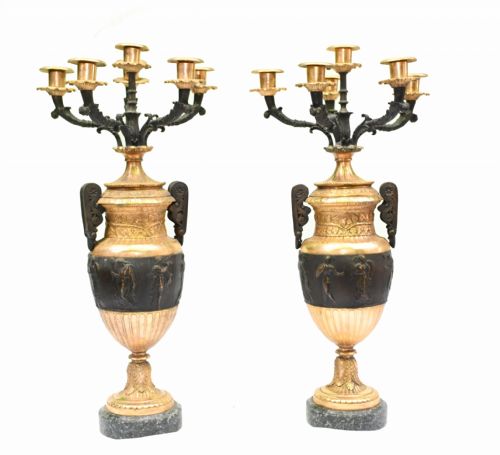
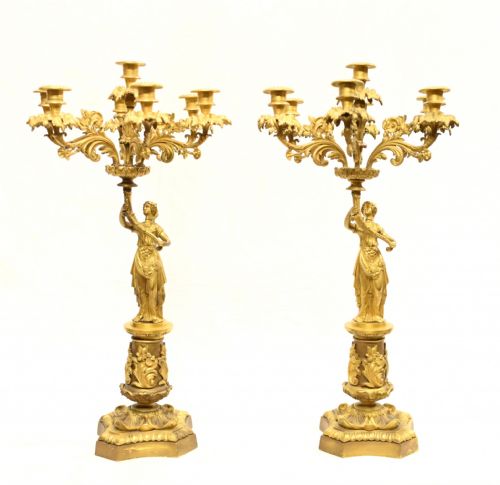
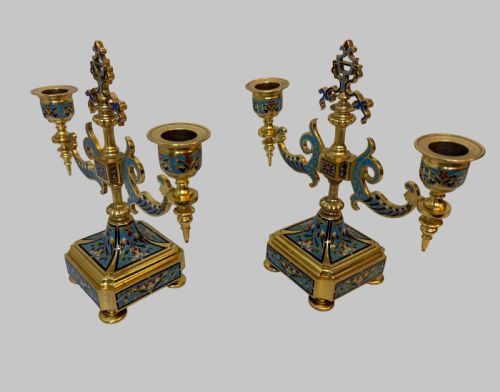
When you search for antique mantel candelabra, you are looking at ornamental branch candle holders designed specifically to sit upon a fireplace mantelpiece. The pieces you are most likely to meet on this page hail from the nineteenth century, taking the form of matched pairs in distinct European styles.
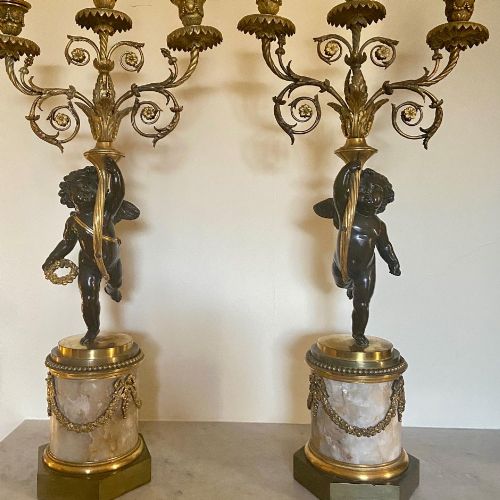
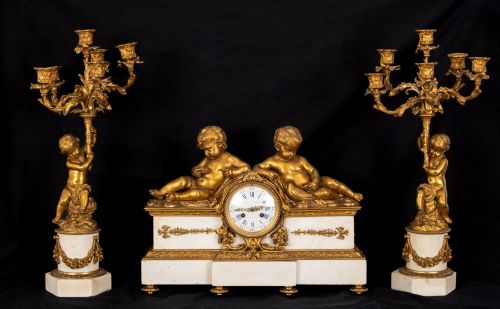
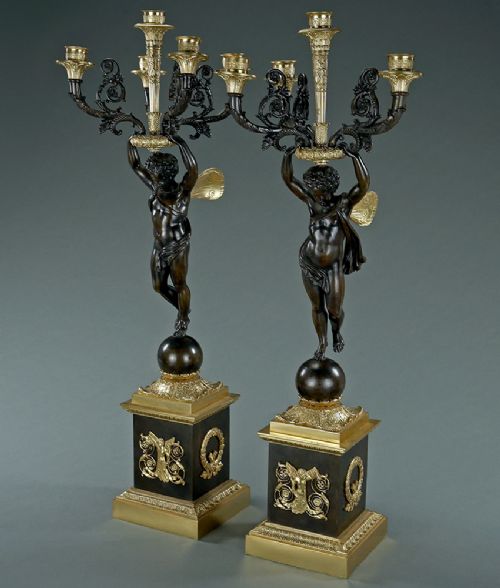
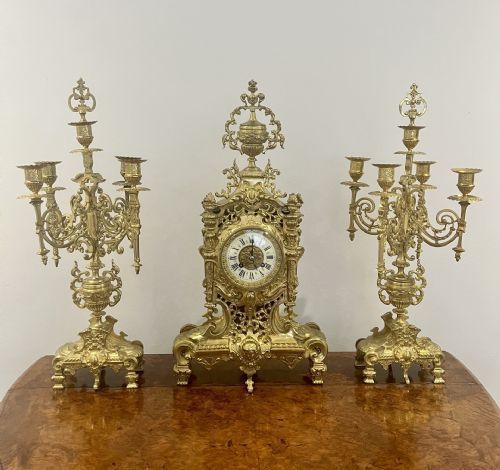
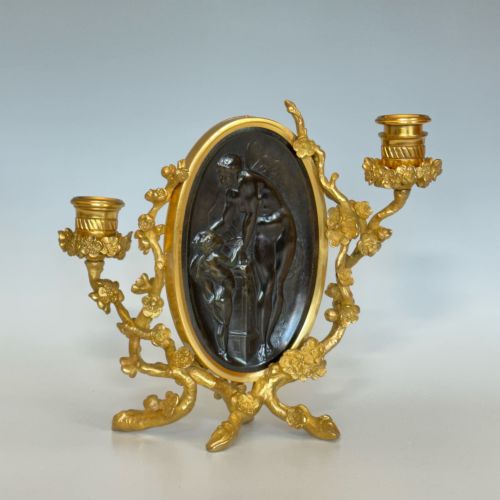
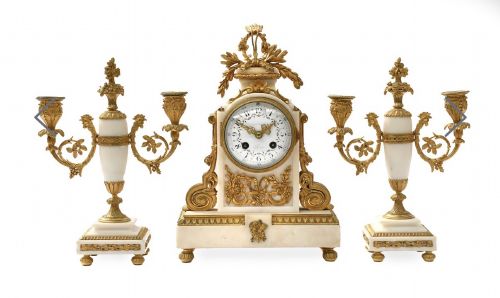
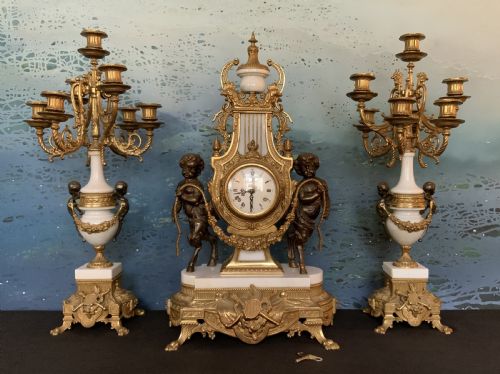
The inventory on this page ranges across French Empire, Louis XVI, and Rococo Revival aesthetics, alongside German porcelain examples. Makers and designers of these periods utilised sculptural figures, cherubs, and classical motifs to frame the branching candle nozzles.
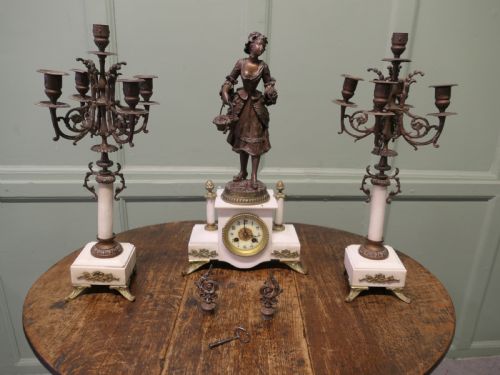
Forms vary from grand gilt bronze and slate combinations down to delicate porcelain compositions. Each object combines functional lighting support with heavy decorative sculpture intended to anchor a room's central hearth.
How they were made
The construction of these pieces relies heavily on metalworking techniques such as casting and chasing in bronze, ormolu, and gilt metal. Artisans combined these metallic elements with heavier natural bases made from slate and marble to ensure structural stability.
Porcelain variants incorporate fired ceramic bodies moulded into figurative or floral shapes, often accented with hand-painted details. Metal components frequently feature combinations of bright gilding and dark patination to create textural contrast.
Retail Price Guide 2026
Typical UK retail prices for mantel candelabra, calculated from the Sellingantiques database of over a million retail prices indexed since 2003. This retail price guide relies exclusively on Sellingantiques data; no external sources or auction records are used, so the figures do not describe the wider market.
What varies in quality
Quality in these objects is dictated by the crispness of the chasing and the weight of the materials employed. Finer examples display deeply detailed casting in the bronze or ormolu, where decorative motifs remain sharp and well-defined.
The integration of mixed materials also defines the hierarchy of quality, seen in how seamlessly bronze branches meet marble or slate bases. Superior pieces maintain structural balance and harmonious proportions between the sculptural figures and the candle arms.
The Antique Mantel Candelabra Glossary
- Ormolu
- Gilded bronze produced by applying a mercury and gold amalgam to a bronze base and heating it. This technique creates a rich, durable golden finish characteristic of fine nineteenth-century metalwork.
- Gilt Bronze
- Bronze metal that has been coated with a thin layer of gold. It provides a bright metallic sheen similar to ormolu.
- Patinated Bronze
- Bronze treated with chemicals or heat to alter its surface colour, usually resulting in a dark brown or greenish tone. This treatment highlights brighter gilt elements by contrast.
- Louis XVI Style
- A neoclassical design style drawing on classical Greek and Roman motifs. It is characterised by symmetry, straight lines, and restrained ornamentation.
Frequently Asked Questions
What rooms suit antique mantel candelabra?
These pieces suit formal reception rooms and dining spaces where a strong architectural focal point is needed. They sit naturally upon fireplace mantelpieces or large sideboards.
Their substantial height and sculptural forms allow them to command attention without overwhelming surrounding furnishings.
How are antique mantel candelabra cleaned?
Cleaning requires a soft, dry cloth to gently remove accumulated dust from crevices and chased surfaces. Liquid cleaners and aggressive polishing compounds should be avoided to protect original patination and gilding.
Maintaining them dry ensures the delicate finishes on bronze and porcelain remain undisturbed over time.
Can these candelabra hold modern candles?
Most historical candle nozzles are sized for taper candles common to their period of manufacture. Standard modern candles may require minor trimming to fit securely into the historical sockets.
Care should be taken to ensure any candle used sits firmly upright within the metal or porcelain nozzle.
How do I identify French Empire pieces?
French Empire pieces typically exhibit heavy classical influence, incorporating military motifs, symmetrical shapes, and deep patinated bronze contrasted with bright ormolu. Their design language reflects the neoclassical tastes prevalent in early nineteenth-century France.
Such characteristics help distinguish them from later Rococo Revival or German porcelain alternatives.