


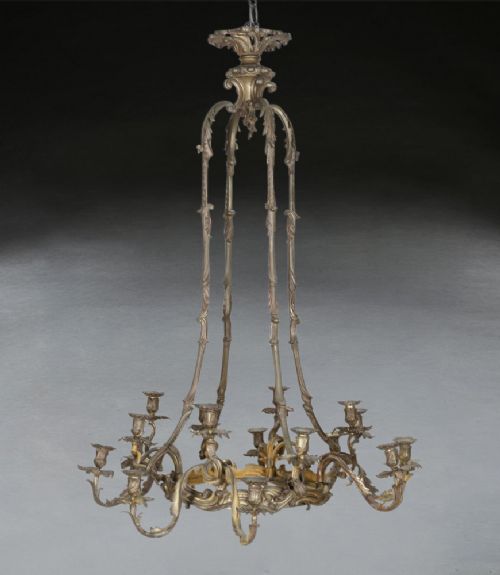
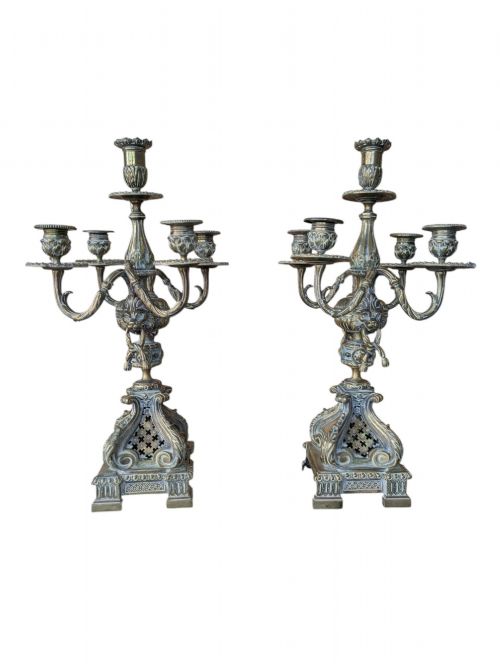
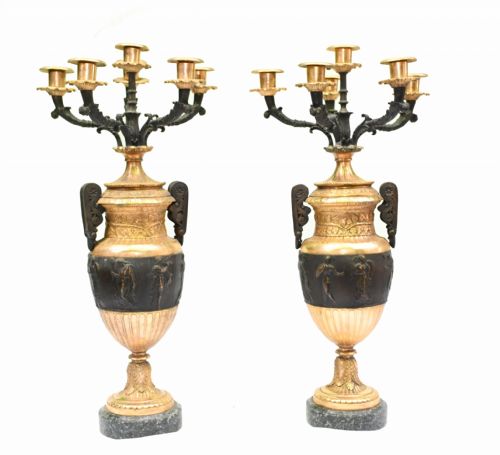
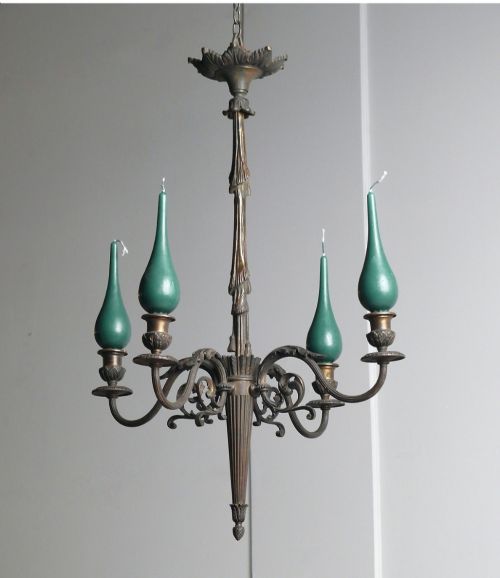


Patinated Bronze Candelabra
Patinated bronze candelabra combine dark metallic surfaces with classical form, offering a sculptural presence that brings period warmth to a room.
Patinated Bronze Candelabra
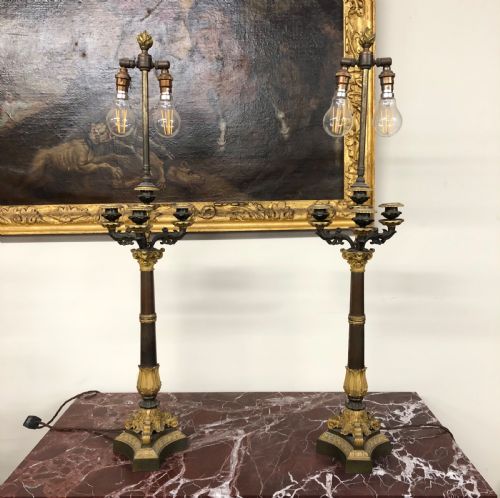
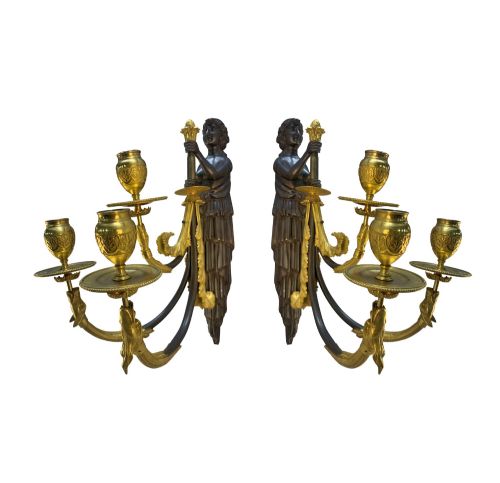
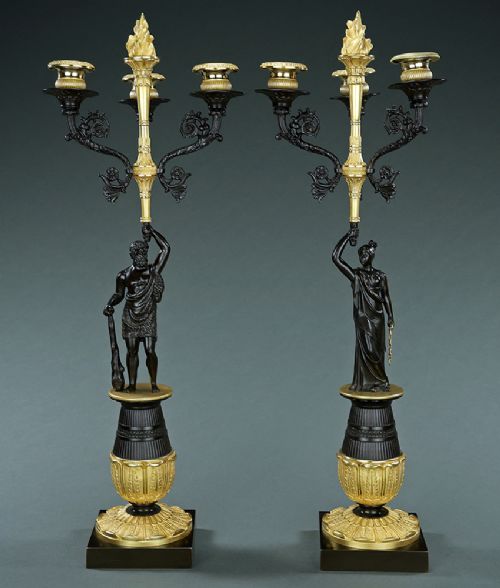
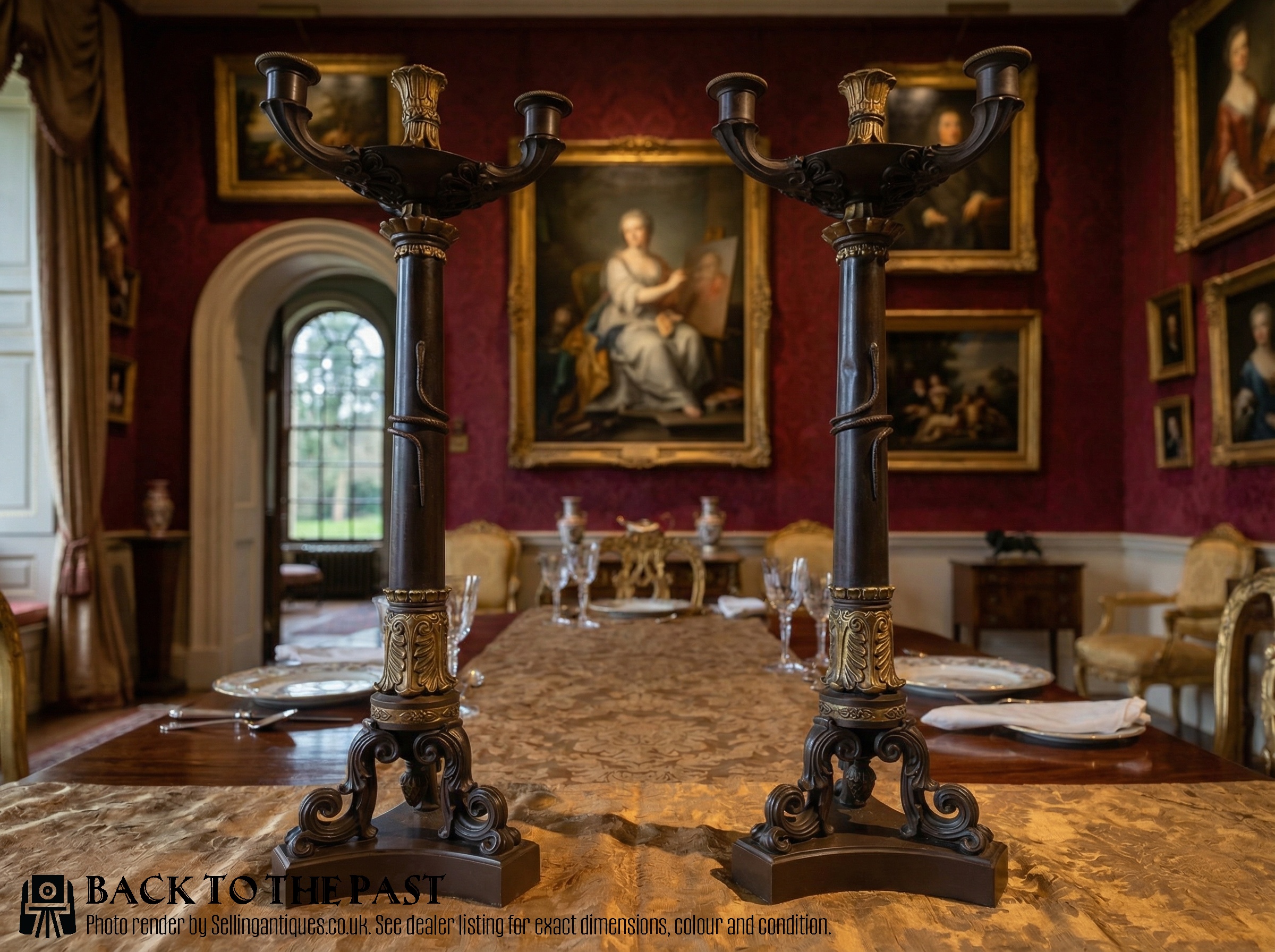
Patinated bronze candelabra are multi-branch lighting fixtures and decorative objects cast from copper alloy and treated to achieve a dark, mellowed surface finish. The selection spans the nineteenth century, including Regency, Victorian, and French Empire periods, alongside neoclassical revivals.
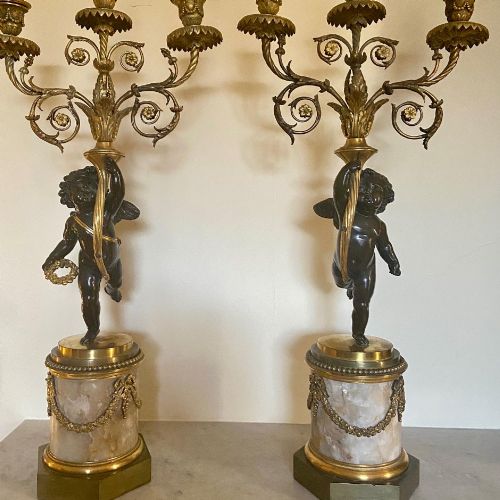
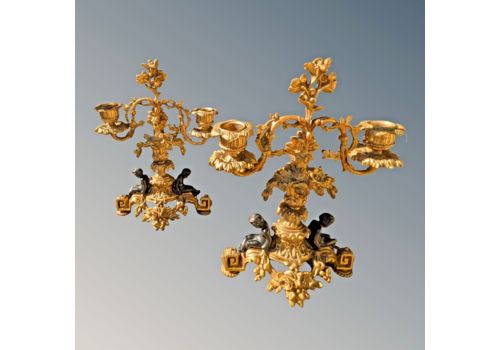
Buyers will encounter pairs most frequently, often configured with three, four, or five candle arms or nozzles. Many examples incorporate figurative elements such as putti, cherubs, or classical deities alongside the standard branch arrangements.
Origins lean heavily toward French workshops and makers, with English Regency productions also appearing in the record. These pieces frequently integrate contrasting materials like marble, slate, and ormolu into their overall compositions.
How they were made
Foundry work relied on traditional lost-wax or sand-casting techniques to shape the bronze components before skilled chiselling defined the fine details of hair, drapery, and foliage. The distinctive dark surface finish resulted from chemical applications applied to the hot or cold metal to simulate age and depth.
Ormolu and gilt-bronze highlights were achieved through mercury gilding or gold leaf application, creating a bright contrast against the dark patinated bronze bodies. Stonework bases in marble, onyx, or slate were turned and polished separately before being joined to the metalwork with threaded rods and pins.
Patinated Bronze Candelabra Retail Price Guide 2026
Typical asking prices for patinated bronze candelabra among the pieces listed under this phrase on Sellingantiques today, from the lower quarter to the upper quarter. They describe what is for sale here now, not the wider market.
Listings feature items from the 18th century, Regency period, and 19th century, incorporating materials like marble, ormolu, and bronze.
What varies in quality
The harmony between contrasting materials dictates the visual success of a piece. High-grade examples feature tight joints between the patinated bronze, ormolu mounts, and marble plinths, with balanced proportions across all candle branches.
François Redmond·Rabiat·Raingo Fres·Deniere·François-Christophe-Armand Toussaint·Clodion·Jules Salmson
The Patinated Bronze Candelabra Glossary
- Patinated bronze
- Bronze treated with chemical solutions to produce a darkened, stable surface colour rather than a bright metallic shine. This treatment protects the underlying metal while accentuating sculptural contours.
- Ormolu
- Finely chopped gold amalgamated with mercury and applied to bronze, then heated to drive off the mercury and leave a durable gold coating. It provides the bright golden contrast seen on many nineteenth-century mounts.
- Garniture
- A set of matching decorative objects, typically comprising a central mantel clock flanked by a pair of candelabra or vases. These matched groups were designed to display symmetrically on a fireplace mantel.
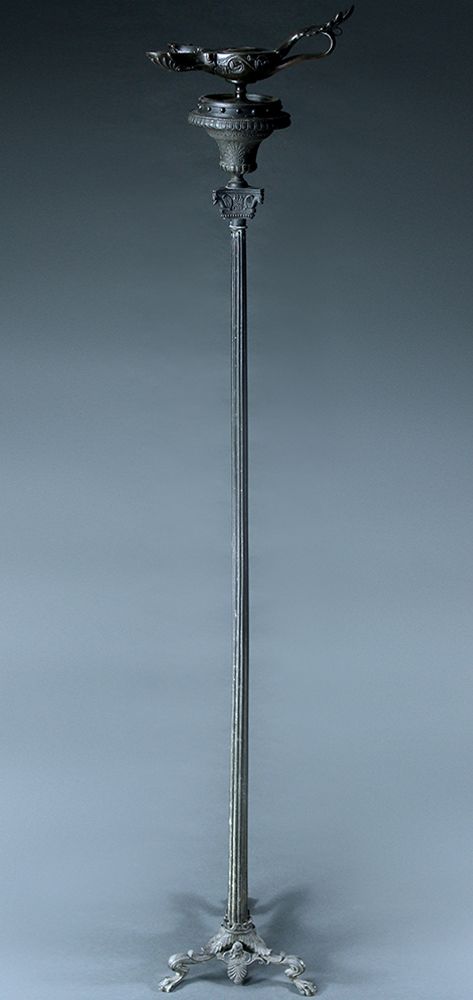
- Torchère
- A tall stand or candlestick designed to hold a light source high above the floor or furniture surface. In nineteenth-century examples, these often took the form of classical figures bearing lights.
- Fluorspar
- A colourful halide mineral sometimes used in decorative bases and mounts for high-end objects. Its natural banding complements the dark tones of patinated bronze.
Patinated Bronze Candelabra: Frequently Asked Questions
How were patinated bronze candelabra used?
These fixtures stood upon dining tables, sideboards, and mantelpieces to provide supplemental illumination during evening hours. They functioned primarily as decorative sculpture when unlit, reflecting candlelight off their polished gilt and bronze surfaces.
Over time, many examples were adapted to electricity for modern interior use while retaining their original form. Pairs were typically arranged symmetrically within a room or as part of a clock garniture set.
How do I clean patinated bronze safely?
Dust the surface regularly with a soft, dry brush to prevent particulate buildup in the recessed chased details. Avoid commercial metal cleaners and abrasive cloths, which can strip the chemical patina and damage the underlying bronze.
For stubborn grime, wipe gently with a slightly damp cloth followed immediately by thorough drying with a lint-free towel. Professional conservation is recommended if the surface finish requires stabilization.
How can I tell nineteenth century pieces apart?
Examine the casting quality, assembly methods, and stylistic cues to determine the period of manufacture. Earlier nineteenth-century works in the French Empire or Regency styles often exhibit heavier bronze casting and fire-gilded ormolu.
Later Victorian and Grand Tour productions frequently utilised varied stone bases such as onyx or marble alongside machine-finished bronze components. Signature marks and stamps can also narrow down the timeframe and origin workshop.
Where should I display these in a room?
Place them on stable, level surfaces away from direct heat sources and high-traffic areas where they might get knocked. Mantelpieces and large sideboards offer traditional placement options that showcase their height and sculptural silhouette.
Ensure that wiring, if converted to electricity, complies with current safety standards and does not strain the antique metal joints. Ambient lighting helps highlight the contrast between the dark patinated bronze and bright ormolu details.