




French Neoclassical Candelabra
French neoclassical candelabra bring classical symmetry and refined metalwork into a room, offering both sculptural presence and functional illumination.
French Neoclassical Candelabra
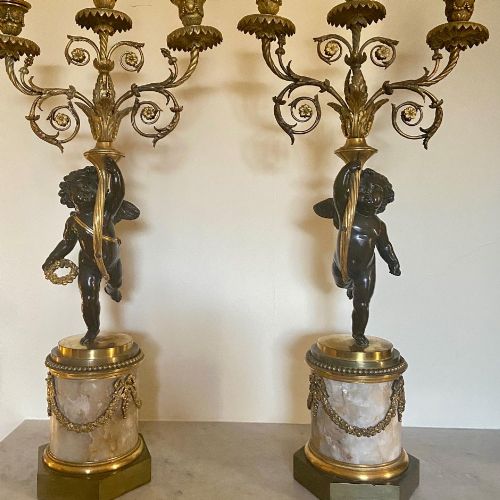
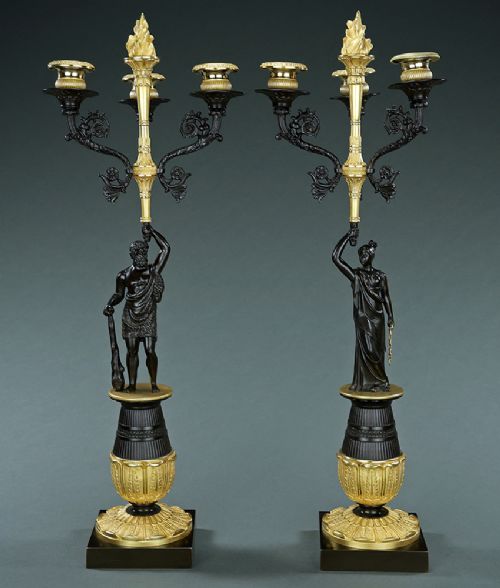
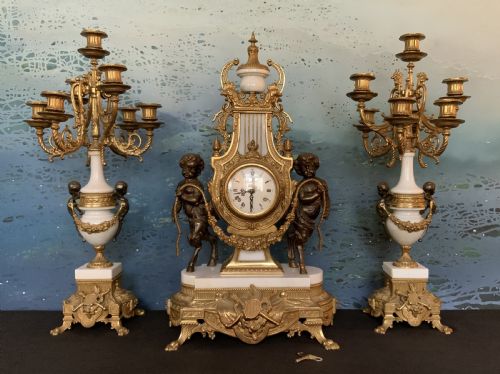
French neoclassical candelabra are decorative branched lighting fixtures rooted in classical antiquity, often appearing in pairs alongside mantel clocks within garniture sets. These pieces draw heavily on architectural motifs, mythological figures such as putti and Hercules, and balanced, symmetrical forms typical of the Louis XVI and Empire periods.
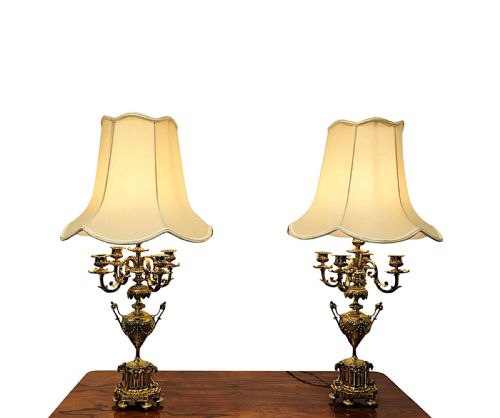
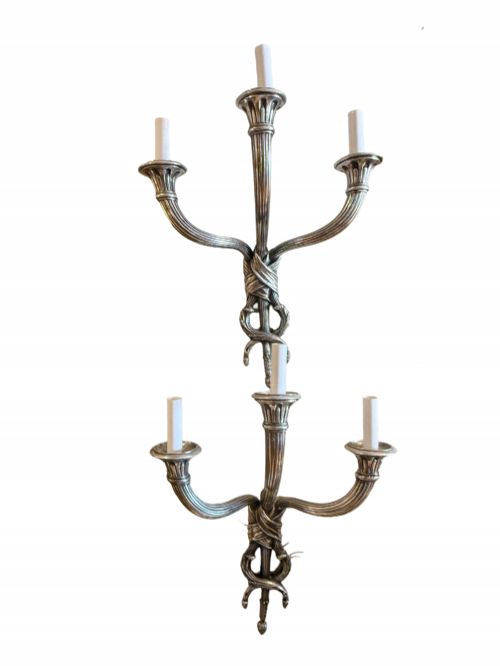
Buyers encountering this selection will frequently find matched pairs dating from the nineteenth century, executed in styles ranging from formal Louis XVI Revival to Greco-Roman design. Alongside traditional multi-arm candle holders, the inventory encompasses variants converted to electric table or standard lamps, as well as wall sconces.
The materials span cast metals and natural stones, reflecting the tastes of nineteenth-century makers inspired by archaeological discoveries. Whether standing on a marble base or featuring patinated bronze figures, these objects serve as focal points for traditional interiors.
Assessing quality
Quality in these items is determined by the crispness of the chasing and the depth of the casting in the bronze or ormolu components. Finer examples display meticulously detailed human figures, sharp acanthus leaves, and tightly secured joints that remain rigid over time.
The selection of secondary materials also dictates the tier of the piece, with solid white marble bases and genuine fluorspar accents separating superior items from simpler brass or plated metal alternatives. Maker signatures and adherence to classical proportions further elevate the standing of a pair.
The inventory includes several functional variations, ranging from three and four-arm candelabra to wall sconces and standard lamps.
Francois Redmond·Rabiat·Claude Clodion·AD Mougin Paris
The French Neoclassical Candelabra Glossary
- Ormolu
- Gilt bronze produced by applying a mercury-gold amalgam to a bronze object and heating it to vaporise the mercury. This technique creates a durable, golden surface characteristic of fine period metalwork.
- Garniture
- A set of matched ornamental objects, usually comprising a central mantel clock flanked by a pair of candelabra or urns. These ensembles were designed to sit harmoniously on a fireplace mantel.
- Putti
- Depictions of chubby male infants, often winged, derived from classical art and frequently incorporated into the bronze figural supports of candelabra. They add a playful yet classical element to the design.
- Bobeche
- A small removable collar or pan fitted below the candle nozzle to catch melting wax. It protects the arms and decorative elements of the candelabra from drips.
- Patinated bronze
- Bronze treated with chemicals, heat, or natural agents to produce a specific surface colour ranging from deep brown to near black. This darker finish contrasts effectively with bright ormolu mountings.
French Neoclassical Candelabra: Frequently Asked Questions
Can electric conversions be reversed?
Most conversions preserve the original structure by running wiring through the central column without drilling destructive holes. Restoring them to hold candles often requires simply removing the electrical fitting and replacing the candle-cup components.
Consult a professional restorer to ensure the internal wiring is removed safely without damaging antique patination or threaded joins.
What is a clock garniture?
A clock garniture is a coordinated decorative set featuring a central mantel clock accompanied by matching side pieces such as candelabra or vases. These sets were designed in the nineteenth century to create visual symmetry on domestic fireplace mantels.
The components share identical materials, styles, and decorative motifs, providing a unified aesthetic across the entire arrangement.
How can I distinguish Louis XVI style from Empire style?
Louis XVI style pieces generally exhibit lighter, more delicate proportions with refined neoclassical motifs like ribbons, urns, and floral garlands. They often feature bright ormolu paired with white marble.
Empire style items tend to be heavier and more monumental, drawing on Roman military and mythological themes with dark patinated bronze contrasted against rich gilt mounts.