


Classical Figure Candelabra
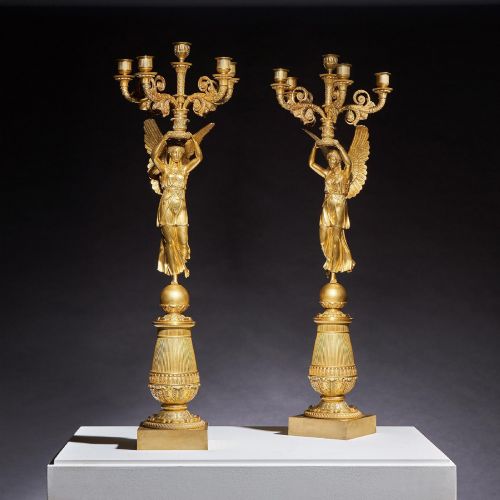
These classical figure candelabra are sculptural bronze, marble and ormolu lighting pieces designed to bring architectural symmetry and rich figurative presence to a mantel or console.
Classical Figure Candelabra
When you search for classical figure candelabra, you are looking at figural lighting pieces that combine cast metal figures with candle branches, frequently appearing as balanced pairs. The examples available on this page lean heavily towards nineteenth-century French Empire, Regency and Neo-Classical designs, alongside later revivals from the twentieth century.
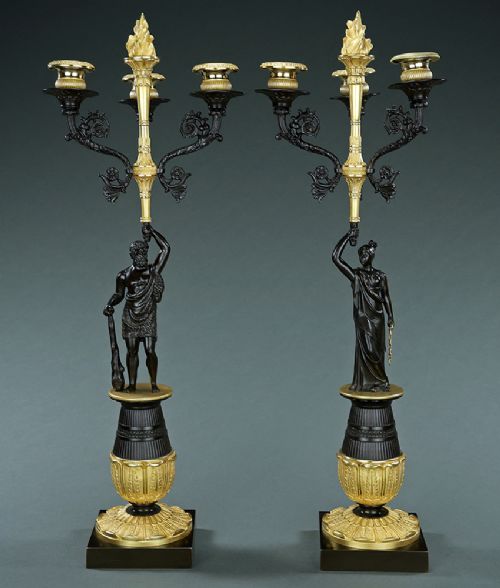
The sculptural subjects often draw on mythological or classical motifs, featuring figures such as Hercules or putti supporting the arms. These works span standard candelabra forms as well as broader garniture sets that incorporate mantel clocks and matching torchieres.
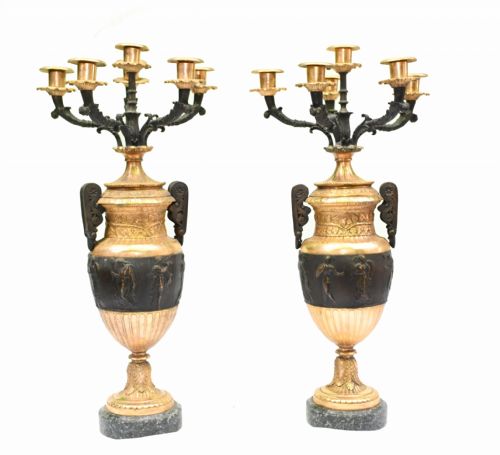
Originating largely from French and English workshops, these pieces utilise stone bases in marble, slate or onyx to anchor the heavy metalwork above. Buyers will find that pairs predominate, serving as focal points for traditional interiors.
What varies in quality
The selection of the base material also marks the tier of the piece, with dense, finely figured marble and slate commanding greater sculptural presence than secondary ceramics. The articulation of the arms and the weight of the metal components further distinguish standard production from exceptional studio work.
Hercules occasionally sets aside his labours to support heavy candle branches alongside delicate marble-based putti.
Pierre Philippe Thomire·Thomas Hope·Humphrey Hopper·Deniere Paris
The Classical Figure Candelabra Glossary
- Ormolu
- Gilded bronze produced by applying a mercury and gold amalgam to the metal and heating it to drive off the mercury. This technique creates a durable, golden surface characteristic of fine nineteenth-century metalwork.
- Garniture set
- A decorative grouping typically consisting of a central mantel clock flanked by matching candelabra or vases. These sets were designed to create a unified display across a fireplace mantel.
- Torchere
- A tall stand or ornamental candelabrum designed to hold lights high above the floor or furniture surface. In classical interiors, they often take the form of figural columns.
- Patinated bronze
- Bronze that has been treated with chemical solutions to produce a controlled surface colour, usually deep brown or black. This dark finish provides visual contrast against bright ormolu mounts.
Classical Figure Candelabra: Frequently Asked Questions
Are these candelabra wired for electricity?
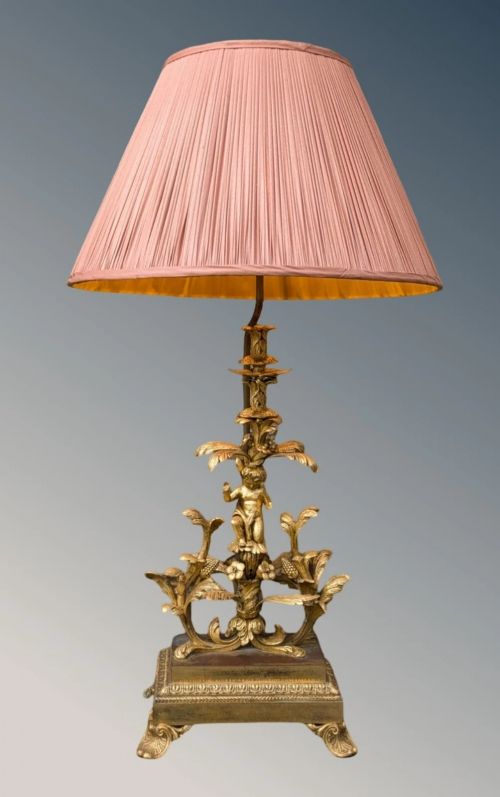
Most pieces retain their original configuration for holding candles, though some entries on the market have been adapted as table lamps over time.
Buyers should examine the specific listing details to confirm whether the electrical fittings are present or if the piece remains strictly for candle use.
How do I care for ormolu and bronze?
Maintenance requires gentle dusting with a soft, dry cloth to prevent the accumulation of dirt in the recessed chased details of the metal.
Harsh commercial polishes must be avoided entirely, as they can strip away the delicate layers of historical gilding and patination.
What is the difference between Empire and Regency styles?
French Empire design draws heavily on the military campaigns and classical motifs of Napoleonic France, featuring bold gilt bronze figures and dense symmetry.
Regency style reflects British classical taste from the early nineteenth century, often incorporating similar antique inspirations interpreted through distinct local cabinet-making traditions.
How can I tell if a garniture set is complete?
A complete garniture set comprises the central clock alongside its matching side pieces, such as a pair of candelabra sharing identical decorative motifs and base materials.
Matching patination, stone types and casting styles across all components indicate that the ensemble was made and kept together as a single suite.