





Victorian Gilt Candelabra
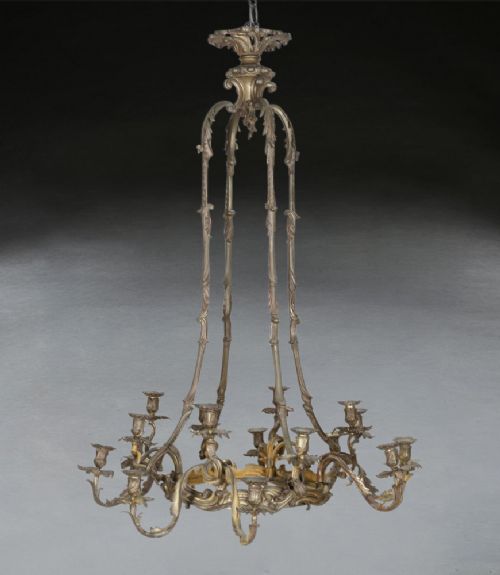
Victorian gilt candelabra bring nineteenth-century lighting into a room through cast metal and gleaming surface.
Victorian Gilt Candelabra
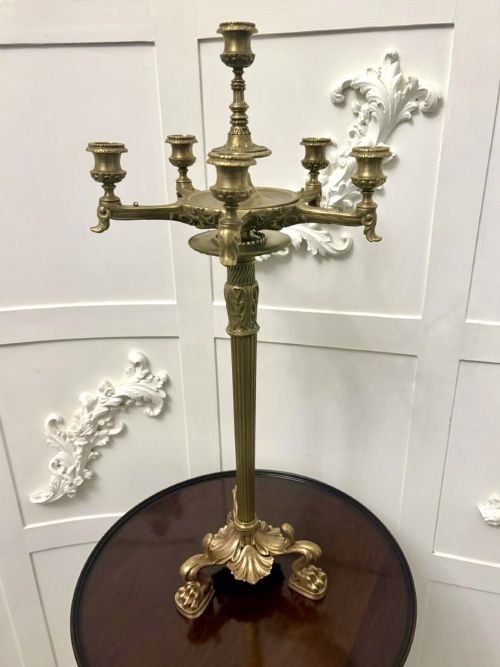
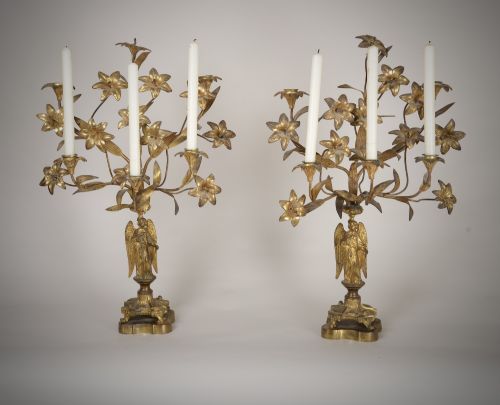
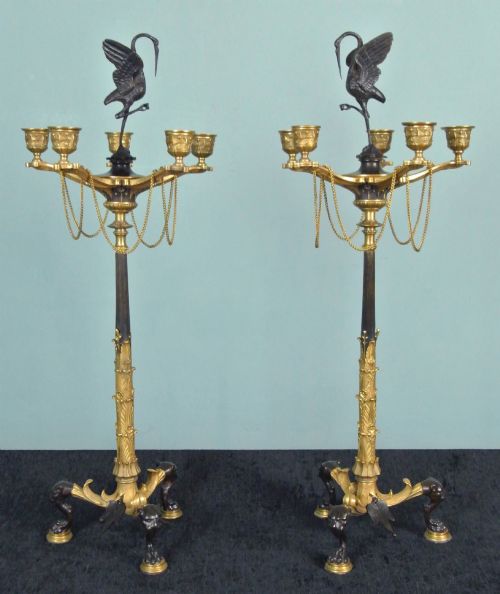
When searching for victorian gilt candelabra, collectors encounter branched lighting stands designed for multiple candles, often paired as mantel ornaments or clock garnitures. The forms on this page span the nineteenth century, including French Rococo Revival, Gothic Revival, and Empire styles.
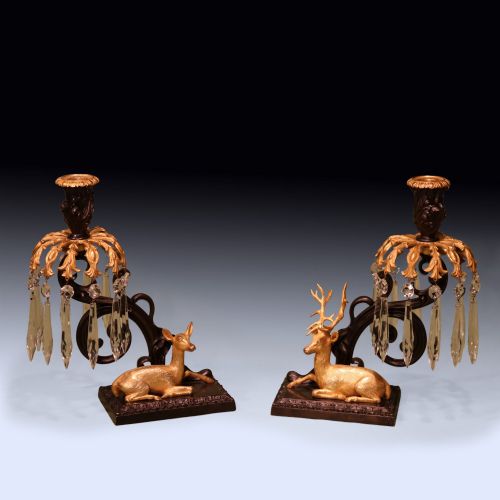
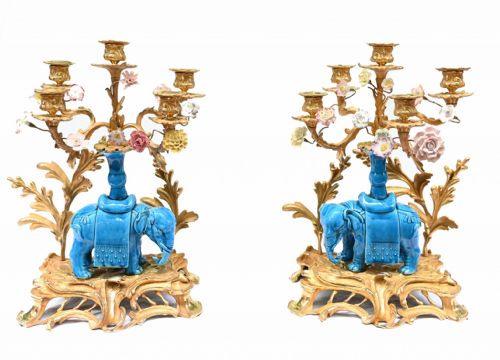
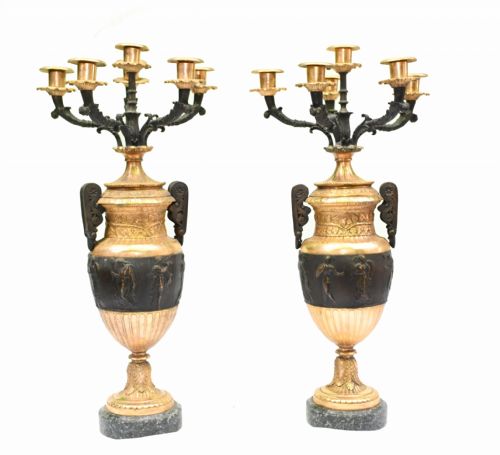
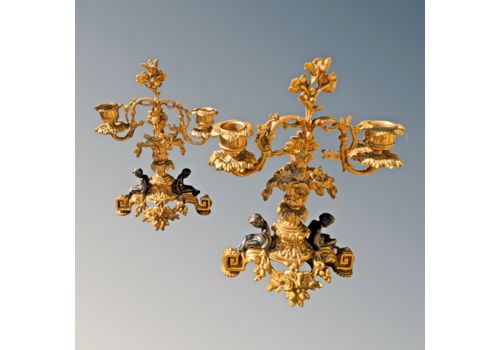
The version most commonly met here is a matched pair in ormolu, gilt bronze, or gilt brass, frequently incorporating marble bases, porcelain elements, or patinated bronze figures such as cherubs, stags, or elephants.
How they were made
Maker workshops utilised metal casting techniques to form bronze, brass, and ormolu into elaborate scrolls, figures, and architectural motifs. Gilding was applied to surfaces to create a bright metallic finish.
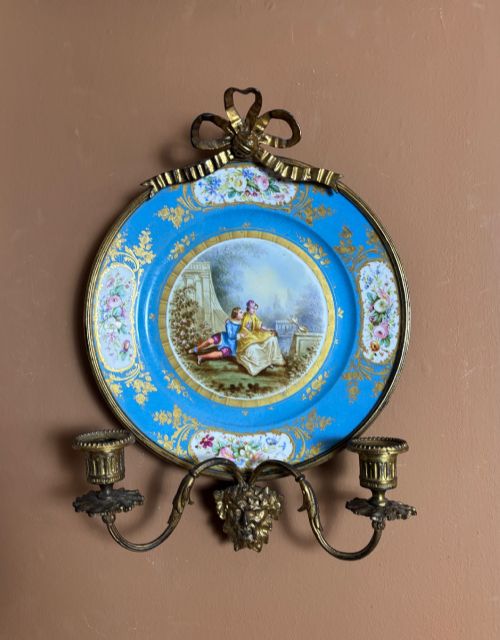
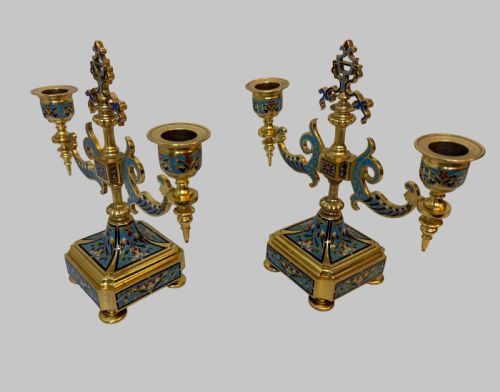
Many pieces integrate contrasting materials, mounting porcelain sections from Sevres or Meissen, or setting bronze components onto marble plinths and champleve enamel bases.
Materials span gilt bronze, ormolu, brass, marble, champleve enamel, and Sevres porcelain.
What varies in quality
The distinction between standard production and the finest work lies in the crispness of the metal chasing and the depth of the gilding. Heavier castings with finely articulated details and substantial marble or porcelain integration represent the upper tier of the range.
Completeness also dictates value, particularly in multi-piece clock garnitures where the candelabras must match the central clock in style, material, and patination.
Barbedienne·Raingo Fres Paris·Thomas Hope·Sevres·Meissen
The Victorian Gilt Candelabra Glossary
- Ormolu
- Gilt bronze produced by applying a finely ground high-carat gold-mercury amalgam to a bronze object before heating. This French technique yields a distinctive matte and burnished golden finish.
- Garniture
- A set of three or more matching decorative objects, typically comprising a mantel clock flanked by a pair of candelabras or vases. They were designed to sit symmetrically on a fireplace mantel.
- Champleve
- An enamelling technique where troughs or cells are hollowed out of a metal surface and filled with vitreous enamel powder before firing. The resulting design shows vibrant bands of colour bordered by metal.
- Patinated bronze
- Bronze that has been chemically treated to alter its surface colour from bright golden metal to tones of brown, green, or near-black. It provides visual contrast against bright gilt mounts.
Victorian Gilt Candelabra: Frequently Asked Questions
What is a clock garniture?
A clock garniture is a matched set consisting of a central mantel clock accompanied by two side pieces, which are frequently candelabras or urns. These sets were manufactured to create a balanced decorative display on nineteenth-century fireplace mantels.
The components share identical materials, styles, and casting details, ensuring the grouping reads as a single cohesive unit within a room interior.
Were these converted to electricity?
Many nineteenth-century lighting pieces found today have been adapted to take modern electrical wiring for table lamps or chandeliers. This conversion allows period metalwork to function safely with contemporary power sources.
Buyers often check the base or stem to see if wiring runs internally or if the original candle sockets remain intact without drill holes.
How do I identify French styles?
French nineteenth-century metalwork often follows specific historical revivals, such as the asymmetric scrolls and floral motifs of Rococo Revival or the strict symmetry and classical mounts of the Empire period. Makers in Paris drew heavily on these historic design vocabularies.
Examining the cast ornamentation, patination, and secondary materials like Sevres porcelain helps determine whether a piece originates from French workshops.
Where should I display them?
Candelabras are traditionally placed on mantelpieces, sideboards, or large entry tables where their height and branched arms can be viewed from multiple angles. Paired stands look best when given adequate surface space to reflect light.
Care should be taken to place heavier bronze and marble pieces on stable, level furniture that can support their considerable weight.