




Six Light Candelabra
These six light candelabra provide an impressive spread of illumination, built from heavy cast metal and glass to anchor a formal room.
Six Light Candelabra
When you search for six light candelabra, you encounter substantial multi-branched metal and glass fixtures designed for domestic illumination. The pieces appearing here span the nineteenth century through the early twentieth century, with French origins predominating.
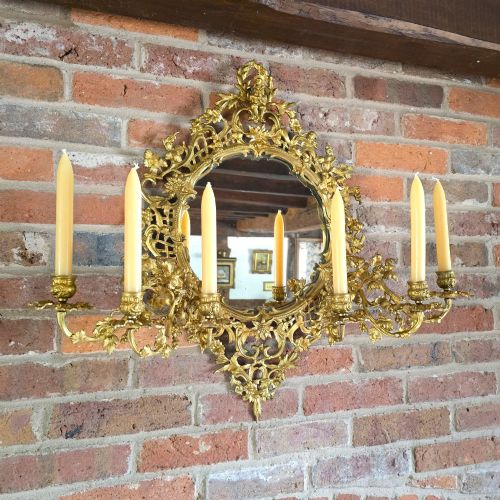
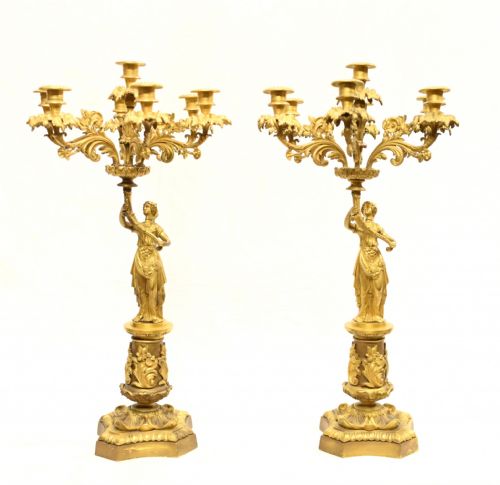
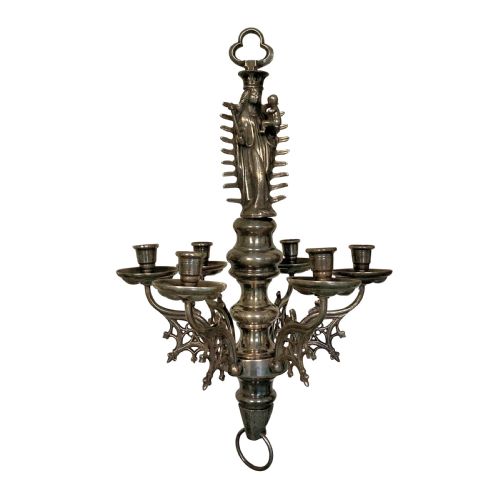
You meet pairs of tabletop or mantel stands alongside wall-mounted fixtures and hanging chandeliers. The forms range from classical revival candelabra to silver plated centrepieces and girandoles.
Victorian and nineteenth century French examples form the core of what is available, featuring robust cast bodies with six distinct branches or stems.
Materials and construction methods
The construction relies heavily on cast brass, ormolu, and gilt bronze, providing a rigid framework to support six branching arms. Foundries shaped these metals through traditional casting before applying gilding or patination.
Cut glass and crystal drops frequently accompany the metal frames, particularly on chandeliers and girandoles, catching the light from the candles. Silver plating also appears on select Victorian pieces over a base metal foundation.
White marble sections are integrated into the bases of certain candelabra to add weight and a contrasting texture to the polished gilt metal.
Six Light Candelabra Retail Price Guide 2026
Typical asking prices for six light candelabra among the pieces listed under this phrase on Sellingantiques today, from the lower quarter to the upper quarter. They describe what is for sale here now, not the wider market.
Listings feature brass, gilt bronze, and ormolu alongside cut glass and crystal pendants.
Distinctions in quality
The crispness of the chasing and the depth of the cast ornamentation dictate the visual standard of a piece. Finer examples display sharp relief on cherubs, foliate scrolls, and classical motifs, whereas lesser items show softer, shallower detailing.
The choice of base material and the durability of the original gilding or silver plating mark further divisions in grade. Heavier castings with substantial brass or bronze content maintain structural integrity across all six branches far better than lighter compositions.
Elkington
The Six Light Candelabra Glossary
- Ormolu
- Gilded bronze produced through a mercury amalgamation technique on nineteenth century decorative objects. This finish gives a warm, enduring golden lustre to the metal surface.
- Girandole
- A branched wall-mounted candelabrum or a candelabrum with attached glass mirrors and drops. These fixtures multiply the reflected light within a room.
- Candelabrum
- A large branched candlestick holder designed for multiple candles. The plural form is candelabra.
- Centrepiece
- A decorative centre ornament for a dining table, occasionally fitted with branches to serve as a candelabrum. Elkington produced notable silver plated examples of this form.
- Flemish Gothic
- A decorative style referencing medieval architectural motifs. This aesthetic appears on silver plated chandeliers from the turn of the twentieth century.
Six Light Candelabra: Frequently Asked Questions
How were six light candelabra used?
These pieces sat upon dining tables, mantelpieces, or sideboards to provide abundant illumination during evening gatherings. Their six branches held tapered candles to light large formal rooms before the widespread adoption of electricity.
Certain versions also functioned as hanging chandeliers or wall-mounted mirror sconces to distribute light across a larger space. Their substantial weight ensured they remained stable while holding six burning candles.
How do I identify French nineteenth century pieces?
French pieces from this era typically display distinct stylistic markers such as Rococo Revival curves, Louis XVI neoclassical symmetry, or heavy ormolu casting. The presence of mythological figures, cherubs, or naturalistic bronze work often points toward French workshops.
Examining the underside of the base and the joinery of the branches reveals traditional nineteenth century construction methods. Brass and crystal combinations from this period also carry specific patination earned through decades of handling.
Can these candelabra be converted to electricity?
Many of these fixtures have already been adapted for electrical wiring during their long histories, particularly the chandeliers and table lamps. Converting a traditional candelabrum requires running wire through the central stem without damaging the original metal or glass components.
Purists often prefer to keep them in their original candle-burning format, while others opt for concealed wiring to use them safely in modern interiors. A professional electrician can execute this without altering the antique metalwork.
What is the difference between brass and ormolu?
Brass is an alloy of copper and zinc, possessing a natural golden-yellow metallic colour that can be polished or left to develop a darker patina. Ormolu specifically refers to a high-status surface finish where gold amalgam is applied to a bronze base.
While solid brass appears frequently across these listings, ormolu offers a richer, deeper golden glow that resists tarnishing. Both materials were widely utilised across nineteenth century French lighting design.