


Ornate Silver Centrepiece
An ornate silver centrepiece commands the middle of a dining table with heavy Victorian or Edwardian elaboration, cast and pierced to hold fruit, flowers, or candlelight.
Ornate Silver Centrepiece
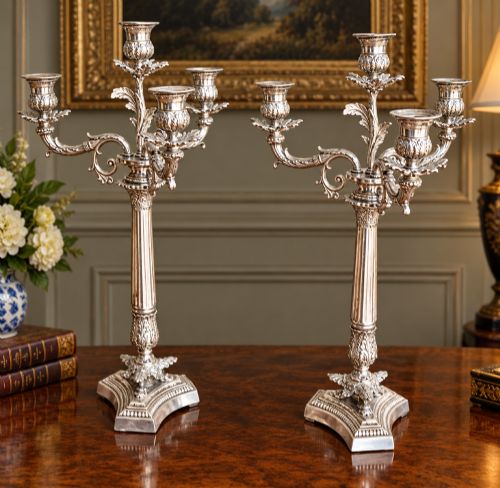
An ornate silver centrepiece forms the principal table decoration, spanning heavy Victorian candelabras, fruit baskets, and footed bowls from the nineteenth and twentieth centuries. These large table ornaments appear in solid silver, sterling silver, silver plate, and silvered bronze across styles such as Victorian Rococo Revival, Art Nouveau, and Napoleon III.
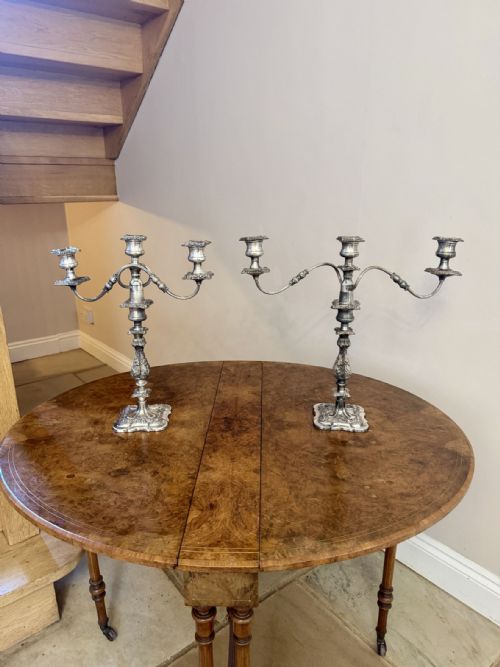
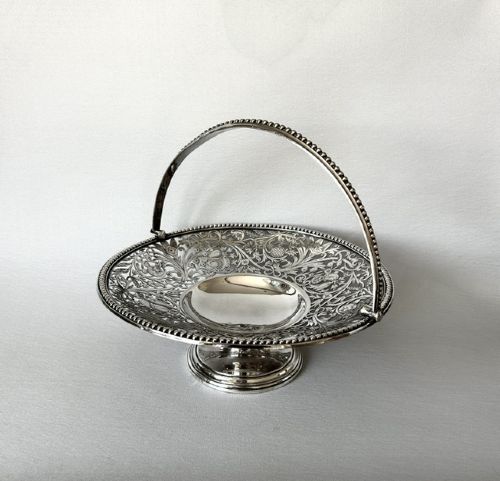
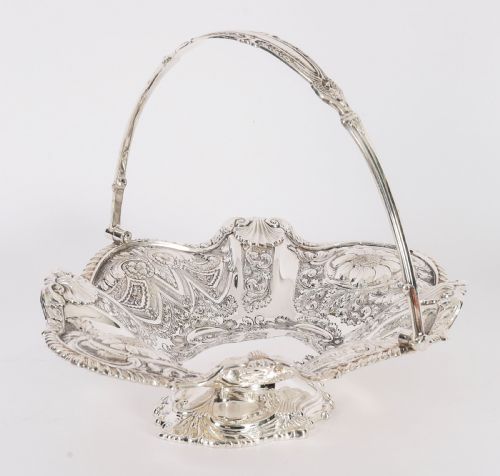
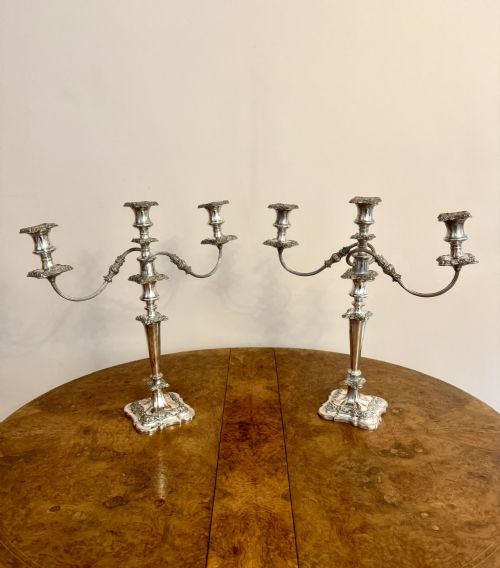
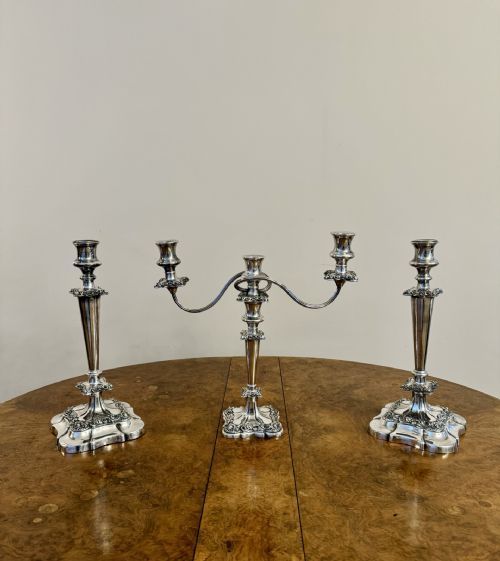
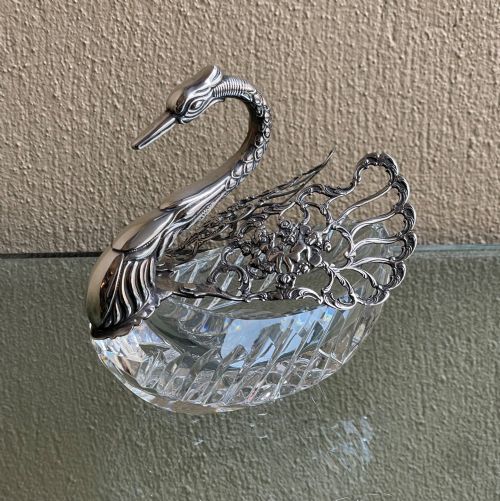
The version most commonly met on this page is the nineteenth-century silver plated candelabra or large decorative bowl, often bearing elaborate repoussé floral and bird decoration, pierced borders, or figural cherub supports. Pieces range from multi-light candelabra pairs to single footed fruit baskets and wine coolers.
Materials and construction
Maker workshops utilised sterling silver, solid silver, and base metals coated in silver plate or electroplated nickel silver, frequently pairing metalwork with heavy cut glass for bowls and dishes. Silver on copper and silvered bronze also appear, providing a durable substrate for intricate surface decoration.
Artisans employed handcrafting techniques including repoussé work, piercing, and casting to achieve high-relief floral, bird, and figural ornamentation. Multi-light candelabras and complex serving dishes were constructed in modular parts, allowing pieces to transition between candelabras and candlesticks.
Some nineteenth-century silver centrepieces feature mischievous cherubs holding up fruit baskets, keeping watch over the dining table.
Distinctions in quality
Quality rests in the crispness of the cast and repoussé details, where deeply chased foliage and sharply defined figures separate superior table ornaments from simpler cast productions. Heavier gauge metalwork and substantial weight signal better production standards in both solid silver and silver plate.
Makers known for exceptional output, such as Elkington, introduce structural complexity and refined finishing that elevates a piece above standard domestic wares. The integrity of the plating or silver surface and the balance of large multi-light forms further govern the standing of an item.
George W. Scott & Sons Ltd·Barker Ellis·Elkington·Blagden, Hodgson & Co.·Gioielleria Agliardi Cassino
The Ornate Silver Centrepiece Glossary
- Repoussé
- A metalworking technique where the design is hammered or pushed up from the reverse side to form a raised relief on the front. This decorative method creates tactile floral and bird motifs across bowls and baskets.
- Silver Plate
- A thin layer of silver applied over a base metal such as copper, nickel silver, or brass. Many nineteenth-century tablewares utilise this method to achieve a bright finish without the cost of solid silver.
- Candelabra
- A branched candlestick holding multiple candles on a single base. These lighting pieces often convert into simpler candlesticks depending on the configuration.
- Old Sheffield Plate
- An early form of plated silver produced by fusing a sheet of silver to a copper ingot before rolling them together. This technique leaves a distinctive edge where the underlying copper shows.
- Pierced
- Metalwork cut through to create openwork patterns such as latticework or scrolling borders. Fruit baskets and bread bowls frequently display this decorative open design.
Ornate Silver Centrepiece: Frequently Asked Questions
What is an ornate silver centrepiece used for?
These large table pieces served as decorative focal points for formal dining tables, holding fruit, flowers, wine, or multi-light candelabra arrangements during nineteenth and twentieth-century meals.
Today they function as standalone decorative bowls, serving dishes, or dining table centrepieces in domestic settings.
How do I clean a silver plated centrepiece?
Clean silver plated items gently with a specialist silver polish and a soft cloth to avoid wearing through the thin silver layer to the base metal beneath.
Avoid harsh chemical dips that strip away the original dark patination in recessed repoussé details.
How can I tell solid silver from silver plate?
Examine the piece for hallmarking stamps that indicate solid sterling or silver standard purity, which are absent on standard silver plate.
Look closely at rims and high points where wear might reveal a coppery or grey base metal underneath the silver surface.
What styles are common in antique centrepieces?
Victorian Rococo Revival and Napoleon III styles dominate, featuring naturalistic floral motifs, scrolls, and high-relief repoussé work.
Later pieces incorporate Art Nouveau curving lines and Edwardian decorative restraint.