



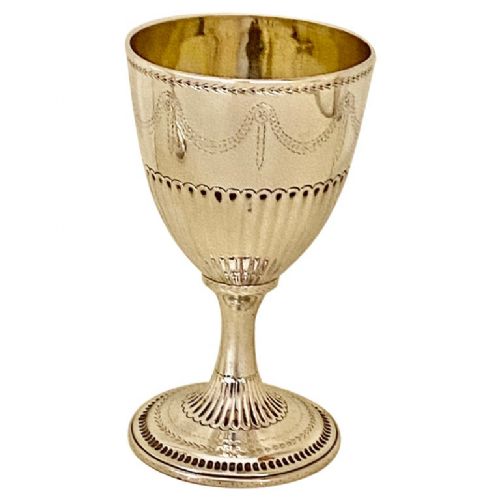

Silver Pedestal Cup
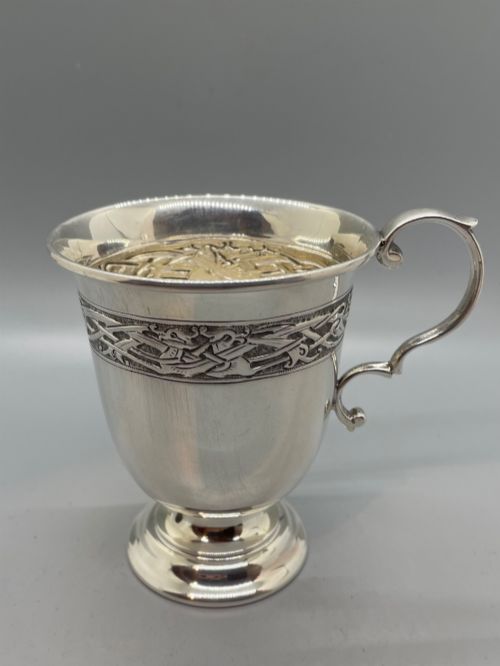
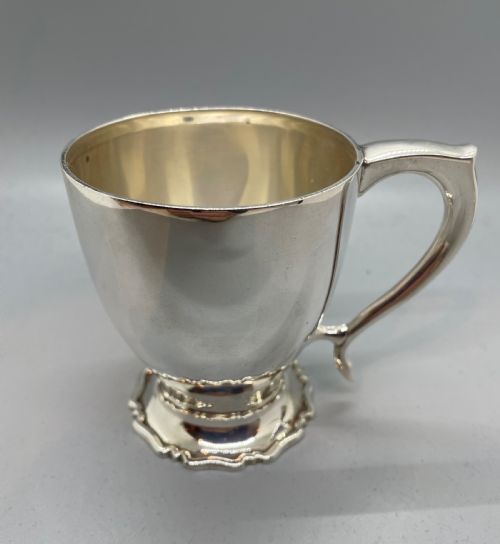
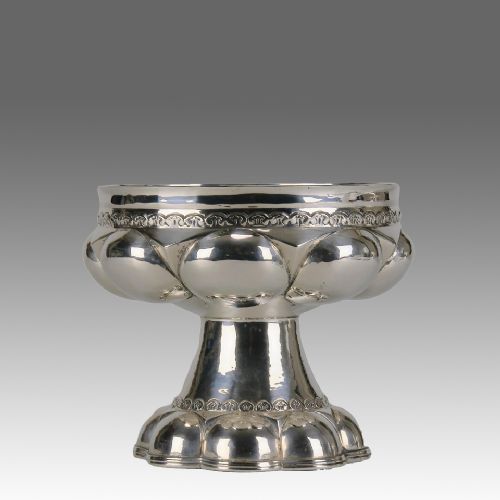
These silver pedestal cup examples span centuries of formal drinking vessels, christening mugs and trophies, offering solid metal forms raised on distinct feet.
Silver Pedestal Cup
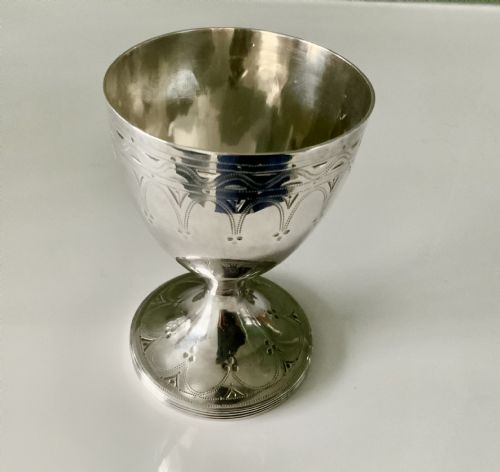
A silver pedestal cup brings together drinking vessels, loving cups, christening mugs and trophies raised upon a distinct foot or base. When you search for a silver pedestal cup, you meet forms ranging from plain Georgian goblets to elaborate Art Deco chalices.
The pieces on this page emerge from several periods, including the Georgian era, the nineteenth century, and twentieth-century decades like the 1920s and 1930s. Styles shift from rococo scrolls and bright cut engraving to clean Arts and Crafts or Jugendstil designs.
Mugs, tankards and miniature urn vases appear alongside paired pedestal dishes and loving cups. Most examples utilise sterling silver, solid silver or silver plate, sometimes finished with a gilt interior.
Materials and construction
Silversmiths formed these vessels from sterling silver, solid silver, and silver plate, occasionally incorporating copper beneath older plating methods. Many items receive a gilt or gold-lined interior.
Construction methods rely on traditional raising and smithing techniques to shape baluster forms, pedestal bases, and twin handles. Details such as scroll handles and bright cut engraving demonstrate manual execution by period craftsmen.
Miniature urn vases and twin-handled chalices prove that historical silversmiths enjoyed making small things look remarkably important.
Judging quality in raised silver
Quality depends upon the crispness of decoration, such as bright cut engraving and rococo scrolls, against smooth metal surfaces. Heavier gauge metal and balanced proportions on the pedestal foot elevate the piece.
The integrity of hallmarks, the neatness of handle attachment, and the preservation of internal gilt surfaces distinguish superior examples from standard production.
Nathan and Hayes·Atkins and Somersall·Wakely and Wheeler·Hayes and Finch
The Silver Pedestal Cup Glossary
- Pedestal
- A raised foot or base supporting a cup or bowl. This elevates the vessel and defines the overall profile.
- Goblet
- A drinking vessel with a stem and foot, lacking handles. These often feature bright cut engraving.
- Vermeil
- Silver gilt or silver plated with gold on the surface. This technique provides a contrasting gold interior.
- Baluster
- An architectural form resembling a shaped pillar or vase. Many mugs and cups utilise this curved silhouette.
- Bright cut
- An engraving technique using faceted cuts to reflect light. It creates sparkling geometric or floral patterns on silver.
Silver Pedestal Cup: Frequently Asked Questions
What is a silver pedestal cup used for?
These vessels served diverse functions including formal toasts, christening gifts, and sporting trophies. Over time, many transitioned from functional drinking items to display pieces.
Today, collectors use them as decorative mantel objects, cabinet displays, or traditional christening presents.
How do I date an antique silver cup?
Dating relies heavily upon hallmarks stamped directly into the metal, indicating assay offices, makers, and date letters. Stylistic clues such as Georgian bright cut work or Art Deco geometry also help determine the era.
Comparing the form, handle shape, and construction details against known period examples narrows the production window.
What is the difference between a chalice and a goblet?
A chalice traditionally possesses a deeper bowl and a heavier, more formal ecclesiastical or ceremonial appearance. Goblets often present slightly more varied secular designs with decorative engraving.
Both sit upon raised stems and feet, but their historical uses separate sacred ritual vessels from dining table ware.
Why do some cups have gold interiors?
A gilt or gold-lined interior protected the silver from corrosion when acidic liquids like wine were consumed. This process involved applying a thin layer of gold over the silver surface.
Today, this feature survives as a sign of quality and original decorative intent.