

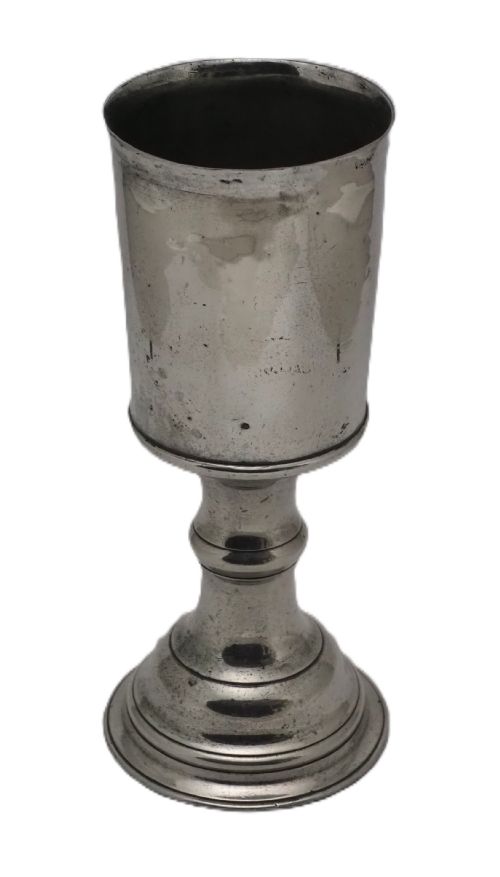
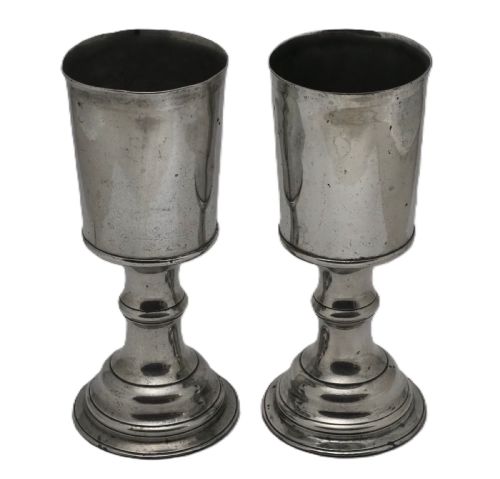


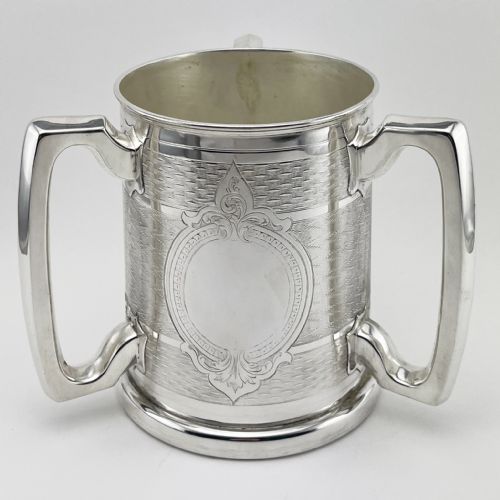


Silver Communion Cup
A silver communion cup holds the wine of the sacrament, taking the form of a chalice or goblet.
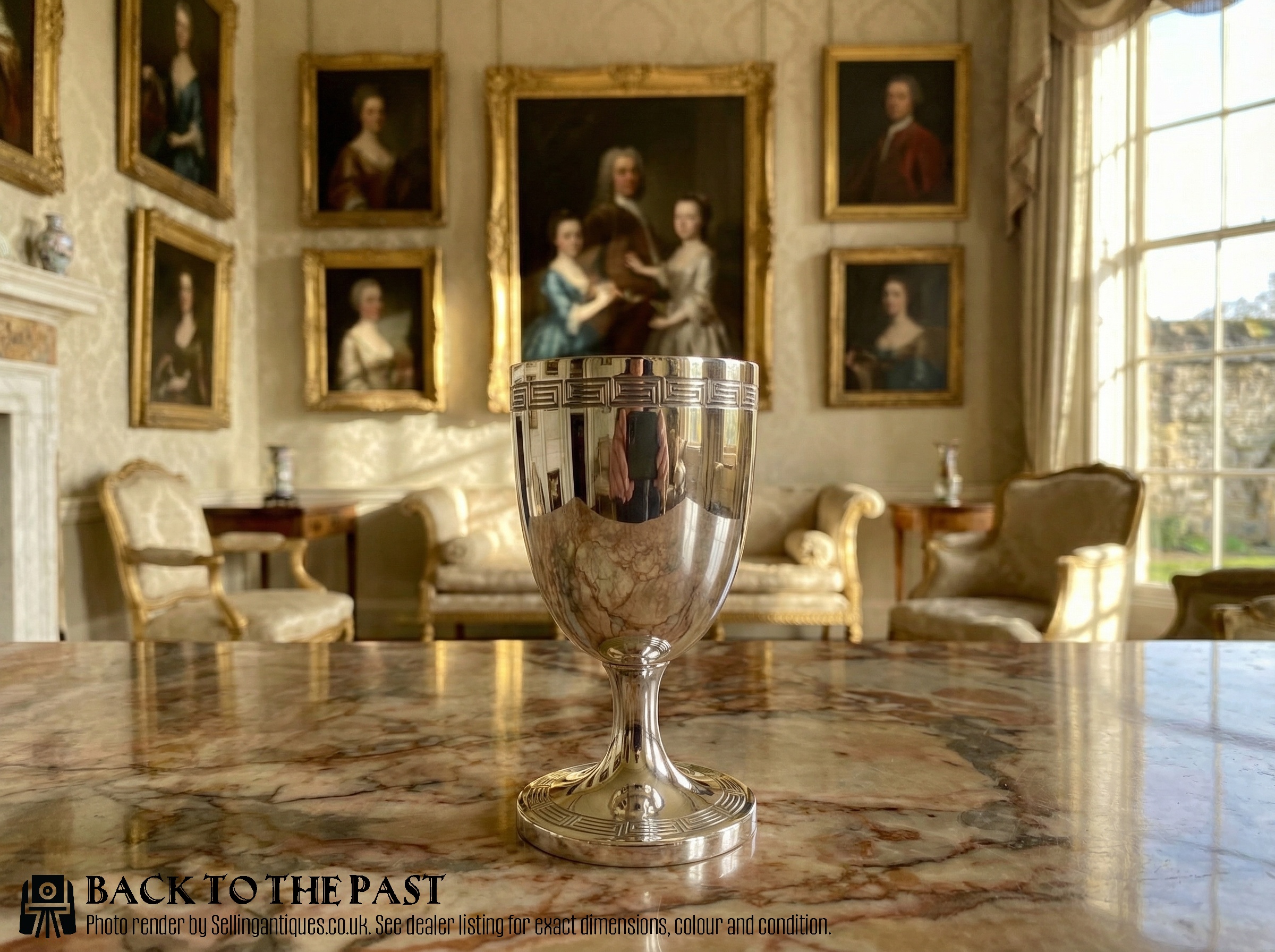
Silver Communion Cup
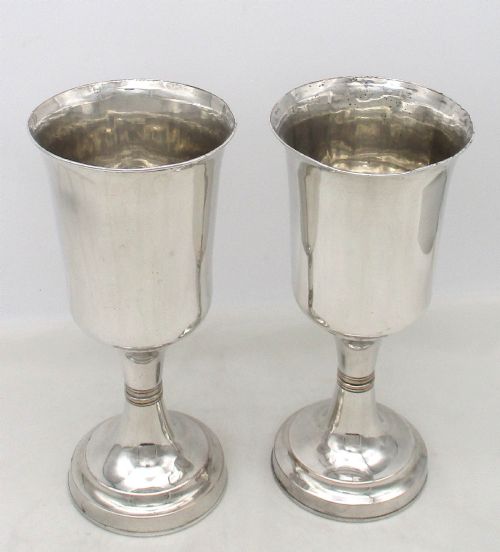
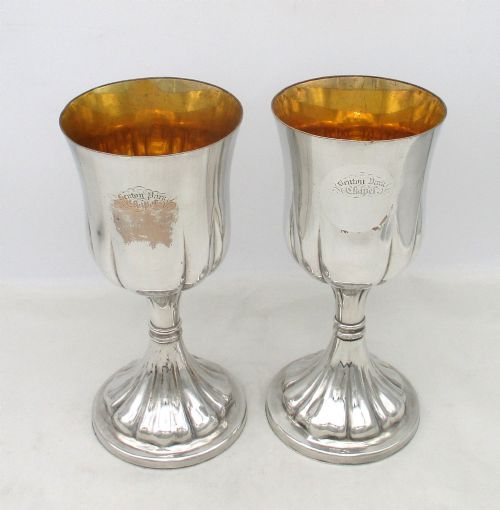
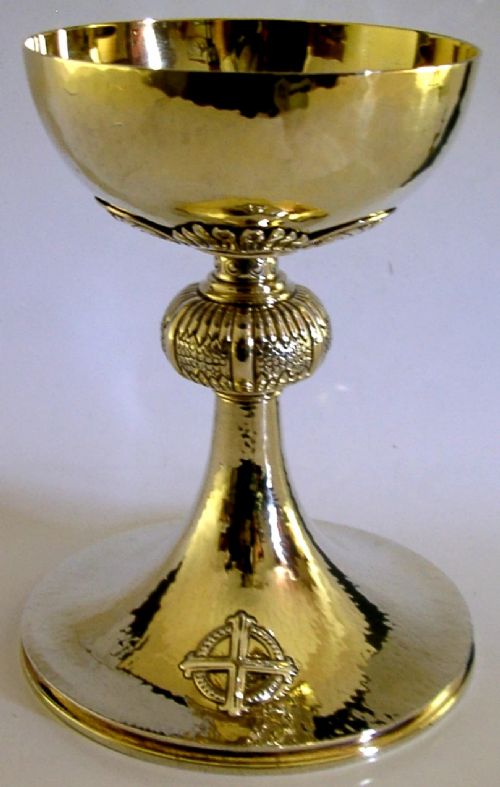
A silver communion cup is a vessel designed for sacred service, taking the form of chalices, goblets, and loving cups. These pieces appear across several centuries, from eighteenth century pewter and Georgian sterling silver to Victorian plate and mid-century ecclesiastical metalwork.
The most frequent examples on this page are nineteenth century church chalices in Old Sheffield plate and Victorian sterling silver. Alongside these liturgical vessels, domestic goblets and secular loving cups adapted for church use regularly appear.
Materials and construction
Silversmiths formed these vessels from sterling silver, silver plate, Old Sheffield plate, and pewter, often adding gold gilding or silver gilt to the interior bowl. The method of manufacture ranges from heavy hand-hammered pewter of the mid-eighteenth century to spun or soldered silver plate and cast sterling silver components.
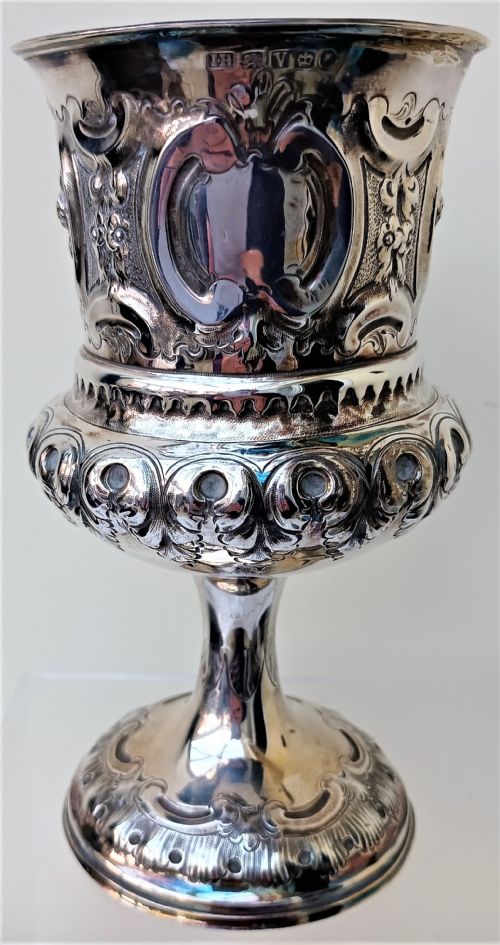
Makers utilised techniques such as bright-cut engraving, parcel gilding, and applied cast ornament to enrich the stem, knop, and domed foot of each chalice. Copper and base metals form the substrate in Old Sheffield plated pieces, visible where the silver layer wears thin over generations of handling.
Silver Communion Cup Retail Price Guide 2026
Typical asking prices for silver communion cup among the pieces listed under this phrase on Sellingantiques today, from the lower quarter to the upper quarter. They describe what is for sale here now, not the wider market.
Several military chaplains carried sterling silver communion cups into active service during the Second World War.
Evaluating quality and execution
Quality rests upon the weight of the metal, the crispness of the chasing or engraving, and the structural integrity of the joint between stem and bowl. A substantial gauge of sterling silver or thick Old Sheffield plate indicates a vessel made to endure regular ecclesiastical use.
The refinement of the design distinguishes standard parish vessels from exceptional ecclesiastical commissions. Balanced proportions in the knop and a well-formed domed foot separate master silversmith work from utilitarian church metalwork.
John Hunt and Robert Roskell·William Eaton·James Deakin and Sons·Richard Gurney·George Maudsley Jackson
The Silver Communion Cup Glossary
- Old Sheffield Plate
- A composite material made by fusing a thin sheet of sterling silver to a thicker copper ingot. This technique dates from the eighteenth and nineteenth centuries before electroplating replaced it.
- Parcel Gilt
- A method where only specific portions of an object, such as the interior of the cup bowl, receive a thin coating of gold while the rest remains silver.
- Knop
- The decorative knob or swelling situated on the stem of a chalice or goblet. It provides a secure grip for the hand during liturgical use.
- Bright-Cut Engraving
- A surface decoration technique using faceted angled cuts to create sparkling geometric or floral patterns. It appears frequently on Georgian silver pieces.
Silver Communion Cup: Frequently Asked Questions
What is a silver communion cup?
A silver communion cup is a sacred vessel used in Christian services to distribute sacramental wine. These pieces take the form of chalices, goblets, or loving cups.
They appear in materials ranging from simple pewter to heavy sterling silver with gold gilt interiors. Many examples bear hallmarks indicating their exact town and year of assay.
How do I date a silver communion cup?
Dating relies upon official assay office hallmarks stamped into the metal, which record the year letter and maker's mark. Stylistic clues such as Georgian vase-shaped bodies or Victorian Gothic revival details also help.
Pewter and Old Sheffield plated pieces often lack standard silver hallmarks, requiring comparison of form and manufacturing technique to establish an approximate decade of origin.
Can I use an antique chalice daily?
Antique chalices function perfectly well for modern use provided they receive gentle hand washing. Vessels with gold gilded interiors resist tarnishing from acidic liquids.
Silver plated items require care to preserve the remaining silver layer over the base metal. Solid sterling silver pieces tolerate regular handling and polish safely.
What is Old Sheffield plate?
Old Sheffield plate is an early fusing technique where silver and copper are heated and rolled together into sheets. This creates a durable material with the appearance of solid silver.
Under magnification or at sharp edges, a thin line of copper often shows through. This manufacturing method distinguishes pre-Victorian plated wares from later electroplated items.