

French Brass Candelabra
French brass candelabra bring genuine weight and nineteenth-century domestic illumination to a room, offering multiple candle arms in classic revival styles.
What french brass candelabra are
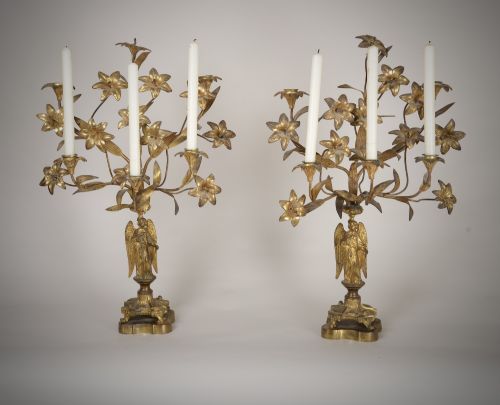
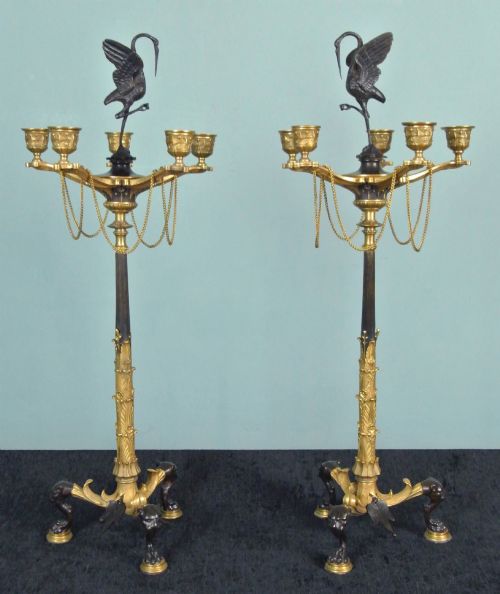
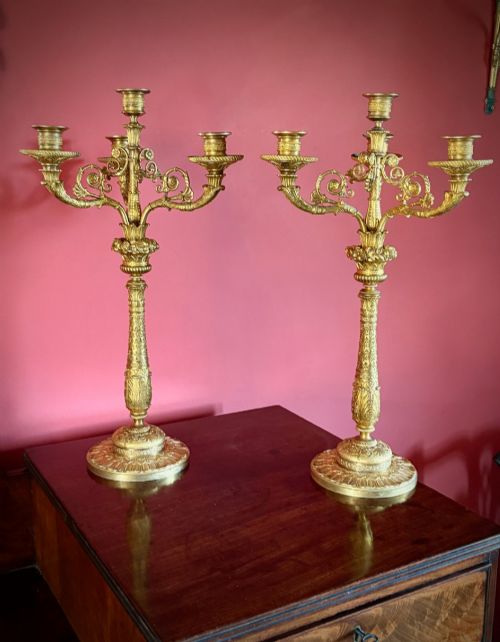
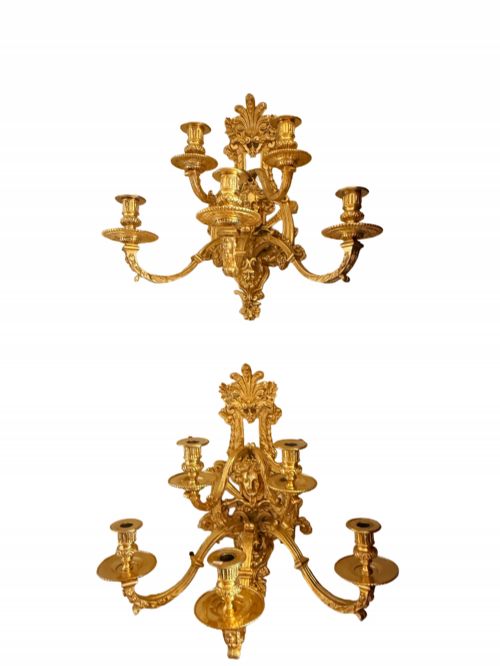
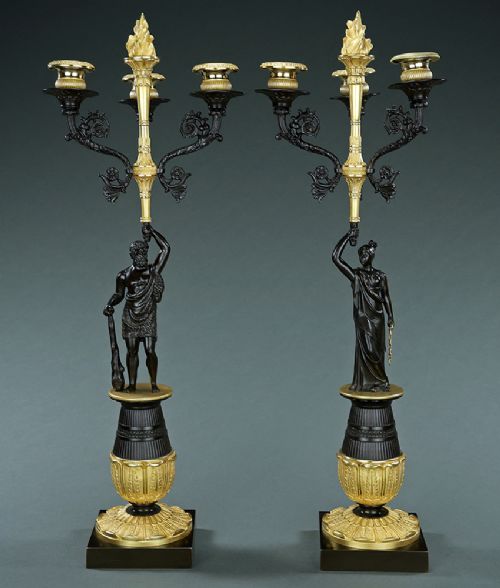
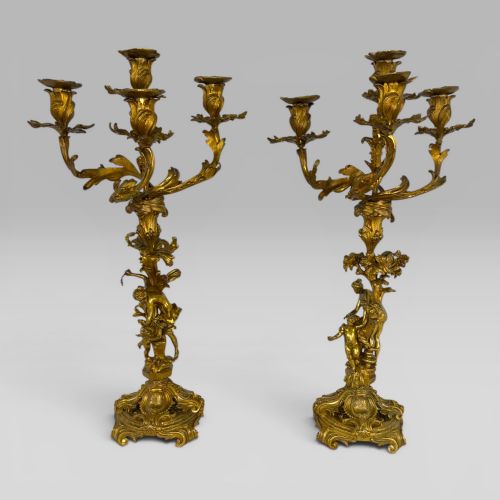
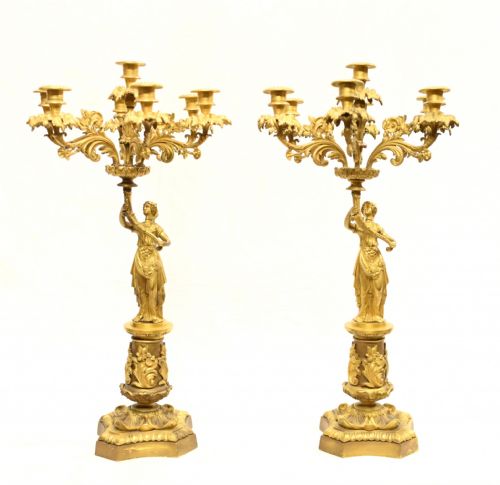
When you search for french brass candelabra, you encounter multi-armed lighting fixtures originating from the nineteenth century, including pairs designed for mantelpieces and large church examples. These objects provide branched candle holders configured with twin, triple, four, five, or six arms.
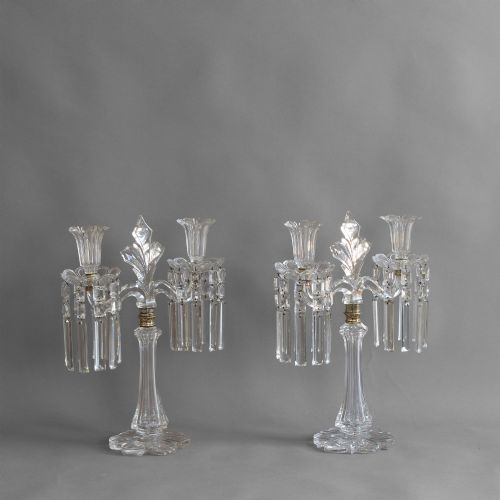
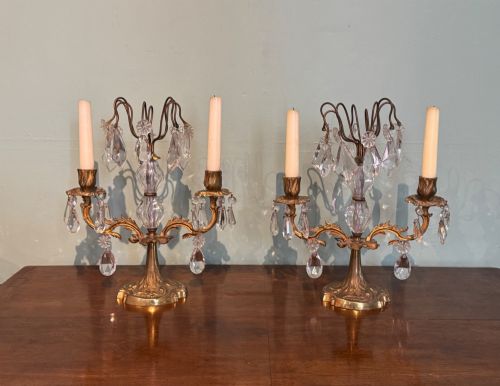
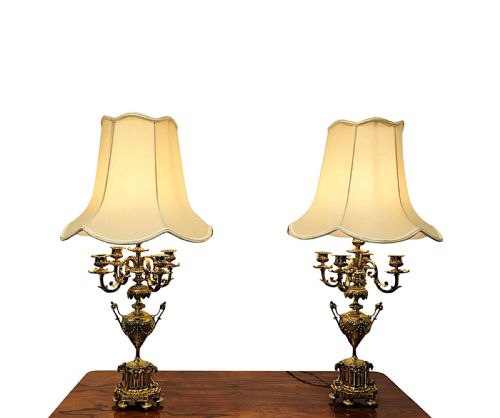
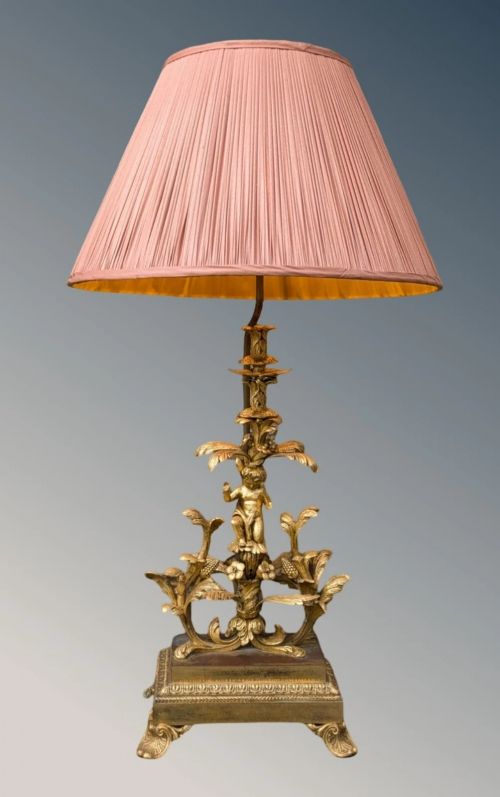
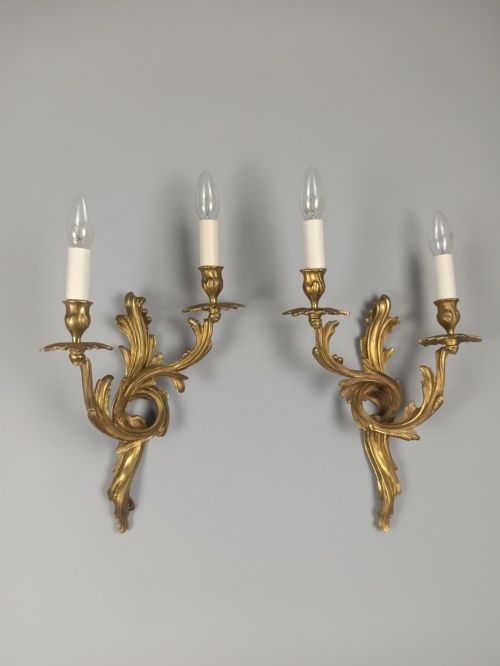
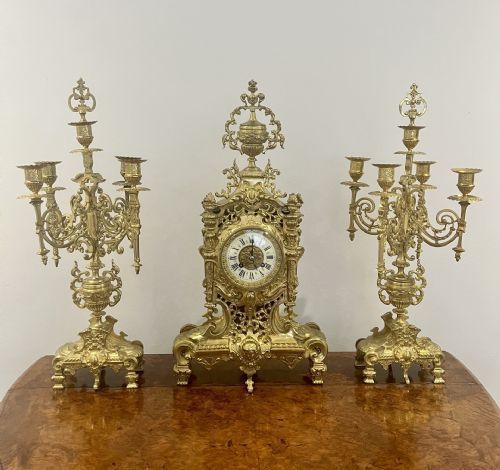
The selections on this page span several distinct revival aesthetics, featuring Louis XVI style, French Empire, and French Rococo Revival forms. Alongside traditional candle stands, the evidence includes adapted table lamps, clock garnitures, and table chandeliers fitted with crystal drops.
How they were made
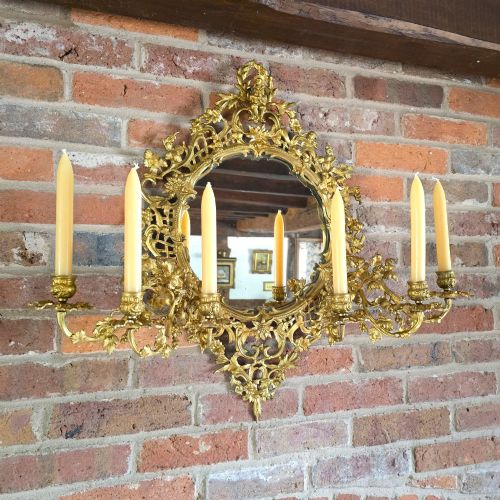
The construction relies heavily on cast brass, often complemented by gilt bronze, gilded brass, iron, and steel components. Metal casting allows for ornate scrollwork, cherub figures, and architectural detailing characteristic of nineteenth-century metalworking.
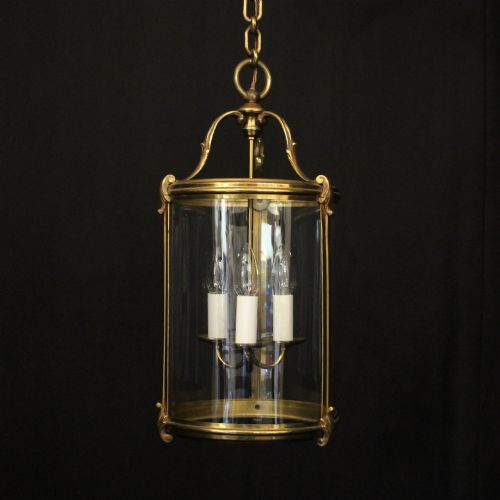
Many examples incorporate glass and crystal elements, such as hanging prisms or glass bodies, which reflect the candlelight. Later adaptations integrate electrical wiring while retaining the original brass framework.
Retail Price Guide 2026
Typical UK retail prices for french brass candelabra, calculated from the Sellingantiques database of over a million retail prices indexed since 2003. This retail price guide relies exclusively on Sellingantiques data; no external sources or auction records are used, so the figures do not describe the wider market.
Materials across the inventory include brass, gilt bronze, crystal, glass, iron, and steel.
What varies in quality
The distinction between standard production and superior examples lies in the crispness of the casting and the depth of the chasing on the brass surface. Heavier pieces with intricate, hand-finished ornamentation represent the upper tier of the range.
Quality also depends on the completeness of the original components, such as matching crystal drops, well-preserved gilding, and balanced structural proportions across all arms.
The French Brass Candelabra Glossary
- Gilt brass
- Brass that has been treated with a thin layer of gold or gold-coloured finish to enhance its decorative sheen. This finish is frequently observed on nineteenth-century table pieces.
- Clock garniture
- A set comprising a central clock flanked by matching side pieces such as candelabra or urns. These coordinated sets were designed to display together on a mantelpiece.
- Louis XVI style
- A neoclassical aesthetic characterised by straight lines, symmetry, and classical motifs derived from ancient Rome and Greece. It appears frequently in nineteenth-century brass lighting.
- Rococo revival
- A nineteenth-century design movement favouring asymmetrical scrollwork, naturalistic plant forms, and elaborate C-scrolls. This style dominates many ornate candelabra arms and bases.
Frequently Asked Questions
Are these candelabra wired for electricity?
Some pieces retain their original function for candles, while others have been adapted as table lamps with wiring.
Listings specify whether items remain purely for candle use or have undergone electrical rewiring and safety testing.
How do I identify the period?
Dating relies on stylistic markers, construction methods, and material combinations associated with nineteenth-century French manufacturing.
Specific dates such as eighteen-eighty or broader periods like the nineteenth century appear where documented by the dealer.
What is a clock garniture set?
A clock garniture is a matched decorative ensemble designed for display together on a mantel or sideboard.
The arrangement typically pairs a central timepiece with matching candelabra sharing identical brass casting styles.
How should I clean antique brass?
Antique brass benefits from gentle dusting and minimal intervention to preserve the aged surface patina developed over time.
Aggressive metal polishes can strip away historical finishes and diminish the character of nineteenth-century castings.