
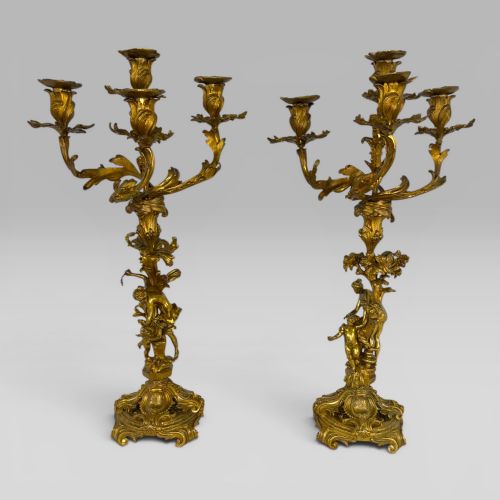
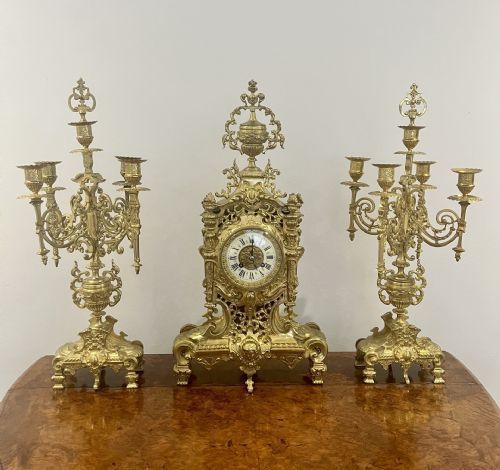
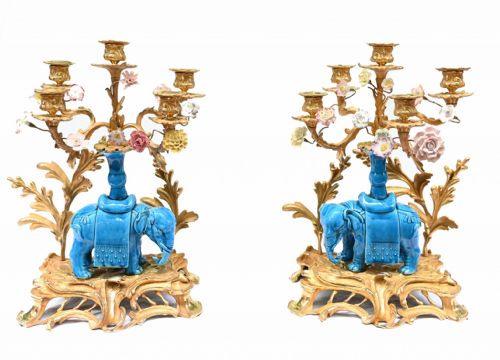

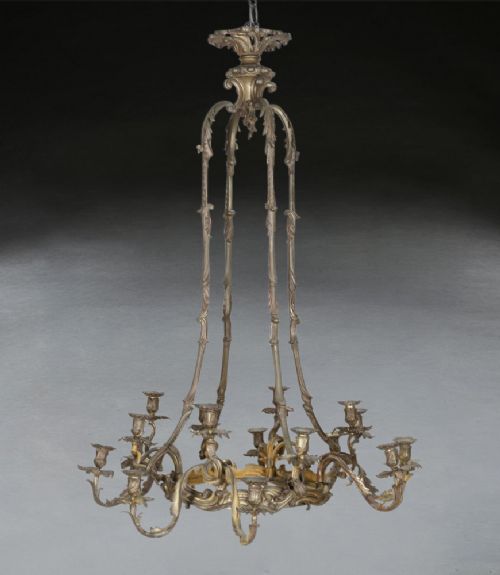


Rococo Style Candelabra
Rococo style candelabra bring elaborate, scrolling bronze and delicate porcelain figures together to light dining tables and mantelpieces with French flair.
Rococo Style Candelabra
The objects take many forms across the selection, ranging from standard table candelabra and figural candle holders to matched clock garnitures. Pieces often incorporate decorative motifs such as putti, cherubs, and birds mounted upon marble bases or floral porcelain columns.
Origins stretch across nineteenth-century workshops in France, Germany, and Britain, alongside later revivals from the early twentieth century. Common materials span brass, silver plate, and crystal, frequently paired together within single decorative objects.
How They Were Made
Metal components rely on traditional casting techniques using bronze, brass, or gilt metal, often finished with mercury gilding known as ormolu. These metal frames are chased and sculpted to create scrolling asymmetrical plant motifs characteristic of the revival period.
Ceramic elements utilise fired porcelain bodies sourced from factories like Meissen, Dresden, and Sitzendorf, hand-painted with floral details and allegorical figures. Artisans then mount these porcelain figures and vases directly into metal drip pans and branching candle arms.
Materials range from gilt bronze and marble to Imari porcelain and hand-cut crystal.
What Varies in Quality
The refinement of the chasing work on the metal mounts dictates the distinction between standard and superior pieces. Sharper surface detail in the bronze or ormolu scrolling indicates skilled hand-tooling after the casting process.
Smith & Sissons & Co·Sitzendorf·Helena Wolfsohn·Meissen·Elkington
The Rococo Style Candelabra Glossary
- Ormolu
- A gilded bronze finish achieved through an amalgam of mercury and gold applied to a cast metal base. This technique creates a rich, metallic lustre typical of luxury French decorative metalwork.
- Garniture
- A set of three matching mantel ornaments, usually consisting of a central clock flanked by matching candelabra or vases. These decorative sets dominated nineteenth-century interior displays.
- Putti
- Representations of chubby, winged male infants used as sculptural supports or decorative accents in European art. They appear frequently climbing among the branches of candelabra and wall lights.
- Candelabra
- A branched candlestick designed to hold multiple candles simultaneously across several arms. Larger varieties can feature up to sixteen individual light points.
- Chasing
- The manual method of refining a metal casting by hammering and punching surface details with fine steel tools. Skilled chasing adds crisp texture to scrolling leaves and drapery.
Rococo Style Candelabra: Frequently Asked Questions
What is a rococo style candelabra?
A rococo style candelabra is a branched candle holder featuring ornate, asymmetrical scrolls and naturalistic motifs derived from eighteenth-century French design.
These pieces typically branch into three or more light fittings and often incorporate cast bronze, ormolu, or painted porcelain figures.
How were candelabra used?
Candelabra provided primary illumination for evening dining tables, drawing rooms, and mantelpieces before the widespread adoption of gas and electric lighting.
Pairs often served as symmetrical focal points on sideboards or formed part of larger decorative clock garniture sets.
How do I clean my candelabra?
Cleaning requires gentle dusting with a soft, dry brush to protect delicate gilt surfaces and fragile porcelain elements from accidental damage.
Avoid chemical polishes and abrasive cloths, as these substances strip historical gold finishes and damage soft metal patinas.
Are these pieces wired for electricity?
Many surviving examples retain their original candle sockets, though some period items have been converted into table lamps.
Conversions vary from reversible alterations to permanent fittings drilled through the original metal or ceramic body.