
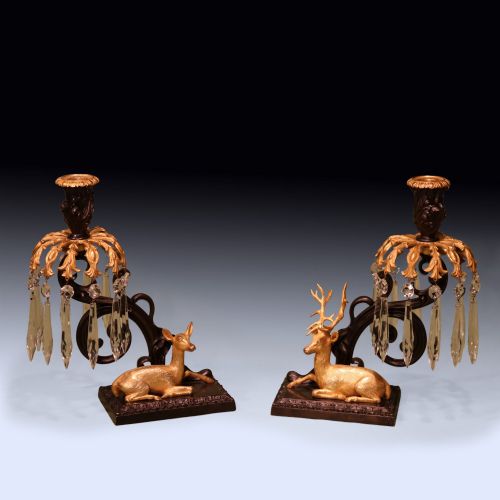
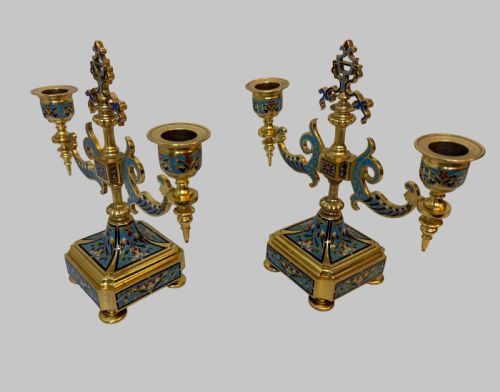


Gilded Bronze Candlesticks
Gilded bronze candlesticks are sculptural pieces of metalwork that bring warmth and classical elegance to any interior.
What these pieces are
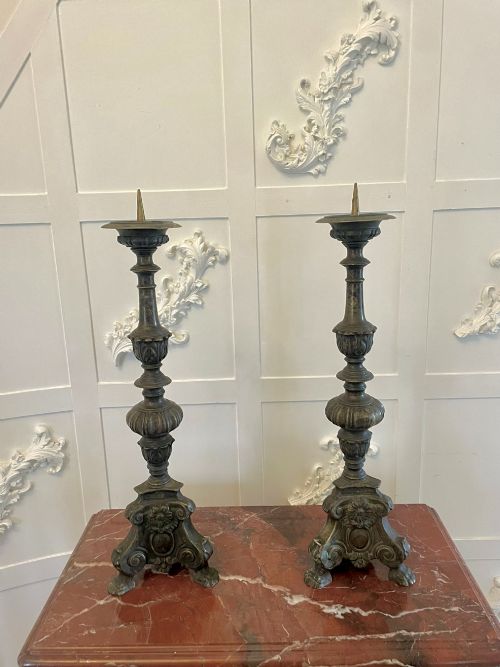
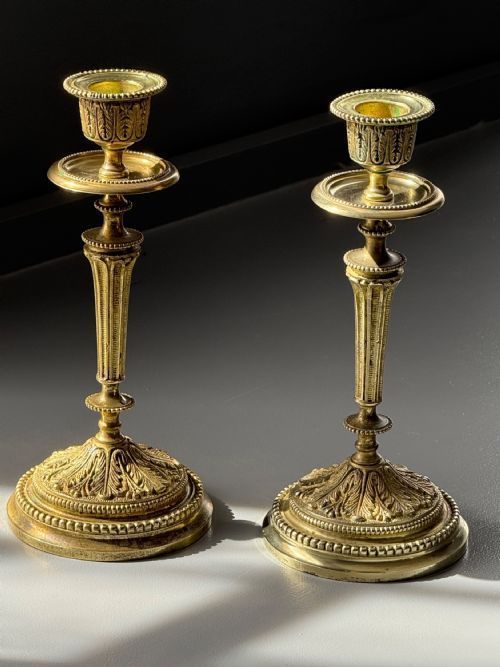
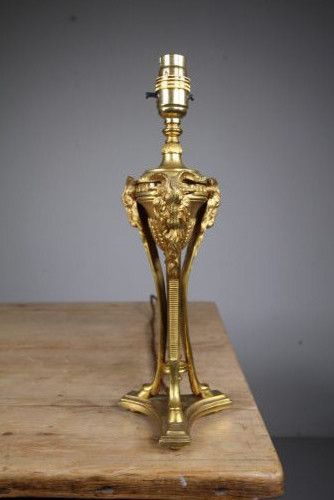
When you search for gilded bronze candlesticks, you encounter heavy metal lighting designed primarily in France and Britain during the eighteenth and nineteenth centuries. The selection ranges from nineteenth-century revivals back to earlier eighteenth-century work, featuring forms that illuminate formal rooms with reflected candlelight.
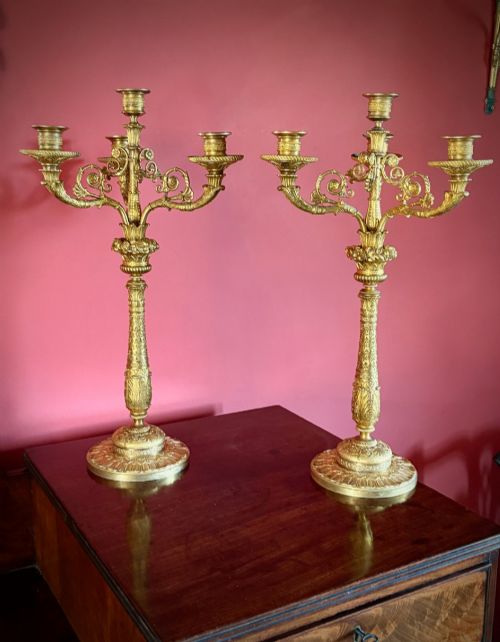
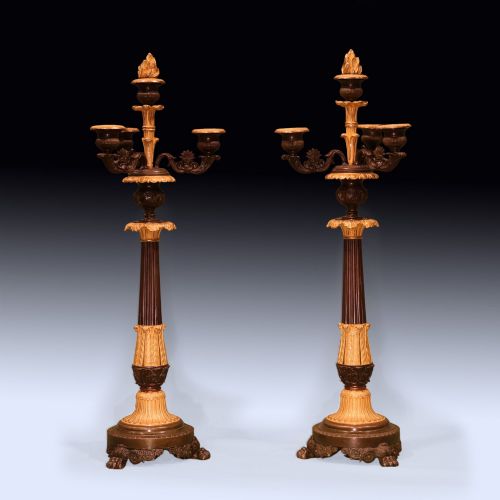
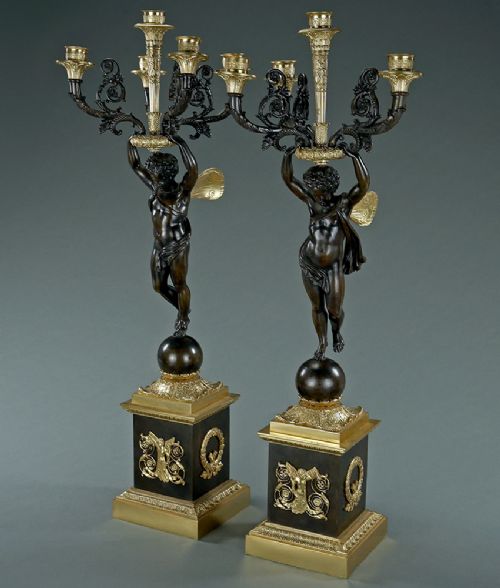
Most examples appearing here are matched pairs, often configured as candlesticks or larger multi-branched candelabra. Styles span from French Empire and Charles X to Rococo and Regence, reflecting the changing tastes of European interiors.
You also encounter figural models cast as knights, dolphins, or stags, which incorporate storytelling elements alongside functional illumination. These sculptural variations demonstrate how makers integrated decorative motifs into everyday household metalwork.
How they were made
Foundries produced these items using traditional metal-casting techniques, working with bronze, cast bronze, and patinated bronze. Artisans then applied fire-gilding or ormolu finishes to create the distinctive golden surfaces characteristic of the best examples.
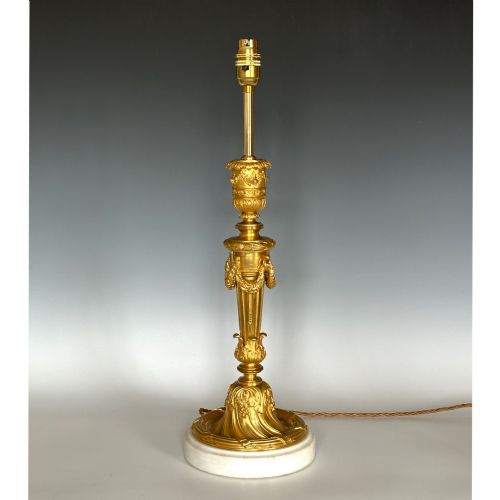
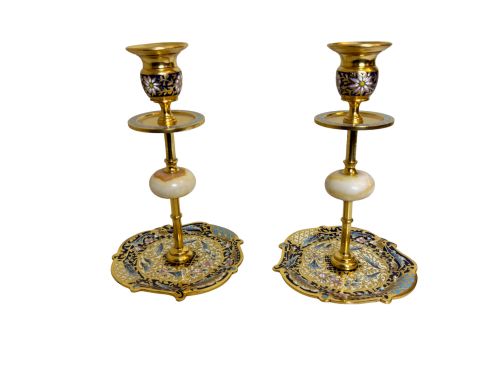
Many designs combine gilded bronze with contrasting materials such as marble bases or glass lustres. This mixed-media approach enhanced the visual richness of the objects by playing polished metal against cool stone and sparkling glass.
Retail Price Guide 2026
Typical UK retail prices for gilded bronze candlesticks, calculated from the Sellingantiques database of over a million retail prices indexed since 2003. This retail price guide relies exclusively on Sellingantiques data; no external sources or auction records are used, so the figures do not describe the wider market.
The listings here feature nineteenth-century pieces alongside examples dated to seventeen-fifty, spanning multiple French and British decorative movements.
What varies in quality
The durability and depth of the gilding also dictate the worth of an object. Intact ormolu surfaces that retain their original varied textures show superior craftsmanship compared to thin or later re-plated finishes.
Galle
The Gilded Bronze Candlesticks Glossary
- Ormolu
- A technique of applying finely ground high-carat gold to a bronze object using a mercury amalgamation process. This method produces a durable, rich golden finish that resists tarnishing over centuries.
- Patinated bronze
- Bronze that has been chemically treated to alter its surface colour, usually resulting in dark brown or greenish tones. It often provides a stark contrast to bright gilded sections.
- Candelabra
- A branched candlestick holding multiple lights on separate arms. These larger fixtures served as centrepieces on dining tables and mantlepieces.
- Gilt bronze
- An alternative term for ormolu or gilded bronze metalwork. It describes any bronze object enhanced with a gold leaf or mercury gilt coating.
Frequently Asked Questions
What is gilded bronze?
Gilded bronze is a metal object cast from copper and tin alloys, then coated in a thin layer of gold. The gold is typically applied using an amalgamation method known as ormolu.
This technique protects the base metal from oxidation while giving the object a brilliant, permanent golden lustre that reflects candlelight effectively.
Were they used daily?
In their original historic settings, these pieces illuminated wealthy drawing rooms, dining tables, and grand hallways. They functioned both as practical lighting before the invention of electricity and as status symbols.
Makers designed them to catch the flickering glow of wax candles, enhancing the atmosphere of formal evening gatherings.
How are periods told apart?
Periods are identified through stylistic cues, casting techniques, and design motifs. For instance, French Empire pieces feature strict neoclassical geometry and military symbols, while Rococo revivals display asymmetric curves and naturalistic scrollwork.
Examining the construction methods and the quality of the bronze chasing helps confirm the era of manufacture.