
Gold Ormolu Candlesticks
Gold ormolu candlesticks bring radiant warmth to a room through finely chased metalwork, offering striking decorative presence from the eighteenth and nineteenth centuries.
Gold Ormolu Candlesticks
Gold ormolu candlesticks are decorative lighting supports fashioned primarily from gilt bronze, merging functional candleholders with sculptural artistry. When searching for gold ormolu candlesticks, buyers encounter pieces spanning eighteenth-century French Regence and Louis XVI designs through to nineteenth-century Victorian and Napoleon III revivals.
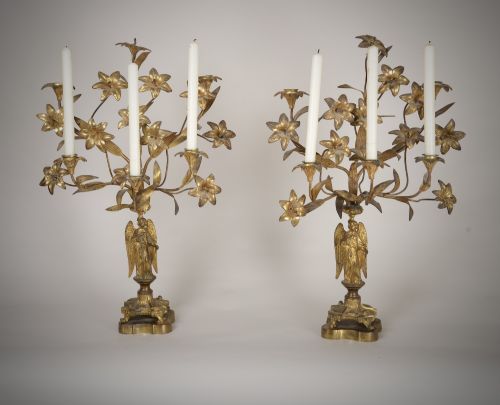
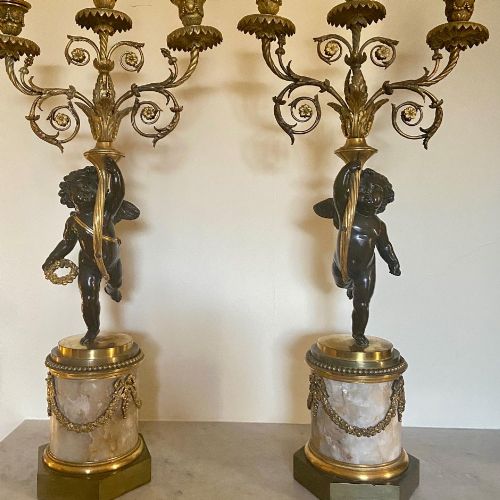
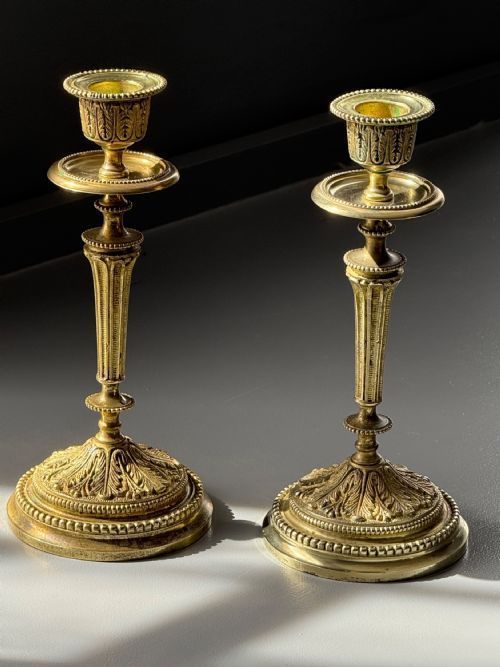
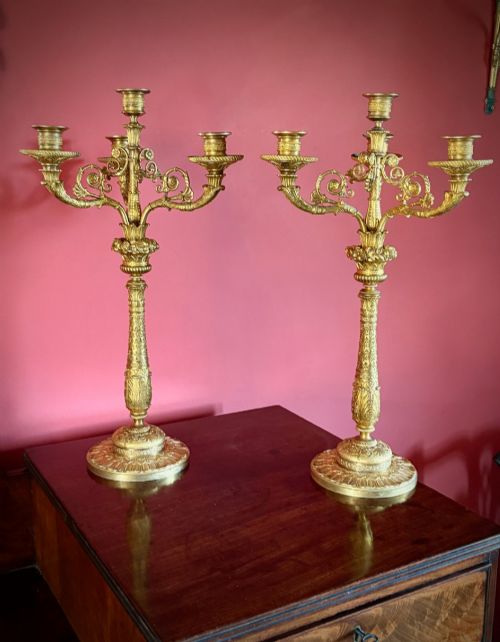
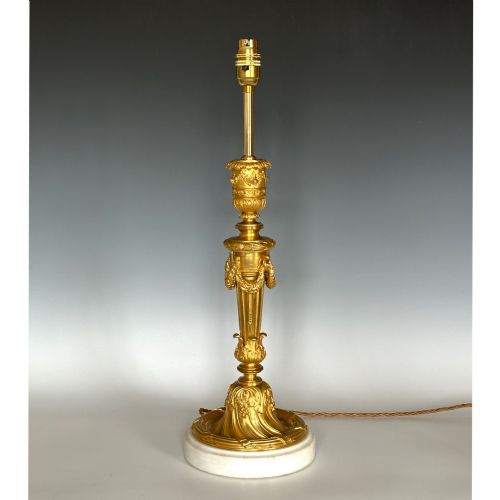
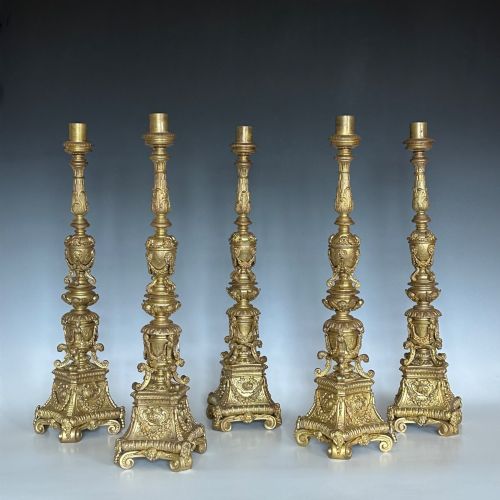
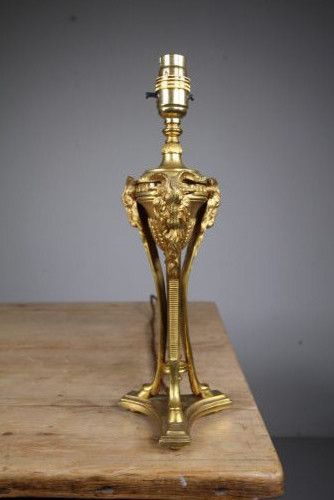
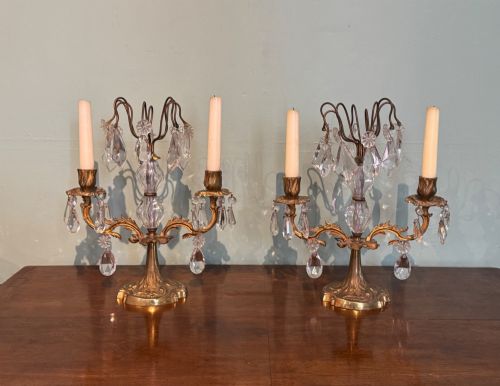
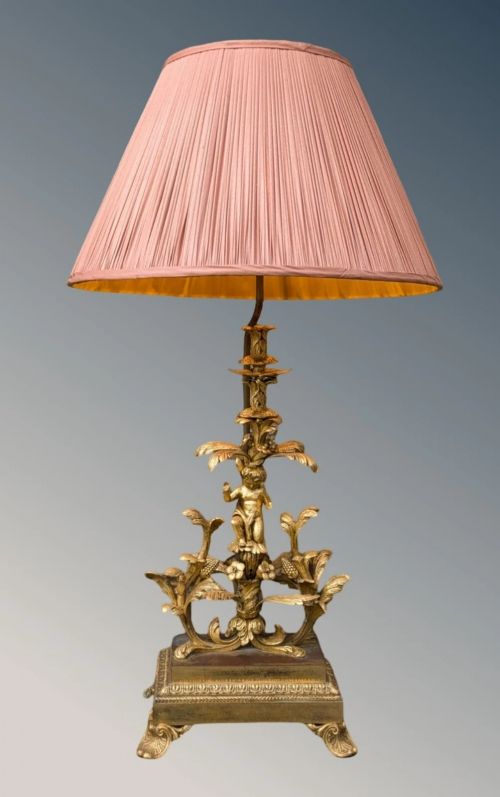
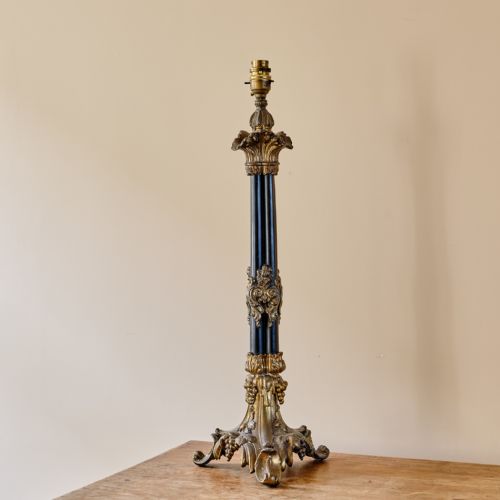
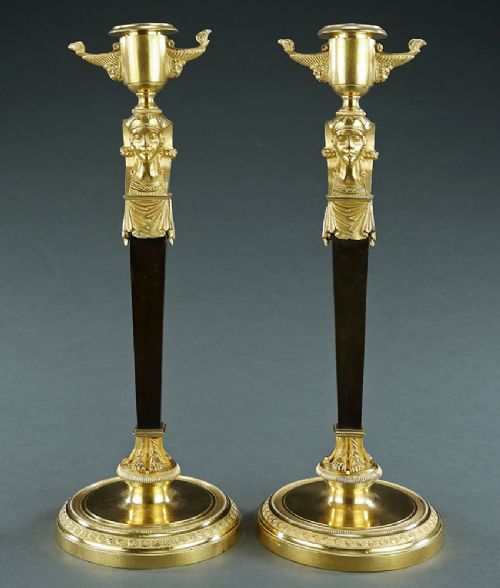
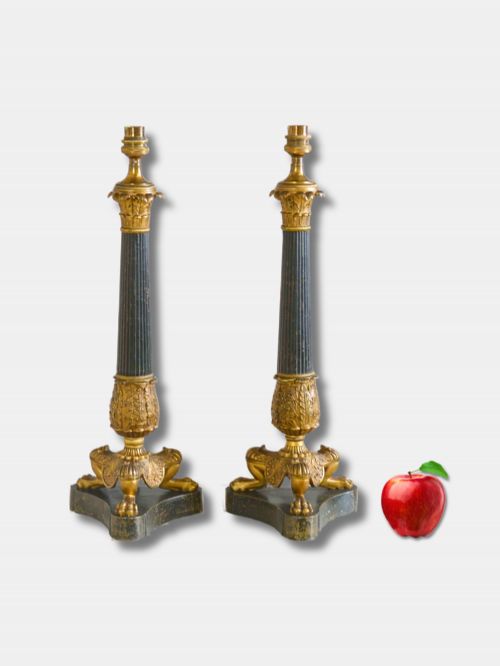
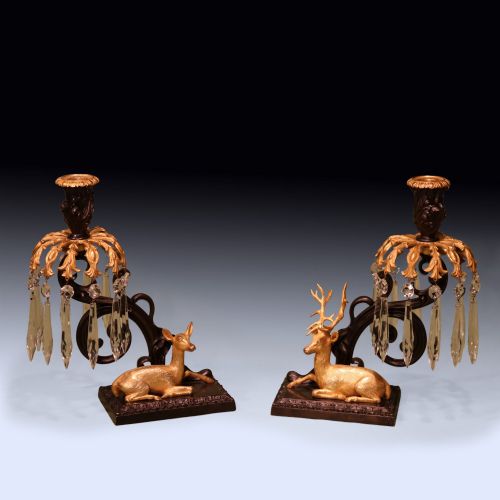
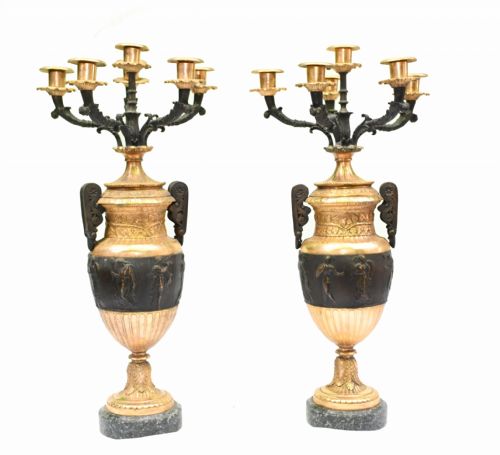
The selections on this page heavily feature French and English production, often taking the form of paired candelabra, single desk sticks, or converted table lamps. Forms range from simple classical columns to elaborate figurative compositions involving putti, stags, and mythological motifs.
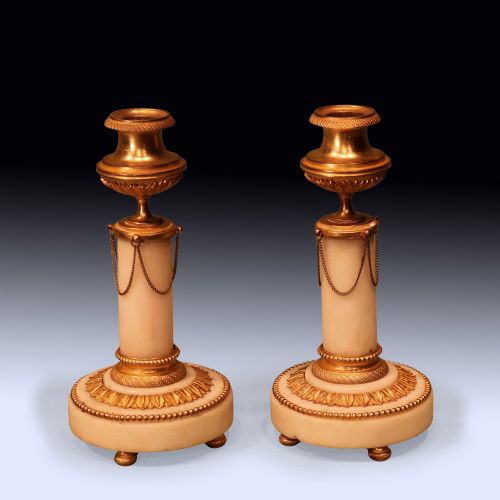
Most examples originate from the nineteenth century, reflecting a strong Victorian and Continental appetite for revivalist styles such as French Empire and Rococo. Buyers find both standalone candlesticks and multi-branch candelabra incorporating decorative additions like marble bases and cut glass.
Materials and Construction
Makers fashioned these pieces predominantly from cast bronze, brass, or gilt metal, applying mercury gilding or modern electroplating to achieve the characteristic rich surface sheen. The technique of ormolu involves adhering a fine layer of gold amalgam to a bronze base before firing, producing a durable and lustrous finish.
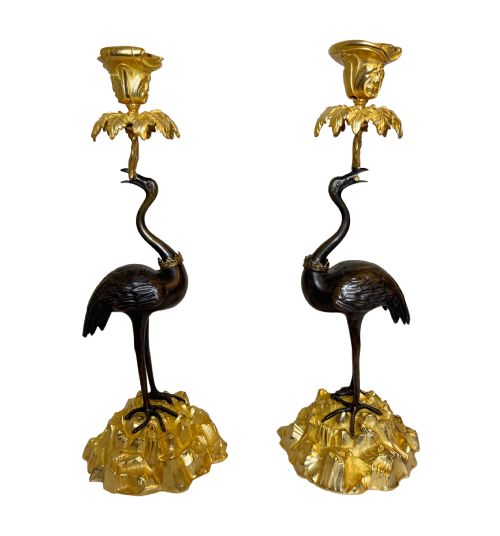
Many items combine ormolu with contrasting materials such as patinated bronze, white marble plinths, fluorspar, and glass lustres to enhance visual depth. Structural components were typically cast in sections, chased with fine detail by hand, and assembled using threaded pins or screws.
Several nineteenth-century pairs incorporate charming animal motifs, featuring stags, does, flamingos, and watchful lions' paw feet.
Assessing Craftsmanship and Detail
The weight of the casting and the integration of subsidiary materials like marble or patinated bronze distinguish finer workshops from mass-produced alternatives. Pieces that retain their original mercury gilding display a warm, buttery tone that differs visibly from later, brighter chemical treatments.
Francois Redmond·Thomas Hope·Galle
The Gold Ormolu Candlesticks Glossary
- Ormolu
- Gilded bronze, derived from the French term ouemolu meaning ground gold. It describes objects decorated with applied gold leaf or mercury gilt bronze.
- Candelabra
- A branched candlestick holding multiple candles or lights. These often feature central shafts surrounded by removable arms.
- Chasing
- The art of refining cast metal by hand using punches and hammers. This technique restores texture and adds fine detail after casting.
- Patinated bronze
- Bronze that has been chemically treated to alter its surface colour, ranging from deep brown to dark green. It provides a stark contrast against bright ormolu.
- Grand Tour
- Eighteenth and nineteenth-century travels undertaken by European gentry. Souvenirs collected on these journeys frequently included classical bronze artefacts.
Gold Ormolu Candlesticks: Frequently Asked Questions
Were these originally wired for electricity?
None of these pieces were made for electricity during their original period of creation. Candlesticks and candelabra were strictly designed to hold wax candles.
Many surviving examples have been converted into table lamps at a later date. Collectors often look for conversions that preserve the original structure without drilling destructive holes.
How do I tell an 18th century piece from a 19th century copy?
Eighteenth-century items generally show heavier, hand-chased bronze castings with softer, mercury-gilded surfaces that wear differently over time. Nineteenth-century revival pieces often utilise sharper machine finishing and brighter, more uniform gilding.
Examining the construction joints, screw types, and mounting pins also helps determine age. Earlier pieces rely on hand-cut threads and pinned assemblies rather than modern industrial fasteners.
What is the difference between a candlestick and a candelabrum?
A candlestick is a single-unit holder designed to support one candle at a time. They usually feature a base, a stem, and a nozzle.
A candelabrum is a larger branched fixture that holds multiple candles simultaneously from a central stem. Many antique candelabra also feature removable branches, allowing them to function as single candlesticks.