


French Gilt Candleholders
French gilt candleholders bring nineteenth-century candlelight, cast bronze, and gilded surfaces together in decorative pairs designed to anchor a mantelpiece or side table.
French Gilt Candleholders
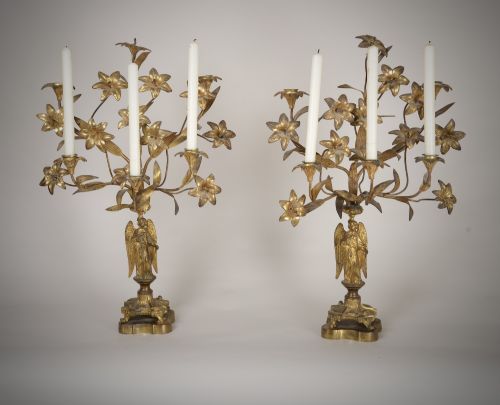
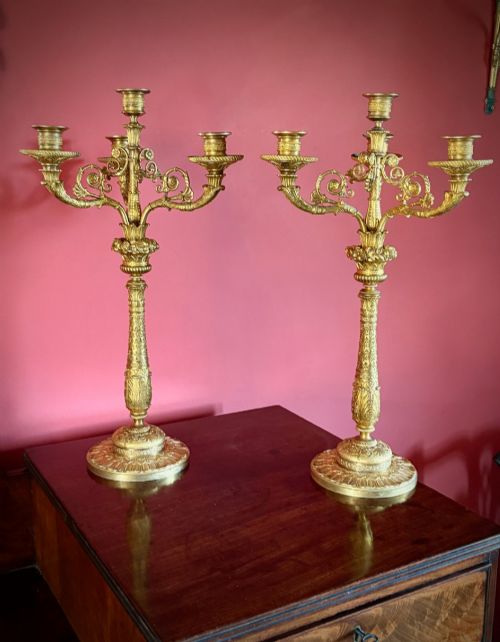
French gilt candleholders comprise nineteenth-century candlesticks, multi-branched candelabra, and wall lights cast in bronze, brass, and gilt metal. The listings here showcase pairs originating from periods spanning the Victorian era through the late nineteenth century.
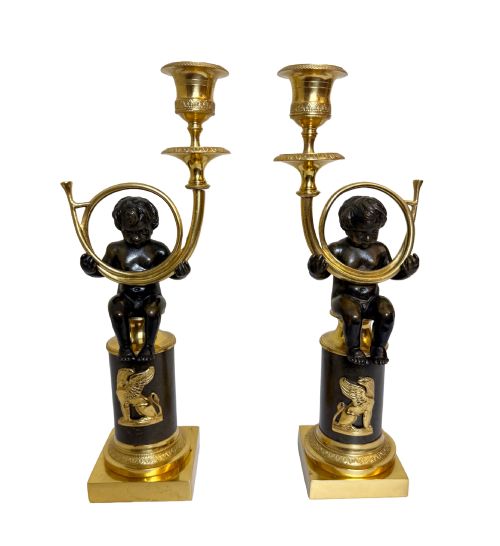
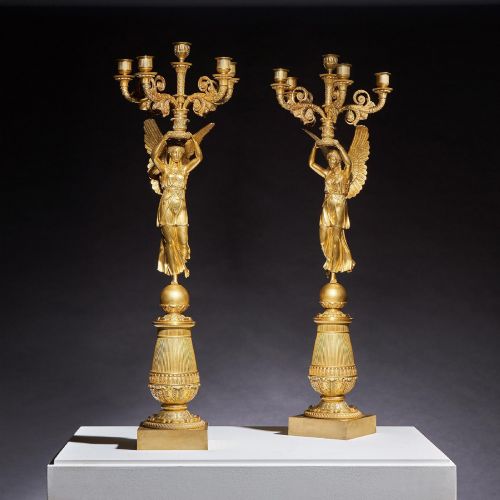
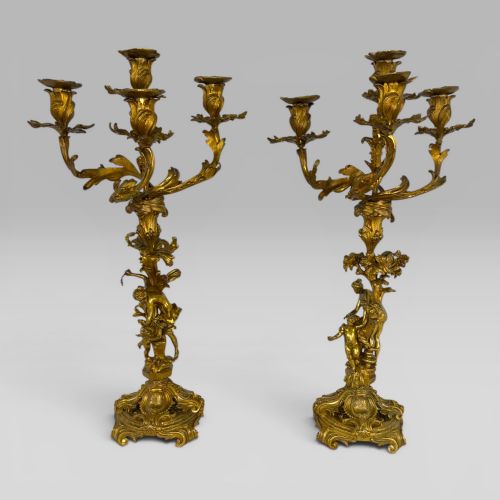
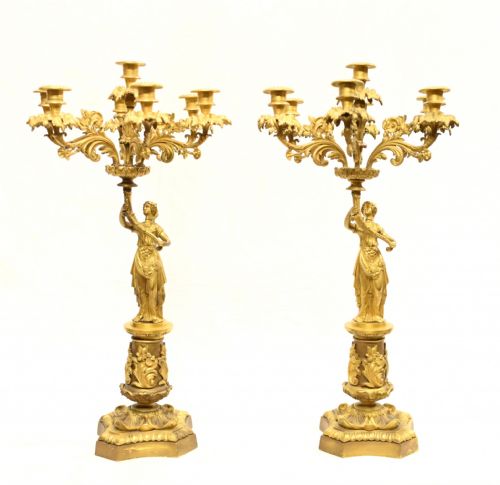
Designs on this page follow historical styles including Louis XVI, Empire, Rococo Revival, and Gothic revival. Buyers encounter figural motifs featuring cherubs, maidens, birds, dolphins, and caryatids supporting candle sockets.
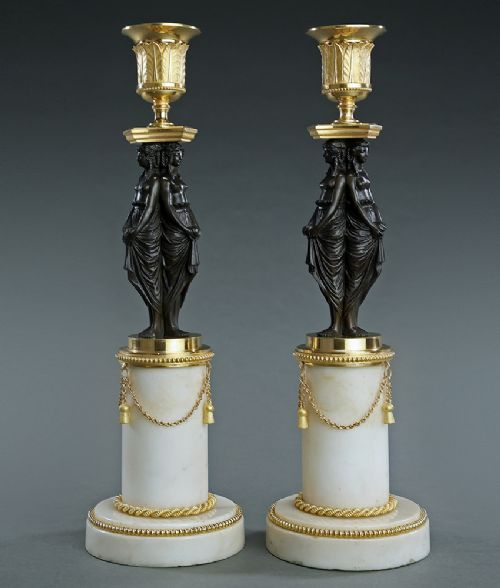
Many examples combine gilded metal with contrasting materials such as white marble, porphyry, and ceramic vases. These decorative objects range from single-socket sticks to grand five-light candelabra.
Materials and Techniques
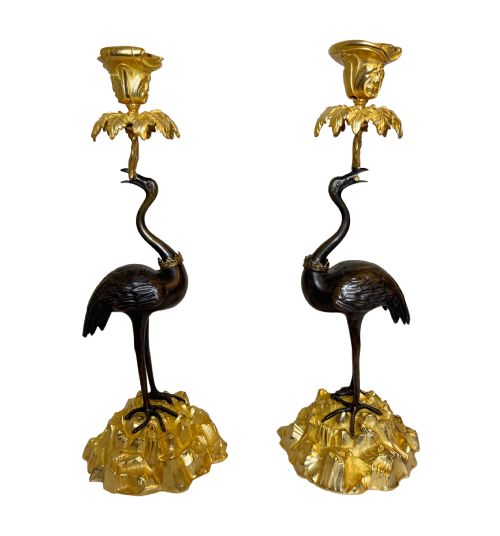
Makers utilised bronze and brass, casting the metal components through traditional foundry methods before applying heavy fire gilding or ormolu finishes. Patinated dark bronze often forms a deliberate contrast against the bright burnished gilt highlights.
Stonework bases feature carved white marble or porphyry, turned to support heavy metal stems and figures. Porcelain elements, including Samson ceramics and Chinese vases, are integrated directly into gilded metal mounts.
Bronze storks and flamingos occasionally hold up the candle sockets.
Evaluating the Pieces
Quality rests upon the crispness of the original metal chasing and the depth of the mercury gilding. Finer pieces retain sharp details in hair, drapery, and acanthus leaf carving, whereas lesser examples present softer contours from worn moulds.
The integration of mixed media dictates the overall execution, with superior pairings uniting solid marble plinths, hand-chased bronze figures, and secure structural assembly without visible solder repairs.
Pierre Philippe Thomire·Claude Clodion
The French Gilt Candleholders Glossary
- Ormolu
- Gilded bronze produced by applying a mercury and gold amalgam to a bronze base and heating it until the mercury vaporises. This historical technique yields a durable, deep golden lustre found on nineteenth-century pieces.
- Candelabra
- A branched lighting fixture designed to hold multiple candles simultaneously. These pieces often feature removable central finials and arms radiating from a central stem.
- Patinated Bronze
- Metal treated with chemicals to darken the surface, creating a contrasting brown or black tone. Makers frequently combined this dark finish with bright gilt bronze for visual depth.
- Grand Tour
- Souvenirs and decorative art purchased by travellers in Europe during the nineteenth century. These objects typically reflect classical antiquity and Italian craftsmanship.
- Caryatid
- A sculpted human figure acting as an architectural support column. In these pieces, female figures frequently form the main stem holding the candle sockets.
French Gilt Candleholders: Frequently Asked Questions
Were these pieces made for actual use?
Nineteenth-century workshops produced these decorative objects to burn wax tapers during evening entertaining in grand salons and dining rooms. Many surviving examples retain residue inside the sockets from historical candle use.
Today, collectors primarily display them as decorative mantelpiece ornaments or table centrepieces rather than daily lighting sources. Their solid bronze and marble construction easily supports standard dinner candles if utilised.
How do I tell Louis XVI style from Empire style?
Louis XVI style pieces display restrained neoclassical elements, featuring straight fluted columns, ribbon twists, and delicate floral swags. The aesthetic draws inspiration from ancient Roman ruins with a lighter, more symmetrical proportion.
Empire style items project heavier military and imperial themes, incorporating sphinxes, laurel wreaths, winged figures, and deep patinated bronze contrasts. The forms feel grander and more imposing, reflecting the Napoleonic era.
Why do some candelabra have removable branches?
Many nineteenth-century designs feature modular construction where the branch arms lift out of the central socket. This engineering allowed the owner to convert a multi-light candelabrum into a simple single candlestick.
Workshop fabrication utilised threaded screws and drop-in sockets to secure the heavy arms during display. This flexibility made the objects adaptable for different table settings and formal occasions.