

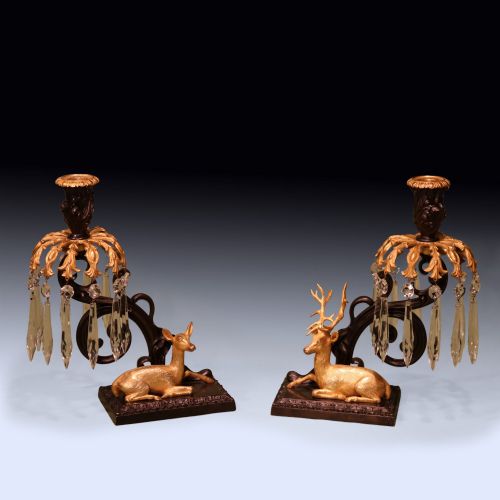

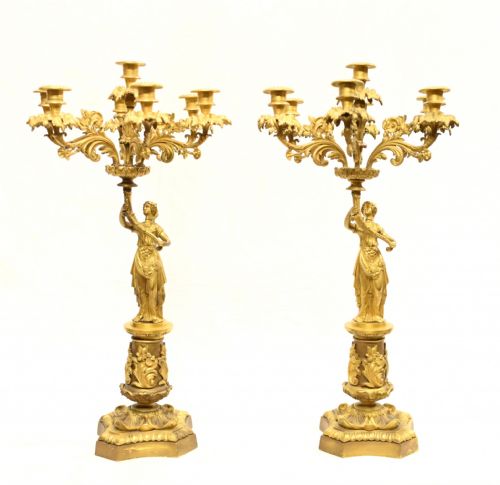
19th Century Ormolu Candelabra
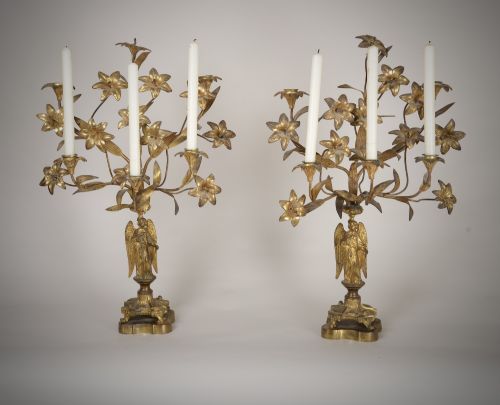
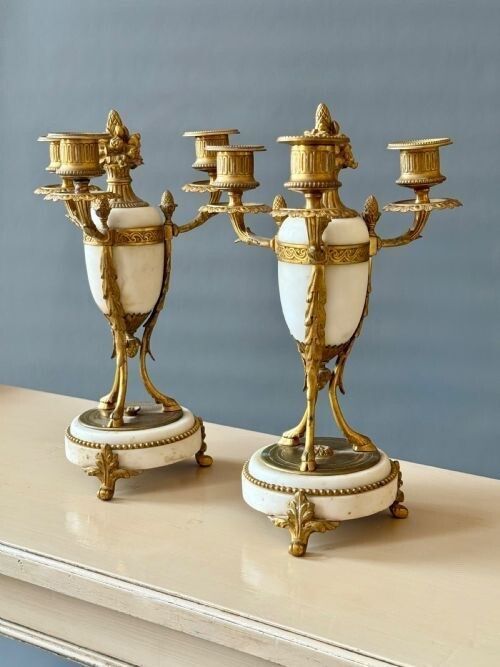
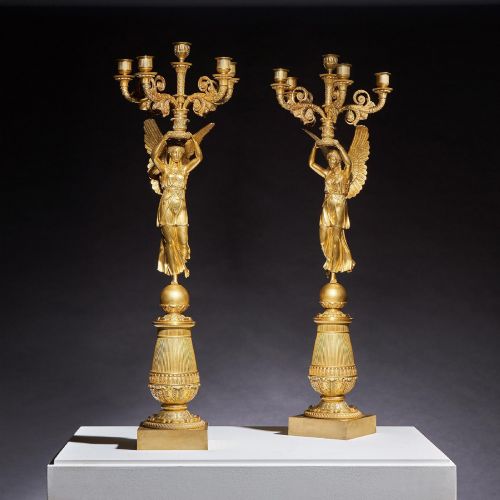
These 19th century ormolu candelabra bring the opulent warmth of gilt metal and classical bronze into a room.

19th Century Ormolu Candelabra
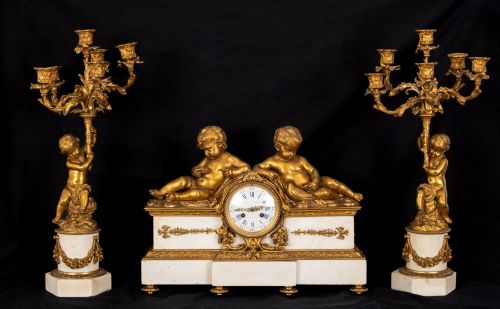
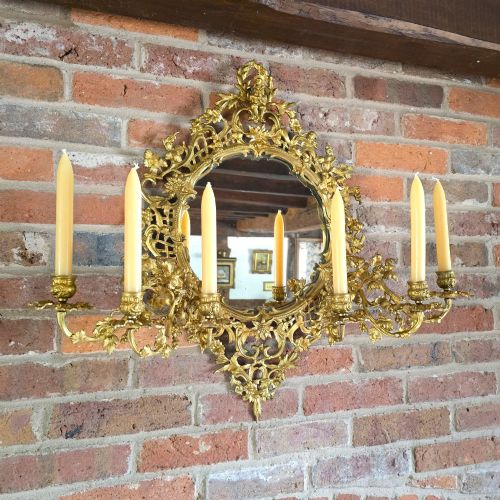
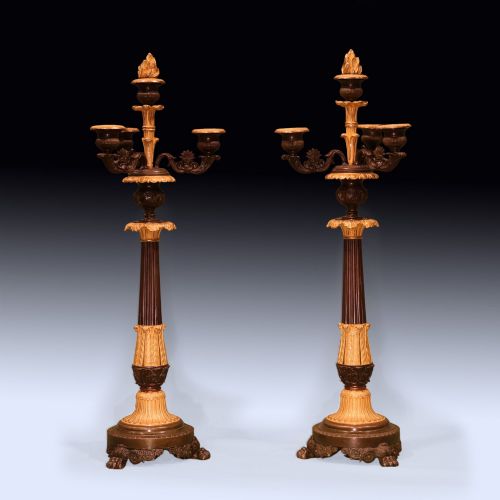
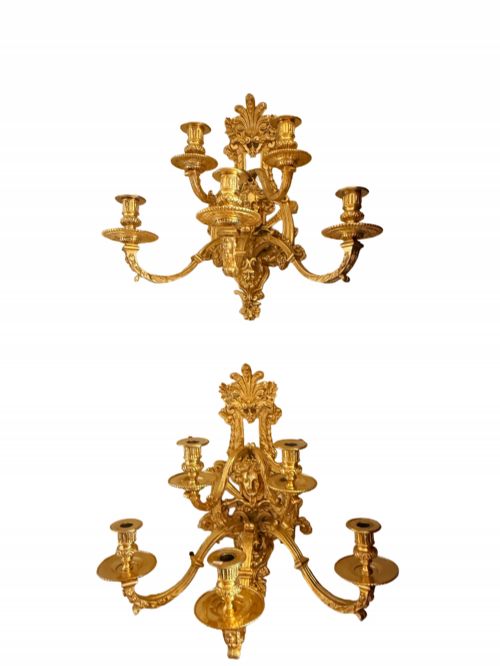
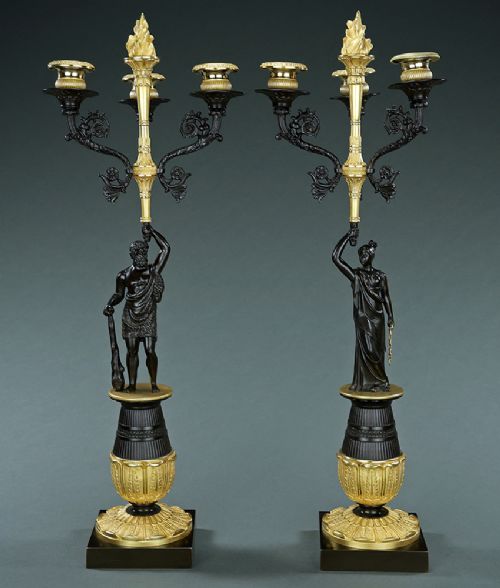
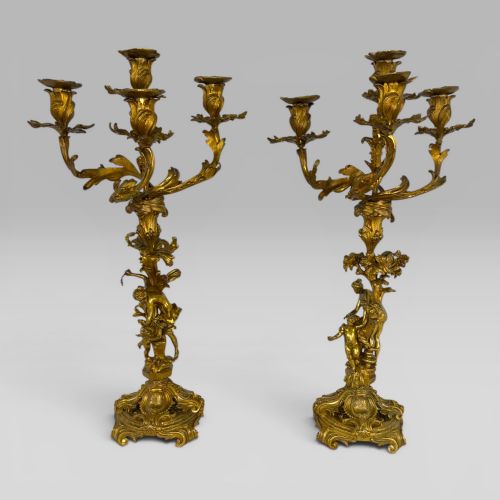
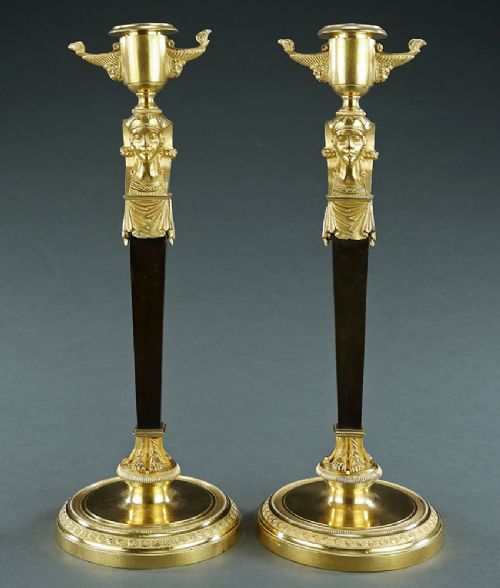
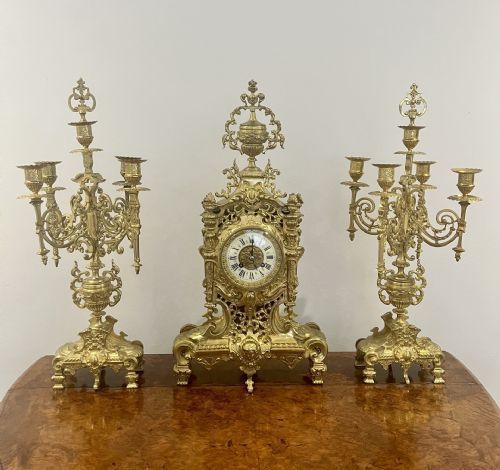
When searching for 19th century ormolu candelabra, collectors encounter multi-branch lighting fixtures and matching mantel garniture sets cast in bronze and treated with gold amalgam. The selection spans French Empire, Rococo Revival, and Louis XVI styles, alongside related candlesticks, clock sets, and wall sconces.
Most examples originate from French workshops active during the Victorian era, specifically the middle and late decades of the nineteenth century. Pieces range from modest two-branch wall lights to monumental ten-light table candelabra incorporating marble bases and figural bronze work.
How they were made
Maker's workshops cast components in bronze or brass before applying mercury gilding to create the characteristic ormolu surface. Many models combine patinated dark bronze with bright gilt elements, often mounted onto white marble, onyx, or porcelain plinths.
Casting methods permitted intricate detailing such as cherubs, scrolling foliage, and classical figures, which were subsequently chased by hand to sharpen the contours. Detachable branches and nozzle inserts accommodated multiple candles while allowing practical cleaning of the metalwork.
Listings feature 19th-century candelabra cast in gilt bronze, ormolu, and patinated bronze, frequently mounted upon white marble bases.
What varies in quality
Material combination and weight signal fabrication standards, with heavy cast bronze foundations and unblemished marble bases commanding greater regard. The preservation of the original mercury gilding, showing consistent tone rather than modern re-plating, governs the standing of an individual piece.
Pierre Philippe Thomire·Henry Dasson·Auguste Cain
The 19th Century Ormolu Candelabra Glossary
- Ormolu
- Gilt bronze produced by applying a mercury and gold amalgam to a bronze base and firing it to drive off the mercury. This historic technique yields a deep, warm golden finish distinct from modern electroplating.
- Garniture
- A set of matched ornamental objects, typically comprising a central mantel clock flanked by a pair of candelabra or vases. These suites dominated nineteenth-century interior display on mantelpieces.
- Patinated bronze
- Bronze treated with chemical solutions to darken the surface to a rich brown, black, or greenish tone. It provides contrast against the bright brilliance of the surrounding ormolu mounts.
- Champlevé
- An enamelling technique where troughs are dug into a metal surface and filled with vitreous enamel powder before firing. Candlesticks and clocks in the listings occasionally incorporate this decorative banding.
- Regency
- An English design period spanning the early nineteenth century characterised by classical motifs derived from ancient Rome and Greece. Pieces from this era often pair dark patinated bronze with gilt highlights.
19th Century Ormolu Candelabra: Frequently Asked Questions
How do I clean antique ormolu candelabra?
Dust the metal surfaces gently with a soft, dry brush to prevent the accumulation of grit in recessed chasing. Avoid liquid metal cleaners, abrasive cloths, or chemical solvents, which strip away the thin historic layer of gold.
Marble bases benefit from occasional wiping with a damp cloth followed by immediate drying. Handle the branches with care, as historic pinned or screwed joints can loosen under pressure.
Were these candelabra wired for electricity?
Original nineteenth-century candelabra were manufactured exclusively to hold wax candles for ambient illumination in salons and dining rooms. Many surviving examples remain in their original un-electrified state to preserve their antique integrity.
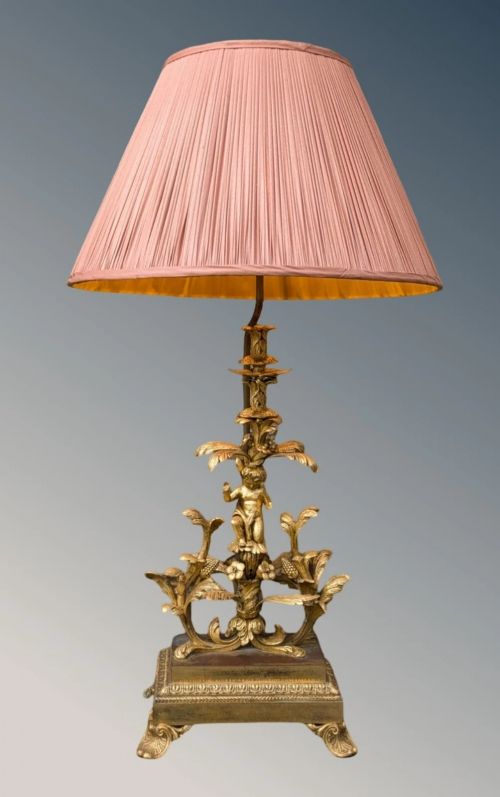
When conversion to table lamps occurs, skilled electricians often run wiring through existing central channels without drilling new holes into the bronze structure. Buyers should inspect the mounting points to determine whether past alterations modified the original form.
How can I tell French Empire from Rococo Revival style?
French Empire pieces rely on strict symmetry, martial trophies, and direct references to classical antiquity inspired by Napoleon's campaigns. The silhouettes remain disciplined, featuring dark patinated figures paired with geometric ormolu mounts.
In contrast, Rococo Revival candelabra embrace asymmetry, scrolling acanthus leaves, C-scrolls, and naturalistic floral motifs. This nineteenth-century interpretation looks back to the reign of Louis XV with exuberant, flowing contours and abundant gilding.
What is a clock garniture set?
A clock garniture is a decorative ensemble consisting of a central mantel clock accompanied by matching side pieces such as candelabra or urns. These matched suites were designed to sit harmoniously upon a drawing-room mantelpiece or sideboard.
The components share identical motifs, materials, and founding workshops, creating a unified visual statement. Complete sets featuring their original accompanying candelabra hold a distinct place among nineteenth-century decorative arts.