

Gilt Bronze Candelabrum
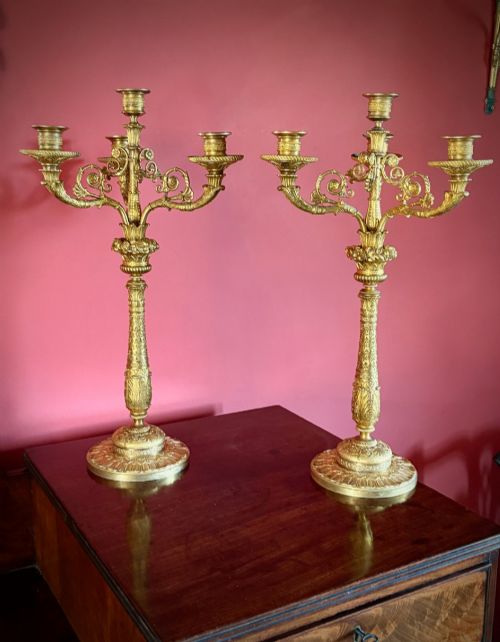
When you want a gilt bronze candelabrum, you are looking at substantial metalwork designed to hold multiple candles with architectural presence and decorative weight.

Gilt Bronze Candelabrum
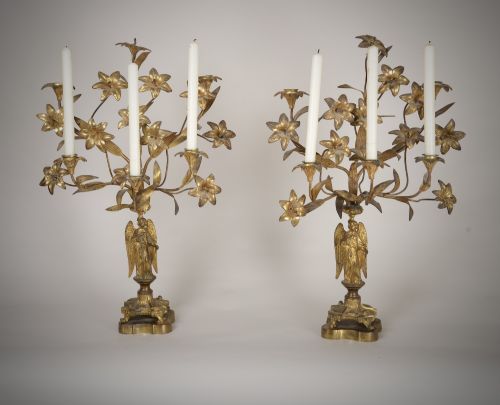
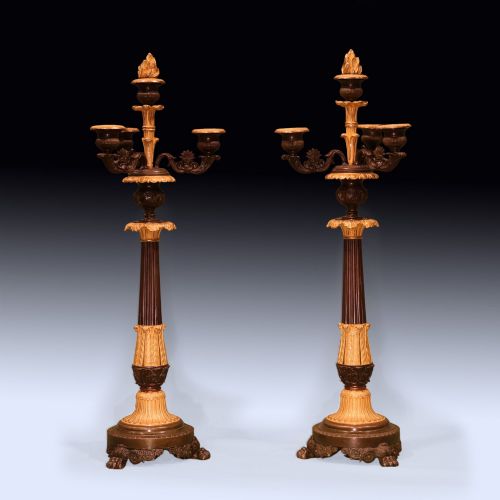
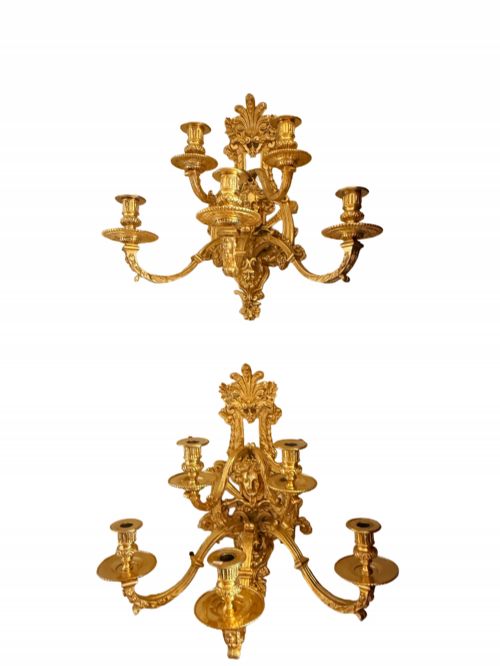
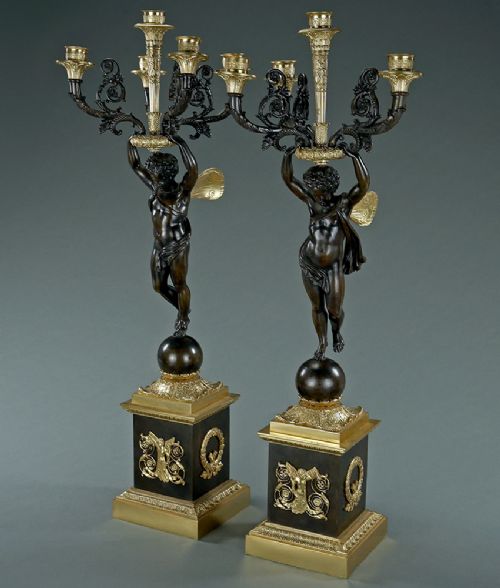
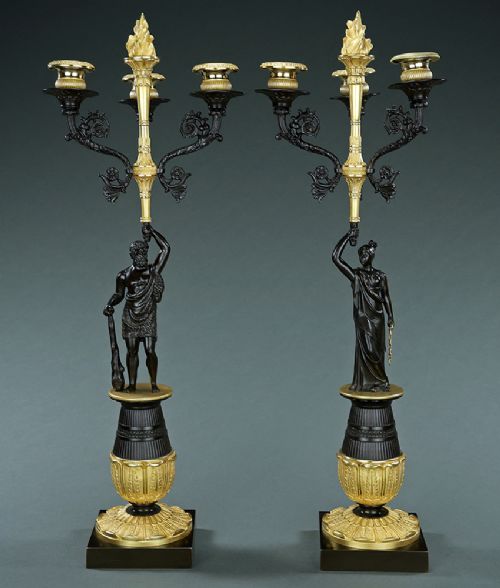
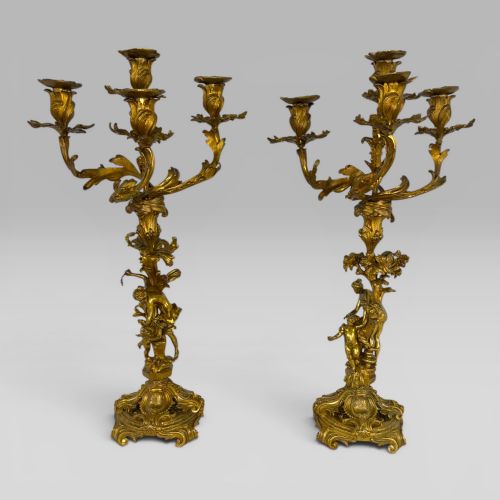
A gilt bronze candelabrum provides a strong vertical element for a mantelpiece, table or wall, frequently appearing in pairs alongside matching garnitures or clocks. The selection spans the nineteenth century with notable eighteenth-century roots, offering multiple branches for illumination.
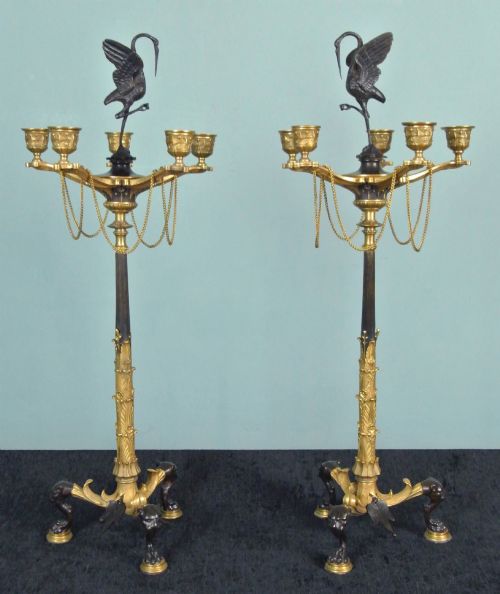
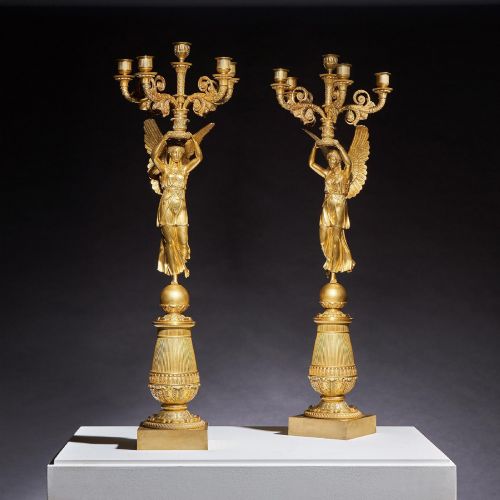
French designs dominate the forms, drawing on Empire, Rococo Revival, and Louis XVI styles alongside English Regency and Gothic interpretations. Many pieces combine gilded metal with white marble bases, porcelain elements, or patinated bronze figures.
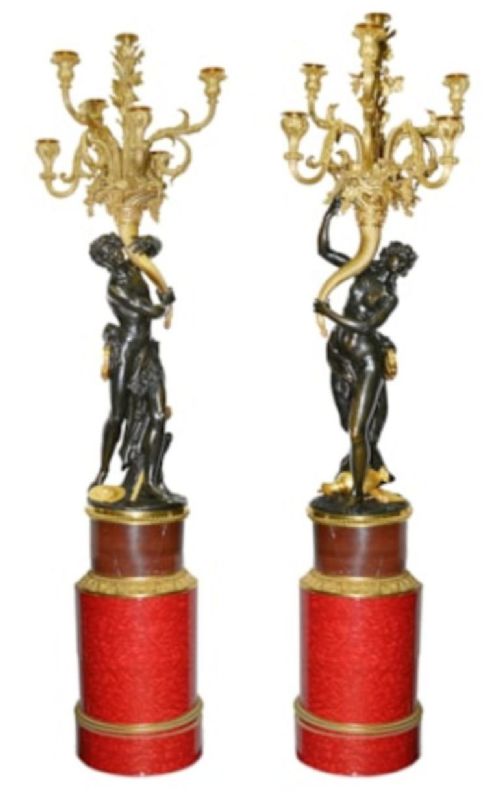
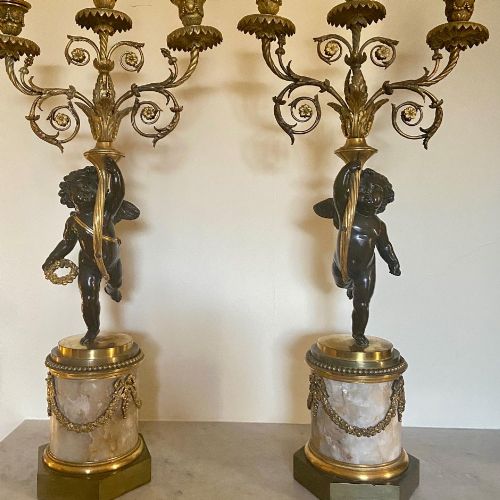
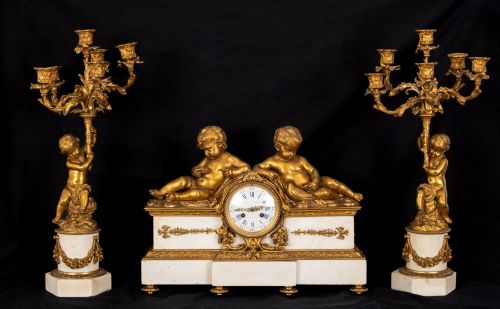
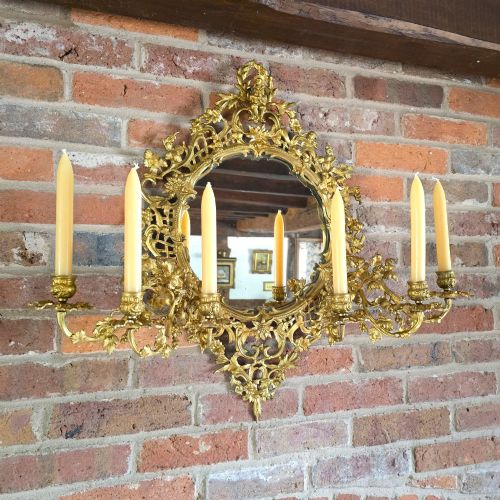
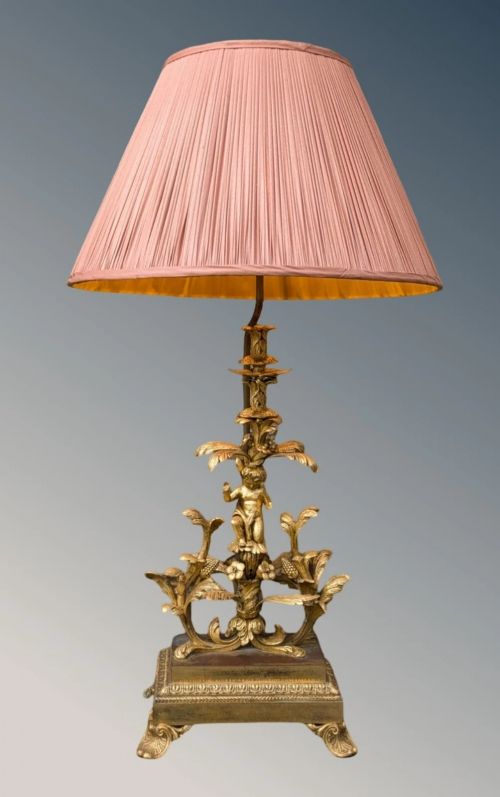
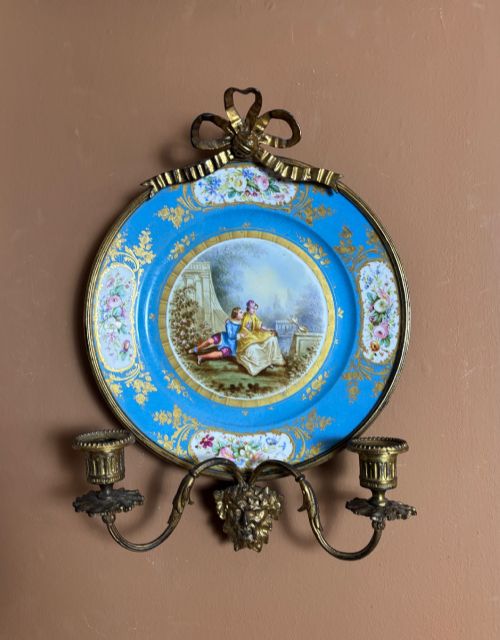
The objects function as both functional lighting and sculptural art, taking the form of candelabra, wall sconces, and multi-piece clock garnitures. Figural subjects include putti, cherubs, and mythological figures such as Hercules.
Materials and construction
Gilt bronze and ormolu form the primary surfaces, applied through mercury gilding or modern electroplating to create a bright, enduring golden finish that contrasts with patinated dark bronze. Artisans cast these components in sections before chasing and assembling them by hand.
Supporting elements frequently utilise white marble, onyx, or porcelain, providing a heavy, stable foundation for the elaborate metalwork above. Enamel and champlevé techniques appear on specific pieces to introduce colour and pattern to the mountings.
The inventory includes multi-branch wall sconces, candelabra, and complete clock garniture sets with patinated bronze figures.
Assessing craftsmanship
The crispness of the chasing separates standard production from exceptional work, visible in the sharp relief of acanthus leaves, hair, and drapery. Castings that retain fine detail without softness demonstrate superior foundry skill.
Integration between the metal mounts and the stone or porcelain bases indicates overall care in assembly, where tight joins and substantial weight signal higher-grade manufacture.
Francois Redmond·Pierre Philippe Thomire·Thiebaut Freres·Rabiat
The Gilt Bronze Candelabrum Glossary
- Ormolu
- Gilt bronze produced by applying a gold and mercury amalgam to a bronze base and heating it until the mercury vaporises. This historical technique creates a characteristic warm lustre.
- Garniture
- A set of matching decorative objects, typically comprising a central clock flanked by a pair of candelabra or vases. These suites were designed to display together on a mantelpiece.
- Chasing
- The manual refinement of a bronze casting using small punches and hammers to sharpen details and textures. Fine chasing distinguishes high-end workshops from mass production.
- Patinated bronze
- Bronze treated with chemicals to produce a dark, uniform surface colour. This dark tone provides visual contrast against the bright areas of ormolu.
- Champlevé
- An enamelling technique where troughs or cells are hollowed out of the metal surface and filled with vitreous enamel before firing. It adds colourful decorative patterns to the mountings.
Gilt Bronze Candelabrum: Frequently Asked Questions
How do I clean gilt bronze?
Dust the surface gently with a soft, dry brush to remove particles without disturbing the delicate gilding.
Avoid abrasive cleaners, water, or metal polishes that can strip the gold layer from the bronze underneath.
Were these electrified later?
Many examples from the nineteenth century have undergone conversion to electricity for modern domestic use.
Some retain their original socket configurations for candles, while others show discreet wiring channels added through the base.
How do I identify French Empire style?
French Empire pieces display classical motifs such as laurel wreaths, sphinxes, military trophies, and strict symmetrical geometry.
The use of contrasting patinated bronze and bright ormolu is a hallmark of this period.
What is a clock garniture?
A clock garniture is a matching decorative set featuring a central mantel clock accompanied by side pieces like candelabra or urns.
These sets were created to unify the decor of a room, sharing identical materials and stylistic ornament.