


Ormolu Five Light Candelabra
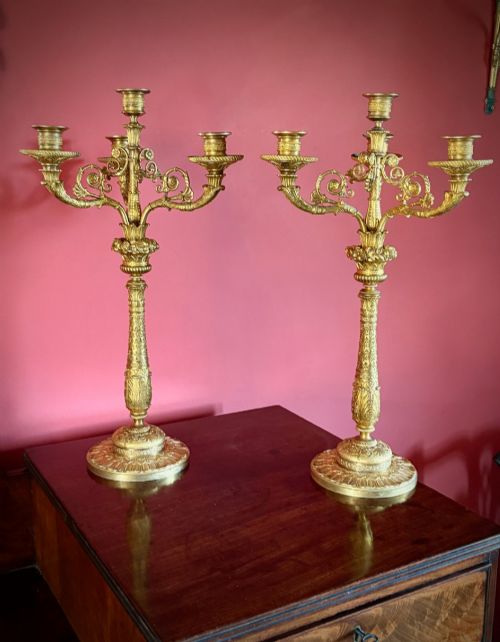
These ormolu five light candelabra bring the warm, heavy gleam of nineteenth-century gilt metal and bronze to a mantelpiece or side table.
Ormolu Five Light Candelabra
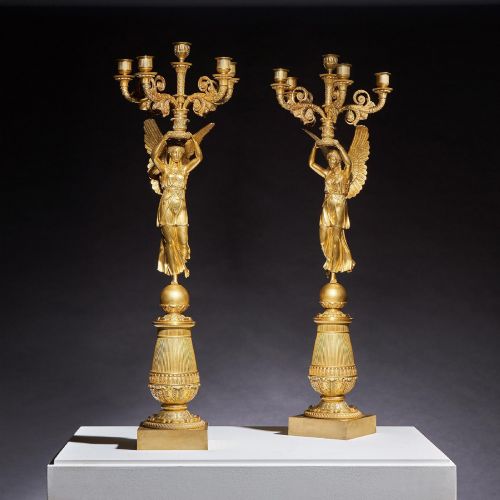
When you search for ormolu five light candelabra, you find nineteenth-century lighting pieces designed to hold multiple candles, often surviving in matched pairs. The selections here include French Rococo Revival, Empire, Neoclassical, and Victorian styles made from cast metals.
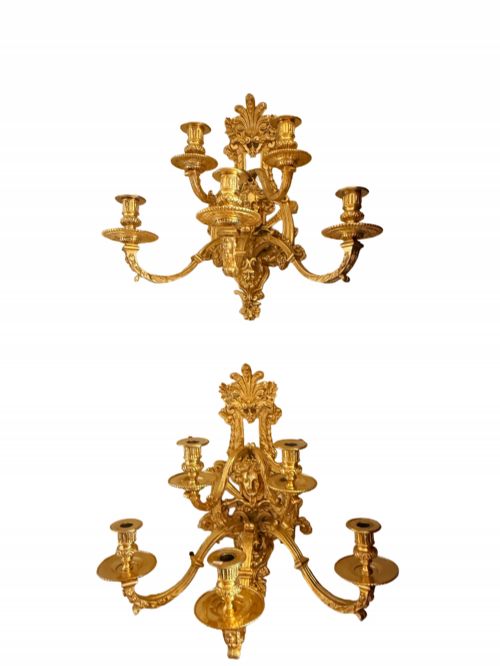
Most examples you meet on this page date from the nineteenth century, spanning decades such as the eighteen-eighties and eighteen-sixties. Alongside table candelabra, the listings feature related wall lights, sconces, chandeliers, and clock garnitures.
Many of these objects incorporate sculptural elements like cherubs, putti, or porcelain panels alongside the branching candle holders. Their forms range from sturdy gilt bronze and brass to combinations featuring marble or alabaster bases.
Materials and construction
The foundation of these pieces relies on cast bronze, brass, or gilt metal, often finished with the mercury gilding process known as ormolu. This technique leaves a durable, rich metallic layer that catches the candlelight.
Makers frequently combined patinated dark bronze with bright gilt elements to create contrast within the figures and scrollwork. Heavier bases often incorporate turned marble, alabaster, or multi-tiered metal plinths to support the branching arms.
Ormolu Five Light Candelabra Retail Price Guide 2026
Typical asking prices for ormolu five light candelabra among the pieces listed under this phrase on Sellingantiques today, from the lower quarter to the upper quarter. They describe what is for sale here now, not the wider market.
Cherubs and putti frequently dangle their legs over the edge of the metal bases, supervising the room.
Assessing quality and execution
The integration of materials also dictates the standard of the piece, where tightly fitted stone bases and securely joined branch sockets separate standard production items from workshop highlights.
Pierre Philippe Thomire·AD Mougin Paris
The Ormolu Five Light Candelabra Glossary
- Ormolu
- A technique of applying finely ground gold-mercury amalgam to bronze, creating a warm golden finish. This surface treatment defines the appearance of high-end nineteenth-century French metalwork.
- Candelabra
- A branched lighting fixture designed to hold multiple candles simultaneously. These items stand on bases rather than hanging from ceilings.
- Clock garniture
- A set comprising a central clock flanked by matching decorative objects such as candelabra or urns. They formed coordinated decorative schemes for nineteenth-century mantelpieces.
- Gilt bronze
- Copper alloy coated with a layer of gold to resemble solid precious metal. It provides durability while maintaining a bright appearance.
- Chasing
- The hand-tooling of a metal surface after casting to refine details and textures. Skilled chasing sharpens the edges of foliage and drapery.
Ormolu Five Light Candelabra: Frequently Asked Questions
How do I clean ormolu candelabra?
Dust gently with a soft, dry brush to prevent accumulation in the intricate cast crevices.
Avoid abrasive polishes or chemical cleaners that can strip the delicate gilt surface away from the bronze base.
Are these candelabra wired for electricity?
Most examples retain their original form designed specifically for wax candles.
Some pieces have been adapted for electricity by previous owners, so check individual listings for wiring details.
What is the difference between ormolu and brass?
Ormolu involves applying a gold layer over a bronze base, giving a deep and lustrous golden tone.
Brass is an alloy of copper and zinc that generally shows a brighter yellow or polished metallic colour without gold application.
How do I identify French Empire style?
French Empire pieces display classical motifs inspired by ancient Rome and military campaigns.
Look for symmetrical designs, sphinxes, laurel wreaths, and stark contrasts between dark patinated bronze and bright ormolu.