

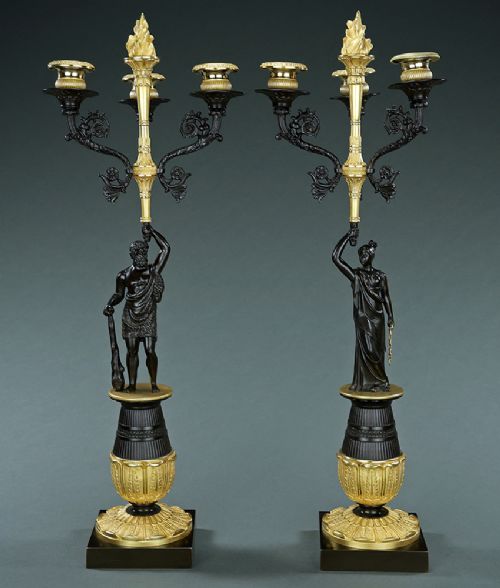
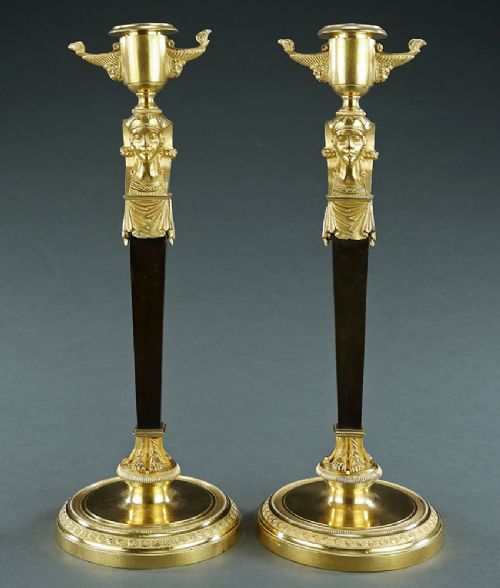


Empire Style Candelabra
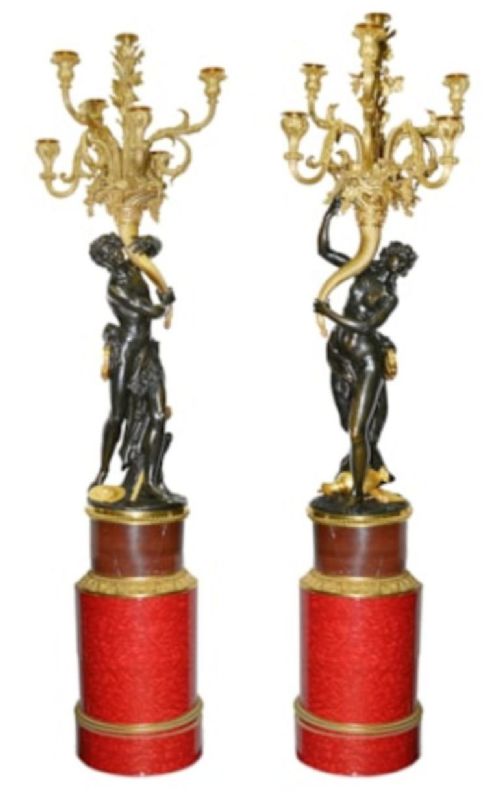
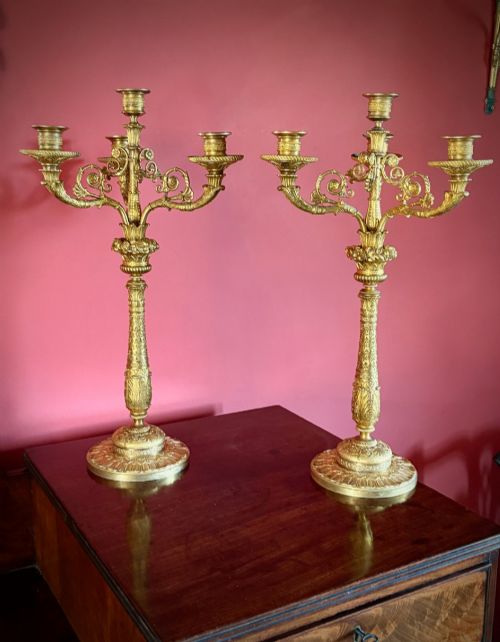
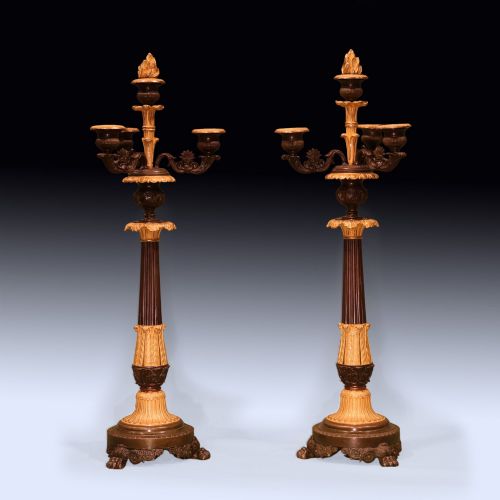
These empire style candelabra bring formal neoclassical presence to a room through heavy gilt metalwork and dark contrasting bronze.
Identifying Empire Style Candelabra
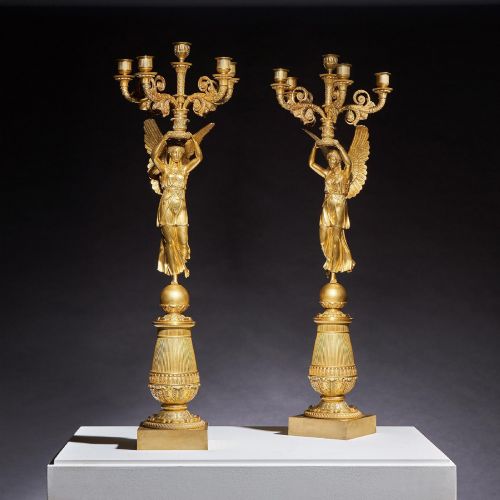
Empire style candelabra draw on classical motifs, incorporating winged figures, architectural lines and balanced branch configurations. When you search for empire style candelabra, you encounter vertical forms designed for tabletop or sideboard illumination during the nineteenth and early twentieth centuries.
The pieces appearing here include pairs and single examples ranging from three-light branches up to five-light formats. Materials lean heavily on combinations of ormolu, patinated bronze and marble, reflecting the regency and French empire tastes seen across the listings.
Makers and designers of the period drew inspiration from classical antiquity, often integrating figures such as Nike or putti into the structural stems. These functional lighting objects serve equally well today as sculptural centerpieces within a traditional interior scheme.
Construction and Materials
Makers combined cast bronze with ormolu, applying a mercury gilt or gold-coloured finish to highlight decorative mounts against patinated dark bronze surfaces. White marble frequently forms the heavy plinths and bases, providing a stable foundation for the upright stems.
Individual components were cast in sections and mechanically joined with threaded pins or screws, allowing for complex configurations such as adjustable arms. Brass and gilt metal appear in later iterations, maintaining the visual weight of earlier bronze work while adapting to changing manufacturing methods.
Retail Price Guide 2026
Typical UK retail prices for empire style candelabra, calculated from the Sellingantiques database of over a million retail prices indexed since 2003. This retail price guide relies exclusively on Sellingantiques data; no external sources or auction records are used, so the figures do not describe the wider market.
Listings feature items dated from the nineteenth century through to nineteen-thirty, utilising materials like white marble and patinated bronze.
Assessing Quality and Execution
The sharpness of the cast ornamentation dictates the visual success of the piece, where crisp chasing on the ormolu separates finer workshop production from simpler commercial foundry output. Deep, even patination on the bronze elements shows careful chemical treatment and maintenance over time.
Substantial weight in the marble bases and tight mechanical fits in the branch assembly indicate superior construction that prevents wobbling when candles are inserted. The precision of the figural casting, particularly on winged putti or classical figures, reveals the hand of a more skilled artisan.
Thomas Hope
The Empire Style Candelabra Glossary
- Ormolu
- Gilded bronze produced by applying a gold amalgam to a base bronze object and heating it. This technique creates a rich, matte gold surface characteristic of nineteenth-century decorative metalwork.
- Patinated Bronze
- Bronze treated with chemicals to darken the surface and create a stable oxidized layer. This dark tone provides contrast against bright gilt metal mounts.
- Regency
- A British design period spanning the early nineteenth century defined by a strong neoclassical influence. Pieces from this era often mirror contemporary French empire aesthetics.
- Putti
- Depictions of plump, winged male infants used as decorative supports in sculptural art. They appear frequently on nineteenth-century bronze and marble candelabra bases.
Frequently Asked Questions
Can I use real candles in them?
Most antique candelabra accept standard taper candles provided the sockets are clean and measure correctly for the wax. Ensure the piece sits on a level surface before lighting to prevent any dripping onto surrounding furniture.
Take care when extinguishing flames near ormolu to avoid smoke residue settling on the gilt surfaces. Many owners prefer modern dripless candles to protect the antique metal from stubborn wax accumulation.
How do I tell nineteenth century from later copies?
Early nineteenth-century examples display hand-chased surface details and heavy construction using genuine bronze and statuary marble. Later reproductions often substitute lighter brass or gilt metal with simpler, unrefined casting.
Examine the joinery and fixings underneath the base to see if the screws and threads match period manufacturing techniques. Older pieces carry natural wear patterns and minor oxidisation appropriate to their age.
Where should I place a pair of candelabra?
These tall pieces suit a dining table, mantelpiece or heavy sideboard where their vertical lines anchor the visual space. Placing them symmetrically frames a mirror or a central decorative object in an entrance hall.
Ensure they sit away from high-traffic walkways where a dangling sleeve might catch a branch or tip the heavy marble base.