

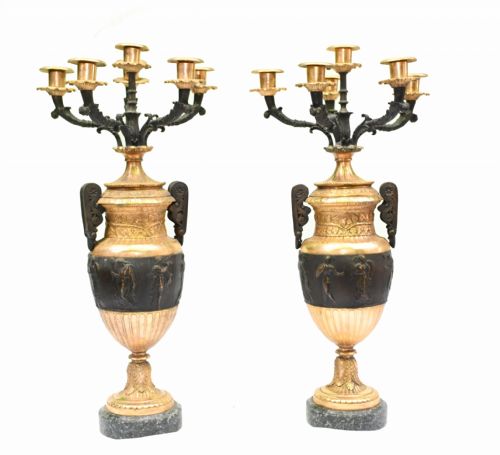


Regency Bronze Candelabra
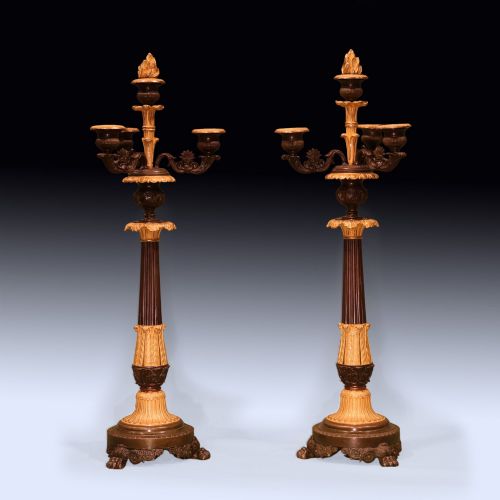
Regency bronze candelabra combine dark patinated metal with bright gilded mounts to light a room with classical authority.
Regency Bronze Candelabra
When you search for regency bronze candelabra, you look at lighting pieces designed to hold multiple candles upon dining tables and mantelpieces. These fittings draw on classical antiquity, French Empire taste, and the heavy decorative forms popular in the early nineteenth century.
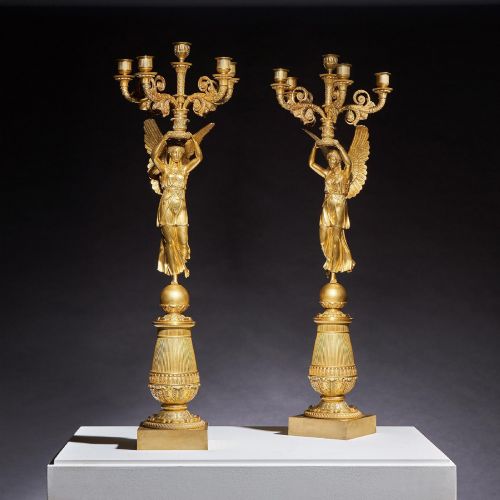
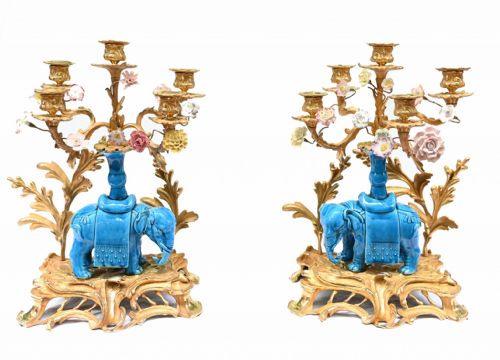
The versions you meet most frequently on this page are pairs featuring patinated bronze bodies contrasted against bright ormolu mounts. Makers arranged these pieces as two, three, or four-arm candelabra, often incorporating marble bases or cut glass drops.
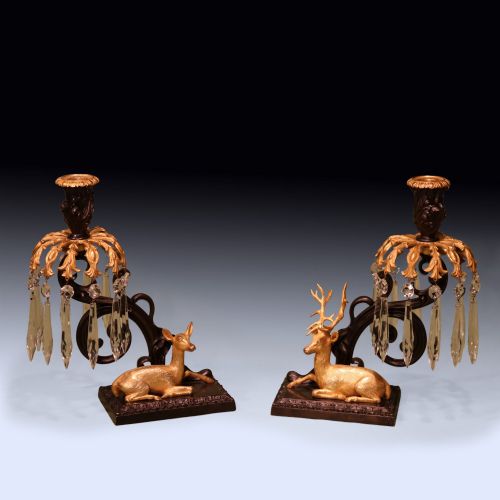
Beyond standard lighting, the forms extend to figural subjects including stags, mermans, and Egyptian figures. Some examples also show later revivals or nineteenth-century interpretations of earlier Swedish and French designs.
Materials and construction
Foundries built these objects by casting bronze into detailed components before applying dark patinas or mercury gilding to create the characteristic ormolu finish. Workers then combined these metal elements with solid marble plinths and cut glass lustres.
Makers assembled the multi-arm branches using threaded fittings and screws that allowed the arms to adjust or dismantle for cleaning. Detail work relied on manual chasing to sharpen the cast foliage, figures, and classical motifs.
Regency Bronze Candelabra Retail Price Guide 2026
Typical asking prices for regency bronze candelabra among the pieces listed under this phrase on Sellingantiques today, from the lower quarter to the upper quarter. They describe what is for sale here now, not the wider market.
Stags and mermans occasionally join the classical foliage, holding candle sockets in their paws and tails.
Judging the work
Superior examples display crisp hand-chasing across the ormolu mounts, where every leaf and facial feature remains sharp and well-defined. Lesser pieces rely on softer, unrefined casts that lack depth in the ornamental details.
Heavier bronze casting and substantial marble bases indicate higher grade production, whereas lighter metals and hollow components suggest commercial output. The crispness of the contrast between dark patinated bronze and bright gilding marks the distinction.
Pierre Philippe Thomire·Thomas Hope·Humphrey Hopper
The Regency Bronze Candelabra Glossary
- Ormolu
- Gilded bronze produced through the application of a mercury and gold amalgam to the metal surface. This technique creates a rich, lasting golden glow on decorative mounts.
- Patinated bronze
- Bronze treated with chemicals or heat to darken the surface tone. This dark finish provides contrast against the brighter gilded elements.
- Lustre
- A glass pendant or drop hung from a candelabra to reflect candle flames. These elements catch and multiply the light in a room.
- Torchere
- A tall stand or candelabra designed to support lighting fixtures. They often feature classical figures or pillar-like shafts.
- Grand Tour
- Travel across continental Europe undertaken by wealthy individuals to collect art and antiquities. Pieces from this context often incorporate classical architectural and sculptural motifs.
Regency Bronze Candelabra: Frequently Asked Questions
How do I clean bronze and ormolu?
Dust the surface gently with a soft brush to remove particles without disturbing the finish.
Avoid commercial metal polishes because abrasive cleaners strip away the original mercury gilding.
Are these candelabra wired for electricity?
Most period pieces retain their original socket configurations for wax candles.
Some examples have been adapted into lamps or standard lamps during later periods.
What is the difference between ormolu and brass?
Ormolu consists of a mercury-gilded bronze base metal carrying a deep golden surface layer.
Brass is a copper and zinc alloy with a uniform yellow composition throughout.
Where were these placed in a home?
Owners positioned them upon dining tables, sideboards, and marble mantelpieces to provide illumination.
Tall torchere versions stood directly on the floor to light corners or entryways.