

Antique Bronze Candelabrum
An antique bronze candelabrum brings sculptural weight and layered candle branches to a room, holding the eye with disciplined metalwork.
Antique Bronze Candelabrum
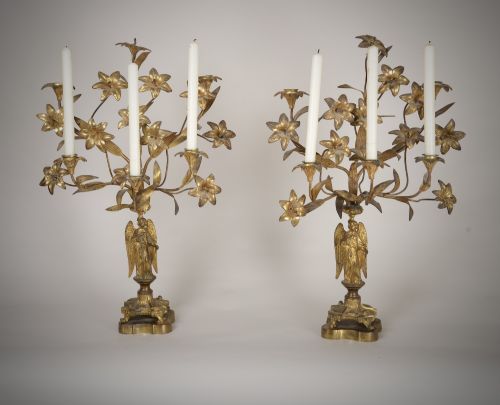
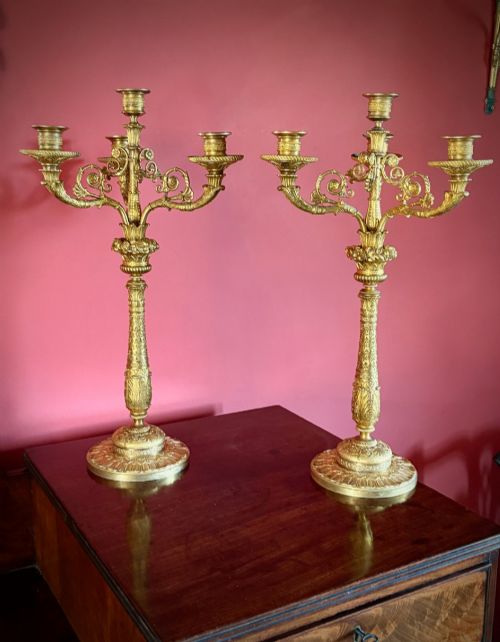
An antique bronze candelabrum is a multi-branched candle holder cast in metal, designed to sit upon mantelpieces, tables, or walls. These pieces emerge predominantly from the nineteenth century, reflecting French Rococo Revival, Empire, and Victorian aesthetic movements.
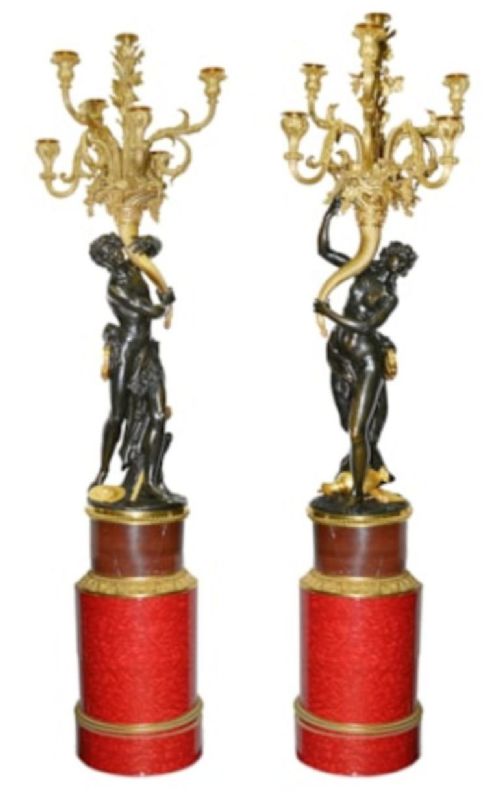
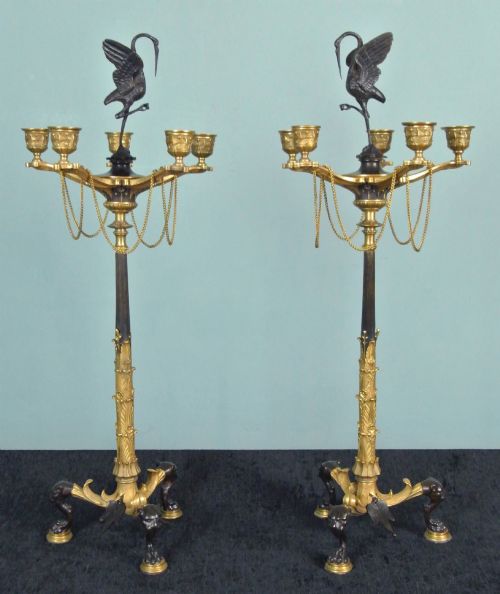
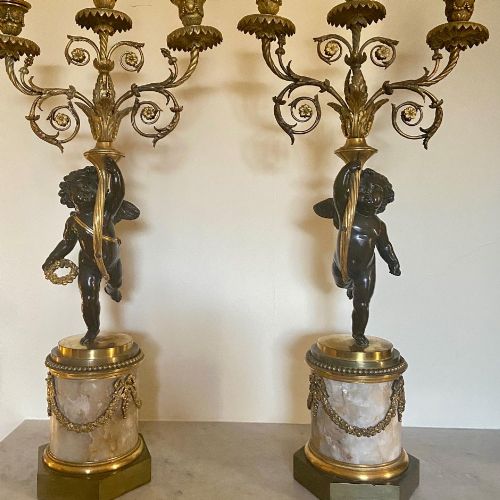
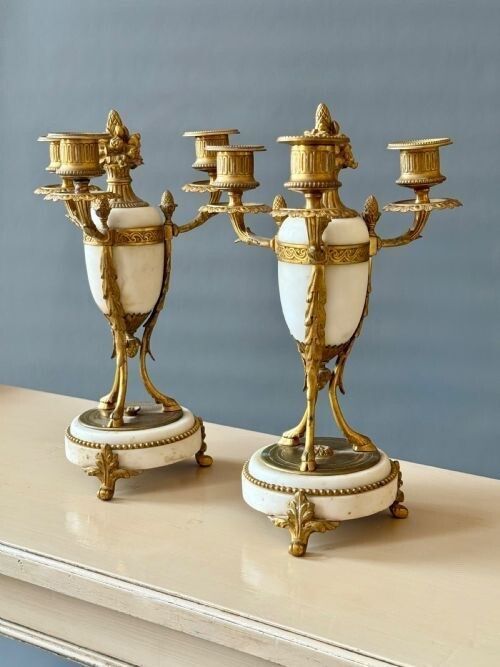
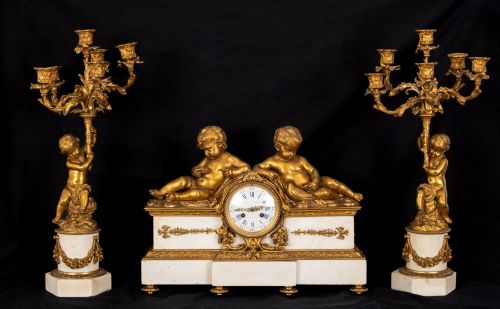
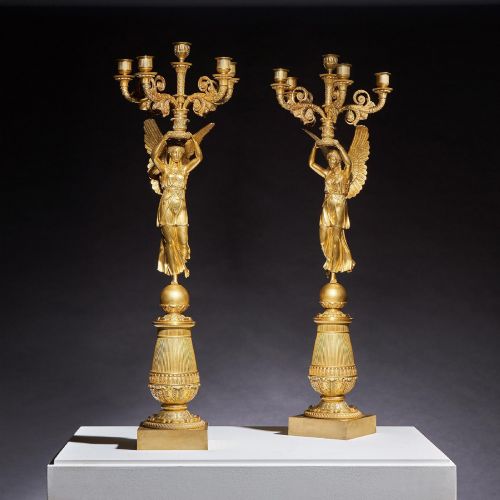
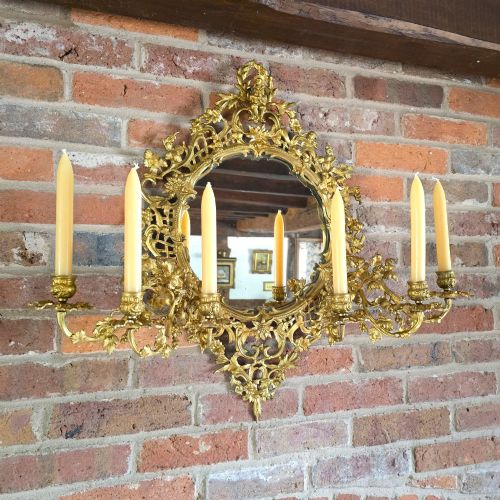
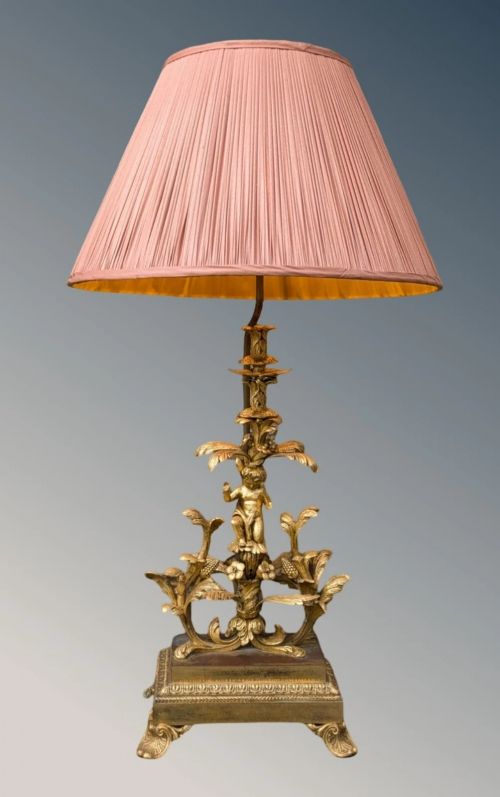
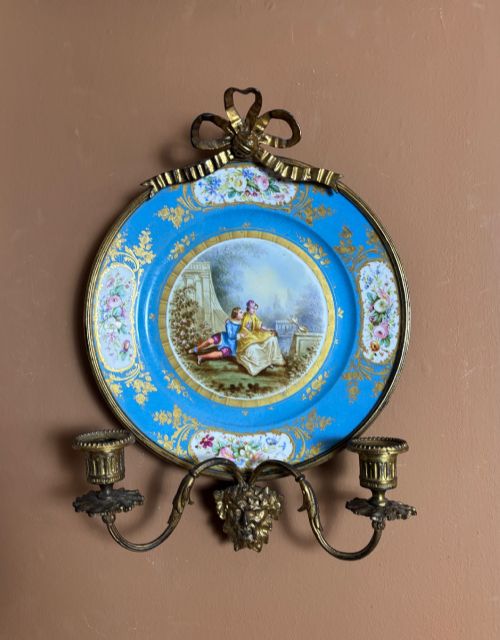
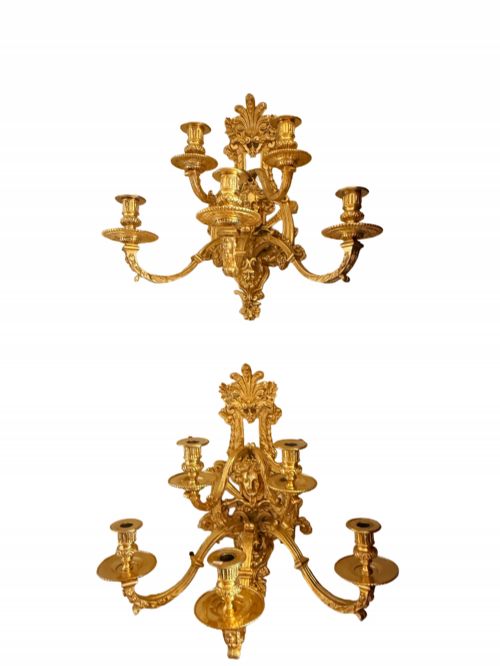
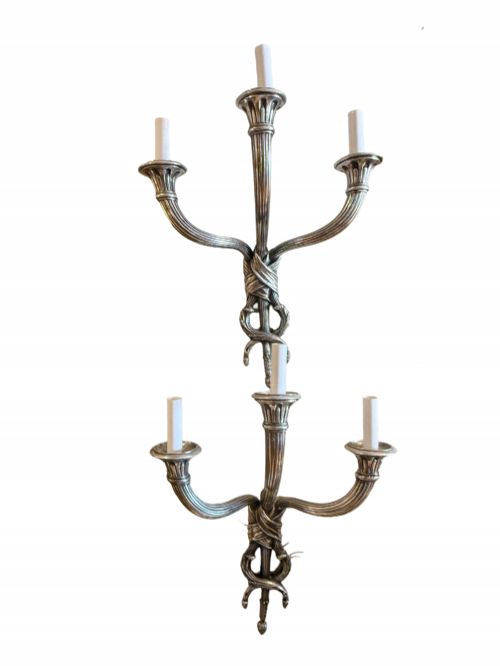
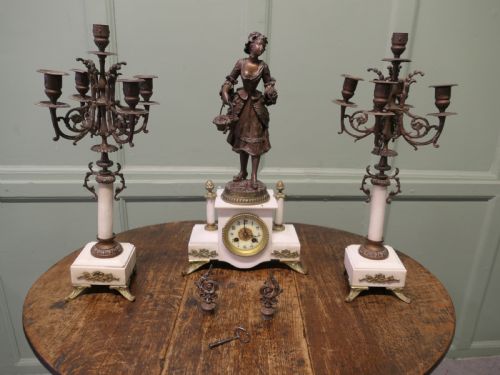
The selections available here showcase distinct forms, ranging from towering pairs with figurative putti and cherubs to smaller wall sconces and clock garniture sets. Buyers encounter heavy patinated bronze and bright ormolu constructions, often paired with white marble bases or porcelain elements.
French workshops dominate the surviving material, bringing classical motifs, mythological figures like Hercules, and Gothic revival detailing into domestic interiors. These heavy lighting fixtures served both practical illumination and formal decorative display in period homes.
Materials and Construction
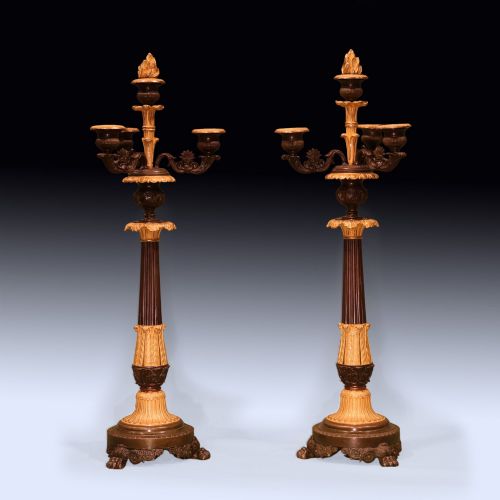
The foundation of these pieces relies on bronze casting, utilising both patinated dark bronze and polished ormolu, which is gilded bronze achieved through mercury amalgamation or electrogilding. Craftsmen frequently combined these metallic finishes with white marble plinths, champlevé enamel, or fluorite to create striking textural contrast.
Stag and doe figures occasionally double as candle holders, bringing woodland fauna directly onto the formal nineteenth-century mantelpiece.
Distinctions in Quality
The depth and durability of the gilding further divide the work, as mercury-gilt surfaces maintain a rich, warm lustre compared to thinner modern platings that wear unevenly. Substantial weight, solid marble bases free of major structural repairs, and tight structural joins between the branches signal superior workshop execution.
Barbedienne·Francois Redmond·Pierre Philippe Thomire·Thiebaut Freres·Thomas Hope
The Antique Bronze Candelabrum Glossary
- Ormolu
- Gilded bronze, derived from the French term ou moulu meaning ground gold. It describes objects coated in a layer of gold amalgam to create a bright, non-tarnishing metallic finish.
- Patinated Bronze
- Bronze left with a dark, chemically induced surface oxidation rather than being polished bright or gilded. This finish highlights the sculptural contours through subtle tonal variations.
- Garniture Set
- A matching decorative garniture, typically comprising a central mantel clock flanked by a pair of matching candelabra or vases. These sets were designed to sit harmoniously on a fireplace mantelpiece.
- Champlevé
- An enamelling technique where troughs or cells are hollowed out of the metal surface and filled with vitreous enamel paste before firing. The resulting coloured patterns sit flush with the surrounding bronze framework.
- Cherub
- A winged angelic figure frequently cast in bronze or ormolu as a supporting element on candle arms or marble bases. These figures draw upon Renaissance and Rococo sculptural traditions.
Antique Bronze Candelabrum: Frequently Asked Questions
How do I clean antique bronze?
Dust the metal gently with a soft, dry brush to prevent dirt accumulation in recessed crevices.
Avoid using abrasive metal polishes or chemical dips, which strip away the historic patina and damage delicate gilding.
Were these electrified later?
Many nineteenth-century pieces have been adapted to electricity over time, with wiring threaded through the central column.
Buyers should inspect whether the conversion was done cleanly without drilling through important maker signatures or weakening structural joins.
How do I spot a reproduction?
Genuine nineteenth-century pieces display heavy, dense bronze casting with hand-finished chasing marks visible under close inspection.
Modern reproductions often feel lighter, show uniform machine-tool chatter, and lack the natural wear patterns of historic handling.
What is a clock garniture?
A clock garniture is a matching decorative set featuring a central mantel clock accompanied by two side pieces, such as candelabra or urns.
These balanced arrangements were designed during the nineteenth century to create a symmetrical display across a fireplace mantel.