
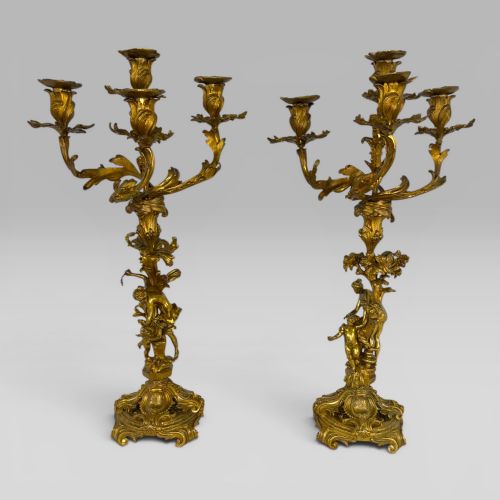
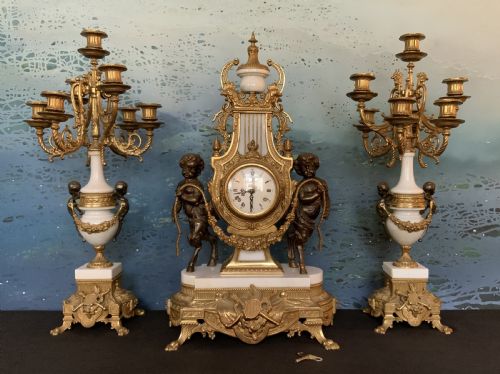


French Cherub Candelabra
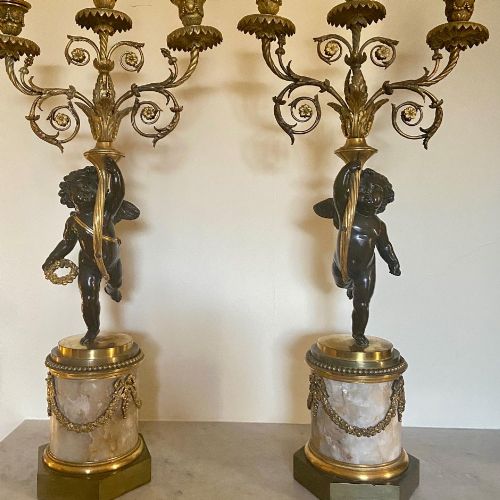
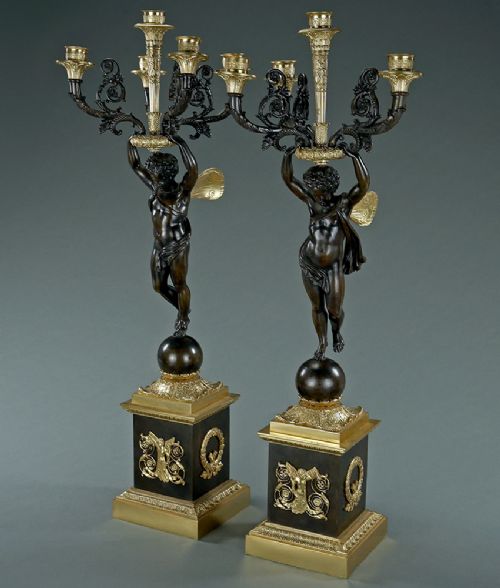
These french cherub candelabra pieces bring figural bronze and marble lighting into a room with undeniable presence.
French Cherub Candelabra
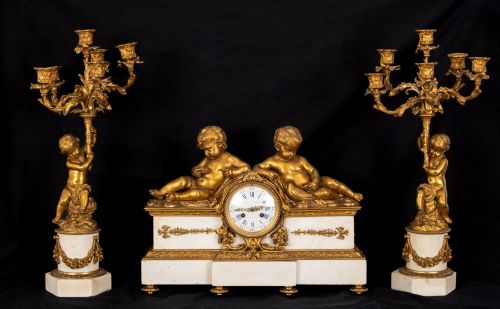
When you search for french cherub candelabra, you encounter figural lighting and garniture sets featuring winged putti holding candle arms. Most examples on this page date from the nineteenth century, spanning periods like the Victorian era, eighteen-eighties, and eighteen-seineties.
The forms range from pairs of two-arm and multi-light mantel pieces to larger monumental sets accompanied by matching clocks. Stylistically, they draw heavily on Louis XVI revival, French Empire, and Rococo designs.
Makers and designers referenced in the evidence include Claude Clodion and François Redmond, alongside classical French workshop traditions.
Materials and construction methods
The construction relies heavily on cast bronze, ormolu, and gilt bronze, often paired with contrasting white marble or porphyry bases. Patinated bronze gives the figures depth, while fire-gilding provides the bright metallic finish seen on many ormolu components.
Additional elements such as enamel, fluorspar, and silver plating appear across various nineteenth-century items. Individual cast components are secured together with threaded pins and bolts, supporting multiple candle arms or conversion into table lamps.
Listings feature eighteenth, nineteenth, and twentieth-century items, utilising materials like gilt bronze, white marble, ormolu, and patinated bronze.
Assessing quality in figural bronzes
The selection of the base material also dictates the standard of the piece, with dense white marble or polished porphyry adding stability and weight. Heavier, finely balanced castings indicate careful workshop production.
Francois Redmond·H Luppens Paris·Claude Clodion
The French Cherub Candelabra Glossary
- Ormolu
- Gilded brass or bronze produced by applying a mercury-gilding amalgam to the base metal. This technique creates a rich, lasting golden surface common in French decorative arts.
- Putti
- Representations of small winged infants or cherubs used as decorative figures in art and sculpture. They frequently support candle branches or adorn the sides of clock garnitures.
- Garniture
- A set of decorative objects designed to be displayed together on a mantelpiece. Typically, this includes a central clock flanked by matching candelabra or vases.
- Porphyry
- An igneous rock with large crystals embedded in a fine-grained groundmass, usually deep purple or red. It provides a durable and decorative base for bronze figures.
- Patinated bronze
- Bronze treated with chemicals to produce a specific surface colour or dark tone. This finish accentuates the contours of the cast figures.
French Cherub Candelabra: Frequently Asked Questions
How do I style french cherub candelabra at home?
Place a pair of these candelabra on a mantelpiece or sideboard to anchor a formal interior scheme. They work well as standalone decorative objects or paired with a matching clock garniture.
Keep the surrounding decor simple to let the chased bronze and marble details stand out without visual clutter. Ensure they are positioned safely away from heavy foot traffic due to their weight and delicate arms.
What is a clock garniture set?
A clock garniture is a matching set comprising a central mantel clock accompanied by two side pieces, such as candelabra, vases, or urns. These sets were designed to create a balanced display across a fireplace.
In nineteenth-century interiors, they served as the visual focal point of the room. The individual items share identical design motifs, materials, and patination.
How do I identify Louis XVI style pieces?
Louis XVI style pieces feature classical symmetry, straight lines, and motifs derived from antiquity, such as urns, swags, and acanthus leaves. The figures of putti are naturalistic and restrained compared to later exuberant styles.
Look for architectural elements like fluted columns and rectangular marble plinths. This aesthetic reflects an eighteenth-century revival popular during the nineteenth century.
Were these candelabra converted to electricity?
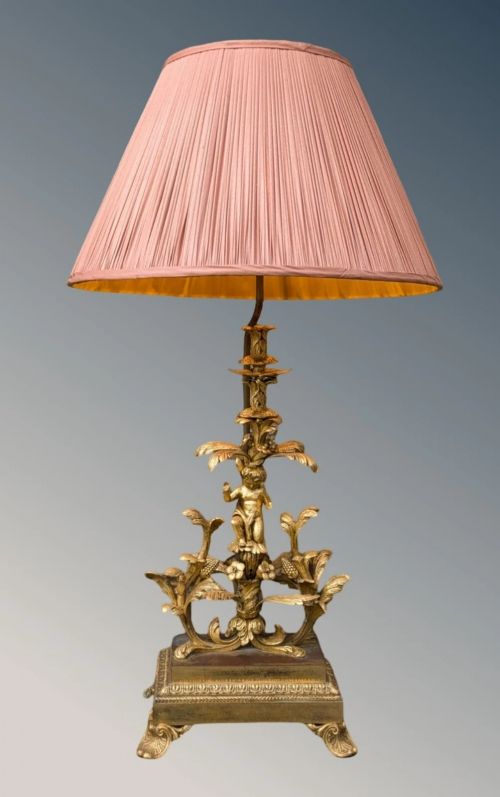
Many nineteenth-century candelabra and torchères have been adapted into table lamps over time to suit modern lighting needs. Conversions often involve running a cord through the central column while preserving the original candle nozzles.
Check the base and wiring method to determine whether the conversion was carried out professionally. Original unmounted candle arms remain desirable for traditional displays.