


Antique Marble Candelabrum
An antique marble candelabrum brings monumental presence and refined metalwork to a room, offering the sculptural solidity collectors seek in period decorative pieces.
Antique Marble Candelabrum
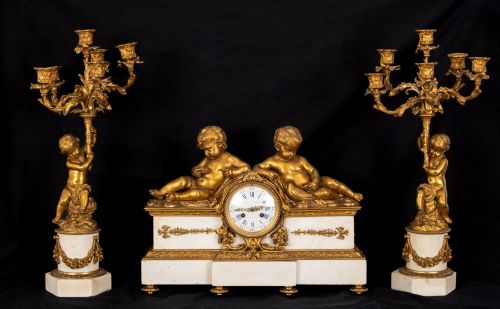
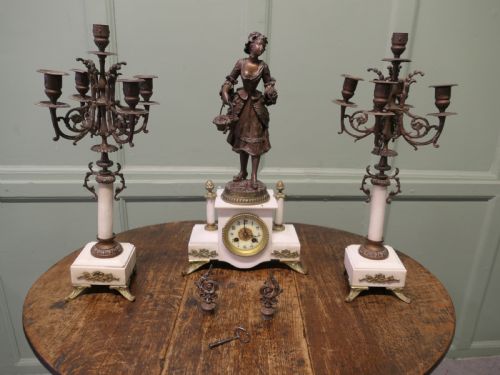
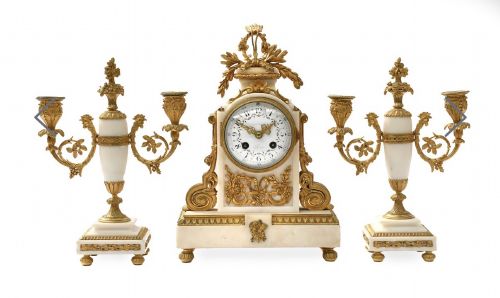
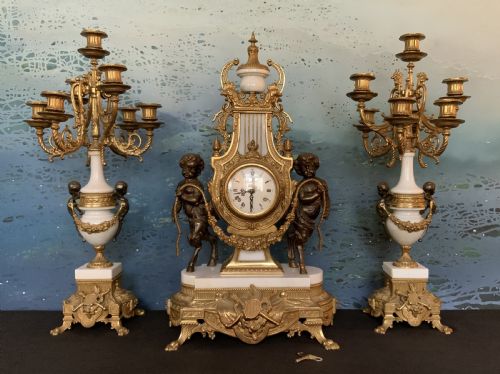
An antique marble candelabrum combines carved stone bases with branching candle holders, frequently appearing alongside matching mantel clocks as part of a garniture set. These sculptural items emerge primarily from nineteenth-century French workshops, reflecting classical revival tastes through symmetrical designs and figurative bronze mounts.
Materials and Construction Techniques
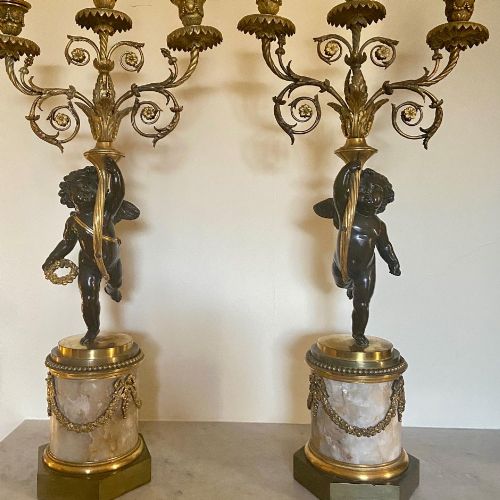
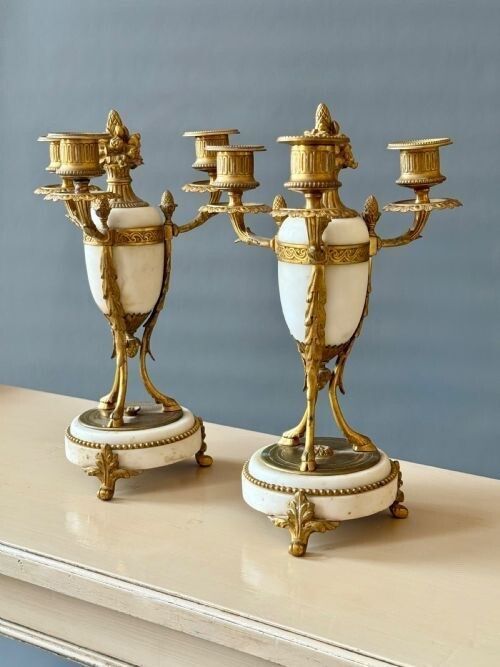
The fabrication relies on a union of turned or carved stone and lost-wax cast metal components secured by internal threaded rods and nuts. Artisans shaped white and coloured marble for the plinths and columns, pairing the stone with cast bronze that received fire gilding or ormolu finishes.
Makers integrated patinated bronze figures, cherubs, and acanthus scroll arms directly into the marble bodies using precisely fitted pins and screw assemblies. Surface chasing and micro-detailing on the bronze elements completed the process before mounting the candle sockets.
Bronze cherubs frequently double as structural supports, balancing heavy candelabra arms with surprisingly cheerful expressions.
Evaluating Quality and Execution
Inferior items often exhibit softer casting details, simple brass rather than ormolu surfaces, and visible seams or repairs within the stone work. The structural weight and the harmony between the bronze mounts and the marble turning dictate the overall standing of an object.
Francois Redmond·H Luppens Paris·Claude Clodion
The Antique Marble Candelabrum Glossary
- Ormolu
- A technique of applying finely ground high-carat gold to a bronze base using mercury, producing a durable golden finish.
- Garniture
- A set of ornamental objects designed to be displayed together on a mantelpiece, typically comprising a clock flanked by matching candelabras or vases.
- Putti
- Depictions of chubby male infants, frequently winged, used widely as sculptural supports in nineteenth-century decorative metalwork.
- Grand Tour
- The nineteenth-century practice of affluent travellers collecting classical antiquities and high-end reproduction bronzes in Europe.
Antique Marble Candelabrum: Frequently Asked Questions
What is a clock garniture?
A clock garniture is a matched set of three decorative objects designed for display on a mantelpiece. It consists of a central clock flanked by two matching side pieces, such as candelabras or urns.
The matching items share identical materials, styles, and foundry techniques to create a unified visual statement across a fireplace or sideboard.
How are antique candelabras cleaned?
Cleaning requires gentle dusting with a soft brush to protect fragile gilt bronze and porous marble surfaces. Liquid cleaners and abrasive cloths should be avoided entirely to prevent permanent damage to the historic finishes.
Moisture can seep into unsealed stone or react with old metal treatments, so professional conservation advice is recommended for deeper restoration work.
Are these pieces wired for electricity?
Original nineteenth-century candelabras were built strictly for wax candles and retain their original sockets and drip pans. Some examples have been converted into electric lamps over the decades.
Collectors generally look for unaltered candle holders, though conversion methods vary depending on whether the wiring runs externally or through the central core.
How can I date a marble candelabrum?
Dating relies on examining the casting quality, fastener types, marble turning styles, and stylistic markers associated with periods like Louis XVI Revival or the Victorian era. Hand-cut threaded screws and heavy fire gilding typically point to earlier nineteenth-century production.
Maker signatures stamped into the bronze or registry marks on the clock movements provide the most precise chronological evidence.