

Gold Bronze Candle Holders
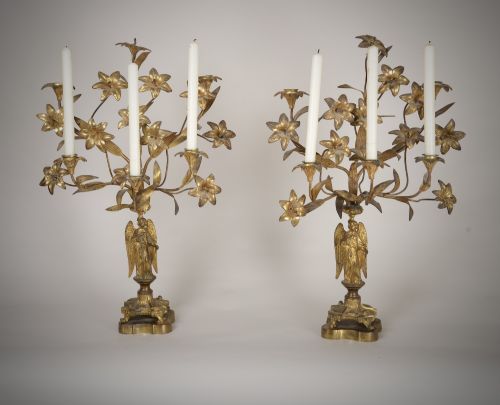
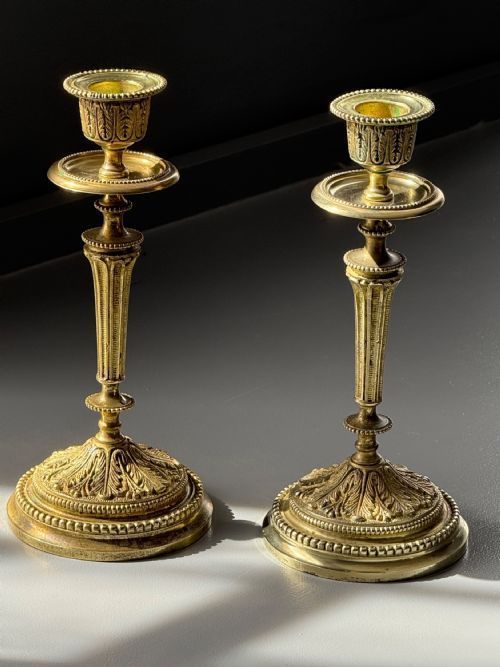
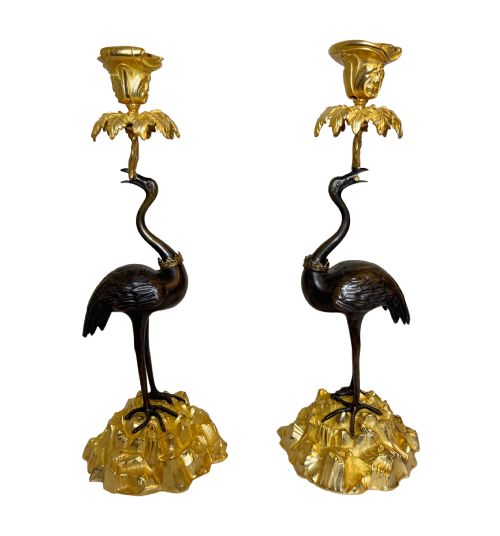
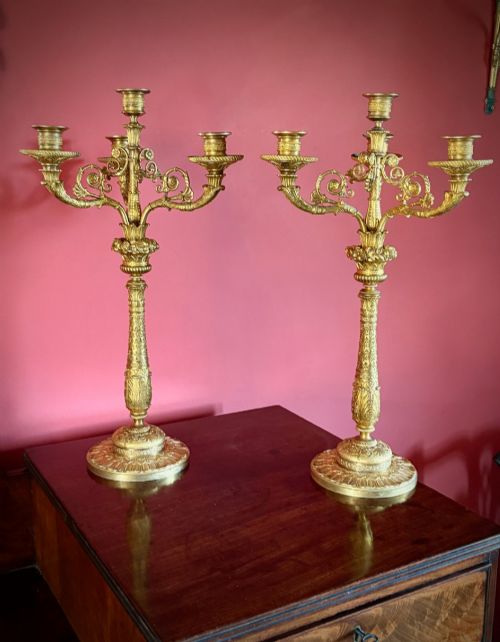
Gold bronze candle holders bring heavy French presence to a room, cast in bright ormolu and dark patinated bronze.
What gold bronze candle holders are
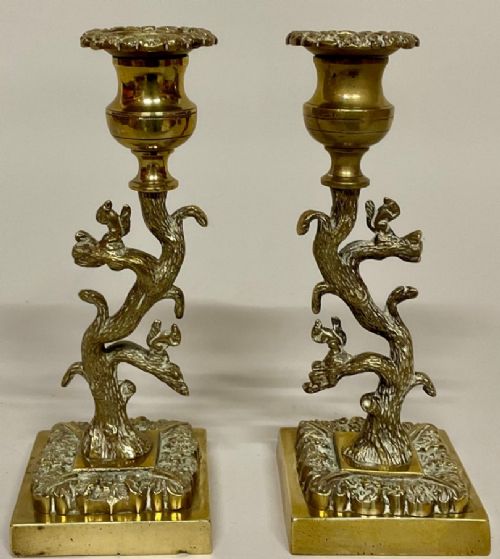
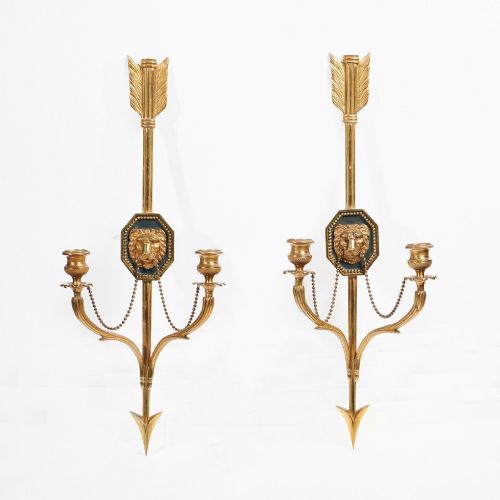
Gold bronze candle holders encompass pairs of heavy candlesticks and multi-armed candelabra originating from nineteenth-century France. Buyers searching this phrase look for substantial metalwork that captures the classical dignity of the Regency and Empire periods.
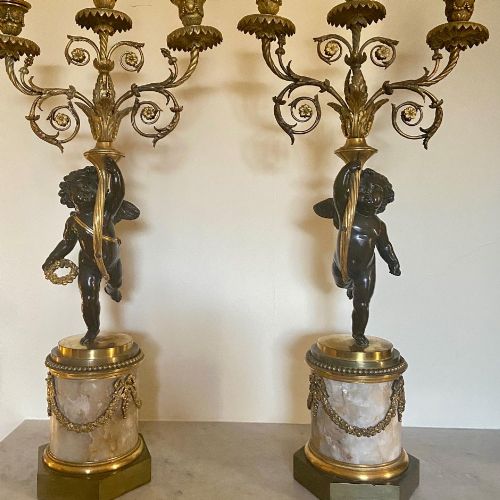
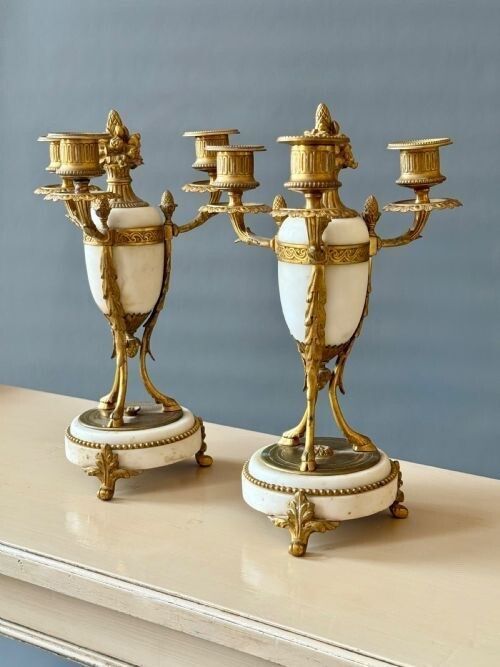
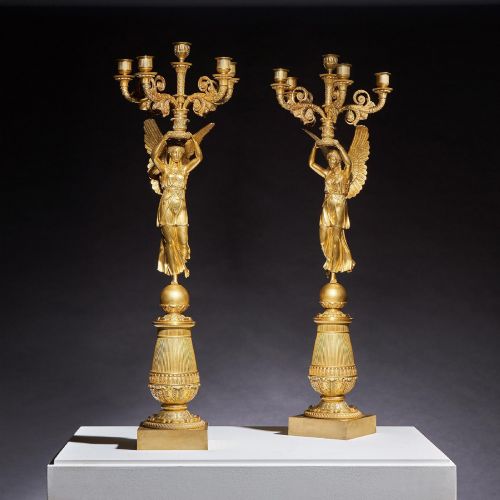
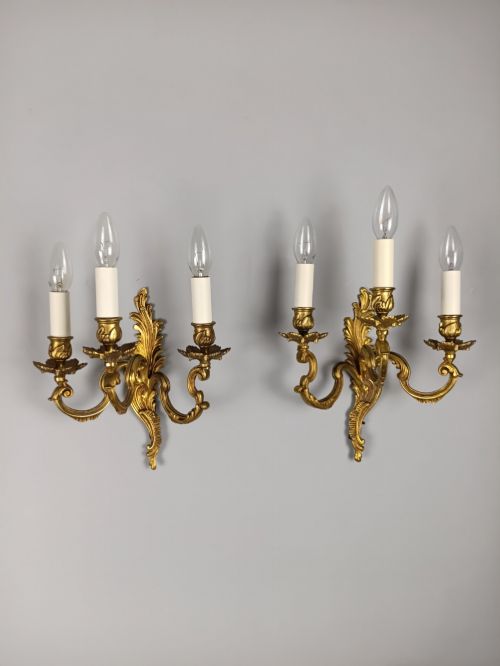
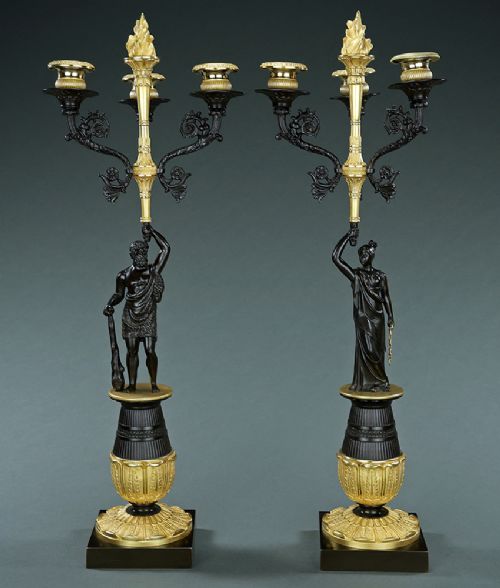
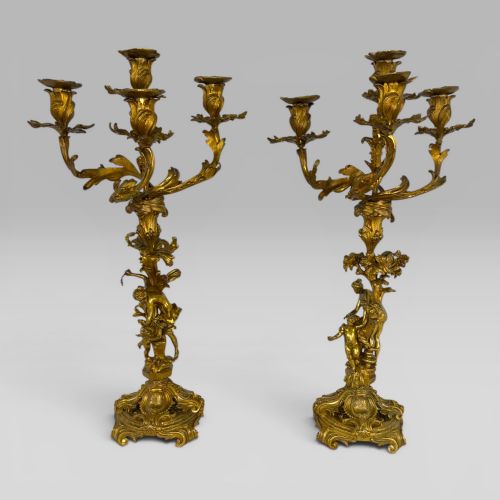
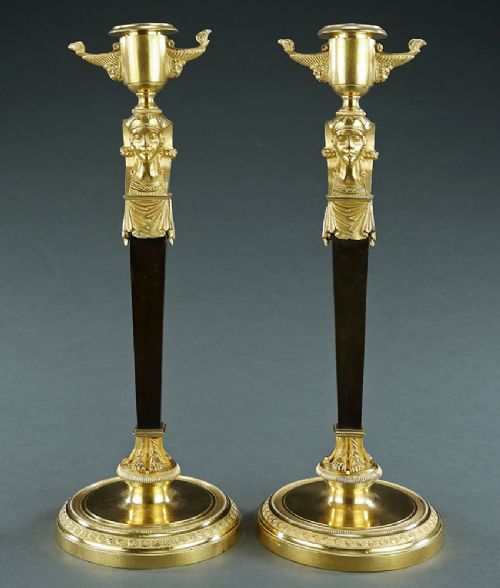
The pieces appearing on this page span several distinct nineteenth-century styles, including Louis XVI, French Empire, French Rococo Revival, and Neoclassical designs. Candlesticks and candelabra dominate the forms, frequently pairing cast bronze with marble or slate bases.
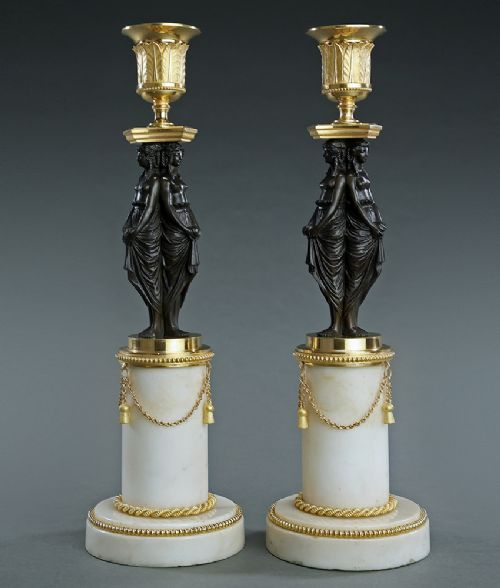
Makers and designers of the period drew upon classical motifs, incorporating caryatids, cherubs, and architectural proportions into the metalwork. These items reflect the elaborate interior schemes of the eighteen-hundreds through to eighteen-eighty.
How they were made
Foundries produced these pieces using traditional metal-casting techniques, working primarily in bronze, gilt bronze, and ormolu. Artisans combined bright mercury gilding with darker patinated bronze surfaces to create striking visual contrast within a single object.
Many examples integrate contrasting structural elements, mounting the cast metal components onto carved marble or slate plinths. Candelabra designs incorporated articulated arms that could hold multiple candles, requiring precise balancing and secure joinery.
Retail Price Guide 2026
Typical UK retail prices for gold bronze candle holders, calculated from the Sellingantiques database of over a million retail prices indexed since 2003. This retail price guide relies exclusively on Sellingantiques data; no external sources or auction records are used, so the figures do not describe the wider market.
Several pairs feature small bronze cherubs holding up candle sockets, maintaining a cheerful watch over the dining table for well over a century.
What varies in quality
The integration of mixed materials also defines the hierarchy of pieces, with heavier marble bases and well-fitted slate plinths indicating superior construction. The weight of the bronze and the structural stability of multi-arm candelabra distinguish standard production from exceptional studio work.
The Gold Bronze Candle Holders Glossary
- Ormolu
- Gilt bronze produced by applying a mercury and gold amalgam to a bronze base and heating it. This technique creates a rich, lasting golden surface common on fine French decorative objects.
- Patinated bronze
- Bronze that has been chemically treated to produce a dark, matte surface finish. It provides contrast against bright gilt sections.
- Caryatid
- A sculpted female figure serving as an architectural support. These figures frequently form the stem of classical candlesticks.
- Candelabra
- A branched candlestick holding multiple lights. Nineteenth-century examples often feature removable arms.
- Slate
- A fine-grained metamorphic rock used for durable bases. It adds substantial weight and stability to tall candle holders.
Frequently Asked Questions
What is the difference between ormolu and gilt bronze?
Ormolu specifically describes the historical French process of mercury gilding applied to bronze during the eighteenth and nineteenth centuries.
In modern description, the terms often overlap, but true ormolu possesses a distinctive warm lustre and depth not found in simple modern plating.
Were these pieces made for actual use?
Nineteenth-century workshops created these items to provide functional illumination in grand reception rooms and formal dining spaces.
Today, many owners continue to burn taper candles in them, though care must be taken to catch dripping wax before it touches the metal.
How do I identify a Regency period piece?
Regency metalwork typically draws heavily on classical Greek and Roman motifs, reflecting British and continental tastes of the early eighteen-hundreds.
Look for austere architectural lines, patinated surfaces combined with gilt highlights, and references to ancient sculpture.