

French Empire Lighting
French empire lighting brings imposing classical form and gilt bronze brilliance into a room, offering striking chandeliers and candelabra.

French Empire Lighting
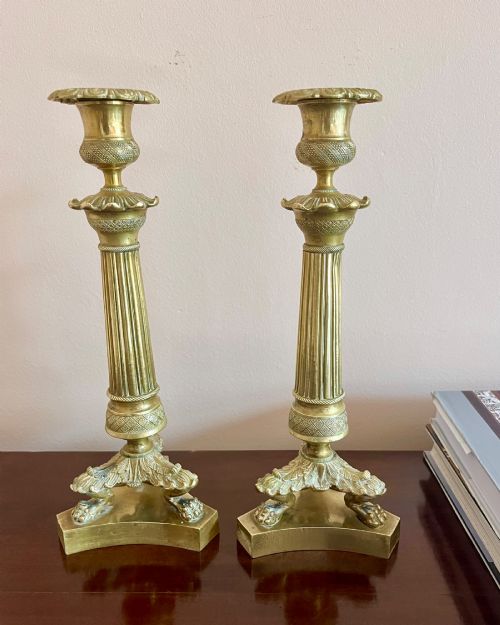
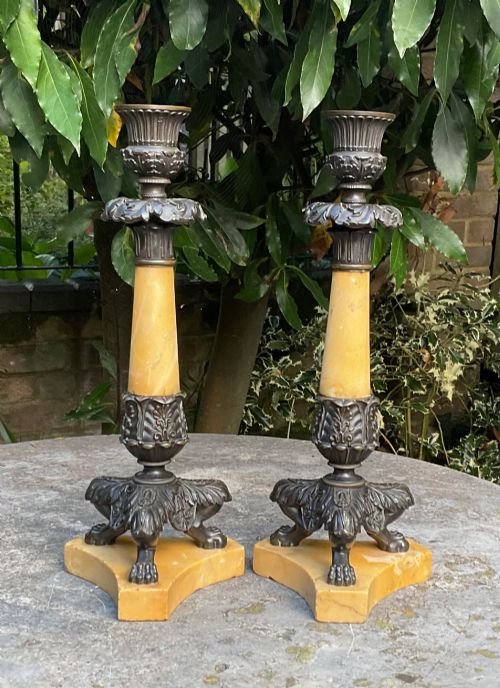
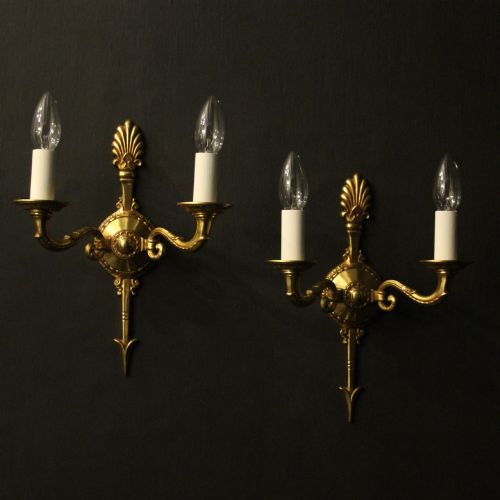
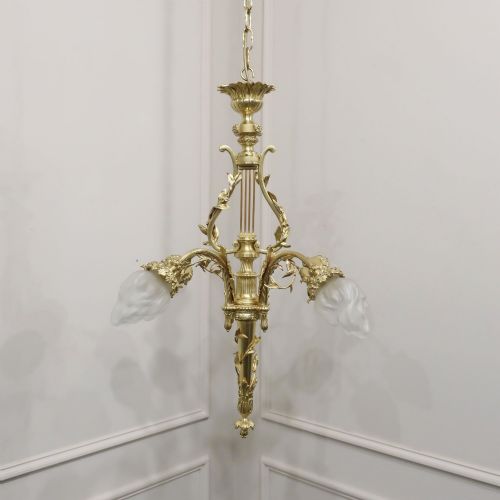
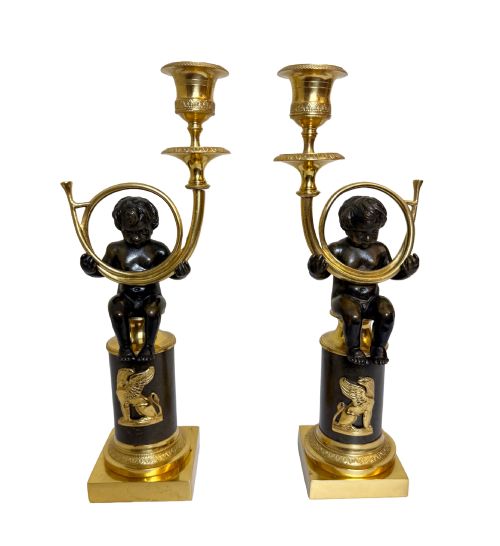
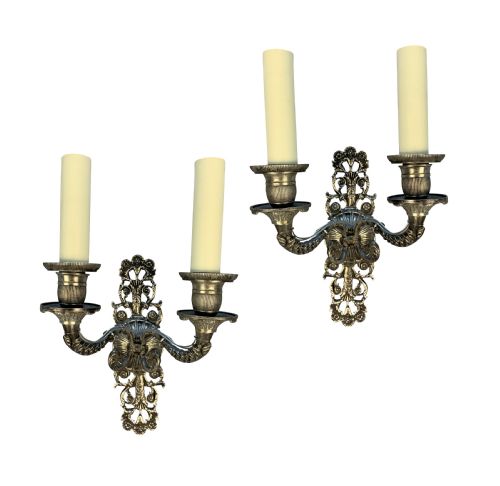
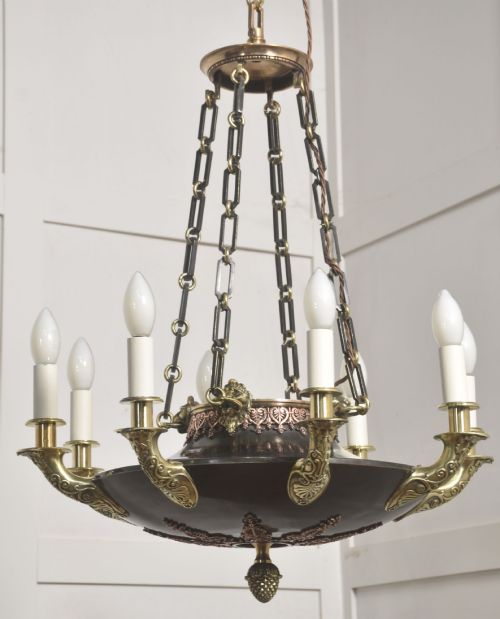
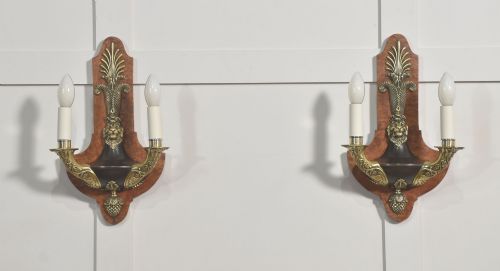
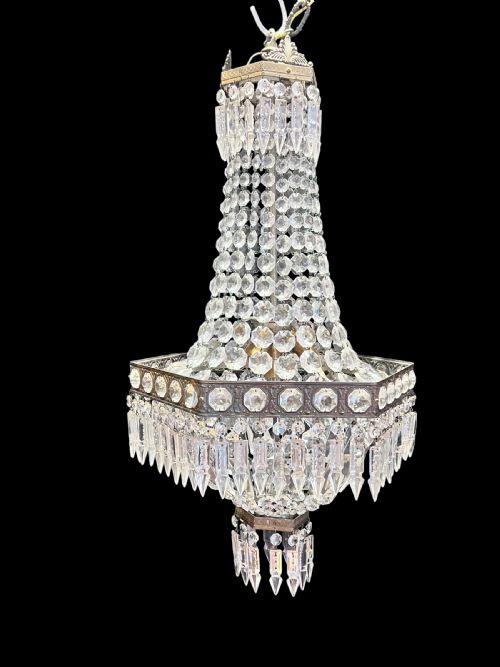
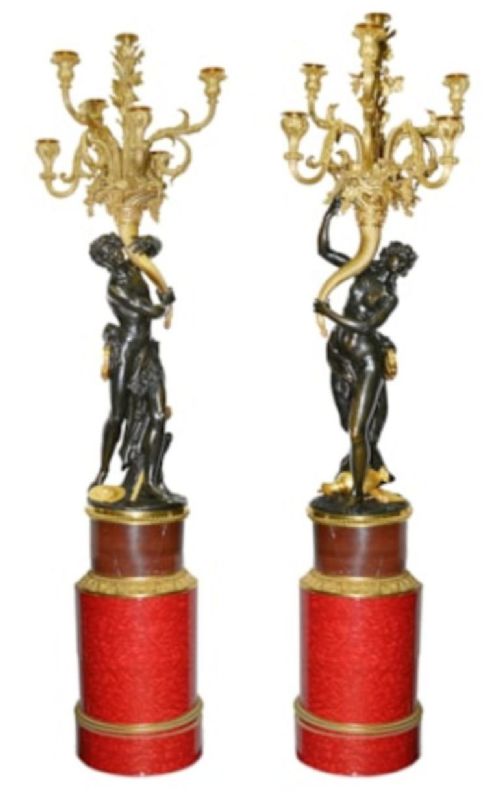
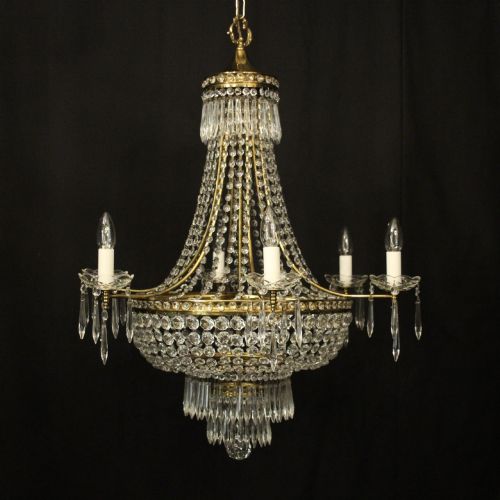
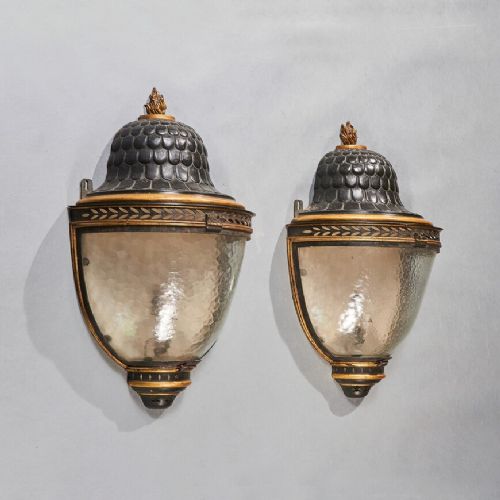
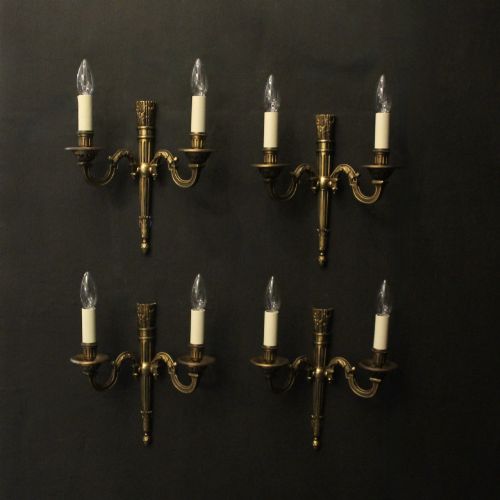
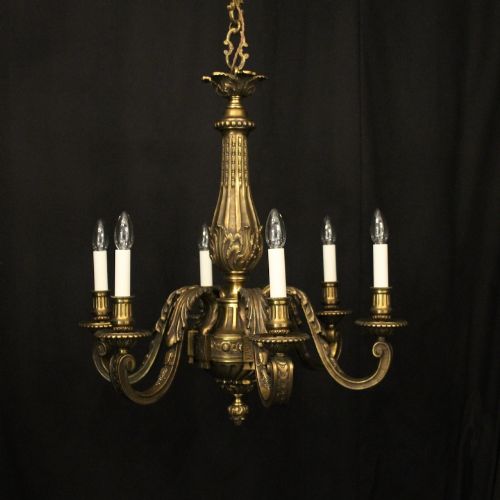
When you search for french empire lighting, you encounter stately fixtures spanning the nineteenth century through revival periods, including grand tent and waterfall chandeliers, multi-armed candelabra, wall lights, and candlesticks.
The objects derive their lineage from strict classical antiquity, blending military motifs and neoclassical symmetry with rich French decorative arts.
Most pieces on this page take the form of ceiling chandeliers and matched pairs of wall sconces or table candelabra, utilising bronze, brass, and cut crystal.
How they were made
Foundry workers cast components in bronze or brass before applying fire gilt or ormolu to achieve a durable golden finish alongside patinated dark bronze sections.
Casting methods allowed for crisp relief work, incorporating classical figures, rams heads, and leaf decoration into heavy structural mounts.
Chandeliers suspended glass crystals in tent and waterfall configurations, while candelabra combined metalwork with white marble bases and turned components.
French Empire Lighting Retail Price Guide 2026
Typical asking prices for french empire lighting among the pieces listed under this phrase on Sellingantiques today, from the lower quarter to the upper quarter. They describe what is for sale here now, not the wider market.
Listings feature brass, gilt bronze, and cut crystal across the nineteenth century and revival periods.
What varies in quality
The refinement of the casting and chryselephantine or gilt surface preparation dictates the visual impact of each fixture, distinguishing sharp hand-tooled details from softer commercial production.
Weight and structural integrity separate substantial domestic and salon installations from lighter revival pieces, visible in the thickness of the bronze mounts and the purity of the cut crystal drops.
Pierre Philippe Thomire
The French Empire Lighting Glossary
- Ormolu
- A technique of applying finely ground high-carat gold to a bronze object using a mercury amalgam before firing. This produces a warm golden lustre that resists tarnishing over centuries.
- Patinated bronze
- Metal treated with chemical solutions to create a dark, stable surface tone. It contrasts sharply with bright gilt elements on classical figures.
- Tent and waterfall
- A chandelier arrangement featuring strings of cut glass beads forming an upper conical tent above a cascading tier of drops. This design maximises light reflection from candles or early bulbs.
- Candelabra
- A branched candlestick holder designed to support multiple candles simultaneously. They frequently stand on marble plinths decorated with classical motifs.
- Bouillotte lamp
- An adjustable desk or table lamp featuring a central shaft, multiple candle arms, and a painted metal shade. They originated in France for card games.
French Empire Lighting: Frequently Asked Questions
What rooms suit french empire lighting?
Grand chandeliers and heavy candelabra demand high ceilings and formal spaces where their verticality and classical detailing command attention. They anchor dining rooms and entrance halls effectively.
Smaller wall lights and bouillotte desk lamps adapt easily to studies or bedrooms, introducing warmth and historical texture without dominating the floor plan.
How do I distinguish original pieces from revivals?
Nineteenth-century originals display heavy cast bronze components, hand-chased surface details, and construction methods appropriate to pre-industrial workshops. Fasteners and fixings show hand-threading or specific period screw types.
Revival pieces from later decades often utilise lighter brass pressings, simpler casting techniques, or standardised modern fixings while copying the exact classical vocabulary of the original era.
Were these fixtures electrified later?
Many period chandeliers and wall lights transition from candle power to electricity during the twentieth century, requiring careful rewiring to meet contemporary safety standards. The original drip pans and candle tubes often convert to house bulb holders.
When examining a wired fixture, check whether the conversion preserves the structural integrity of the metal arms and central brass channels.
What materials appear most frequently?
Gilt bronze, ormolu, and patinated bronze form the primary metallic structure for figures, arms, and mounts. These combine frequently with white marble bases and brass components.
Chandeliers introduce cut glass and crystal drops, while specific table or desk lamps incorporate green toleware shades and burr walnut details.