

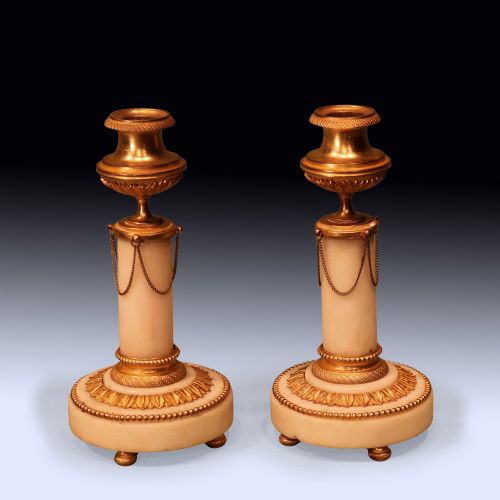


Empire Style Candle Holders
Empire style candle holders bring classical symmetry and gleaming metalwork into a room, capturing nineteenth-century grandeur.
Empire Style Candle Holders
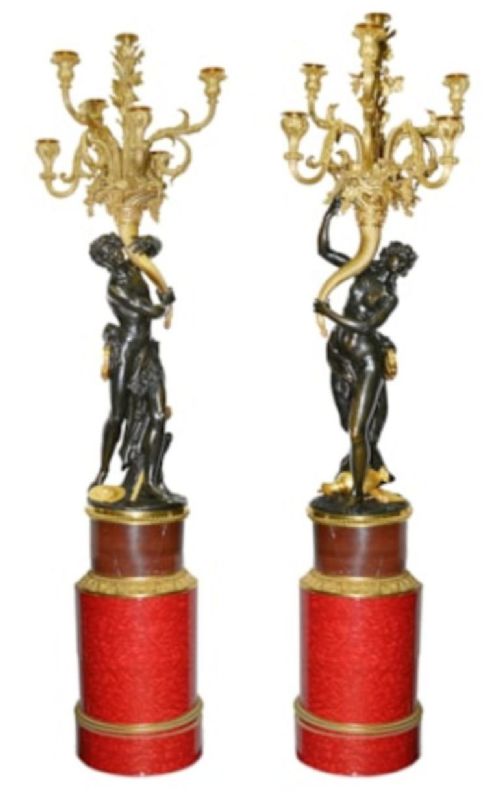
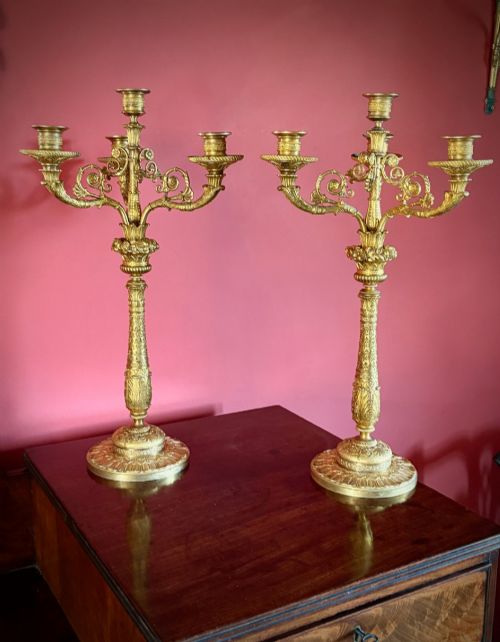
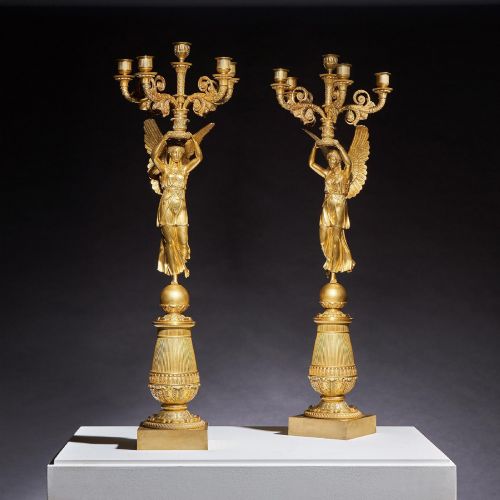
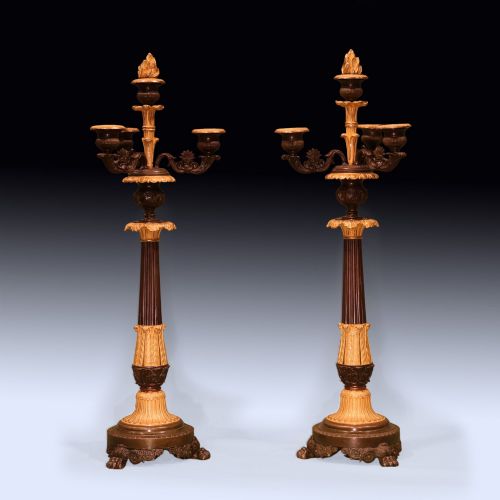
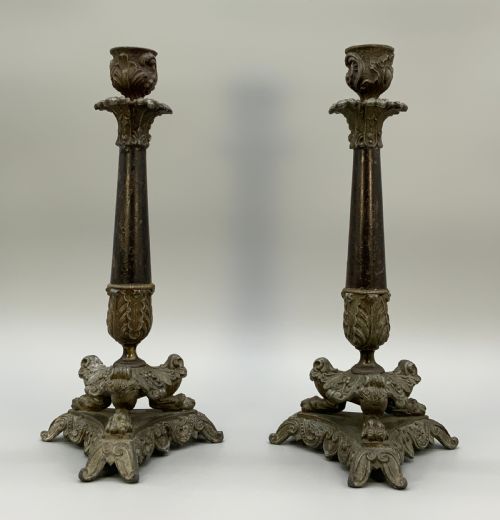
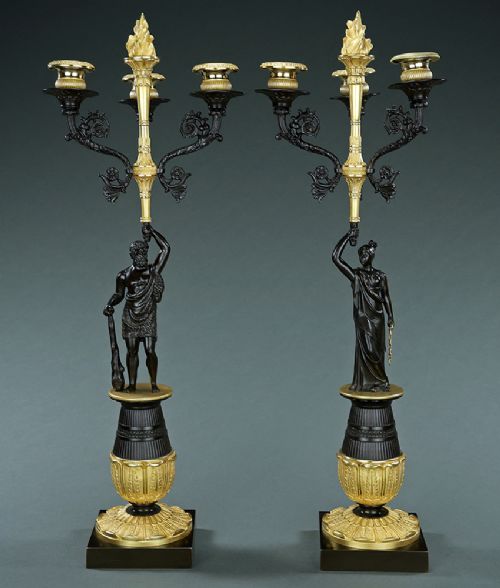
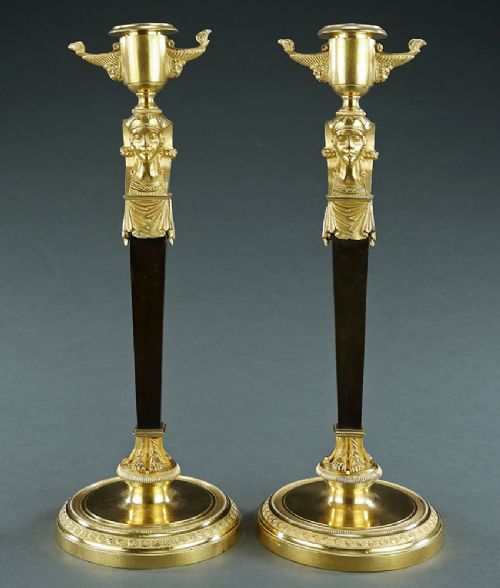
When you search for empire style candle holders, you encounter heavy lighting pieces originating mainly in the nineteenth century, including the Regency and Georgian periods. These items draw heavily on French Empire, Neoclassical, and Swedish Empire design vocabulary, often taking the form of paired candelabra or individual candlesticks.
The objects frequently combine two contrasting metal finishes, pairing dark patinated bronze with bright gilt bronze or ormolu. Many incorporate white marble bases or figure-led columns depicting classical motifs, mythological figures, and winged putti.
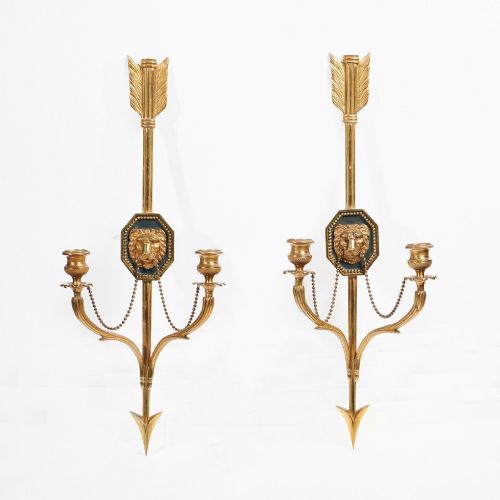
You also meet wall sconces, desk pieces, and adjustable multi-arm arrangements alongside standard table candle holders. The physical evidence demonstrates a strong preference for symmetrical pairs designed to anchor a mantelpiece or sideboard.
Materials and construction
The manufacturing process relies primarily on casting bronze and brass, which workers then finished with fine chasing and mercury gilding to create ormolu sections. Patinated bronze supplies a dark, matte contrast to the reflective gilded surfaces, while white marble frequently forms the plinths and column shafts.
Makers integrated structural elements through precision casting, assembling individual components such as drip pans, bobeches, and figural shafts into multi-arm candelabra or single candlesticks. Secondary materials like brass and cast metal appear in various pieces alongside natural stone.
Empire Style Candle Holders Retail Price Guide 2026
Typical asking prices for empire style candle holders among the pieces listed under this phrase on Sellingantiques today, from the lower quarter to the upper quarter. They describe what is for sale here now, not the wider market.
Listings feature items spanning the 19th Century, Georgian, and Regency periods, alongside later 1930s examples.
Assessing quality and execution
The depth and durability of the gilding also define the upper tier of objects, where the original ormolu retains a warm, glowing lustre rather than a flat yellow sheen. Furthermore, the harmonious integration of contrasting materials, such as tight joints between patinated bronze and white marble, signals careful workshop assembly.
Pierre Philippe Thomire·Galle
The Empire Style Candle Holders Glossary
- Ormolu
- Gilded bronze produced by applying a mixture of gold and mercury to a bronze base and heating it. This technique creates a rich, durable golden surface characteristic of nineteenth-century decorative metalwork.
- Patinated Bronze
- Bronze treated to achieve a dark, controlled surface oxidation. This treatment creates a stable, matte finish that contrasts sharply with bright gilt elements.
- Candelabra
- A branched lighting device holding multiple candles. These objects typically feature a central shaft dividing into several arms for illumination.
- Bobeche
- A removable collar or small dish placed below the candle socket. It catches melting wax and protects the arms and base of the holder.
- Caryatid
- A sculpted female figure serving as an architectural support. In these pieces, the figure often forms the central shaft of the candlestick.
Empire Style Candle Holders: Frequently Asked Questions
What periods do these pieces date from?
The items span the nineteenth century, covering the Regency, Georgian, and French Empire eras, with occasional pieces from later decades up to the 1930s.
Most surviving examples date from the central decades of the eighteen-hundreds, reflecting popular neoclassical revivals.
How were empire style candle holders used?
They provided portable illumination for dining tables, mantelpieces, and desks before the widespread adoption of gas and electric lighting.
Paired candelabra also functioned as decorative ornaments, enhancing the symmetrical arrangement of formal nineteenth-century rooms.
How do you clean ormolu and bronze safely?
Dusting gently with a dry, soft brush is the safest method to remove particle buildup without disturbing the historic surface.
Harsh chemical polishes must be avoided entirely, as they strip away the original gilding and alter the patination.
How do I distinguish French Empire from Regency pieces?
French Empire pieces often lean heavily into strict classical mythology, military motifs, and rich ormolu mounts inspired by Napoleonic design.
Regency examples frequently incorporate British interpretations of classical forms, including distinct bronze and ormolu combinations with local aesthetic touches.