



Egyptian Revival Decor
Egyptian revival decor brings classical pharaonic motifs into European interiors through bronze, marble and gilt wood.
What egyptian revival decor pieces are
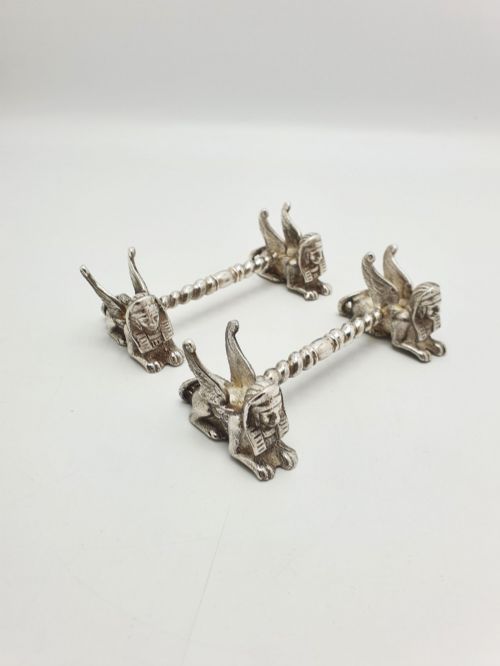
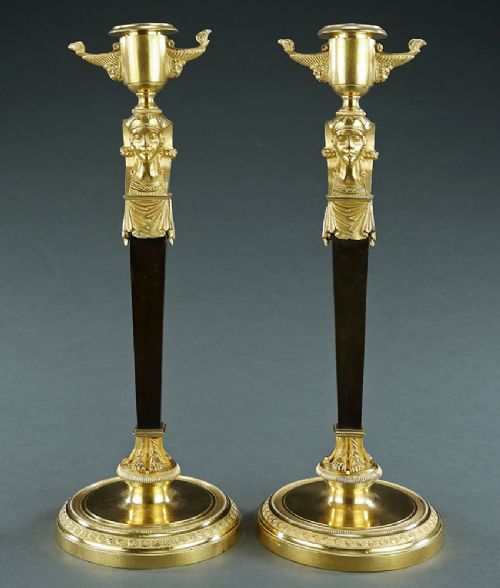
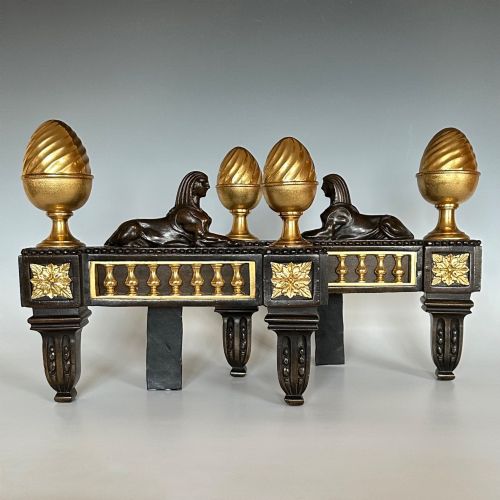
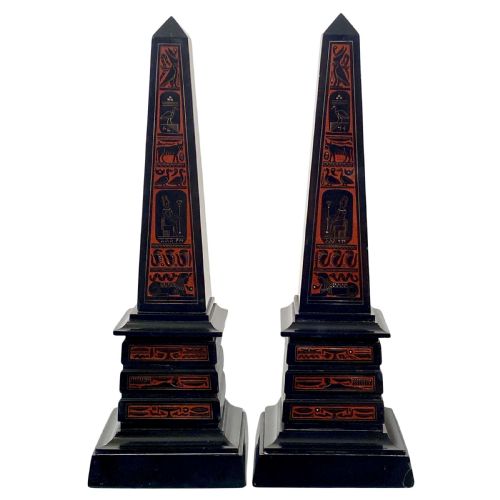
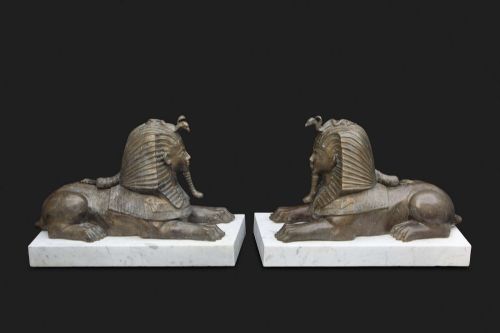
Egyptian revival decor encompasses sculptural objects and furnishings inspired by ancient forms, spanning the nineteenth century through the mid twentieth century. These pieces draw directly on classical motifs, manifesting as sphinxes, obelisks, shabtis and figural candelabras.
How they were made
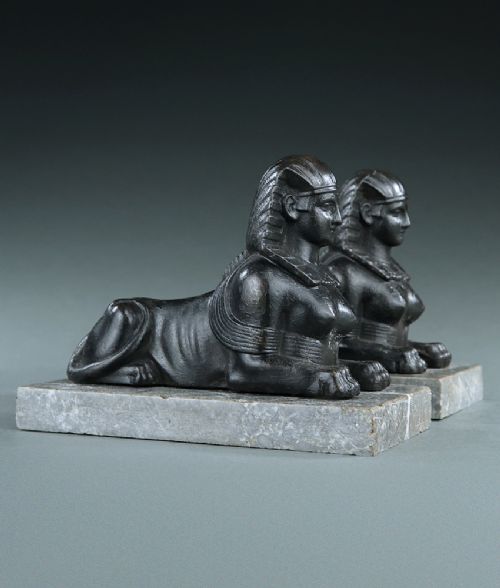
Maker workshops utilised durable metals including bronze, patinated bronze, gilt bronze and cast iron to cast sculptural figures and candlesticks. These metal components were frequently paired with stone elements such as black marble, rouge griotte marble, Carrara marble and granite.
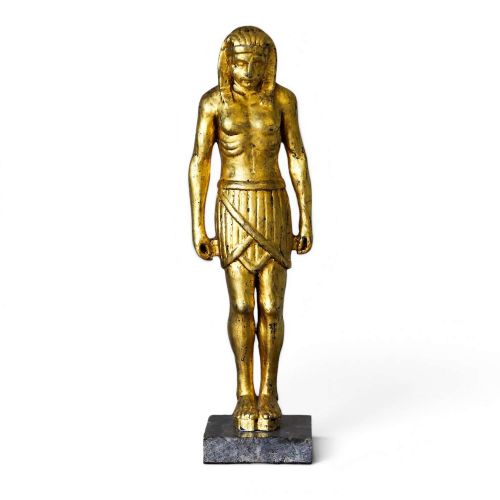
Wooden elements received gilt finishes to complement the heavy metallic and stone structures typical of the French Empire and nineteenth century aesthetic. Surface detailing relied on precise casting and patination techniques to emulate ancient artefacts.
Retail Price Guide 2026
Typical UK retail prices for egyptian revival decor, calculated from the Sellingantiques database of over a million retail prices indexed since 2003. This retail price guide relies exclusively on Sellingantiques data; no external sources or auction records are used, so the figures do not describe the wider market.
Listings span the nineteenth century, Victorian era, nineteen twenties and nineteen fifties, incorporating gilt bronze, marble, granite and cast iron.
What varies in quality
Quality diverges between monumental sculptures with fine chasing and standard decorative items produced in series. The crispness of the bronze casting and the selection of high grade marbles dictate the visual weight and refinement of each object.
The Egyptian Revival Decor Glossary
- Sphinx
- A mythical creature with the body of a lion and a human head, frequently rendered in bronze or cast iron as ornamental pairs. These figures anchor classical furniture schemes.
- Obelisk
- A tall, four sided tapering monument ending in a pyramid shape, commonly carved from black marble or granite during the nineteenth century. They served as popular souvenirs for travellers on the Grand Tour.
- Shabti
- A small funerary figure placed in ancient tombs, represented here in wood with gilt finishes mounted on stone bases. Collectors prize these miniature interpretations for their cabinet presence.
- Grand Tour
- A cultural journey of Europe undertaken by wealthy young men in the eighteenth and nineteenth centuries, yielding classical and egyptian revival decor souvenirs. These items reflect the academic taste of the period.
Frequently Asked Questions
What materials are common in egyptian revival decor?
These pieces incorporate metals such as bronze, gilt bronze, patinated bronze and cast iron. Stone bases and columns utilise black marble, rouge griotte marble, Carrara marble and granite.
Wooden elements with gilt finishes also appear among nineteenth century shabti figures and architectural ornaments.
How do I date a piece of egyptian revival decor?
Dating relies on material analysis and stylistic markers linked to the nineteenth century, Victorian era, and twentieth century revivals. Nineteenth century items often reflect Grand Tour origins or French Empire influences.
Later pieces from the nineteen twenties and nineteen fifties exhibit distinct casting methods and stone selections compared to Victorian works.
Where were sphinxes and obelisks displayed historically?
Pairs of sphinxes and marble obelisks functioned as mantelpiece ornaments, desk accessories, and architectural table centerpieces in nineteenth century drawing rooms. Their heavy bronze and stone construction suited formal domestic interiors.
They often served as conversation pieces that demonstrated the owner's classical education and travel history.
What is a Grand Tour souvenir?
Grand Tour souvenirs were portable artworks and antiquities purchased by travellers visiting cultural centres across Europe and the Mediterranean. Items like marble obelisks and wooden shabtis brought home academic prestige.
These objects bridged classical archaeology with Victorian interior decoration.