


Bronze Taper Candle Holders
Bronze taper candle holders are cast metal pieces designed to hold narrow wax lights, bringing period weight and refined illumination to a room.
Bronze Taper Candle Holders
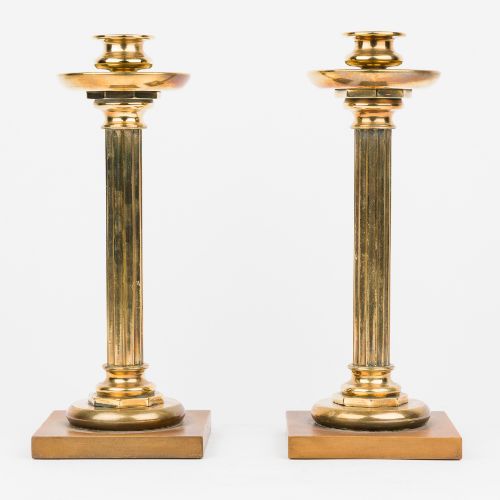
When you search for bronze taper candle holders, you are looking at small candlesticks designed for slender wax lights, produced across the eighteenth and nineteenth centuries. The pieces available here include pairs from the Regency, Victorian, and Art Deco periods, alongside French Empire and Louis XVI styles.
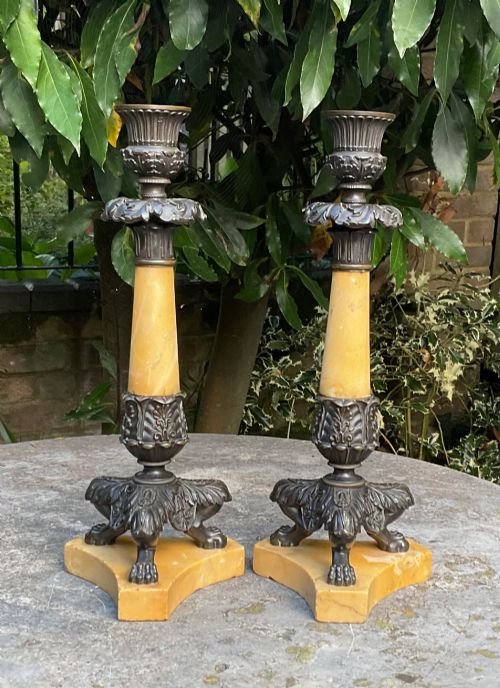
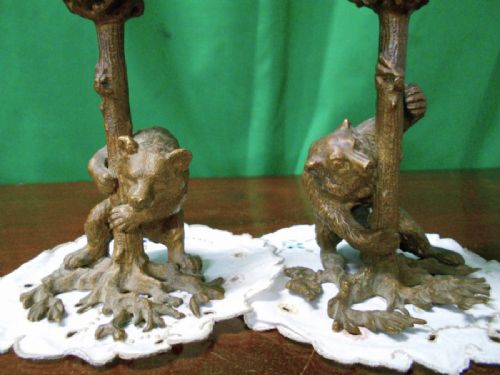
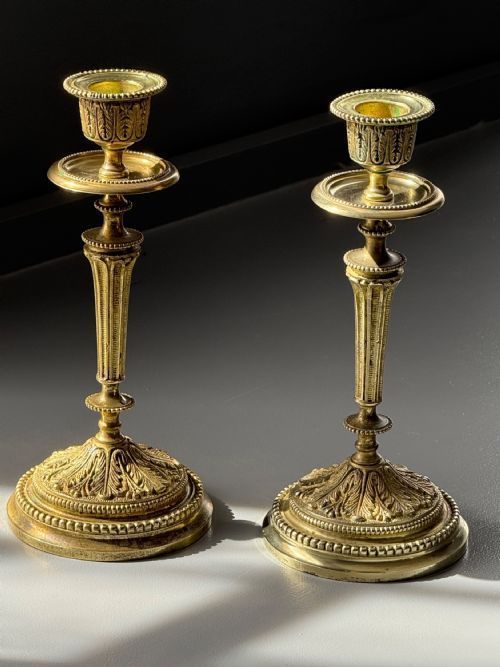
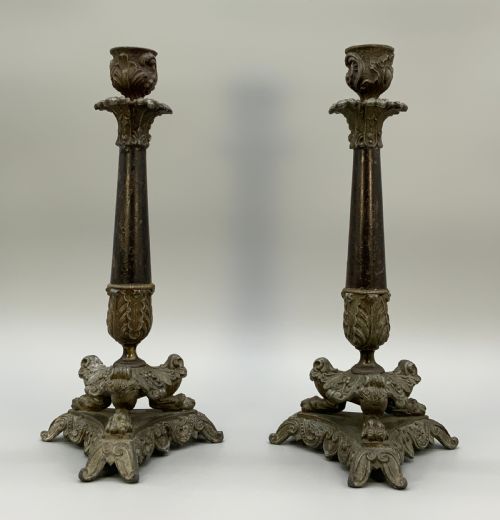
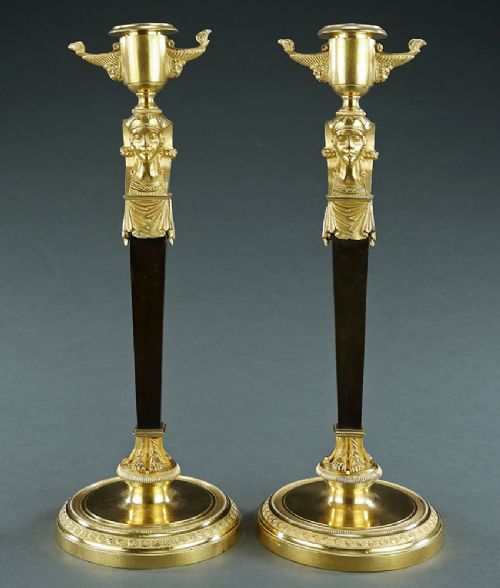
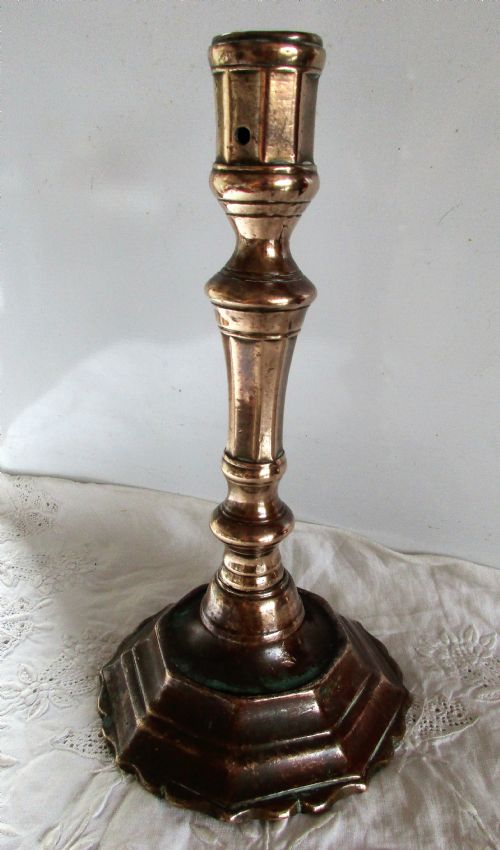
Most examples you will meet on this page are cast in bronze or patinated bronze, often paired with marble bases or enriched with ormolu and gilt highlights. They range from English Georgian single sticks to French Grand Tour souvenirs and figural Black Forest bear designs.
The selection leans heavily toward pairs, spanning classical urn forms, caryatid shafts, and Egyptian Revival motifs. These items served functional lighting roles on desks and mantelpieces before becoming decorative objects of interior display.
How they were made
The primary material is cast bronze, utilised either in its natural dark patinated state or highlighted with ormolu, gilding, and silvering. Workshops employed sand casting or lost-wax techniques to achieve crisp detail in foliage, figures, and classical ornament.
Many of the nineteenth-century examples incorporate secondary elements such as white marble bases, cloisonné enamel, and micro mosaic panels. Components were turned on lathes and assembled mechanically, joining cast shafts to weighted bases for stability.
Listings span the eighteenth century to the twentieth century, with nineteenth-century French and English production forming the majority of the material.
What varies in quality
The distinction between standard production and superior work lies in the crispness of the chasing and the depth of the original patination. Finer pieces retain sharp definition in the cast foliage and drapery, whereas lower grades suffer from smoothed details and soft edges.
The choice of secondary materials also dictates quality, with heavy marble plinths, fire-gilt ormolu, and integrated mixed media like cloisonné marking out the more ambitious examples. Construction integrity, such as solid threading and true vertical alignment of the sockets, separates workshop standards.
Ferdinand Barbedienne·Galle
The Bronze Taper Candle Holders Glossary
- Ormolu
- Finely ground high-carat gold mercury-gilded to a bronze object. This technique gives a warm, enduring finish characteristic of French Empire and Louis XVI decorative metalwork.
- Patinated bronze
- Metal treated chemically or exposed to air to produce a controlled dark surface oxide. It provides protection and a rich, muted tone to the cast form.
- Grand Tour
- Nineteenth-century souvenirs acquired by wealthy travellers visiting continental Europe. These pieces often reproduce classical architecture and mythological figures in bronze.
- Caryatid
- A sculpted female figure serving as an architectural support or candlestick shaft. They appear frequently in Regency and nineteenth-century classical revival designs.
- Retour d'Egypte
- A French design style inspired by Napoleon's campaign in Egypt. It incorporates pharaonic motifs, sphinxes, and lotus capitals into bronze lighting forms.
Bronze Taper Candle Holders: Frequently Asked Questions
What is a taper candle holder?
A taper candle holder is a small candlestick specifically made to support thin wax tapers rather than thick domestic candles. They were used for lighting letters, sealing wax, or carrying light through corridors.
These pieces typically feature a narrow nozzle and a compact drip pan or base. Their small scale allowed them to sit comfortably on writing desks and bedside tables.
How do I date a bronze candlestick?
Dating relies on stylistic clues, casting methods, and material combinations matched to the periods represented in the evidence. Regency and Georgian items show distinct classical restraint, whereas later nineteenth-century pieces embrace eclectic revivals like Art Deco and Egyptian styles.
Examine the construction of the base and socket joints for signs of period assembly techniques. Patination types and the presence of secondary materials such as marble also help narrow down the decade of production.
Are these candle holders made of solid bronze?
Many examples are cast in solid bronze, while others utilise cast metal or brass with specific patination and gilding. French and English workshops employed various casting alloys depending on the intended finish and period.
Heavier items often combine bronze components with marble plinths or internal weights to ensure stability. Surface finishes range from dark chemical patinas to bright fire-gilt ormolu.
How should I clean antique bronze?
Antique bronze requires minimal intervention to preserve its historical patinated surface and finish. Dusting with a soft dry cloth is usually sufficient for regular maintenance.
Avoid abrasive polishes, water, or chemical cleaners that can strip away the original patination or damage delicate gilding. Professional advice should be sought if deeper conservation is required.