



Antique Marble Obelisk
These antique marble obelisk pieces bring classical architectural form and striking mineral colour to a mantelpiece or desk.
Antique Marble Obelisk
An antique marble obelisk draws on ancient Egyptian monuments adapted through centuries of European taste, notably via Grand Tour souvenirs and the Neoclassical revival. These decorative objects take the classic tapering four-sided shaft and pyramidion apex, rendered in miniature for domestic display.
The versions most commonly met on this page date from the nineteenth and early twentieth centuries, spanning Victorian, Art Deco, and Egyptian Revival aesthetics. They appear primarily as decorative sculptures, desk ornaments, and occasional functional pieces such as thermometers or lamps.
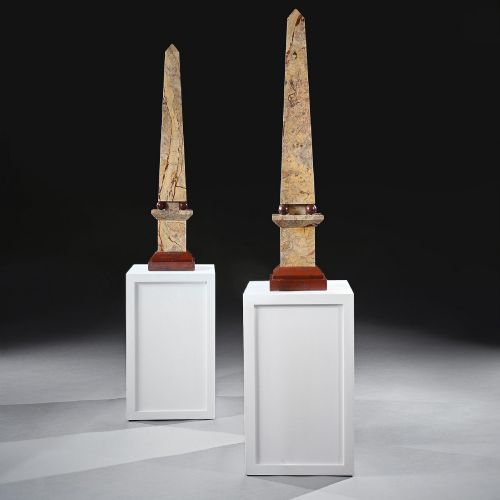
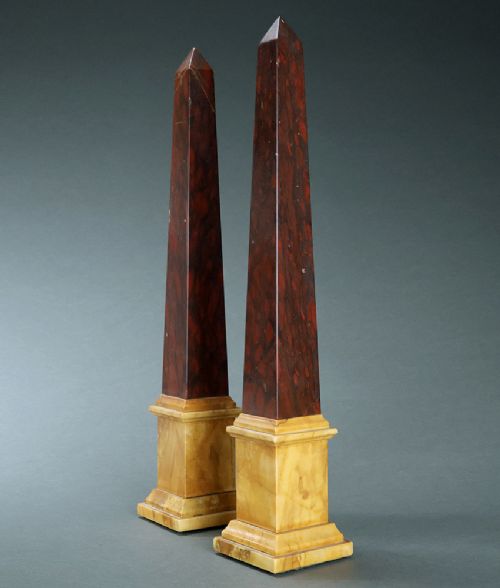
Originating predominantly from workshops in Italy, France, and Britain, these pieces range from simple single columns to monumental pairs. Collectors encounter both plain monochrome stones and elaborate multi-mineral compositions designed to catch the light and anchor a room.
Materials and construction
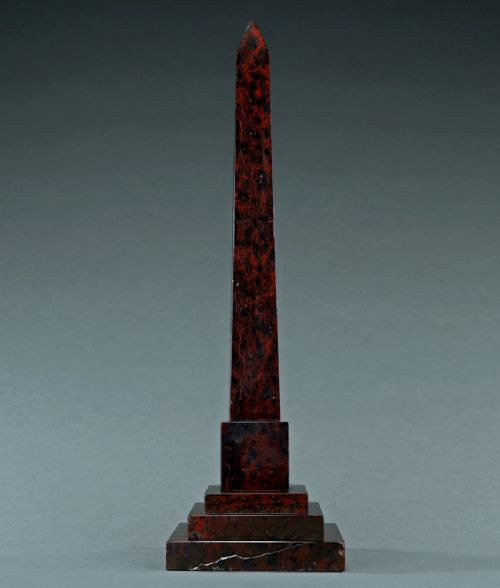
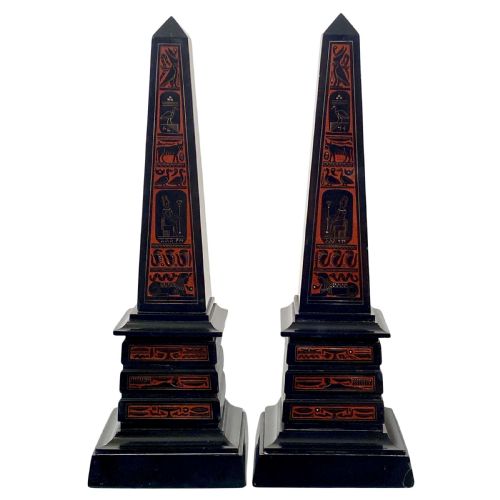
Makers utilised a rich variety of natural stones, including Ashford black marble, portasanta, rosso antico, red serpentine, and green Egyptian onyx. Specimen marble works often incorporate pietra dura inlay, setting contrasting mineral fragments precisely into the stone surface.
Turning and polishing hard stone required skilled lapidary work, shaping heavy mineral blocks into straight tapering faces and sharp apexes. Where mixed media appears, subsidiary details such as brass mounts or bases provide structural support and aesthetic contrast to the polished stone.
Antique Marble Obelisk Retail Price Guide 2026
Typical asking prices for marble obelisk among the pieces listed under this phrase on Sellingantiques today, from the lower quarter to the upper quarter. They describe what is for sale here now, not the wider market.
Some nineteenth-century makers concealed thermometers inside stone obelisks, allowing Victorians to check the room temperature using ancient architectural forms.
Assessing quality and execution
Quality rests upon the selection of the marble and the crispness of the geometry, where superior pieces maintain perfectly flat planes and razor-sharp corners without rounding. The richness and rarity of the mineral figure, from intricate fossiliferous limestone to vibrant malachite accents, elevate the stature of an object.
The sophistication of the lapidary work dictates the upper tier of pieces, particularly in specimens featuring complex pietra dura mosaic or matched pairs with consistent mineral grain. Workshop execution is visible in the alignment of the base, the polish of the stone, and the stability of the junction between shaft and plinth.
The Antique Marble Obelisk Glossary
- Obelisk
- A tall, four-sided, narrow tapering monument which ends in a pyramid-like shape at the top. In decorative arts, these are produced in miniature from stone or metal.
- Grand Tour
- A traditional trip of Europe undertaken by upper-class European young men of means in the seventeenth through nineteenth centuries. Souvenirs from these travels frequently included marble models of ancient monuments.
- Pietra dura
- An artistic technique of using cut and fitted, highly polished coloured stones to create images. This painstaking inlay work appears on select nineteenth century desk ornaments.
- Specimen marble
- Stonework composed of numerous different regional marbles gathered and displayed together. Pieces utilising this technique showcase a variety of geological colours and textures.
- Pyramidion
- The solid pyramid-shaped upper piece or capstone of an obelisk. On small decorative versions, this apex is polished to a precise point.
Antique Marble Obelisk: Frequently Asked Questions
How were they used historically?
Historically, these stone pillars functioned as scholarly desk ornaments, library decorations, and mantelpiece centerpieces in Victorian and continental homes.
Some examples incorporated practical elements, doubling as paperweights, thermometers, or table lamps while retaining their classical architectural presence.
How do I date a marble obelisk?
Dating relies on observing the mineral types, decorative styles, and construction methods characteristic of periods like the Victorian era or Art Deco.
Items associated with the Grand Tour or Egyptian Revival movements typically align with nineteenth-century taste, whereas geometric simplicity often points toward the twentieth century.
What materials are most common?
Black marble, particularly Ashford black marble from Derbyshire, is frequently encountered alongside Italian decorative stones like rosso antico and portasanta.
Other examples employ green Egyptian onyx, red serpentine, and inlaid pietra dura mineral specimens to achieve striking colour and pattern.