

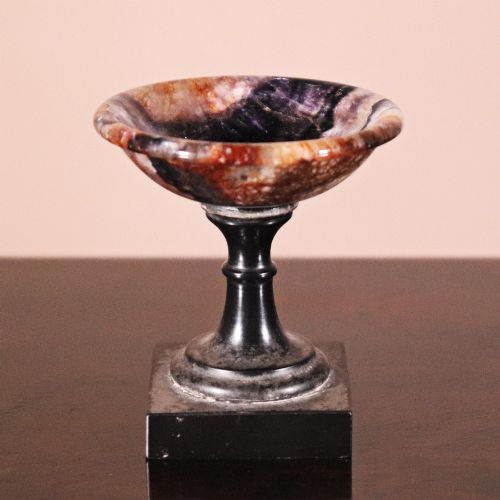


Black Marble Ornaments
Black marble ornaments bring weight and architectural precision to a room, combining dark polished stone with bronze or gilt highlights.
Black Marble Ornaments
When you search for black marble ornaments, you encounter a selection spanning the nineteenth century up to the art deco period. These objects serve distinct decorative functions, ranging from sculptural bases and paperweights to obelisks and ornamental urns.
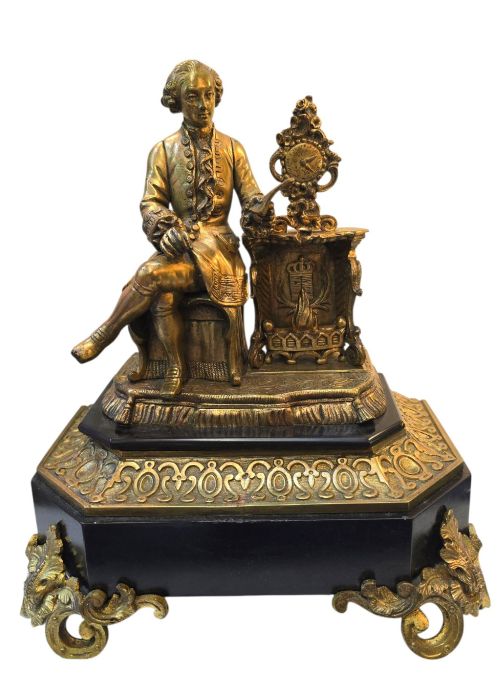
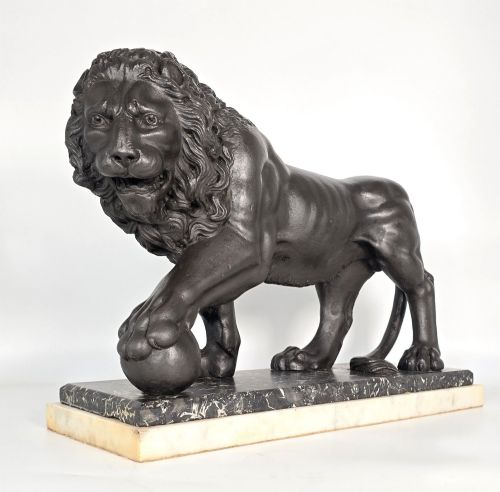
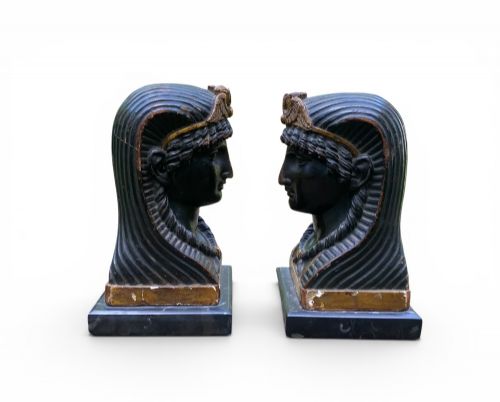
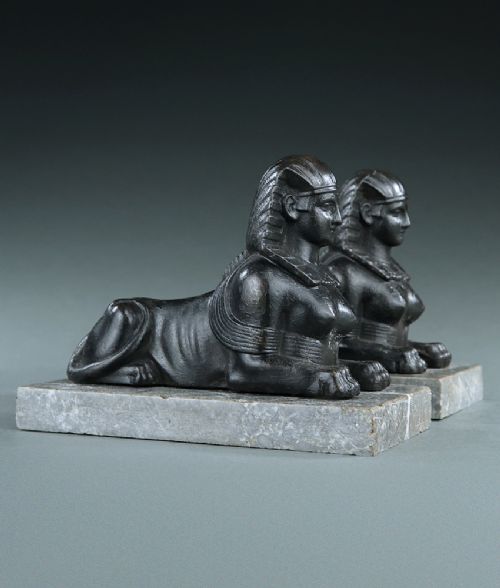
The nineteenth century examples often derive from grand tour travels, featuring classical motifs like sphinxes, lions, and columns mounted on dark stone plinths. Alternatively, regional English pieces utilise ashford black marble to create architectural forms such as thermometers and obelisks.
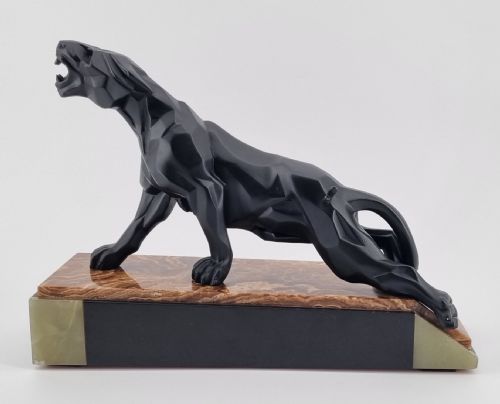
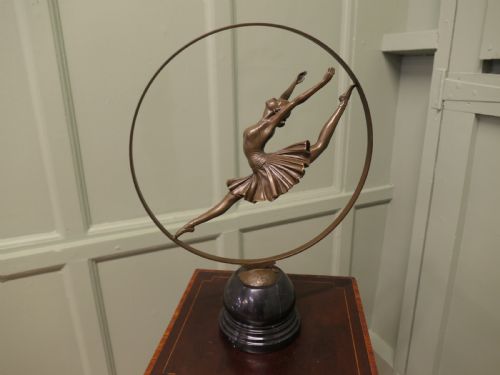
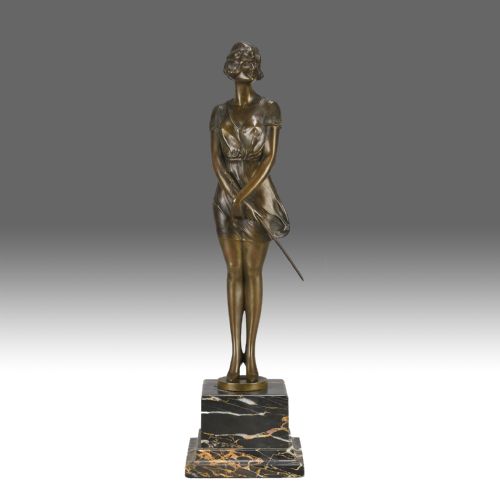
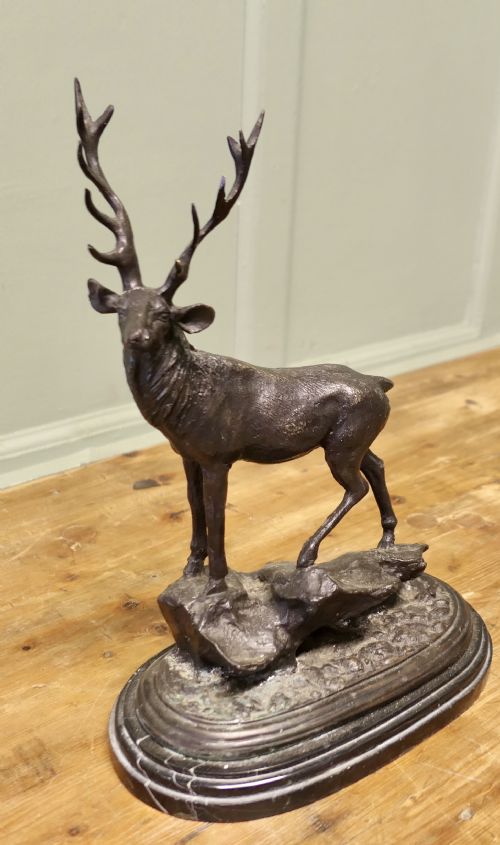
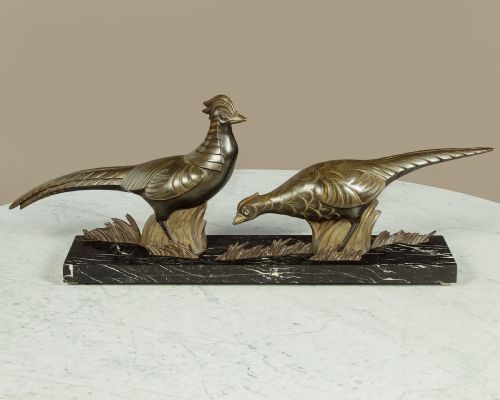
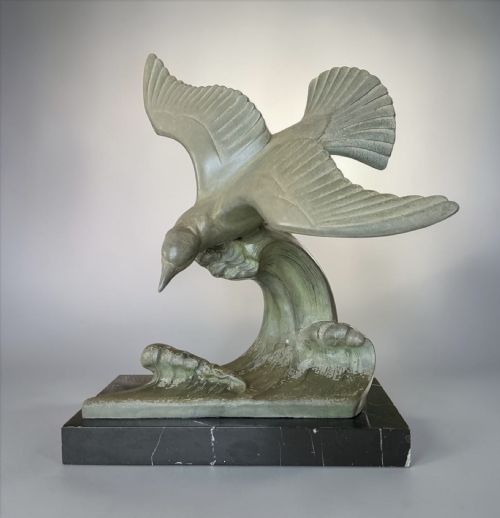
Twentieth-century variations lean towards art deco designs, mounting bronze, spelter, or silvered metal figures of animals and dancers directly onto polished dark bases. These pieces reflect shifts in aesthetic preference from academic nineteenth-century subjects to streamlined modern animalier and human studies.
Materials and Construction
Makers shaped the heavy stone components using precision sawing and polishing techniques to achieve a deep, reflective surface on the black marble or ashford black marble. Stonemasons frequently inlaid contrasting mineral specimens like malachite or pietra dura motifs directly into the dark stone matrix.
Metal elements paired with the stone, including bronze, brass, cast iron, and spelter, were produced via traditional casting methods before being chased and patinated. Sculptures were then mechanically secured to their marble plinths using threaded rods or pins.
Listings combine dark stone elements with bronze, brass, cast iron, and wooden supports across the nineteenth and twentieth centuries.
Assessing Quality and Execution
The standard of an ornament rests upon the crispness of the cast metal work and the precision of the stone cutting. Superior pieces exhibit finely detailed chasing on the bronze or silvered figures and tightly fitted inlay work without visible gaps.
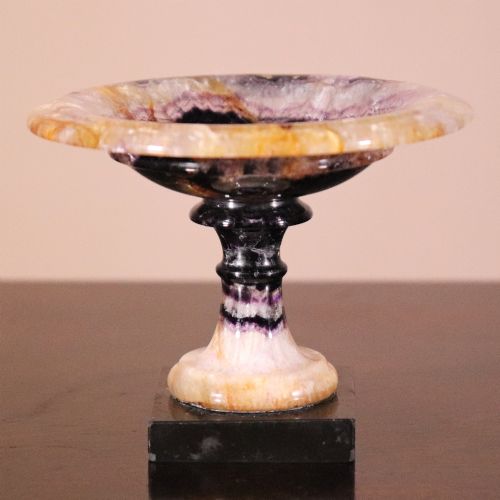
The choice of stone also dictates the grade of the object, with dense, flawless black marble or specialised local stones like blue john and ashford black marble commanding greater skill in polishing and assembly.
Bruno Zach·Thomas Hope·Selim Bright·Demetre H. Chiparus·Louis Lejeune·Claire Colinet·I. Rochard
The Black Marble Ornaments Glossary
- Ashford Black Marble
- A dense dark limestone from Derbyshire used for inlay work and polished decorative objects. It takes a high, glossy finish.
- Grand Tour
- Cultural travel undertaken by wealthy Europeans in the eighteenth and nineteenth centuries. It generated a market for miniature architectural models and bronzes.
- Pietra Dura
- Pictorial mosaic technique utilising cut and fitted polished coloured stones. It appears as decorative inlay on marble surfaces.
- Obelisk
- A tall, four-sided tapering monument ending in a pyramid-shaped top. These were popular as desk ornaments and decorative objects in the nineteenth century.
- Animalier
- nineteenth-century sculptural movement focusing on realistic depictions of animals. These figures were frequently mounted upon marble bases.
Black Marble Ornaments: Frequently Asked Questions
What periods do these ornaments come from?
The pieces span from the early nineteenth century through the victorian era and into the art deco style of the nineteen thirties. This timeline captures both classical grand tour revivals and twentieth-century modernist metalwork.
Earlier items tend to reflect archaeological discoveries and classical architecture, while later examples focus on stylized animal and human figures set on dark stone bases.
How were these decorative items used historically?
Many objects served functional roles on desks and mantelpieces, acting as paperweights, thermometers, or inkstands alongside purely decorative sculptures. Their weight made them suitable for anchoring larger papers or holding small items.
Grand tour souvenirs and architectural models were also displayed in studies and libraries to signal the owner's travels and classical education.
What is ashford black marble?
Ashford black marble is not a true metamorphic marble, but a fine-grained dark limestone quarried in Derbyshire, England. It is capable of taking an exceptional, mirror-like polish.
Craftsmen utilised this stone for obelisks, urns, and desk thermometers, frequently decorating the surface with inlaid floral pietra dura designs.
How do I identify an art deco piece?
Art deco ornaments typically feature streamlined geometric forms, stylized animal subjects like gazelles and pheasants, and figures rendered in bronze, silvered metal, or spelter. The bases often employ contrasting materials such as onyx or polished black marble.
These pieces contrast with nineteenth-century works through their rejection of classical motifs in favour of modern speed, dance, and sleek silhouettes.