





French Bouillotte Lamp
A French bouillotte lamp brings adjustable task lighting and classic metalwork into a study or drawing room.

What they are
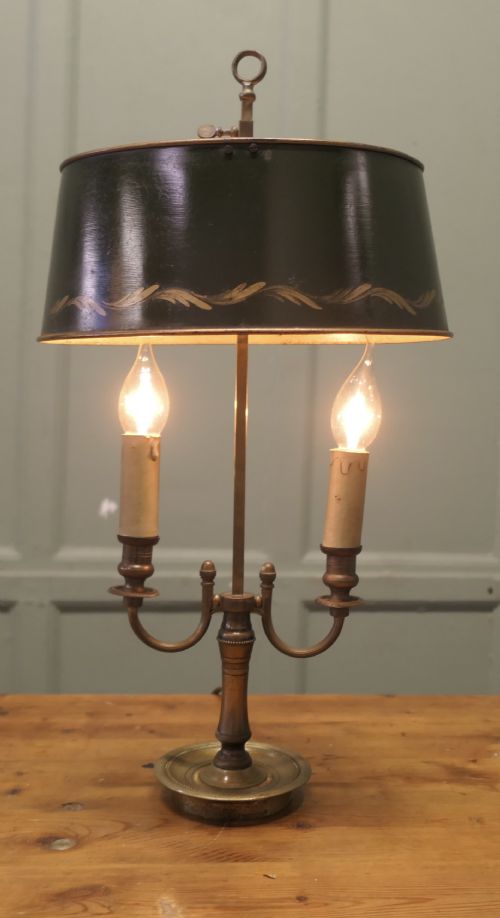
When you search for a french bouillotte lamp, you encounter traditional desk and table lamps designed with adjustable shades and multiple candle-style arms. These pieces originate primarily from the nineteenth and early twentieth centuries, drawing on French Empire, Regency and Neoclassical styles.
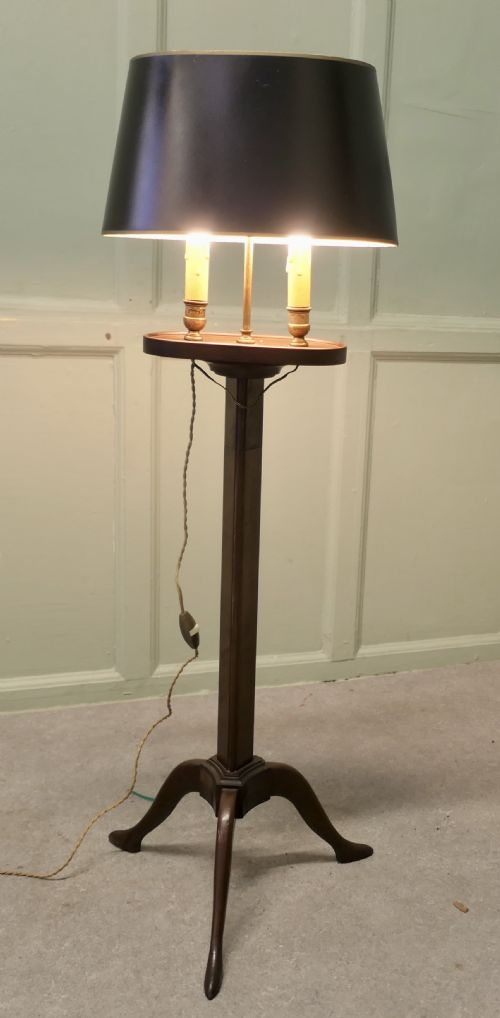
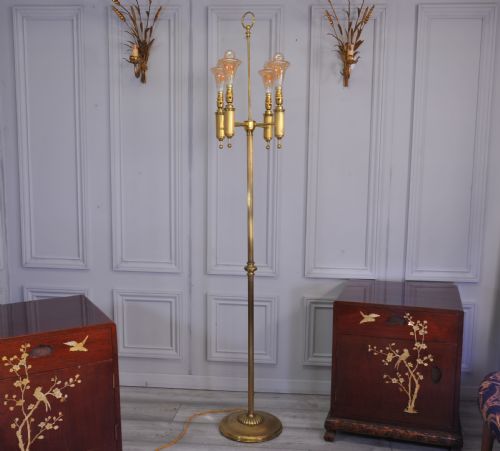
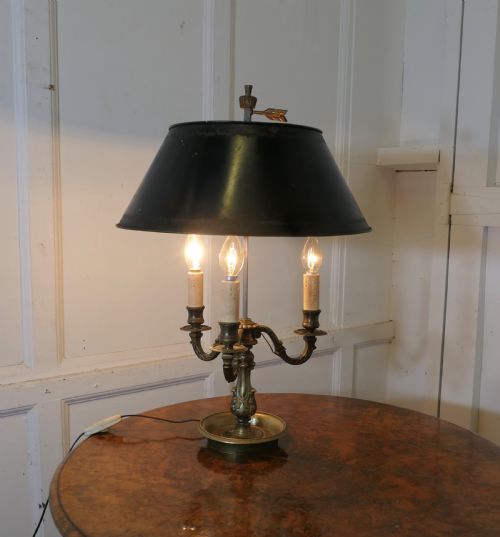
The most common formats on this page are twin and triple desk lamps featuring painted metal or toleware shades paired with brass, gilt metal or bronze bases. Floor lamps and specialised bouillotte lamp tables also appear among the selections.
Makers and designers are not named in the titles, leaving the focus entirely on the materials, forms and decorative styles inherited from the period.

How they were made
Construction relies on durable metals such as brass, bronze, silver plating and gilt metal for the structural columns and arms. These metal components are frequently combined with turned mahogany elements or glass components.
Retail Price Guide 2026
Typical UK retail prices for french bouillotte lamp, calculated from the Sellingantiques database of over a million retail prices indexed since 2003. This retail price guide relies exclusively on Sellingantiques data; no external sources or auction records are used, so the figures do not describe the wider market.
Card players in the eighteenth century relied on these adjustable shades to keep their bluffs hidden in the dim parlor light.
What varies in quality
Quality separates through the crispness of the metal casting and the weight of the base materials, where heavier bronze and solid brass components outlast lighter plated alternatives. The articulation of the adjustable height mechanism also dictates how smoothly the shade moves along the central rod.
The finish on the toleware shades dictates visual appeal, with hand-painted details and rich patination on the green or burgundy surfaces indicating superior workshop output. The integration of original electrical conversions or preserved candle-fitting components maintains the historical integrity of the piece.
The French Bouillotte Lamp Glossary
- Toleware
- Painted or lacquered metalware, typically tin or steel, used traditionally for durable lamp shades in green or burgundy. This material provides the characteristic contrasting hood against the polished brass structure.
- Bouillotte
- A game of chance popular in France during the eighteenth century, which inspired the invention of these specialised card-table lamps with adjustable shades. The design ensured players could shield their eyes from glare while viewing their cards.
- Gilt metal
- Base metal treated with a thin layer of gold or gold-coloured wash to imitate solid or mercury-gilt bronze. This finish gives the lamp body a bright reflective quality under artificial light.
- Neoclassical
- A style referencing classical antiquity, evident in the clean architectural lines, urn motifs and symmetrical arrangements of these lamp bases. It defines much of the decorative vocabulary seen across nineteenth-century French lighting.
Frequently Asked Questions
What is a french bouillotte lamp used for?
Originally designed to illuminate card games on small round tables, these lamps function effectively as focused desk lighting today.
The adjustable shade allows you to control the downward pool of light, making them practical for reading and working.
How do you adjust the height on these lamps?
A central vertical metal rod holds the toleware shade via a sliding collar secured by a thumbscrew or decorative key.
Loosening this mechanism permits you to raise or lower the shade to alter the spread of illumination.
Are these lamps wired for modern electricity?
Many surviving examples have been converted from candle fittings to electricity during the twentieth century, with wiring running up through the central column.
It is advisable to check individual listings for details regarding current electrical cords and plug types.
What materials are typical for the shades?
Toleware forms the standard material for the shades, painted in deep tones like green or burgundy to absorb interior glare.
These metal hoods sit above two or three candle-style arms branching outward from the main stem.