






Three Light Desk Lamp
These three light desk lamp designs bring focused illumination and classical elegance to a workspace through enduring forms.

Three Light Desk Lamp
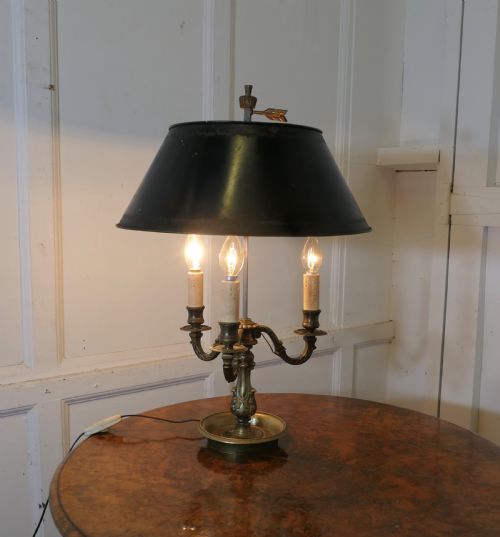
A three light desk lamp provides directional illumination across a workspace using a multi-branch arrangement, often adopting the traditional bouillotte form. These pieces emerge primarily from the nineteenth and early twentieth centuries, reflecting French Empire, Neoclassical, and Rococo Revival styles.
Most examples encountered here pair metal components with painted shades, combining functional multi-bulb wiring with decorative bases. Table lamps, desk lamps, and converted candelabra form the core of the selection.
The regional origins lean heavily towards France, alongside Kashmiri and Victorian pieces, demonstrating formal metalwork designed for reading and writing.
How they were made
Makers utilised brass, bronze, gilt brass, and silver plating to construct the structural frames and multi-branch candelabra arms. Metal casting and turning created the sturdy vertical columns and weighted bases needed to support multiple bulbs safely.
Toleware and fabric shades provide the characteristic downward glare control, painted in shades like green to reduce reflection. Many pieces began life as traditional candelabra before conversion to electricity during later periods.
Listings feature materials spanning plain brass, gilt bronze, fabric, and painted toleware across the nineteenth and early twentieth centuries.
What varies in quality
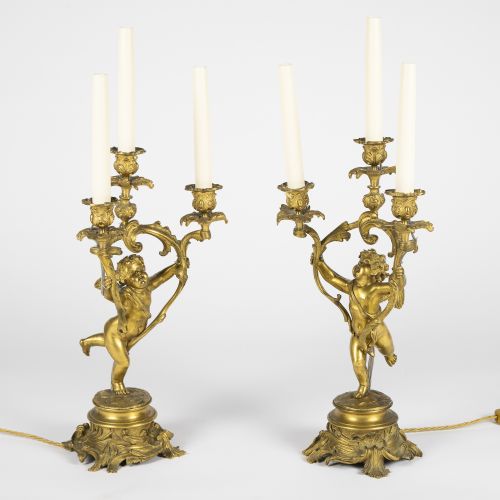
The refinement of the casting and chasing on the bronze or brass framework separates standard items from exceptional work. Crisp detail in figural elements like putti or floral motifs indicates superior workshop production.
The condition and depth of the original gilding or patination dictate the visual presence of the object. Hand-painted finishes on toleware shades retain subtle variations that machine-finished alternatives lack.
The Three Light Desk Lamp Glossary
- Bouillotte
- A traditional French desk or table lamp featuring an adjustable shade held on a central upright rod above a saucer-like base. This form typically accommodates three lights for card games or reading.
- Toleware
- Painted or enamelled sheet metal items produced for domestic utility and decoration. The technique gives durable colour to lamp shades.
- Candelabra
- A branched candlestick holder designed to carry multiple candles simultaneously. Many antique examples undergo later conversion to electric lighting.
- Spelter
- A zinc alloy frequently cast as a cheaper alternative to bronze for decorative figural objects. It takes patination well to simulate heavier metals.
- Gilt bronze
- Bronze metal coated with a thin layer of gold or gold-coloured alloy to impart a rich metallic lustre. It resists tarnishing better than plain brass.
Three Light Desk Lamp: Frequently Asked Questions
What is a bouillotte lamp?
A bouillotte lamp is a traditional French desk or table light featuring a central column with multiple candle arms and a sliding shade. The shade moves up and down on a vertical rod to direct the light.
Originally designed for the card game bouillotte, these pieces now serve as sophisticated desk lamps providing focused illumination.
Were these lamps electrified originally?
Many antique three light desk lamp examples started as oil lamps or candelabra before receiving later electrical wiring. Conversions allow these historical pieces to function safely in modern settings.
Evidence shows pieces ranging from the nineteenth century adapted to hold standard modern bulbs while retaining their original frames.
Where should I place this lamp?
These lamps suit study desks, side tables, or reading areas where directional, multi-source lighting is beneficial. The adjustable shades help control glare across a workspace.
Their classical French and Victorian styling works well within traditional interiors or as contrasting accents in modern rooms.
How do I date a lamp?
Dating relies on examining the casting techniques, the style of the metalwork, and the materials used in the construction. Pieces reflecting French Empire or Rococo Revival aesthetics often align with nineteenth-century manufacturing methods.
Wiring styles and shade construction also offer clues, though many components may have been updated over time.