





Brass Bouillotte Lamp
A brass bouillotte lamp brings adjustable task lighting and French neoclassical elegance to a desk or side table.
Brass Bouillotte Lamp
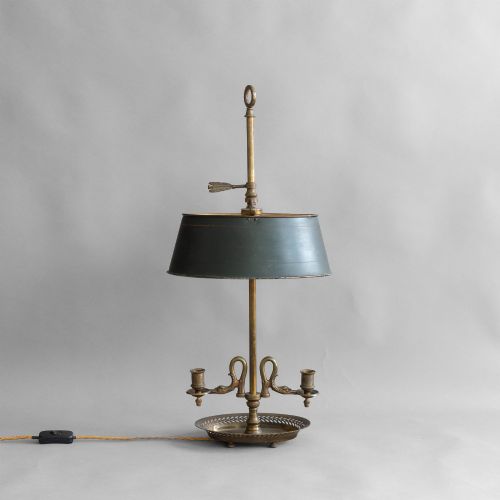
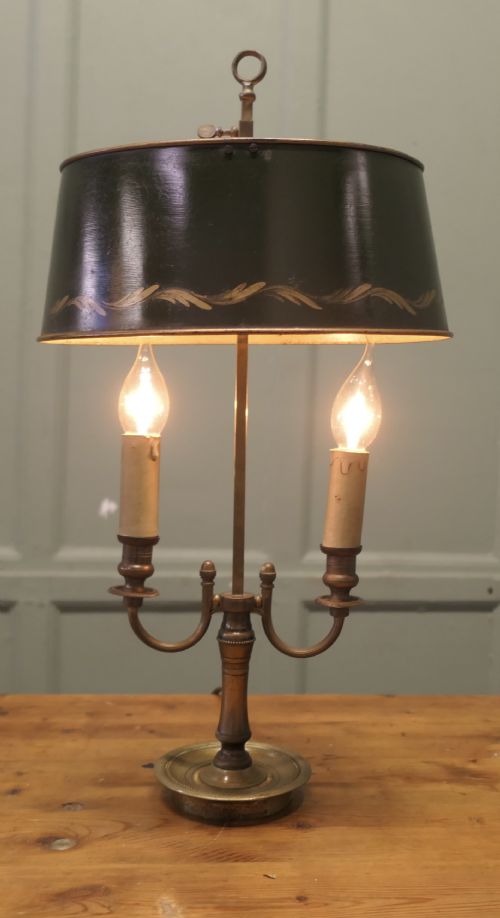
A brass bouillotte lamp is a traditional lighting fixture rooted in French design, typically featuring a central shaft mounted on a circular basin or tray. These pieces combine metalwork with adjustable toleware shades designed to direct light downwards onto a table.
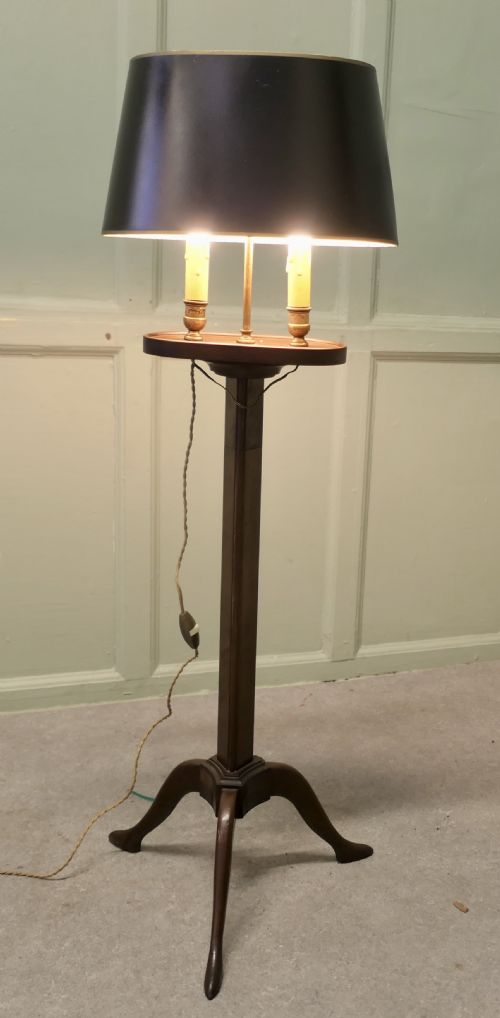
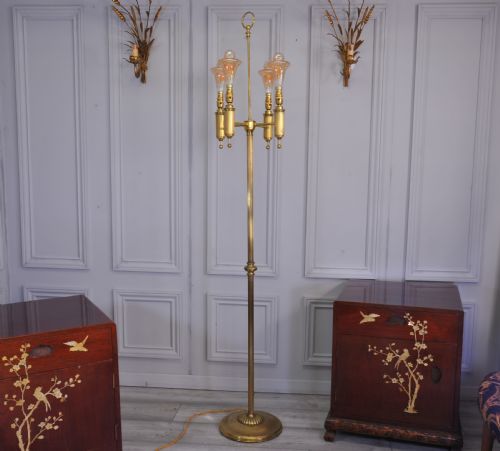
Buyers seeking this phrase encounter pieces predominantly from the nineteenth century and early twentieth century, reflecting Regency, Victorian, and French Empire styles. Desk lamps and table lamps appear frequently alongside variations such as floor lamps and wall lights.
The form originates from card playing tables where players gathered for the game of bouillotte, requiring downward illumination that could be lowered as the candles burned down. Surviving examples adapt this mechanism for electrical wiring while retaining the classic adjustable shade.
Materials and construction
Makers utilised brass and gilt metal as the primary structural materials for the central columns, branches, and weighted bases. Toleware, painted metal, and bronze frequently form the characteristic adjustable shades that slide along the central stem.
Many examples incorporate marble bases or incorporate details in mahogany, kingwood, and walnut beneath the metal components. The engineering relies on a central key or thumbscrew that secures the shade at the desired height.
Brass Bouillotte Lamp Retail Price Guide 2026
Typical asking prices for brass bouillotte lamp among the pieces listed under this phrase on Sellingantiques today, from the lower quarter to the upper quarter. They describe what is for sale here now, not the wider market.
What defines quality in these pieces
Quality rests upon the weight of the cast brass and the crispness of the chased details on the base and candle arms. Superior pieces display substantial metal gauge and refined proportions rather than hollow or thin pressings.
The integrity of the adjustable mechanism distinguishes finer examples, ensuring the shade holds its position securely without slipping. Original painted finishes on toleware shades, particularly green and gold combinations, add considerable merit to the piece.
The Brass Bouillotte Lamp Glossary
- Bouillotte
- A French card game popular during the eighteenth and nineteenth centuries that gave its name to these specific lamps designed for gaming tables. The shade allowed players to shield their eyes from the glare of the candles.
- Toleware
- Enamelled or painted sheet metal used to form the characteristic shades of these lamps. This material is typically found in shades of green, red, or black with gilt decoration.
- Ormolu
- Gilt bronze produced by applying a finely ground high-carat gold mercury amalgam to a bronze object. This technique imparts a rich golden lustre to nineteenth-century metalwork.
- Regency
- A British design style spanning the early nineteenth century characterised by classical motifs and French influence. Pieces from this period often display restrained neoclassical lines.
- Candelabrum
- A multi-branched candlestick holder that forms the lighting cluster of many bouillotte lamps. These branches carry the electrical fittings or candle tubes.
Brass Bouillotte Lamp: Frequently Asked Questions
Were these lamps originally electrified?
These fixtures were originally designed to burn wax candles rather than electricity. Many surviving examples have been subsequently wired for modern electrical use while preserving the exterior appearance.
Conversion methods vary between individual pieces, with some retaining dummy candle tubes that conceal modern bulb sockets. The wiring typically runs down through the central column and out the base.
What is the purpose of the tray base?
The circular basin or tray at the bottom of the lamp originally served to catch dripping wax from the burning candles. In modern settings, this dish provides a stable footprint and balances the weight of the adjustable shade.
These trays often feature raised rims and decorative banding consistent with French neoclassical design. Some examples incorporate small compartments or surfaces designed to hold matches or gaming accessories.
How do I identify French Empire style?
French Empire style draws heavily on ancient Roman, Greek, and Egyptian motifs, featuring symmetrical designs and solid architectural proportions. You will often see laurel wreaths, claw feet, and classical urns incorporated into the brass castings.
This aesthetic flourished during the early nineteenth century and emphasises authority and classical order. The metalwork from this period is typically heavy and displays precise chasing.