


Traditional Brass Task Light
These traditional brass task light pieces bring honest industrial focus to a desk, combining solid metal construction with practical articulation for daily work.
Traditional Brass Task Light
When you search for a traditional brass task light, you are looking at functional desk and table lamps designed to direct illumination precisely where needed. The selection here spans the Edwardian period, the 1920s, and the 1930s, alongside late nineteenth-century examples.
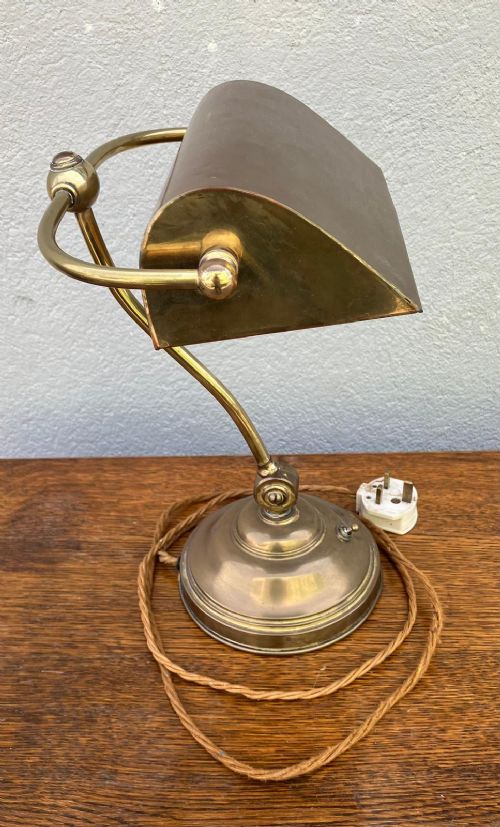
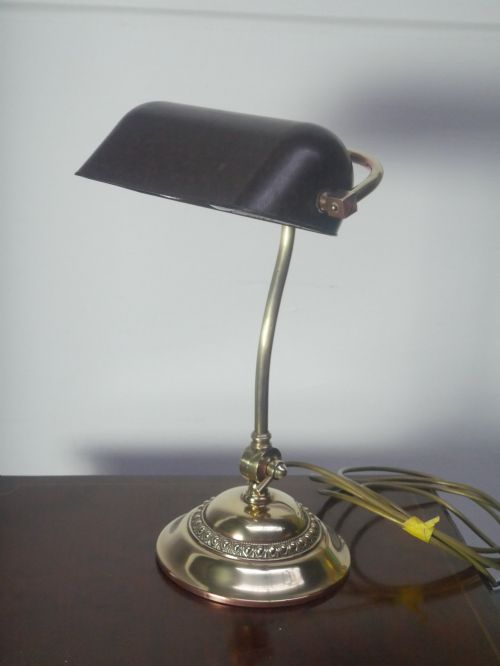
Most items you will meet take the form of bankers desk lamps, adjustable swan neck lamps, and notary lights. These utilitarian forms reflect early twentieth-century workspace requirements, built for durability and clear desk illumination.
Origin variations include English and French pieces, bringing distinct regional touches to the classic metal desk lamp. You will find traditional English models alongside French bouillotte lamps featuring toleware shades.
How they were made
Construction relies heavily on solid brass, often paired with metal, bronze, and ormolu for added weight and stability at the base. Shades incorporate fabric, glass, etched glass, and painted toleware to diffuse the light.
Articulated joints and adjustable swan neck structures required precise engineering to allow smooth positioning without slipping. Metal components were cast, turned, and polished by hand, showing the mechanical joinery typical of the period.
Early desk lamps often retain the honest grease spots and ink stains of diligent clerks who worked beneath them a century ago.
What varies in quality
Substance and weight separate standard pieces from the finest examples, with solid brass castings offering superior longevity over thinner sheet metal. The heft of the base dictates how far the adjustable arm can extend safely.
The sophistication of the articulation mechanism reveals the maker's hand, where smooth adjustment without loose joints denotes higher craftsmanship. Original surface patination and intact shade materials also elevate the character of the piece.
The Traditional Brass Task Light Glossary
- Swan neck
- A curved upper arm on a desk lamp that allows the shade to be positioned over documents. This graceful sweep defines many adjustable twentieth-century designs.
- Bouillotte lamp
- A traditional table lamp featuring a central shaft and multiple candle-style arms beneath an adjustable shade. They typically utilise toleware or metal shades to direct light downwards.
- Ormolu
- Gilt bronze mounted onto decorative objects and lamps during the nineteenth and early twentieth centuries. It provides a rich, golden finish that catches the ambient light.
- Toleware
- Painted or lacquered sheet metal used traditionally for lamp shades. It adds a durable, colourful contrast to polished brass fixtures.
- Bankers lamp
- A recognisable desk lamp style featuring a heavy brass base and a green or matching metal shade. It was designed to reduce glare for extended reading and paperwork.
Traditional Brass Task Light: Frequently Asked Questions
How do I adjust a swan neck lamp?
Most swan neck lamps use friction joints or threaded keys that loosen to let the arm pivot before tightening again.
Take care not to force stiff joints, as vintage brass can stress at the pivot points if adjusted too quickly.
Where should I place a bouillotte lamp?
These multi-arm lamps suit side tables, reading desks, or sideboards where downward light is beneficial.
The adjustable shade allows you to lower it as evening approaches for a more focused pool of light.
Can I polish the brass?
Vintage brass develops a natural oxidation over decades that many collectors prefer to leave untouched.
If you choose to clean the metal, use a mild brass cream and a soft cloth to avoid removing the underlying historic patina.
How do I date an Edwardian desk lamp?
Edwardian pieces generally date from the early twentieth century, showing simpler lines than ornate Victorian predecessors.
Look for heavy cast bases, braided fabric cords, and maker markings stamped directly into the metal components.