



Cast Brass Table Lamp
A cast brass table lamp brings weight and steady form to a room, combining functional illumination with enduring metalwork from the nineteenth and early twentieth centuries.
Cast Brass Table Lamp
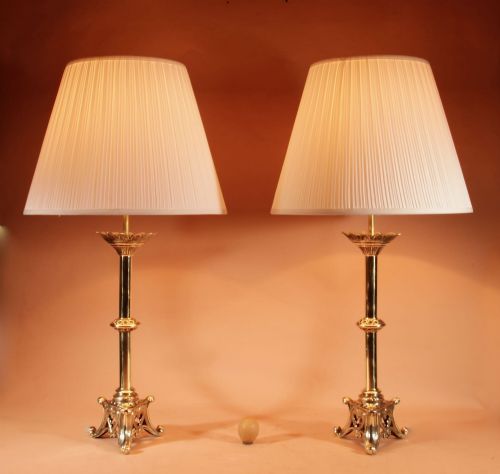
A cast brass table lamp originates predominantly from the Victorian and Edwardian eras, spanning into the 1920s and 1930s. Buyers encountering these pieces on the page will frequently find classical Corinthian columns, adjustable desk forms, and sturdy domestic lighting.
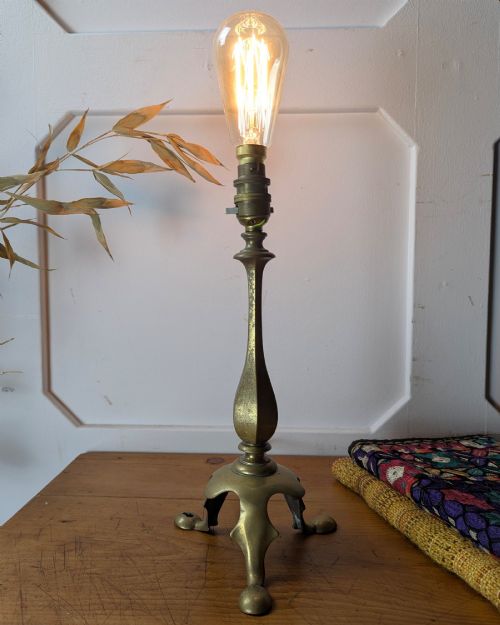
The selection ranges from simple domestic oil and lamp bases to heavy pullman designs, often resting on claw feet or stepped square plinths. These items reflect the varied interior tastes of the nineteenth century through to the interwar period, including gothic and classical revivals.
Defining Quality in Metalwork
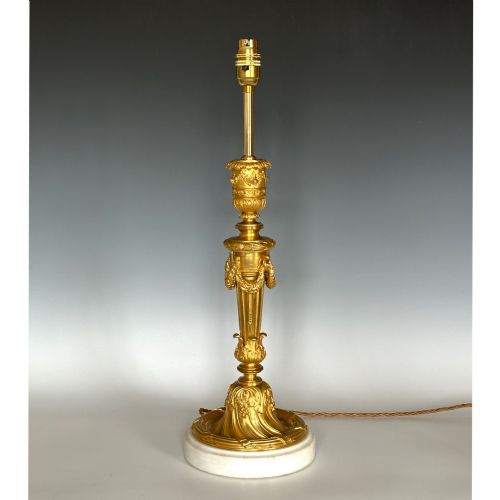
Quality rests in the crispness of the casting detail and the thickness of the metal used in the column or base. Superior examples display sharply defined acanthus leaves on Corinthian capitals and deeply chased ornamentation rather than soft, smoothed contours.
The distinction between standard domestic lighting and finer pieces also lies in the proportional balance of the base, the integrity of the joins, and the presence of original registration marks or maker attributions.
Cast Brass Table Lamp Retail Price Guide 2026
Typical asking prices for cast brass table lamp among the pieces listed under this phrase on Sellingantiques today, from the lower quarter to the upper quarter. They describe what is for sale here now, not the wider market.
Listings feature cast brass table lamps alongside related forms such as standard lamps, oil lamps, and desk lamps spanning the Victorian to Art Deco periods.
Angelo Brotto for Esperia·L and F Moreau·Joseph Hinks
The Cast Brass Table Lamp Glossary
- Corinthian column
- A pillar form featuring an ornate capital decorated with carved acanthus leaves. This classical architectural motif appeared frequently on nineteenth-century domestic lighting.
- Ormolu
- Gilt bronze ornamentation applied to furniture and lighting fixtures. The technique involves treating metal with a finely ground gold-mercury amalgam.
- Font
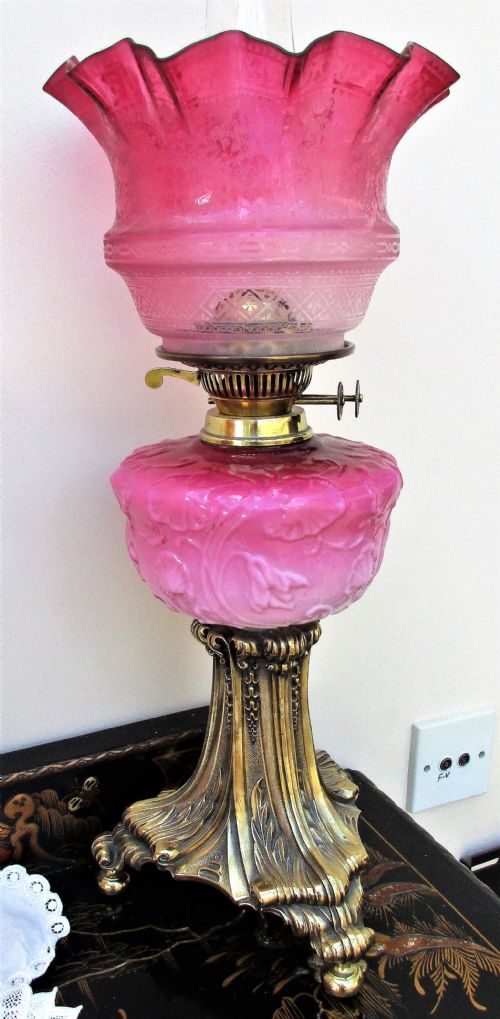
- The oil reservoir positioned at the upper section of a lamp base. These components were frequently manufactured from pressed glass, opaline, or ceramics.
- Pullman lamp
- A heavy, stable lighting fixture designed originally for travel or railway carriages. These pieces feature weighted bases to prevent tipping during movement.
- Pat test
- An examination of electrical safety and appliance testing. Many antique lamp bases undergo this procedure to ensure safe modern operation.
Cast Brass Table Lamp: Frequently Asked Questions
How do I date a brass lamp?
Dating relies on examining the manufacturing style, assembly screws, switch mechanisms, and any registration marks stamped into the metal base. Victorian and Edwardian examples often display distinct stylistic revivals, such as Gothic or Neoclassical motifs.
Changes in wiring standards and the transition from oil to electricity also provide helpful clues, though many antique bases have been rewired during their long history.
Were these lamps originally electric?
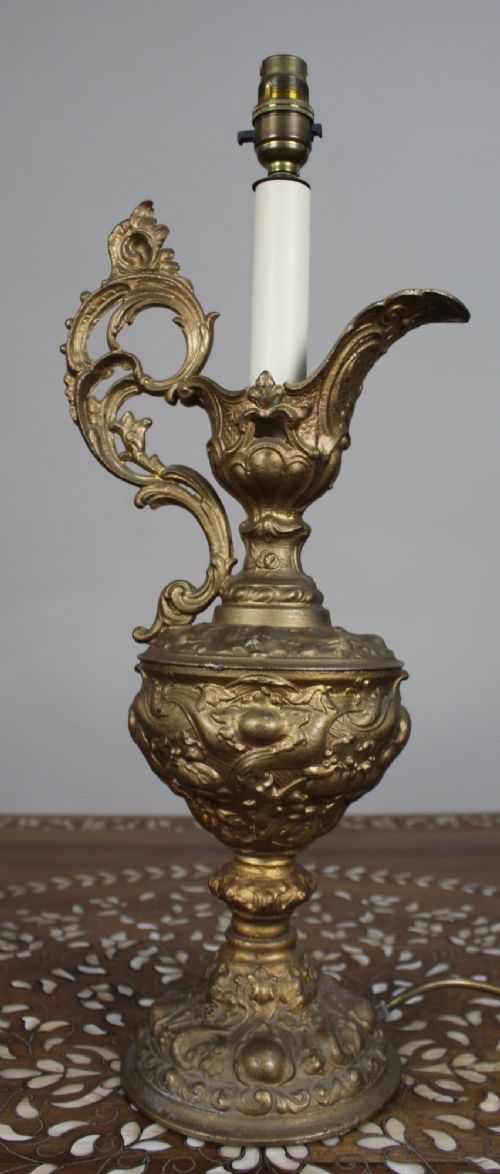
Most pieces originating from the nineteenth century began life as oil lamps or fluid burners before being converted to electricity at a later date. This evolution means that fonts and burners were frequently adapted to house lamp holders.
When evaluating these conversions, collectors look for sympathetic alterations that preserve the original metalwork and structural integrity of the base.
How do I clean cast brass safely?
Maintenance requires gentle dusting with a soft cloth to prevent the accumulation of dirt within the recesses of the casting. Harsh chemical polishes can strip away the natural patination built up over decades.
Allowing the metal to retain its aged surface helps preserve the character and historical depth valued by collectors of antique lighting.
What is a Corinthian column lamp?
A Corinthian column lamp mimics the classical Greek architectural style, featuring a distinct capital adorned with stylized acanthus leaves. These architectural pieces were immensely popular during the Victorian and Edwardian periods.
They offer a formal, balanced silhouette that suits traditional study desks and side tables alike.