


Gold Brass Table Lamp
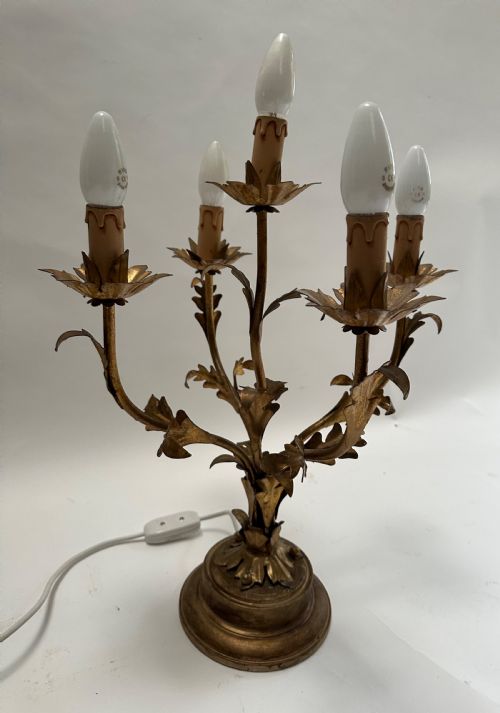
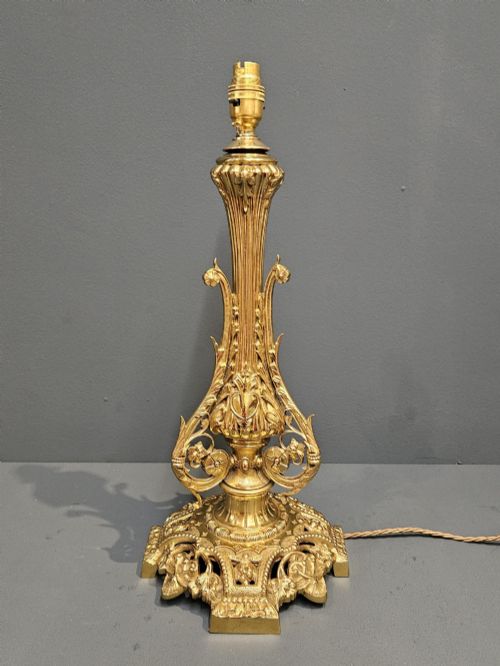
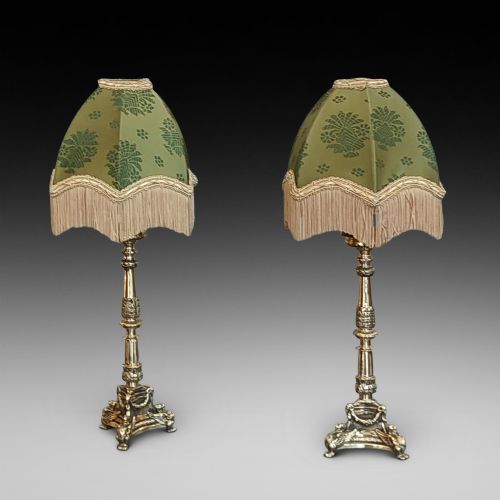
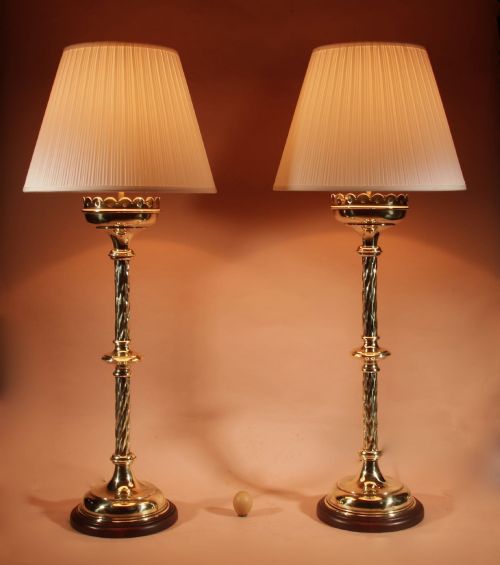
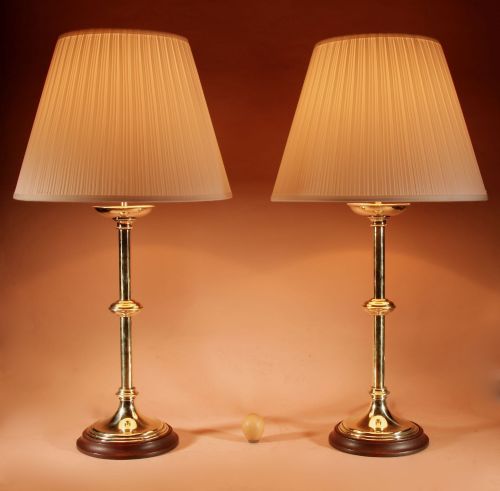
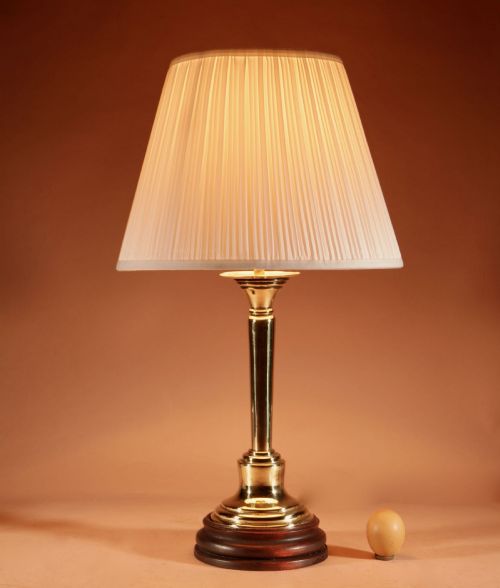
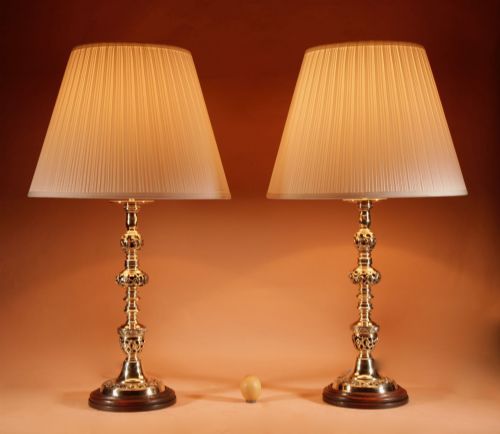
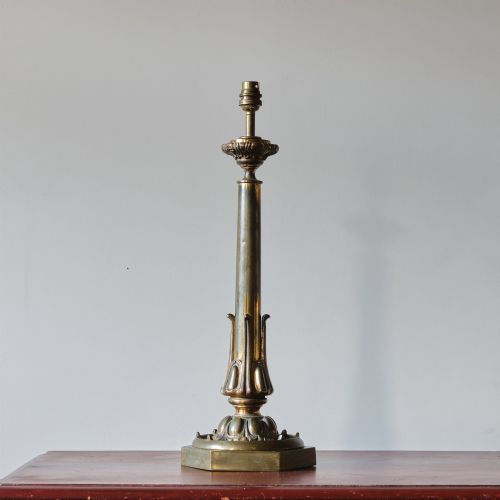
A gold brass table lamp brings warm metallic light to an interior, spanning Victorian columns and Art Deco designs.
Gold Brass Table Lamp
When searching for a gold brass table lamp, buyers encounter lighting fixtures formed from brass, gilt bronze, or ormolu, often paired with marble, glass, or fabric. These pieces originate across the nineteenth and early twentieth centuries, drawing on Victorian, Edwardian, and Neoclassical idioms.
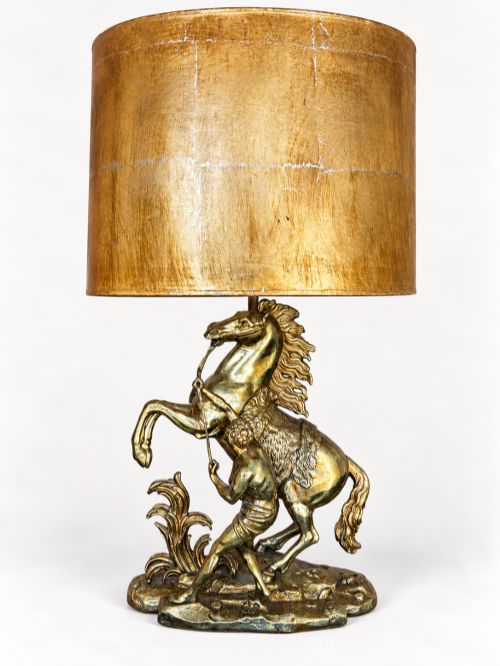
The selection here ranges from converted candlesticks and classical Corinthian columns to adjustable desk lamps and elaborately cast figural pieces. Versions featuring classical revival styles or simple reeded columns appear frequently among the listings.
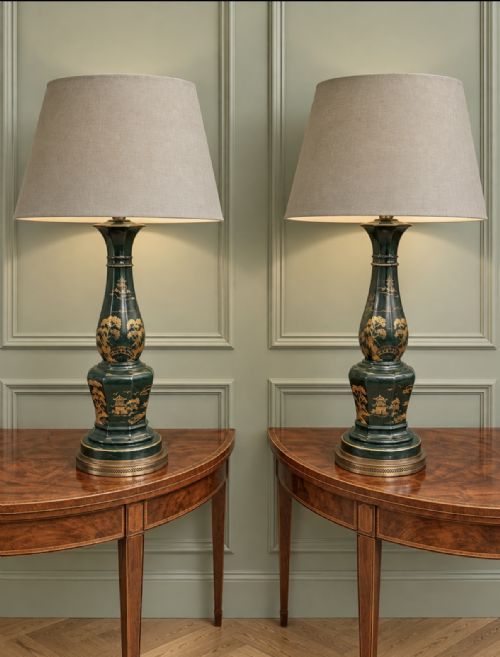
Origins span English, French, and Italian workshops, alongside specialised designs like Pullman carriage lamps and architectural revival pieces. Buyers find both single statement pieces and matched pairs intended for side tables or desks.
How they were made
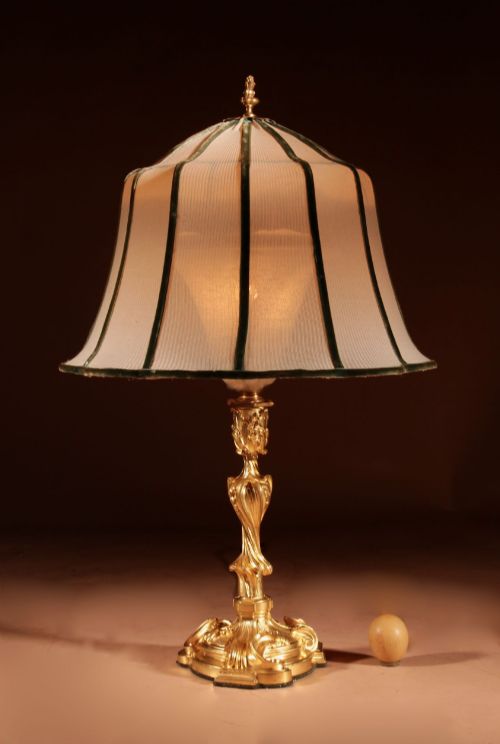
Maker workshops utilised casting techniques for heavy brass and gilt bronze components, shaping metals into reeded columns, classical capitals, and figural bases. Ormolu elements received detailed chasing and fire gilding to achieve bright metallic surfaces.
Many early examples began as candlesticks or oil lamps before conversion to electric wiring during later updates. Combinations of green marble, crystal, and clear glass integrated structurally with the metal bases.
Gold Brass Table Lamp Retail Price Guide 2026
Typical asking prices for gold brass table lamp among the pieces listed under this phrase on Sellingantiques today, from the lower quarter to the upper quarter. They describe what is for sale here now, not the wider market.
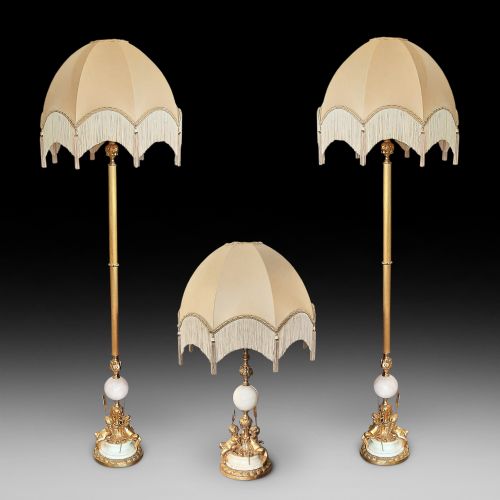
Illuminated cherubs and cinematic Metropolis inspirations keep metallic glow wonderfully dramatic.
What varies in quality
Quality rests in the crispness of the metal casting and the depth of the gilding or patination across the brass and ormolu. Finer examples display sharp architectural fluting, clean chasing on figural mounts, and solid weights in the base.
Design ambition separates standard production lamps from notable pieces by documented makers or those following specific stylistic revivals. The integration of high-grade materials like verde marble and heavy crystal components elevates certain items.
W.A.S. Benson·L & F Moreau
The Gold Brass Table Lamp Glossary
- Ormolu
- Gilded bronze produced through mercury amalgamation, common in French decorative lighting. It provides a rich, warm metallic surface that holds detail well.
- Corinthian column
- A classical column form featuring ornate acanthus leaves on the capital. This design frequenty shapes the stems of Victorian and Edwardian lamps.
- Gilt metal
- Base metal treated with a gold-coloured surface coating. It offers the visual appearance of solid gold or bronze at a different weight.
- Reeded
- A decorative moulding consisting of parallel convex strips placed side by side. It appears frequently on the stems of nineteenth-century lamp standards.
- Gilt bronze
- Copper alloy cast and then gilded with gold leaf or powder. This material allows for intricate sculptural detail in bases and mounts.
Gold Brass Table Lamp: Frequently Asked Questions
How do I date a brass lamp?
Dating relies on stylistic clues such as Corinthian capitals, reeded columns, or specific revival motifs popular in Victorian and Edwardian periods. Construction methods and wiring access points also help determine the age of the metalwork.
Changes in manufacturing techniques across the nineteenth and early twentieth centuries leave distinct marks on the castings. Comparing the design to known period pieces narrows down the decade of production.
Were these lamps originally electric?
Many older pieces began life as candlesticks, oil lamps, or gas fixtures before conversion to electricity. This adaptation process is common among nineteenth-century examples found on the market.
Original wiring is rarely intact on antique pieces, so rewiring is standard practice for modern use. Converted items retain their original metal bodies while meeting contemporary safety standards.
Where should I place a heavy brass lamp?
Heavy columns and cast bronze pieces suit sturdy side tables, desks, or credenzas where their weight provides stability. They require surfaces capable of supporting substantial metal and marble bases.
Placing them away from high-traffic edges protects both the lamp and the supporting furniture. Their metallic finishes catch ambient light effectively when positioned near walls or reading areas.
What is the difference between brass and ormolu?
Brass is an alloy of copper and zinc used widely for structural components and turned lamp bodies. Ormolu specifically denotes gilded bronze, typically found on higher-status French decorative items.
Ormolu undergoes a gilding process that gives it a deeper lustre than standard polished brass. The underlying bronze casting also allows for finer sculptural detail than ordinary brass fabrication.