

Victorian Brass Lighting
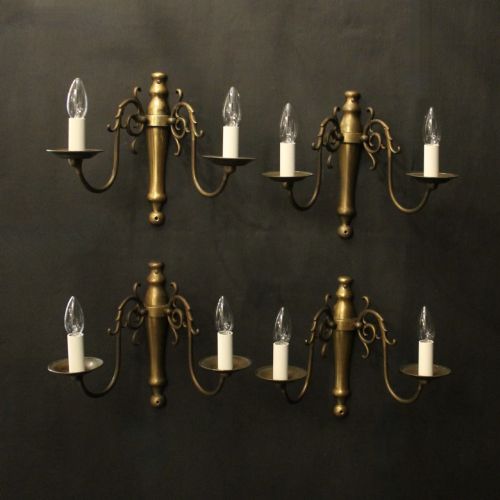
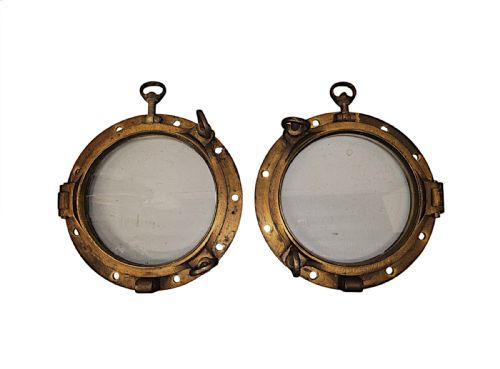
These robust victorian brass lighting fixtures bring functional period warmth and striking metallic lustre to interiors.
Victorian Brass Lighting
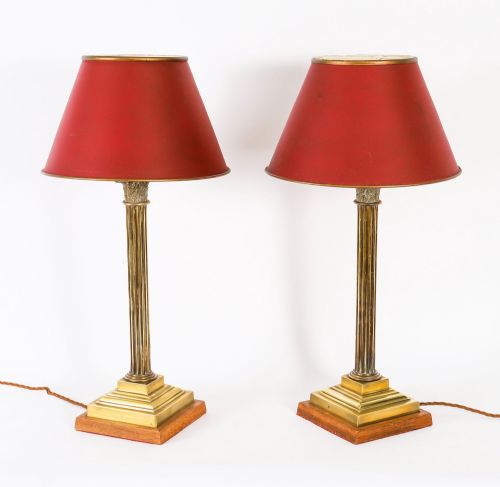
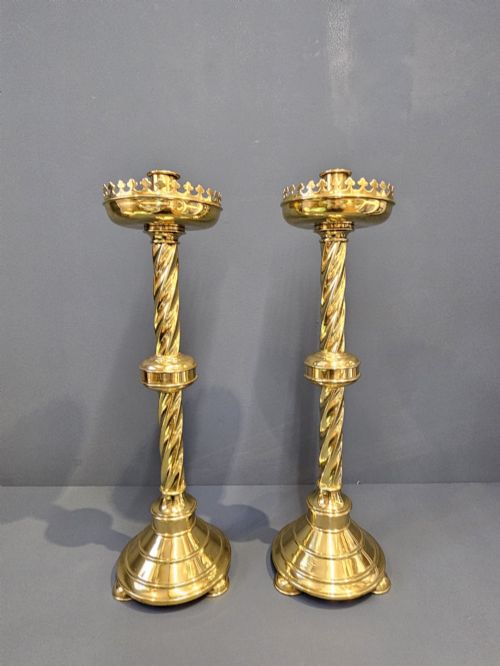
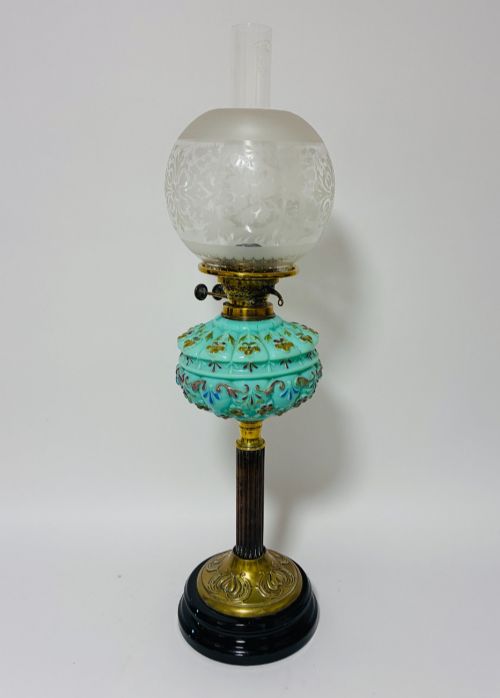
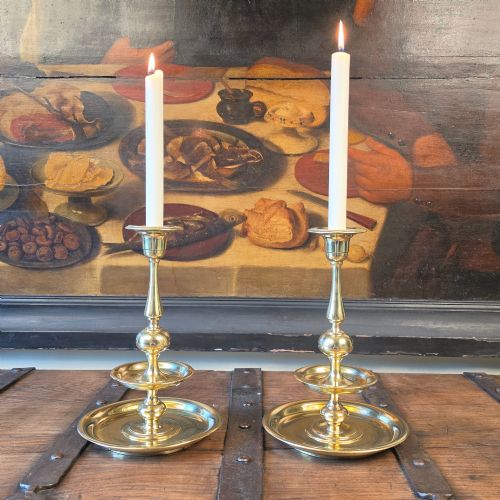
Victorian brass lighting encompasses a diverse array of functional metal objects designed to illuminate nineteenth-century interiors. Buyers searching for victorian brass lighting encounter standard lamps, table lamps, oil lamps, ceiling lights, wall lights, and heavy church or altar candlesticks.
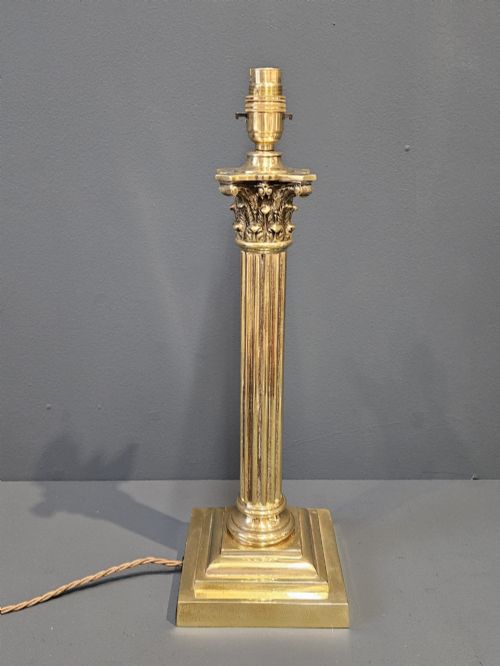
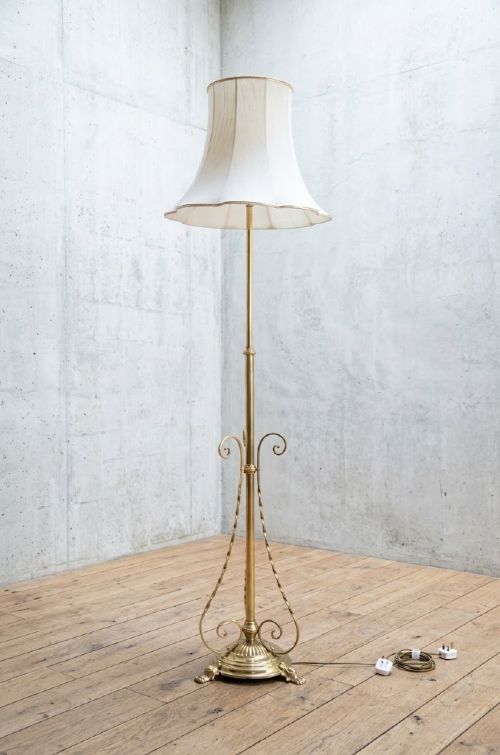
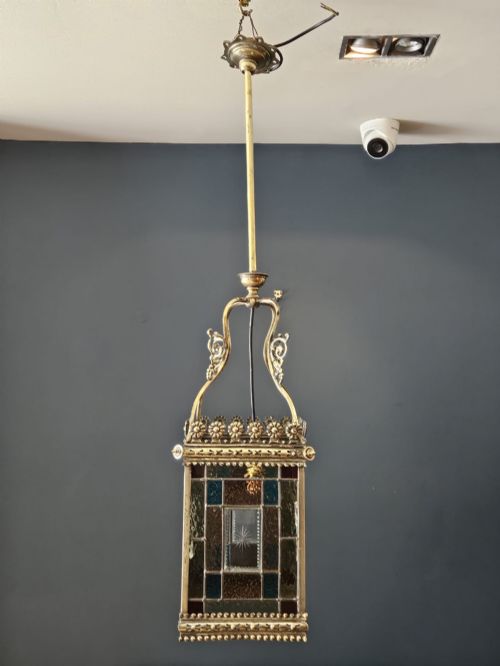
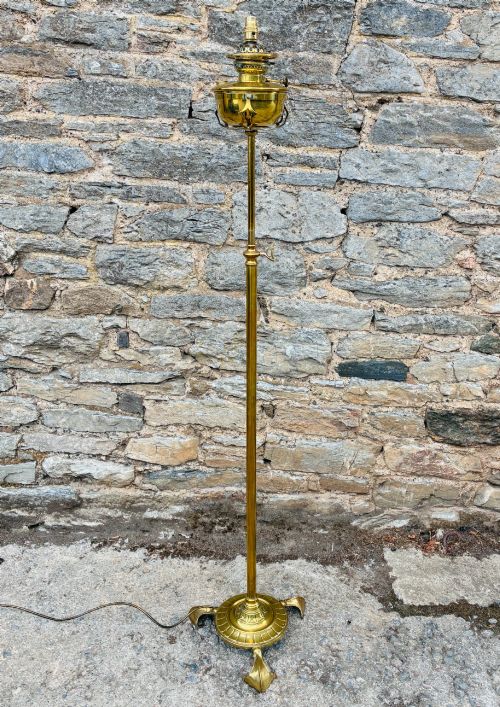
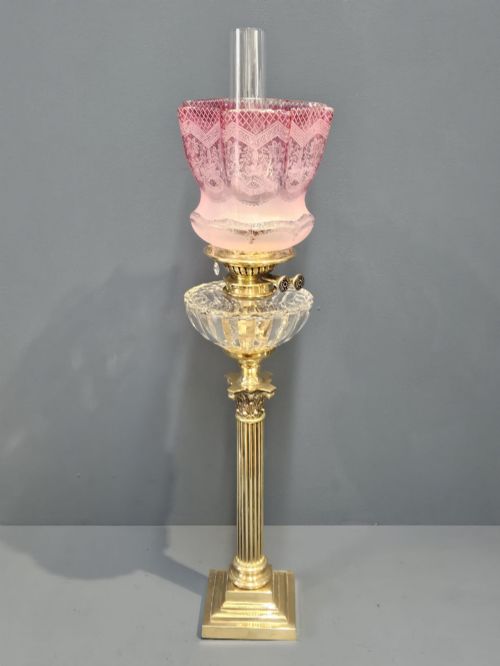
The selections span the Victorian era, the wider nineteenth century, and subsequent Edwardian updates into the early twentieth century. Common architectural forms include Corinthian column table lamps, telescopic floor lamps, and hanging lanterns framed in brass.
Stylistic influences range from austere Gothic Revival and heavy Victorian interpretations to flowing Art Nouveau lines and rectilinear Arts and Crafts designs. Many pieces demonstrate utilitarian ingenuity, such as height-adjustable mechanisms, dual burners, and pivoting reading arms.
Materials and Techniques
Brass serves as the primary structural medium, worked through casting, turning, and heavy forging to create rigid columns, bases, and arms. Accompanying materials like bronze, gilt bronze, ormolu, and wrought iron appear in mounts and structural frames.
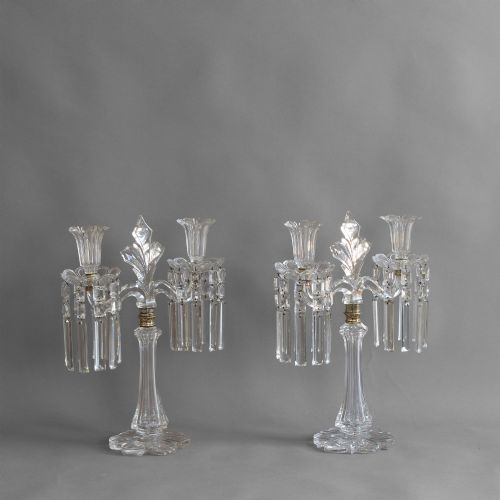
Transparent and translucent elements complete the construction, utilising cut glass, lead glass, opaline glass, opalescent glass, vaseline glass, and cranberry glass for shades and lustres. Ceramic inserts and porcelain bodies occasionally punctuate the metallic framework.
Victorian Brass Lighting Retail Price Guide 2026
Typical asking prices for victorian brass lighting among the pieces listed under this phrase on Sellingantiques today, from the lower quarter to the upper quarter. They describe what is for sale here now, not the wider market.
Lighting includes heavy bronze bears that double as stout candlesticks from the Black Forest.
Assessing Quality
Quality rests upon the weight of the metal casting, the crispness of chased or turned details such as acanthus leaves on Corinthian capitals, and the structural integrity of joints. Superior examples employ heavy-gauge brass and robust telescoping mechanisms that retain rigidity at maximum extension.
Glass components differentiate standard production from finer output, with hand-blown, flashed, or layered glass shades exhibiting superior depth of colour and precise mould-blowing. The integration of auxiliary materials like gilt bronze or ceramic bodies elevates a piece beyond basic utility.
Barbedienne·W.A.S. Benson·Bruce Talbert
The Victorian Brass Lighting Glossary
- Ormolu
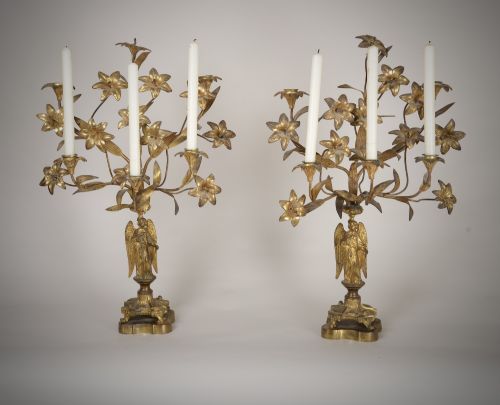
- Gilded bronze, where finely ground gold is amalgamated with mercury and applied to a bronze base through heat firing. This technique produces a durable, rich golden surface finish seen on select nineteenth-century mounts and candelabra.
- Vaseline glass
- A transparent or translucent yellow-green glass containing uranium dioxide, which glows brightly under ultraviolet light. It appears frequently in late Victorian and Gothic Revival shades and lamps.
- Corinthian column
- A classical architectural column form featuring ornate acanthus leaves and scrolls on the capital. Lamp makers frequently adapted this aesthetic for heavy brass table and oil lamp standards.
- Gasolier
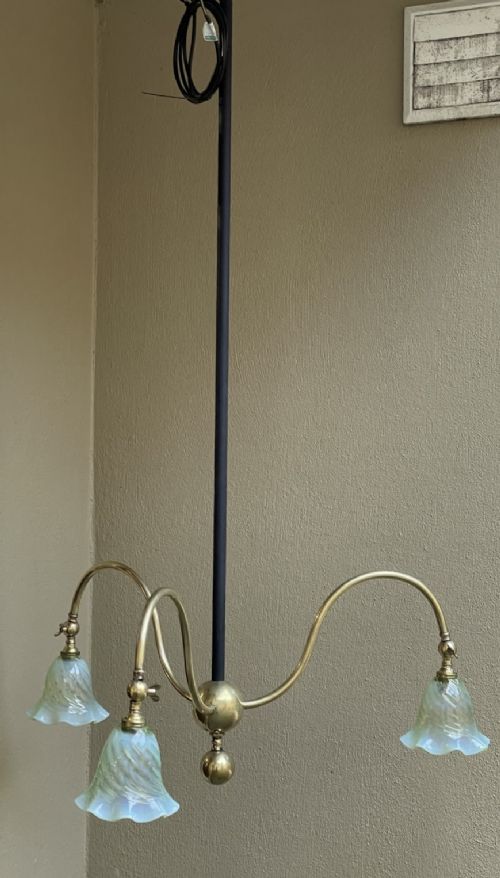
- A multi-burner gas lighting fixture suspended from the ceiling during the nineteenth century. These often feature decorative arms and opalescent shades.
- Pricket candlestick
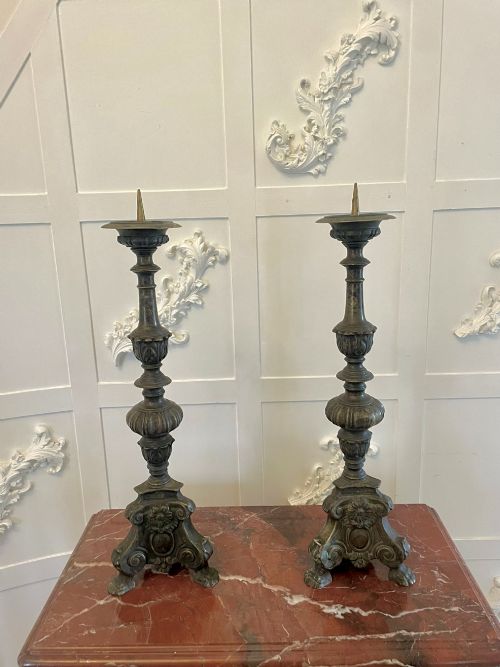
- A heavy candlestick utilising a central spike or pricket to secure a large wax candle rather than a socket. These forms are frequently found in ecclesiastical or Gothic Revival contexts.
Victorian Brass Lighting: Frequently Asked Questions
Can old oil lamps be used with electricity?
Many nineteenth-century oil lamps undergo careful conversion to electricity by routing wiring through the original burner assemblies or central columns.
This adaptation preserves the antique standard or table lamp body while allowing safe everyday illumination in modern homes.
How do I identify a Gothic Revival piece?
Gothic Revival lighting incorporates medieval architectural motifs such as pointed arches, trefoils, and heavy structural ironwork.
These designs often feature darker patination, pricket spikes, and rich ecclesiastical styling popular throughout the nineteenth century.
What is the difference between brass and ormolu?
Brass is an alloy of copper and zinc, offering a durable yellow metallic body that can be polished or left with a darkened patina.
Ormolu is a distinct gilding technique involving mercury and gold applied to bronze, yielding a bright, non-tarnishing golden lustre.
Are standard lamps height adjustable?
Certain floor-standing standard lamps utilise telescopic mechanisms that allow the central shaft to extend vertically.
These adjustable stems were engineered to vary the reach and spread of the light source for reading or ambient illumination.