

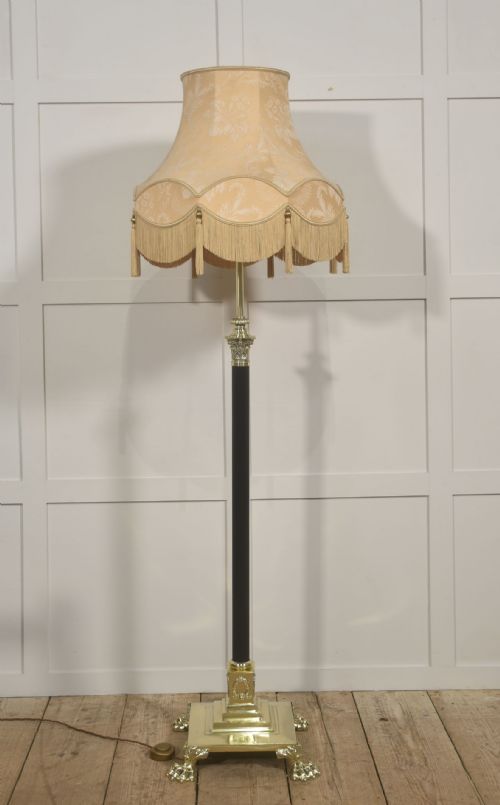


Brass Column Floor Lamp
These brass column floor lamp pieces bring period presence and height to a room, offering both standard lighting and substantial presence.
What They Are
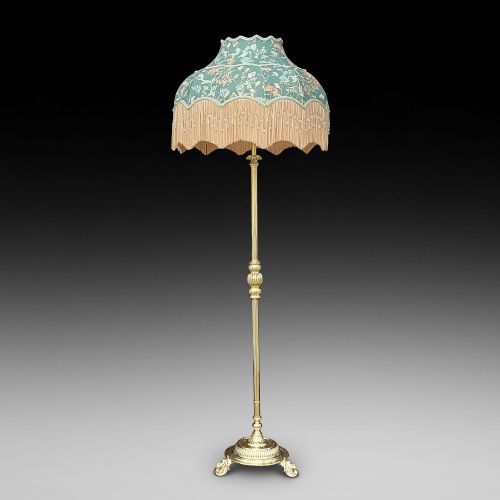
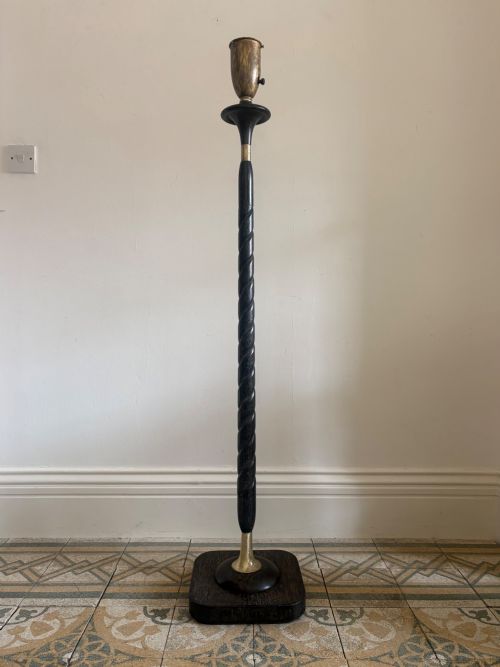
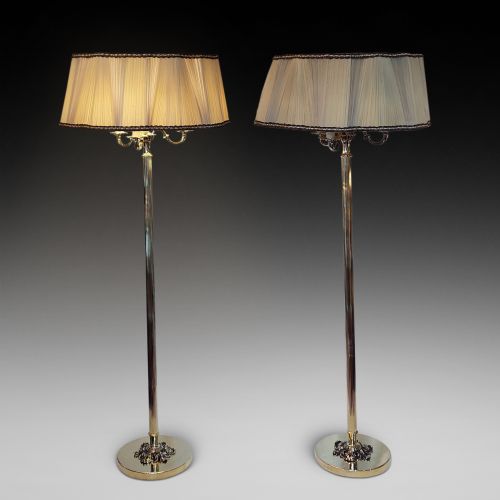
A brass column floor lamp is a tall standing lighting fixture built around a central metal pillar, appearing in Victorian, Edwardian, and nineteenth-century forms. These pieces frequently take the form of standard lamps or floor lamps designed to illuminate a space from an elevated position.
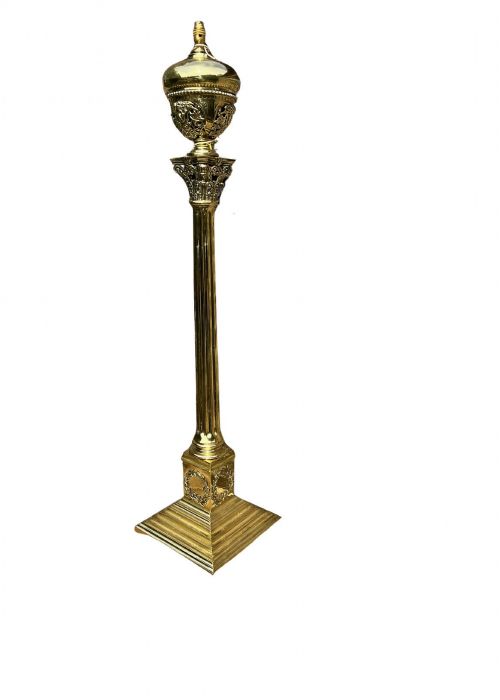
The versions most commonly met on this page include Victorian and Edwardian examples, often featuring Corinthian column designs or telescopic mechanisms. Makers such as A Hinks & Sons also appear in the archive, demonstrating the historical range of standard lamps in brass.
Materials span beyond basic metal, incorporating fabric, enamelled metal, silk damask, and cast iron alongside the primary brass structure. Styles lean heavily toward Victorian Neoclassical, Traditional English, and general Neoclassical aesthetics.
How They Were Made
Construction relies primarily on brass, sometimes paired with cast iron elements for structural weight and stability at the base. Metalworking techniques allowed for fluted columns and adjustable stems, which enabled the height of the standard lamp to change.
Many examples began life as oil lamps before later conversion to electricity, preserving the original metal reservoirs and burners. Shades introduced fabric, silk damask, and enamelled metal components to diffuse the light from the burner or bulb.
Retail Price Guide 2026
Typical UK retail prices for brass column floor lamp, calculated from the Sellingantiques database of over a million retail prices indexed since 2003. This retail price guide relies exclusively on Sellingantiques data; no external sources or auction records are used, so the figures do not describe the wider market.
Some telescopic stems retain traces of ancient soot, whispering tales of Victorian evenings spent reading by flickering oil light.
What Varies in Quality
The distinction between standard examples and the finest pieces often rests on the crispness of the column detailing, such as the acanthus leaves on a Corinthian capital. Heavier casting and more substantial gauge brass elevate the tactile and visual weight of the standard lamp.
Engineering mechanisms define the upper tier of the range, particularly the smoothness and precision of telescopic adjustment stems. The presence of documented maker attributions, such as Hinks, separates ordinary production from notable workshop output.
A Hinks & Sons
The Brass Column Floor Lamp Glossary
- Corinthian column
- A classical architectural column style featuring an ornate capital decorated with acanthus leaves, frequently utilised on the shafts of these floor lamps.
- Telescopic
- An adjustable stem design allowing the height of the standard lamp to extend or retract using an internal sliding mechanism.
- Standard lamp
- The traditional British term for a floor lamp, describing a tall vertical post designed to support an oil burner or electrical fitting.
- Brass
- A copper and zinc alloy chosen for its bright metallic lustre and suitability for decorative casting and polishing.
- Silk damask
- A reversible figured fabric often utilised in period lamp shades to complement the polished metal standard.
Frequently Asked Questions
Are these lamps converted from oil?
Many Victorian and nineteenth-century examples began life as oil-burning standards before being adapted for modern electricity during their long histories. This conversion process is standard for the period and preserves the original metalwork.
Collectors appreciate the retention of original burners, reservoirs, and telescopic mechanisms even when the wiring has been updated to meet contemporary safety standards.
How do I adjust the height?
Telescopic models feature a central sliding stem secured by a side key or screw mechanism, allowing the overall height of the standard lamp to be raised or lowered. Care should be taken to support the upper section while releasing the lock.
Fixed-height columns do not possess this mechanism, maintaining a single rigid profile from the weighted base to the shade carrier.
How do I clean the brass?
Polishing depends entirely on the desired finish, as many collectors prefer to leave an aged patina rather than achieving a bright modern shine. Gentle dusting and non-abrasive cleaners help preserve the surface without stripping historical character.
Harsh chemical dips can remove subtle details in the cast ornament and are generally avoided by experienced handlers.