


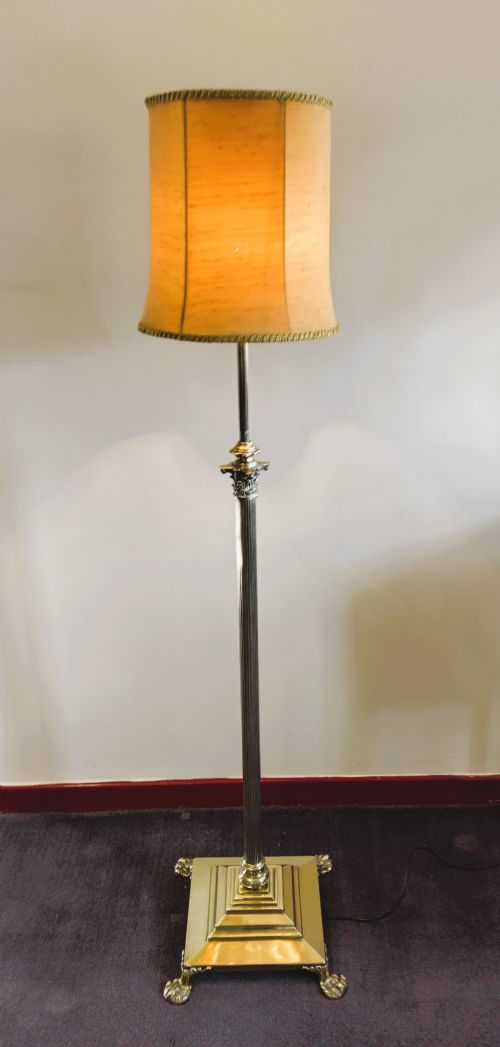


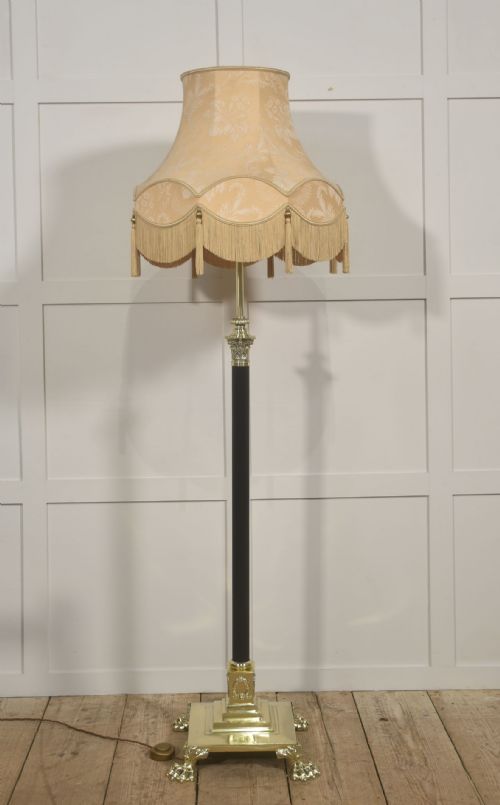


Adjustable Standard Lamp
An adjustable standard lamp brings flexible height and directional light into a room, combining practical engineering with period decorative character.
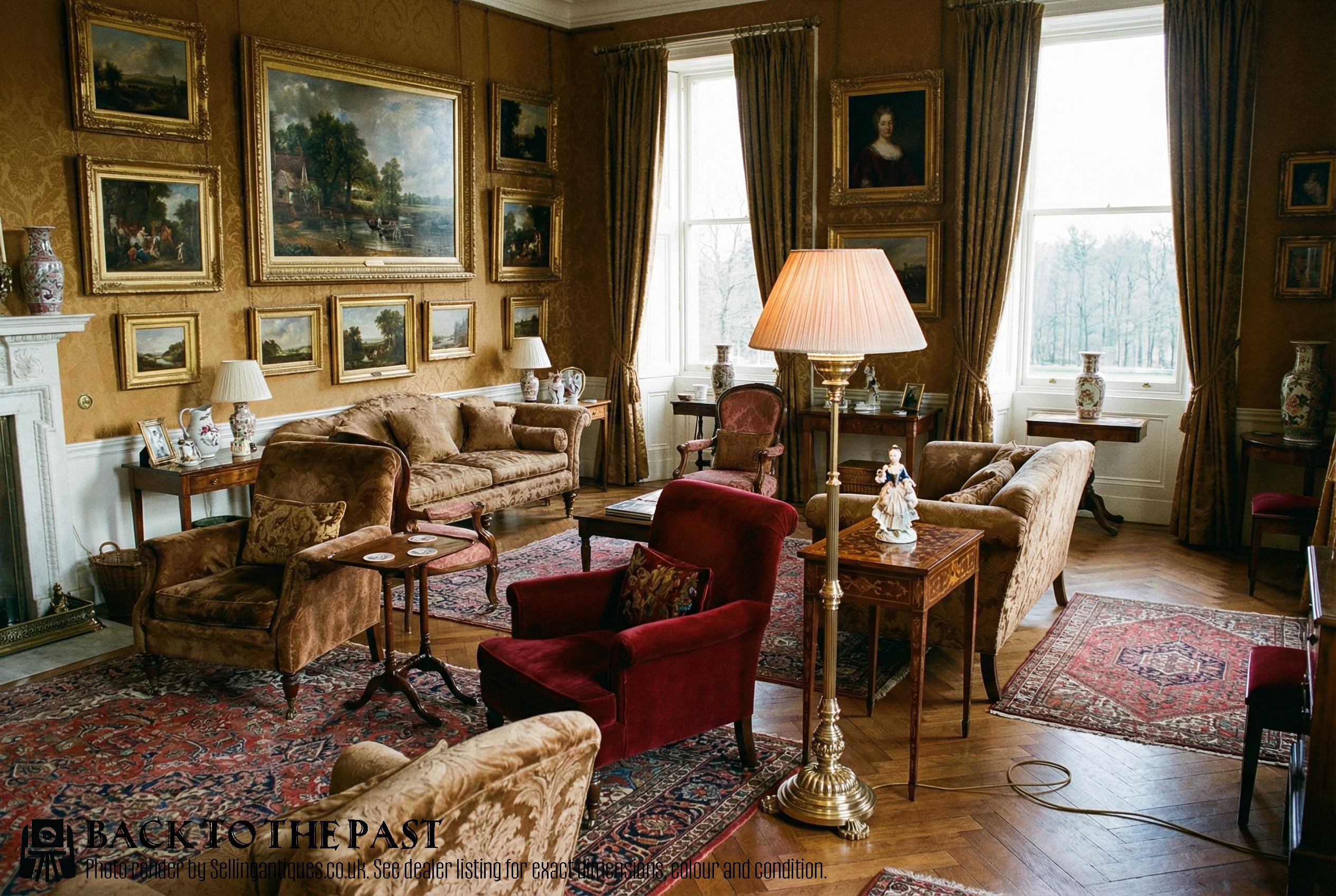
Adjustable Standard Lamp
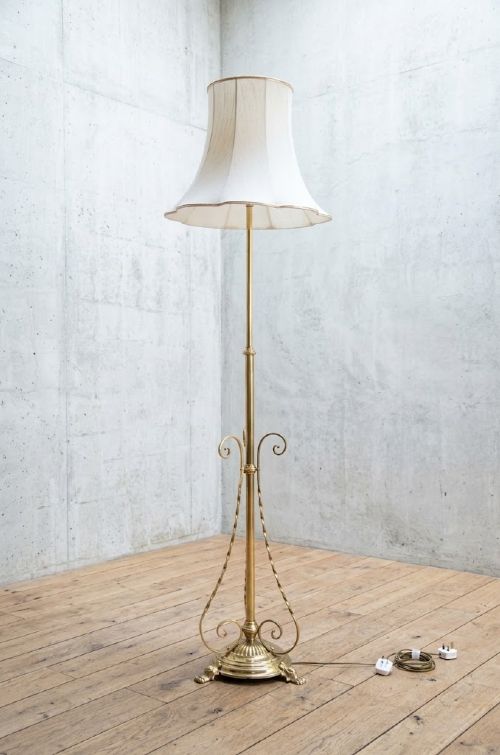
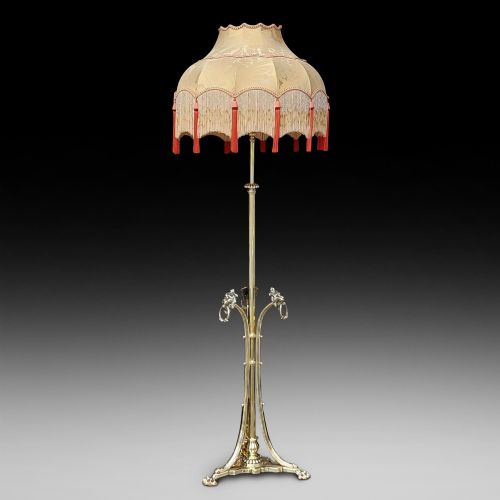
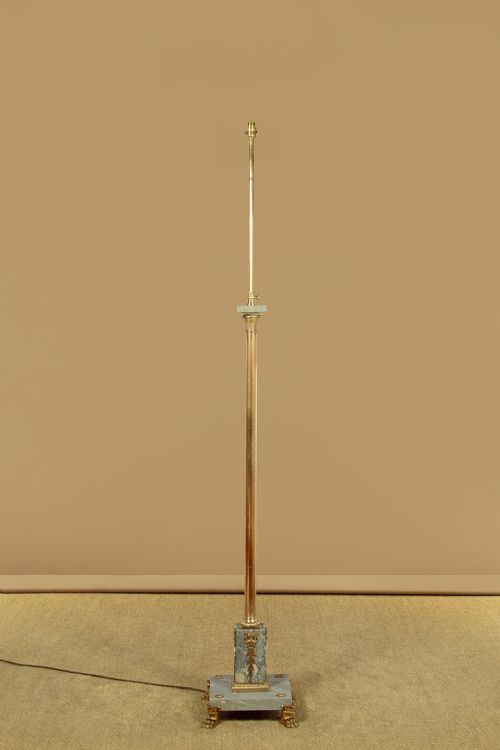
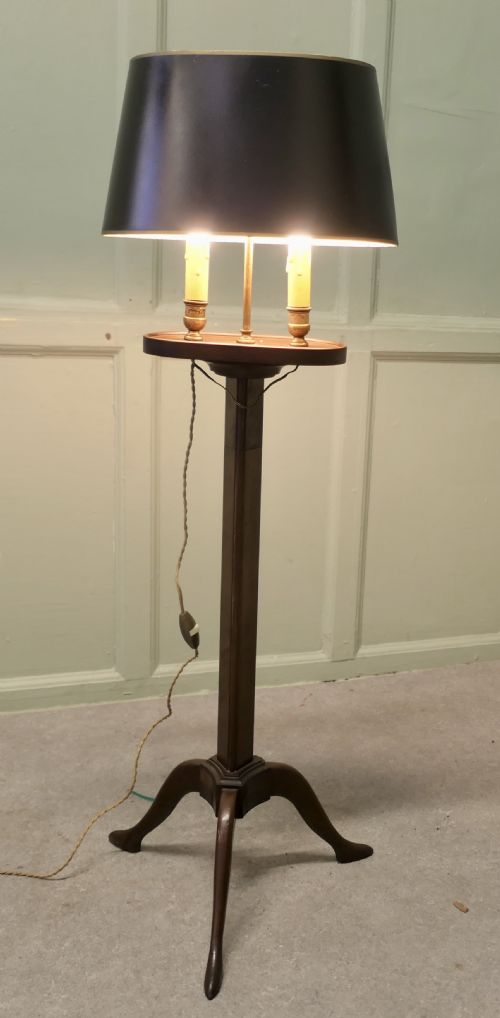
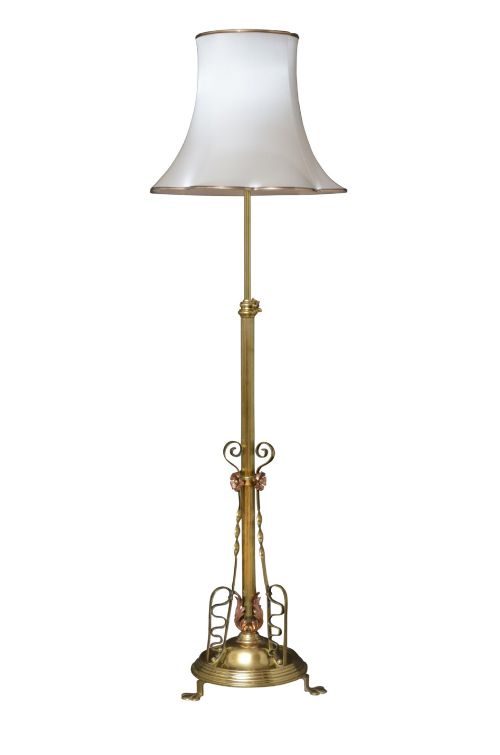
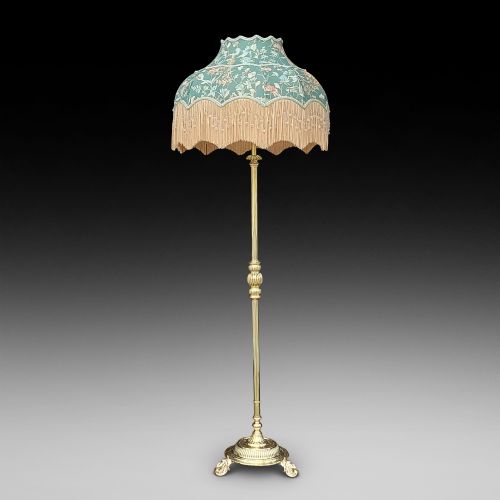
An adjustable standard lamp is a tall floor-standing lighting fixture designed to alter its height or angle to suit reading and living spaces. When you search for an adjustable standard lamp, you meet floor-standing designs from the Victorian, Edwardian, and 1920 periods alongside Arts and Crafts and Art Nouveau interpretations.
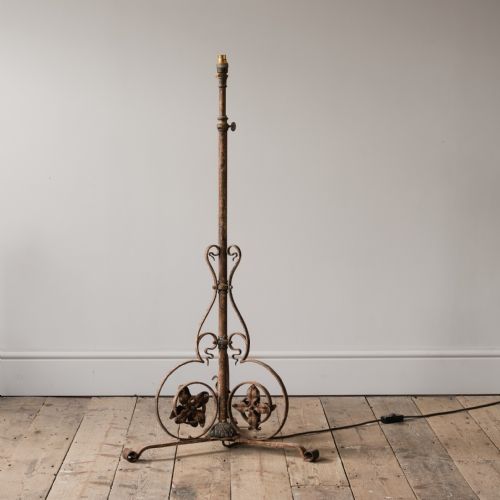
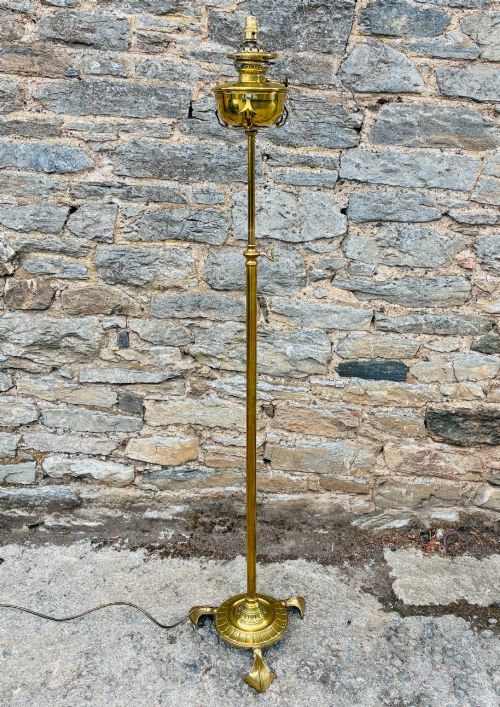
The most common examples on this page are tall brass telescopic designs that transform nineteenth-century oil standards into electric floor lamps. Alongside these, you find wrought iron frames, copper columns, and occasional wooden standards originating from diverse decorative traditions.

Materials and construction methods
Makers utilised heavy metals such as brass, copper, wrought iron, and silver plate to build stable vertical columns that support the weight of extended arms and shades. Many nineteenth-century pieces began as oil lamps with telescopic mechanisms, later converted to electricity while retaining their original screw keys and sliding stems.
Details incorporate marble or onyx bases for added ballast, paired with fabric, silk, or glass shades. Structural styles draw on Neoclassical, Gothic Revival, and Arts and Crafts design vocabularies to shape the metalwork and joints.
Adjustable Standard Lamp Retail Price Guide 2026
Typical asking prices for adjustable standard lamp among the pieces listed under this phrase on Sellingantiques today, from the lower quarter to the upper quarter. They describe what is for sale here now, not the wider market.
Design styles represented include Neoclassical, Art Nouveau, Arts and Crafts, and Gothic Revival across floor-standing forms.
Assessing quality and craftsmanship
Quality rests in the precision of the telescopic action and the stability of the base. Superior examples maintain smooth vertical movement without slipping, supported by heavy cast metal or stone bases that prevent tipping.
Refinement shows in the hand-finished details of the metalwork, such as chased brass collars, forged iron scrollwork, and intact period fittings that retain their original proportion and balance.

The Adjustable Standard Lamp Glossary
- Telescopic
- A sliding mechanism of concentric tubes allowing the upright shaft to raise or lower. This permits the overall height of the standard lamp to change according to room requirements.
- Standard lamp
- A traditional British term for a floor lamp. It describes a tall freestanding lighting fixture designed to stand directly on the floor.
- Telescopic oil lamp
- A nineteenth-century lighting reservoir mounted on an extendable brass column. Many surviving examples have subsequently been rewired for electric illumination.
- Arts and Crafts
- A design movement prioritising visible construction and honest materials. Standard lamps from this tradition display hammered metal surfaces and unadorned structural joints.
Adjustable Standard Lamp: Frequently Asked Questions
How do I operate a telescopic standard lamp?
Most adjustable models use a central thumb screw or sliding friction collar on the upper shaft. Loosening this collar allows the inner tube to slide upward to the desired height before tightening again to hold the position.
Take care to support the top section with one hand while adjusting the height so the inner mechanism does not drop too quickly.
Are these lamps safe for modern electrical use?
Many older standards originate from an era before modern wiring standards or began life as oil lamps. Consequently, a large portion require professional rewiring and PAT testing before daily use in a home.
Inspect the internal cord path and bulb holder to ensure a qualified electrician has updated the components to meet current safety regulations.
How do I date a brass standard lamp?
Dating relies on combining the base style, manufacturing techniques, and decorative motifs present on the metalwork. Victorian and Edwardian examples often feature heavy cast brass bases with threaded joins, while 1920 pieces introduce chrome finishes and simpler geometric forms.
Patina also offers clues, as genuine nineteenth-century brass develops a deep, uneven warmth that modern reproductions struggle to replicate accurately.
Where should I place a floor lamp in a room?
These tall fixtures suit corners, beside reading armchairs, or flanking large pieces of furniture where they can cast light downward. The adjustable height allows you to raise the beam above eye level or lower it for focused tasks.
Ensure the heavy base rests on a stable, flat surface so the extended arm remains balanced and secure.