






Adjustable Floor Lamp
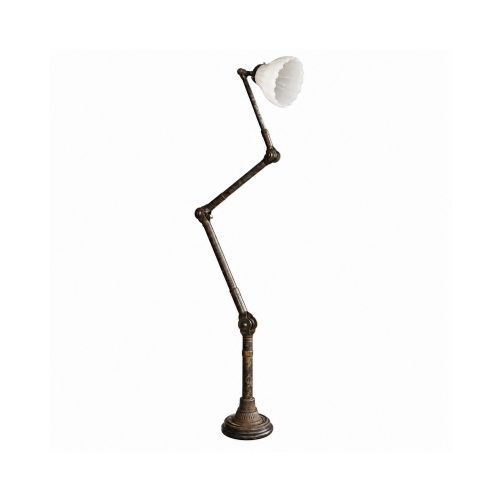
An adjustable floor lamp brings direct illumination and period presence to a room, moving effortlessly between practical task lighting and decorative warmth.
Adjustable Floor Lamp
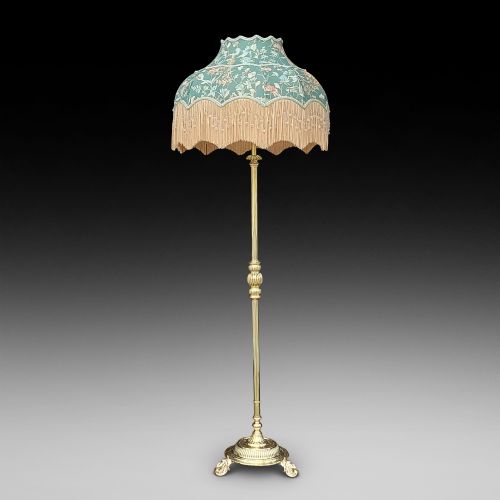
An adjustable floor lamp serves as a flexible lighting fixture designed to alter its height or angle to suit various domestic spaces. When browsing for an adjustable floor lamp, buyers encounter pieces originating from the Victorian and Edwardian eras, alongside items spanning the nineteenth century through to the mid-twentieth century.
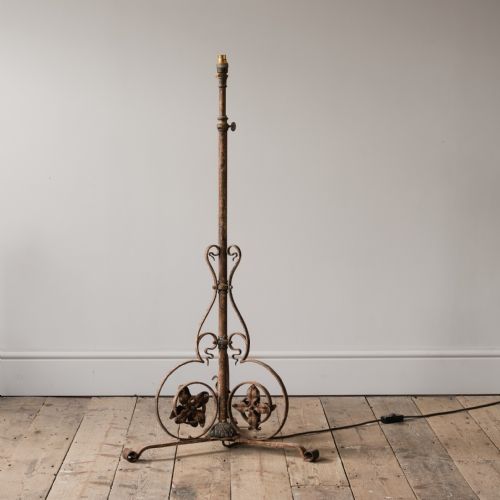
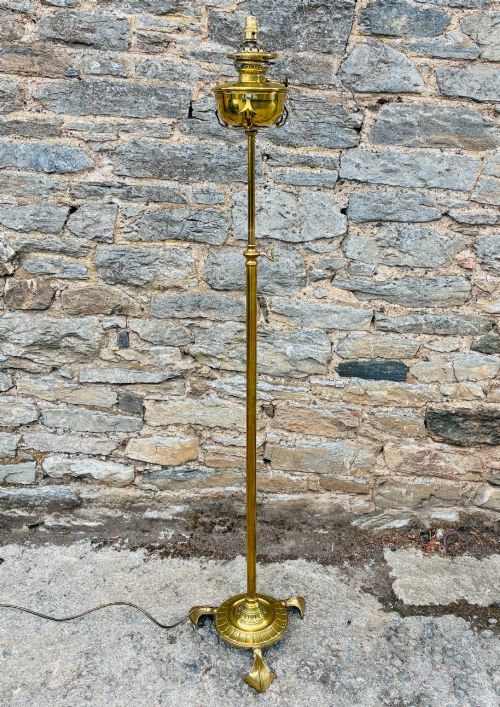
The selections frequently manifest as standard lamps, telescopic designs, or converted oil lamps adapted for modern electricity. Common styles range from Arts and Crafts and Art Nouveau to Neoclassical, Gothic Revival, and traditional Chinese aesthetics, utilising materials like brass, wrought iron, and polished wood.
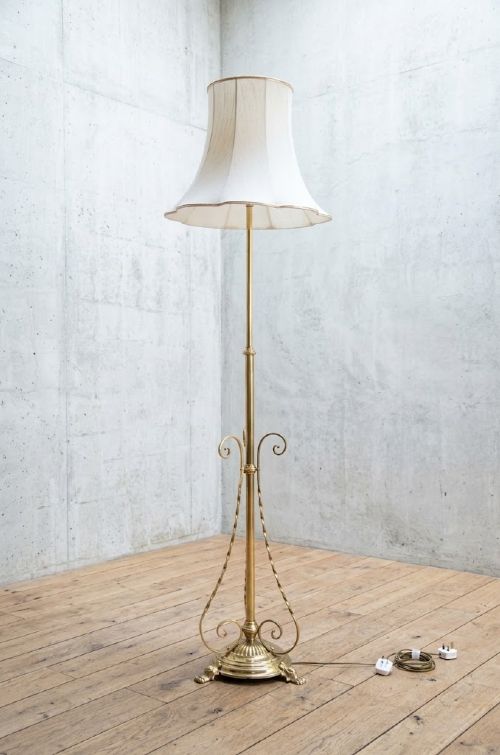
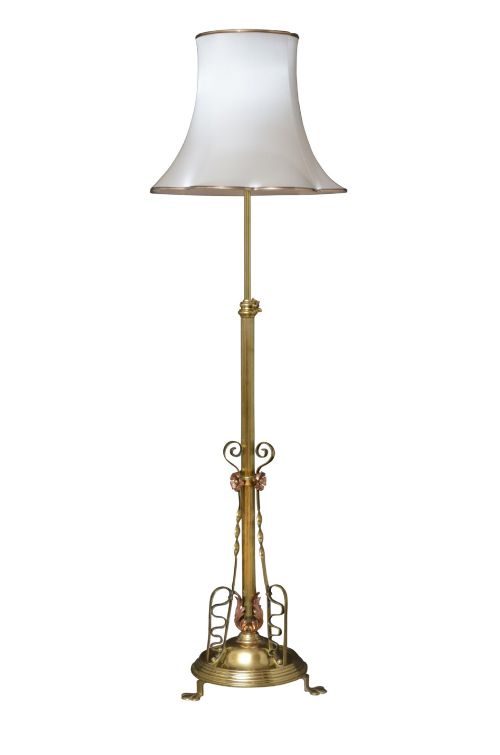
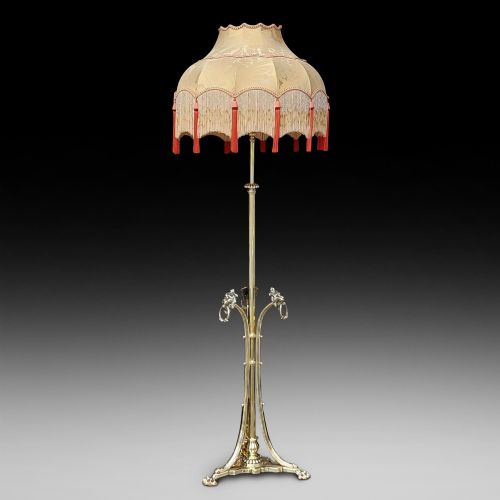
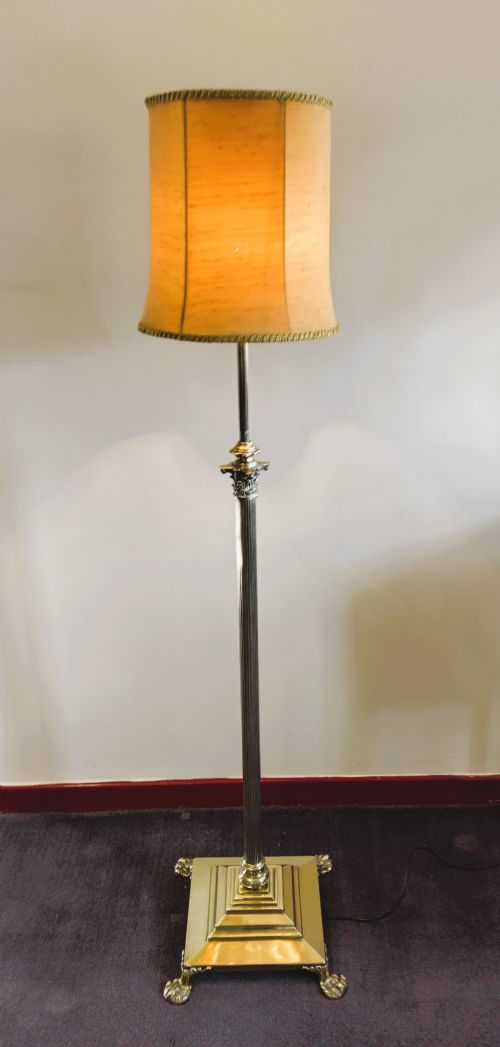
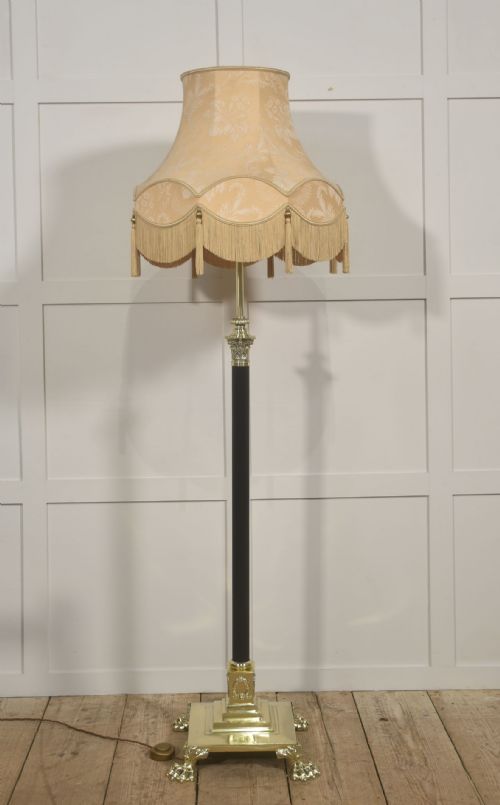
Telescopic stems and swivel arms define the functional mechanics of these pieces, allowing the standard to extend upward or pivot outward. Many examples incorporate fabric or silk shades to soften the glow emitted by the bulb.
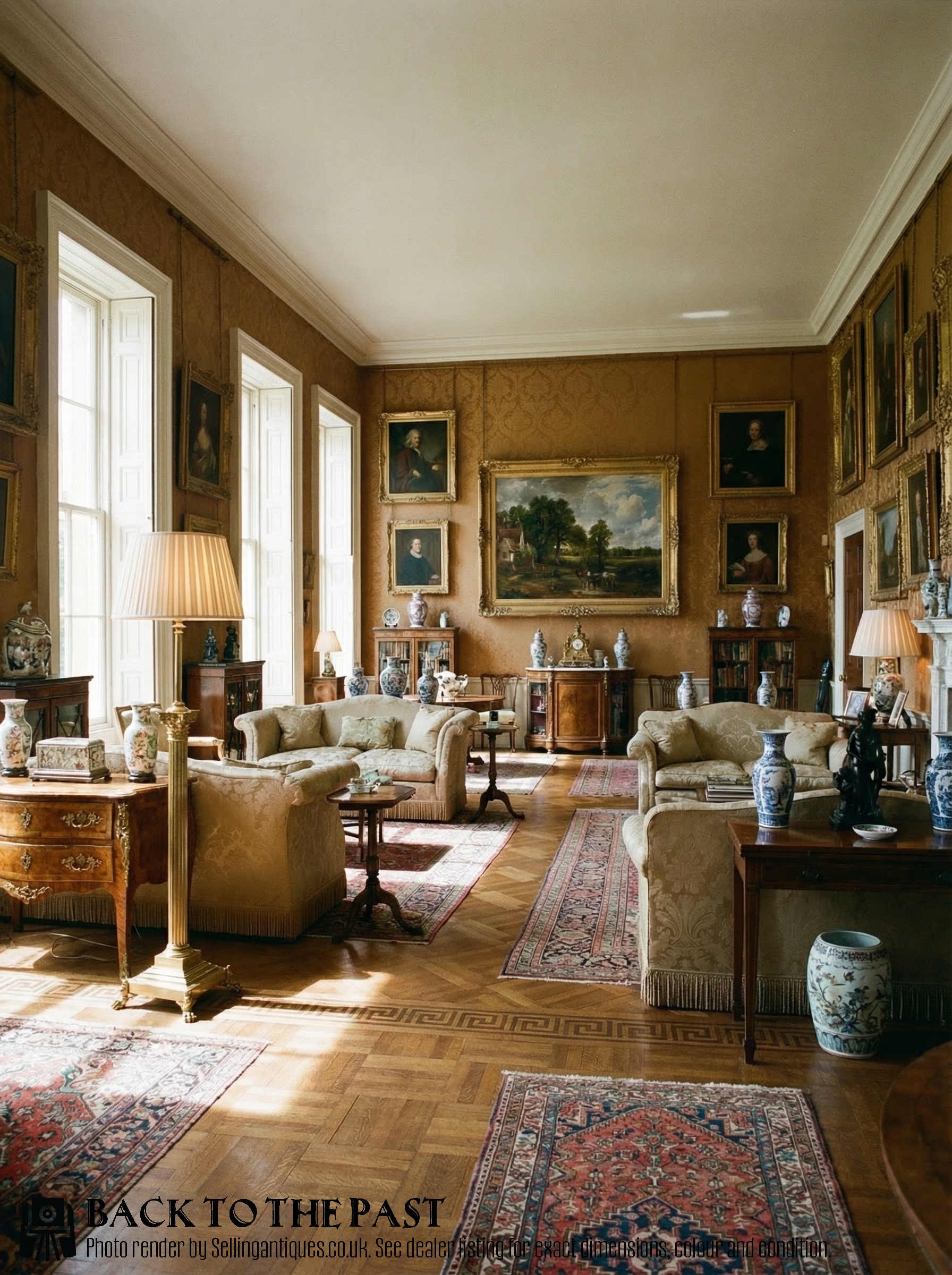
How they were made
Makers utilised heavy metals such as brass, copper, and wrought iron to construct the foundational columns and weighted bases of these standards. Telescopic mechanisms relied on precision engineering of sliding brass tubes secured by threaded keys or friction collars.
Decorative elements often involved hand-beaten copper, cast brass ornamentation, or carved padauk wood, reflecting the distinct ornamental preferences of periods like Arts and Crafts and Art Nouveau. Surfaces were frequently polished, bronzed, or left with a blackened finish depending on the prevailing style.
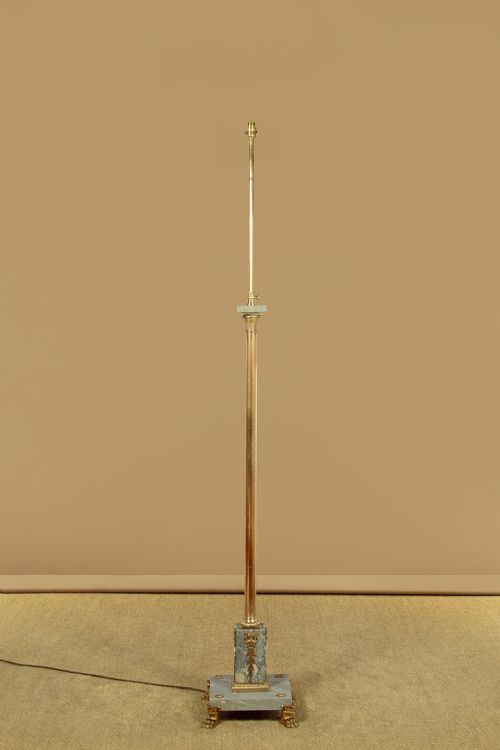
Combinations of mixed media, including marble and onyx bases or cranberry glass reservoirs, added stability and visual contrast to the tall upright structures.
Adjustable Floor Lamp Retail Price Guide 2026
Typical asking prices for adjustable floor lamp among the pieces listed under this phrase on Sellingantiques today, from the lower quarter to the upper quarter. They describe what is for sale here now, not the wider market.
Listings feature brass as the most common material, alongside wrought iron, copper, and marble.
What varies in quality
The weight and integrity of the base separate robust standards from lighter alternatives, as heavy brass, marble, or iron ensures the tall frame remains stable when fully extended. Superior execution shows in the smooth operation of telescopic stems and swivel arms without excessive wobbling.
Artisanal detail distinguishes standard production from finer pieces, evident in hand-wrought ironwork, carefully chased brass ornamentation, or integrated candle brackets. The retention of original period components, such as specialised keys, heavy collars, and period shades, elevates the character of the fixture.
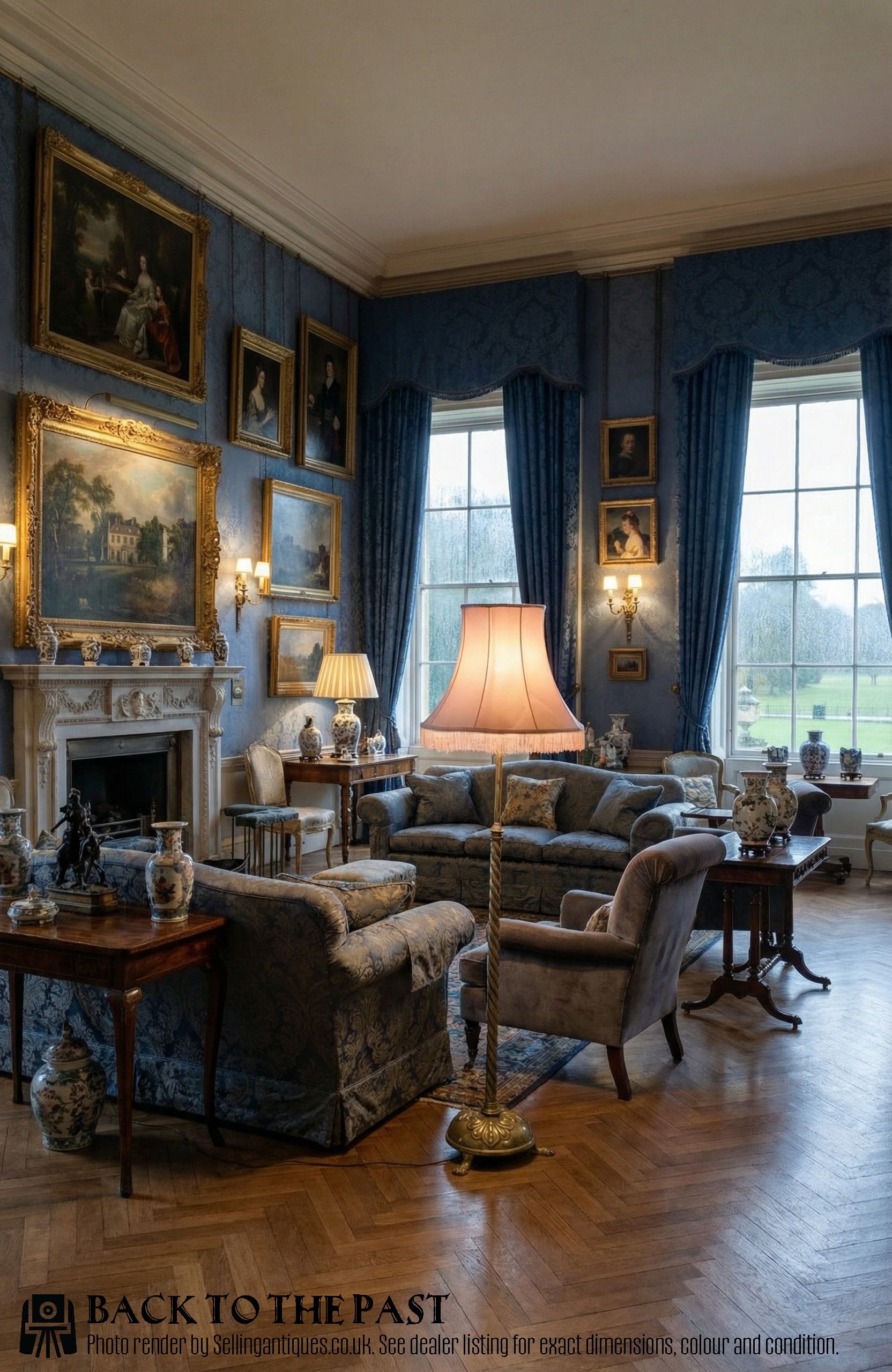
A Hinks & Sons
The Adjustable Floor Lamp Glossary
- Telescopic
- A design featuring nested sliding tubes that allow the height of the lamp standard to be raised or lowered. This mechanism is common in nineteenth-century brass lighting.
- Standard lamp
- A traditional British term for a floor lamp, describing a tall vertical post designed to support an upper light source and shade. These fixtures typically stand beside armchairs or sofas.
- Bouillotte lamp
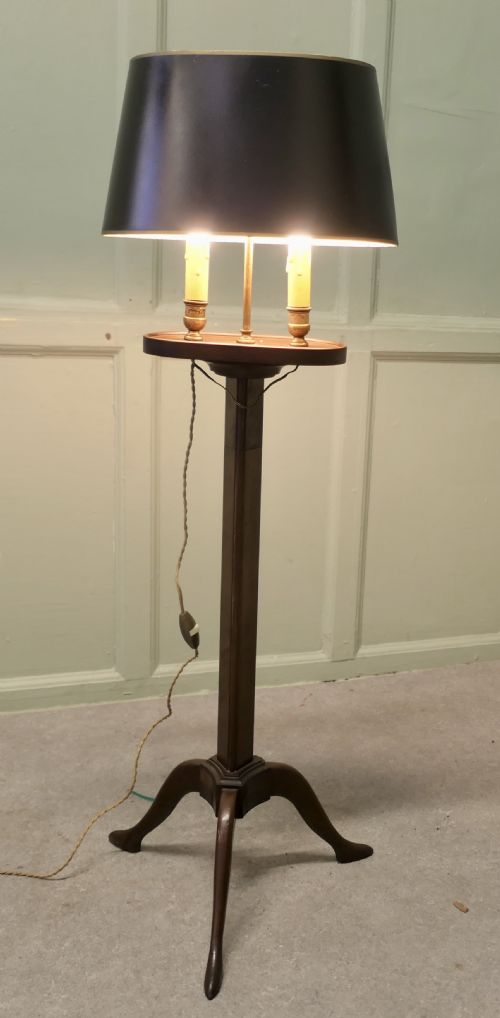
- A decorative lighting fixture featuring one or more candle arms mounted on a central column, often accompanied by an adjustable metal shade. Originating in card games, these pieces provide focused downward light.
- Corinthian column
- A classical architectural column style featuring an ornate capital carved with acanthus leaves. Victorian makers frequently adopted this form for tall brass lamp standards.
- Wrought iron
- Iron beaten and shaped by hand while hot, producing a textured, durable material. This technique appears frequently in Arts and Crafts and vernacular nineteenth-century floor lamps.
Adjustable Floor Lamp: Frequently Asked Questions
How do I adjust the height?
Telescopic standards generally rely on a sliding inner rod secured by a thumbscrew or a friction collar located near the upper section of the shaft. Loosening this fastener allows the column to extend upward before tightening it again to hold the position.
Swivel arms and pivoting joints operate independently to direct light horizontally without altering the overall vertical height of the main standard.
Are these lamps safe to use today?
Many older pieces arrive wired to modern safety standards or ready for a qualified electrician to inspect and update the internal cord. Converted oil lamps and vintage brass fittings often require contemporary wiring and modern lamp holders to meet current electrical regulations.
Checking the stability of the weighted base and the integrity of the internal wiring ensures the tall fixture remains secure during daily domestic use.
Where should I place a floor lamp?
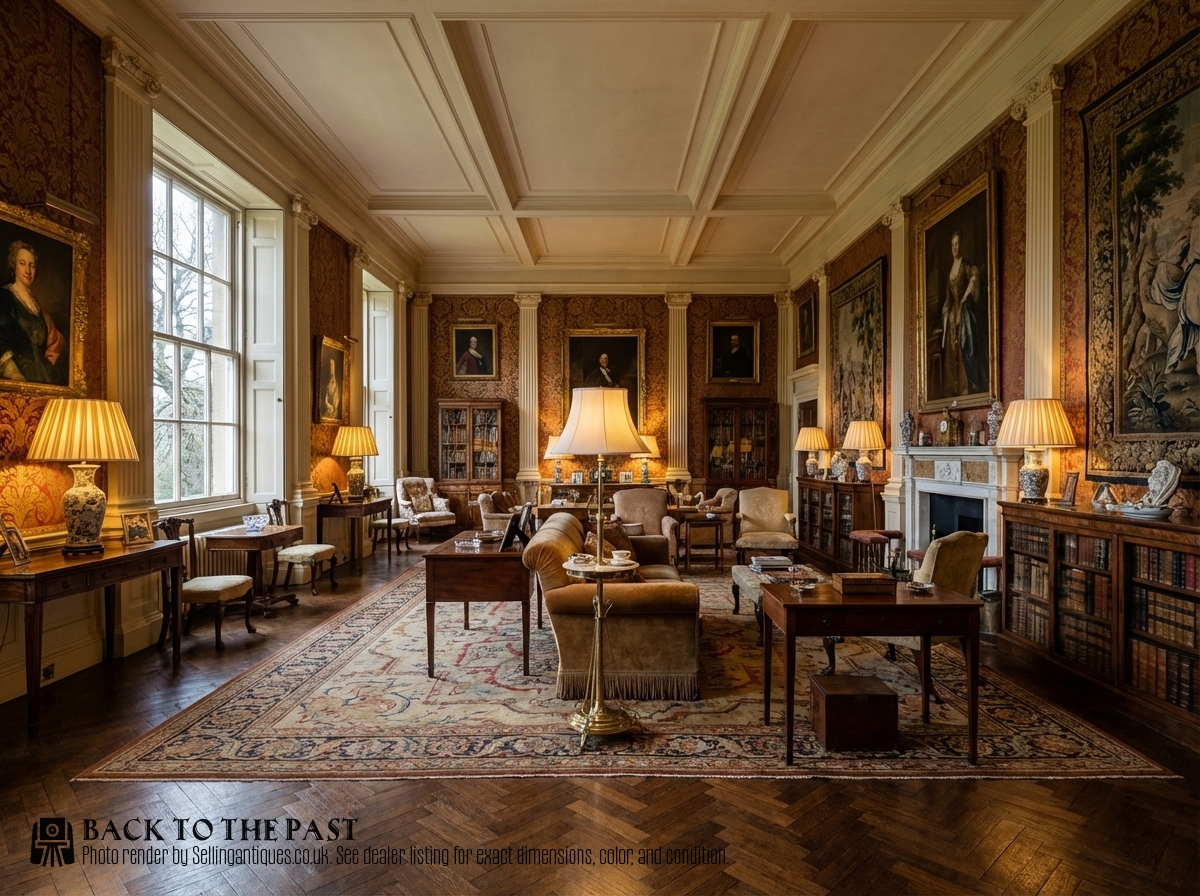
These tall fixtures suit corners, beside reading chairs, or near low seating where the adjustable arm can project light directly over a surface. Their height allows them to illuminate dark corners without crowding tables or taking up surface space.
Positioning the base on a solid, level floor ensures the extended weight remains properly balanced.
How do I identify the period?
Stylistic details such as heavy cast brass Corinthian capitals point toward Victorian manufacture, while simpler geometric lines often indicate Arts and Crafts or Edwardian origins. Materials like wrought iron, polished copper, and oak or padauk wood frequently align with specific design movements from the late nineteenth and early twentieth centuries.
Examining the construction methods, such as threaded joints versus cast components, helps distinguish older nineteenth-century examples from later reproductions.