
Classic Brass Lighting
Classic brass lighting brings warm, enduring metalwork into rooms through chandeliers, wall lights and table lamps.
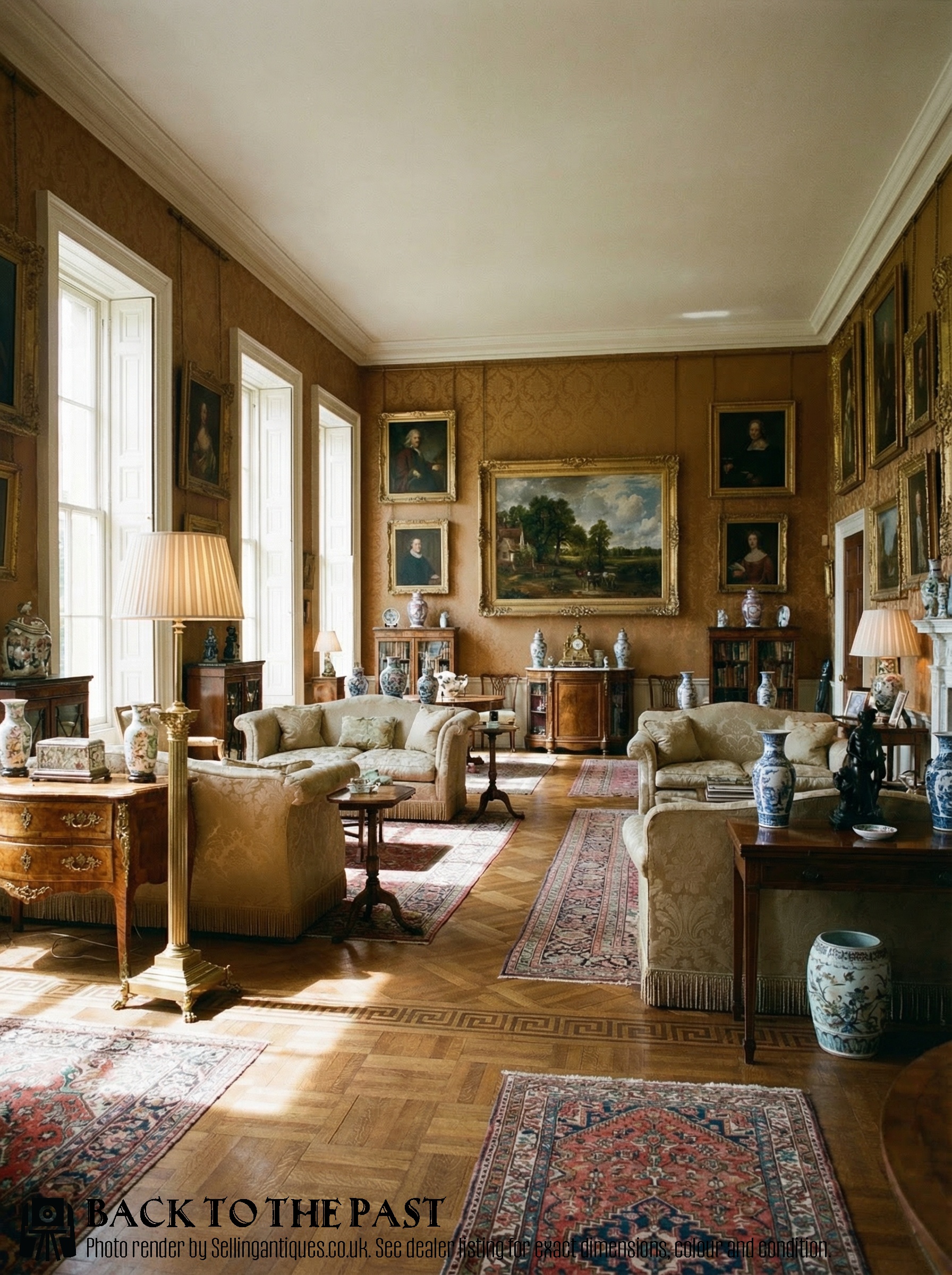
Classic Brass Lighting
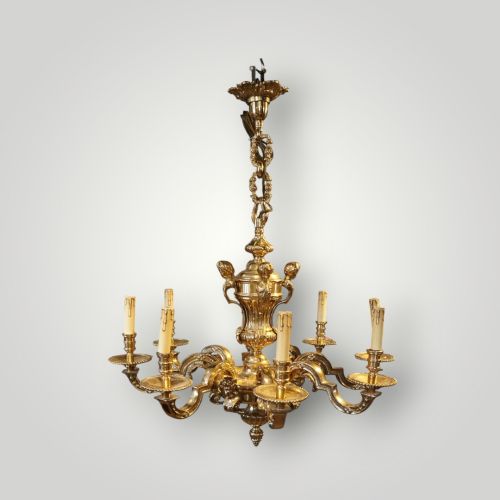
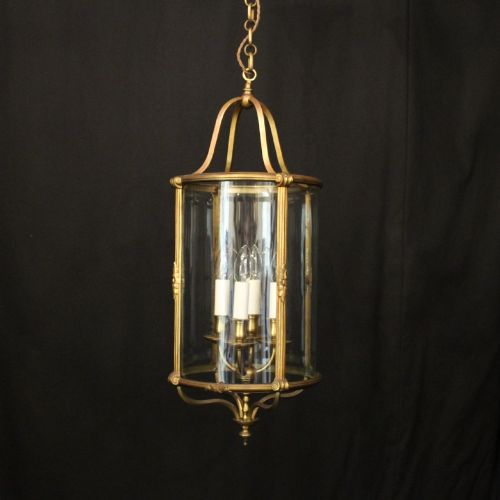
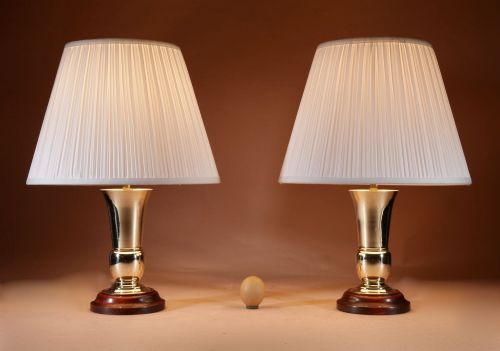
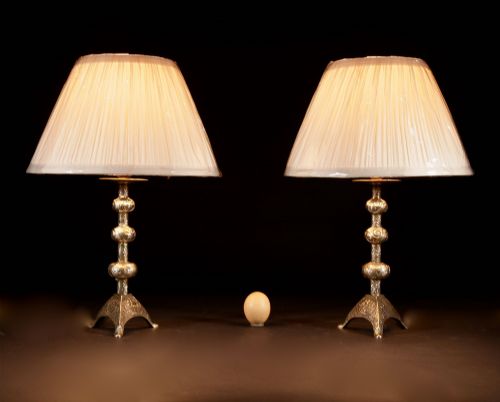
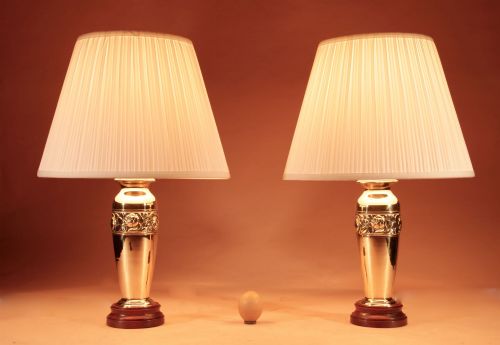
Classic brass lighting encompasses chandeliers, wall lights, table lamps, floor lamps and lanterns spanning from the Victorian and Edwardian eras into the Art Deco period. Pieces take many forms, from multi-branch chandeliers hung with crystal to simple desk lamps and hall lanterns.
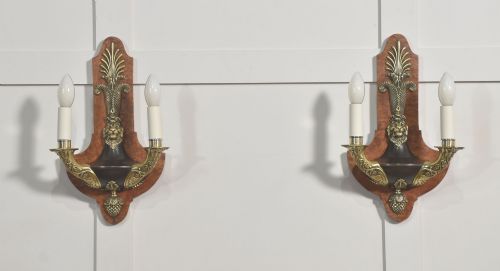
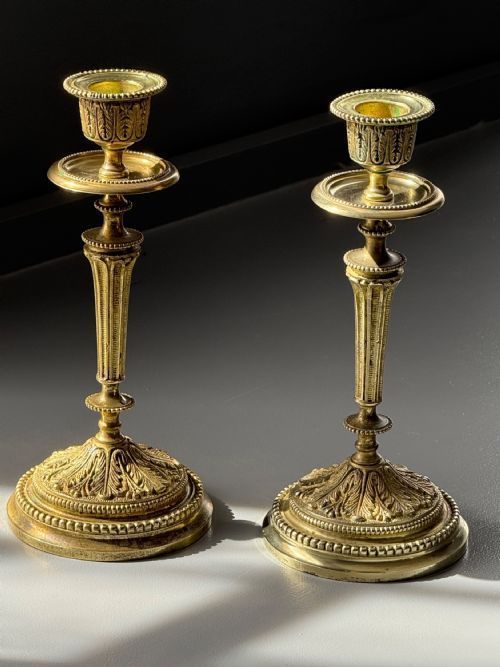
The selection on this page draws heavily on French and English designs, featuring styles that range from restrained Edwardian work to ornate French Empire and Rococo pieces. Buyers encounter everything from seamed brass ejector candlesticks to grand Italian crystal chandeliers.
Makers and workshops of the nineteenth and early twentieth centuries produced these fittings to illuminate domestic and formal spaces alike. Brass, gilt bronze and gilded brass predominate, often paired with glass, crystal or fabric components.
Materials and construction
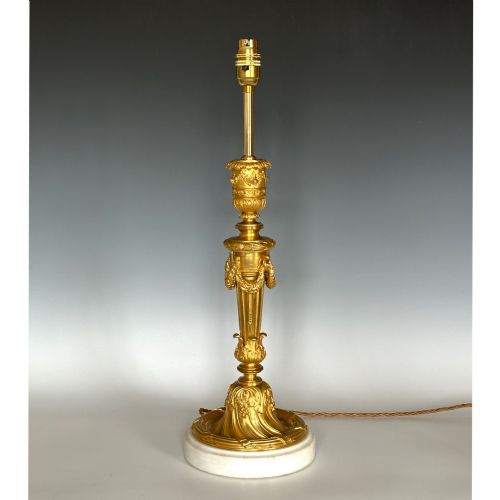
Foundries utilised cast brass, gilt bronze and copper, shaping metal through casting, spinning and hand-finishing techniques. Ormolu and fire-gilding impart a durable golden surface to many French chandeliers and wall sconces.
Makers incorporated glass and crystal drops, pendants and convex panels into lanterns and chandeliers to reflect candle or gas light. Wiring was frequently added later as homes transitioned to electricity during the early twentieth century.
Classic Brass Lighting Retail Price Guide 2026
Typical asking prices for classic brass lighting among the pieces listed under this phrase on Sellingantiques today, from the lower quarter to the upper quarter. They describe what is for sale here now, not the wider market.
Listings feature brass, gilt bronze, and copper materials across Victorian, Edwardian, and Art Deco styles.
Quality and execution
The crispness of the casting and the depth of the hand-chasing distinguish finer metalwork from simpler commercial production. Weight, thickness of gauge and the quality of the gilt or brass surface set the standard for longevity.
Integration of secondary materials, such as precision-cut crystal drops and heavy mountings, indicates higher-tier workshops. Original components and unified design schemes across multi-branch fixtures elevate the standing of a piece.
G.E.C·Royal Worcester
The Classic Brass Lighting Glossary
- Ormolu
- Gilded bronze, where a gold amalgam is applied to a bronze base using heat. This technique creates a rich, matte gold surface seen on French lighting from the eighteenth and nineteenth centuries.
- Ejector candlestick
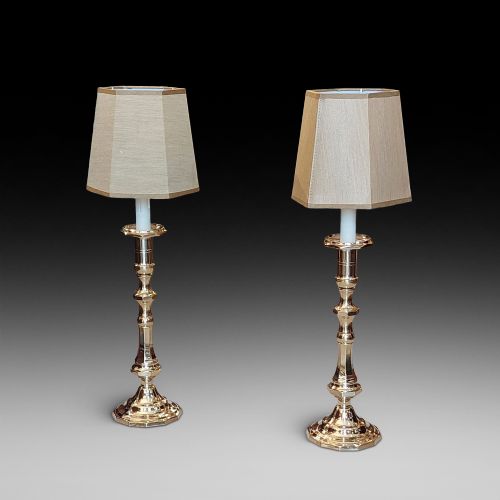
- A domestic candlestick containing an internal mechanism to push out the remaining stub of a wax candle. These items date from the eighteenth and nineteenth centuries and are found in brass.
- Sconce
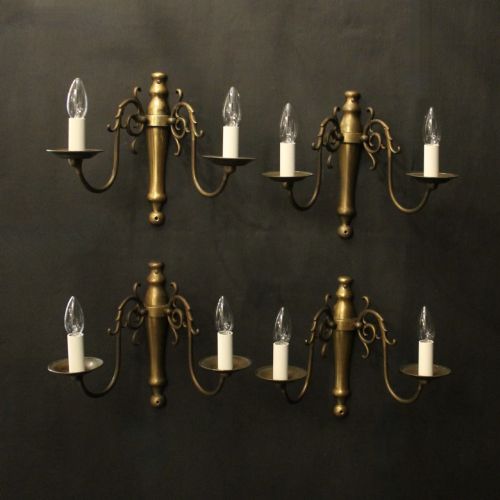
- A wall-mounted lighting fixture designed to hold candles or electric lamps. They frequently feature multiple arms and backplates cast in brass or bronze.
- Chandelier
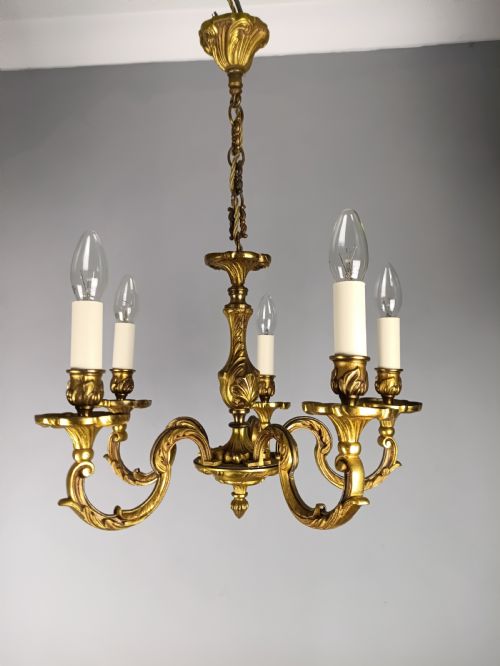
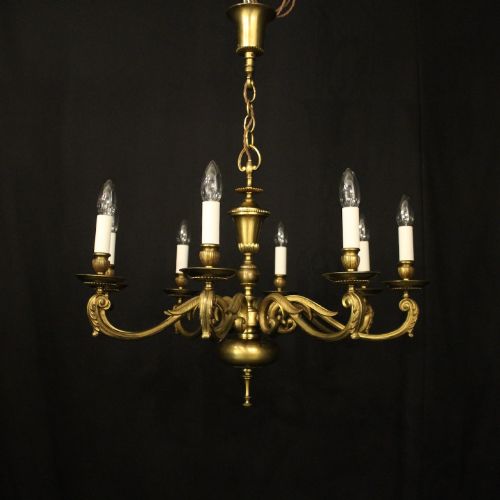
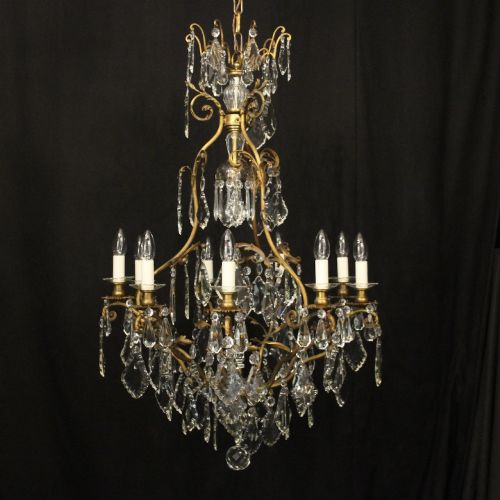
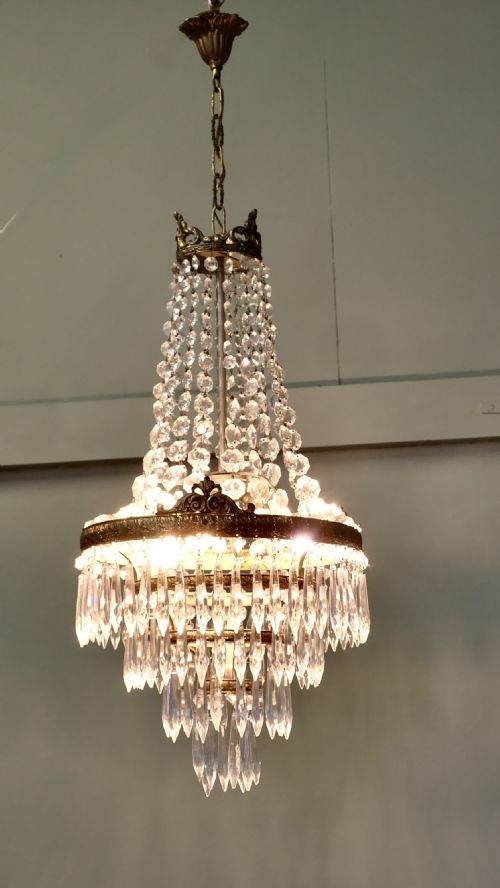
- A branched ceiling-mounted lighting fixture designed to hold multiple lamps or candles. Examples in the evidence incorporate glass, crystal, and gilt metal.
- Tent and waterfall
- A specific chandelier configuration featuring an upper tent of strung crystals dropping down into a tiered waterfall of further crystal prisms.
Classic Brass Lighting: Frequently Asked Questions
How do I date an antique brass chandelier?
Dating relies on stylistic clues, casting methods, and construction techniques visible on the frame. Victorian and Edwardian fixtures often display heavy cast components, while 1920s and 1930s pieces lean towards streamlined or revival forms.
Examination of the fixings, wiring channels, and any remaining maker marks helps narrow the decade of production. Stylistic overlaps are common, so inspecting the mountings provides the clearest indication of age.
Can these antique lights be rewired for modern use?
Most antique brass lighting can be adapted safely for contemporary electrical standards by a qualified professional. Rewiring allows historic fixtures to function reliably in modern homes without altering their external appearance.
Lampholders and internal channels are typically updated while preserving the original brass or bronze body. This approach maintains the historic integrity of the metalwork while ensuring safety.
What is the difference between brass and gilt bronze?
Brass is an alloy of copper and zinc, valued for its bright golden metallic appearance and durability in casting. Gilt bronze, or ormolu, uses a bronze base coated with a layer of finely ground gold.
Bronze generally permits sharper cast details and heavier construction than standard brass. Gilt bronze surfaces exhibit a distinctive warm lustre that differs from polished or patinated brass.
How should I clean antique brass lighting?
Maintenance requires gentle dusting with a soft cloth to prevent the accumulation of dirt on the metal and crystals. Harsh chemical cleaners or abrasive polishes should be avoided because they strip away desirable historic patina.
Preserving the surface finish maintains the character acquired over decades of use. Crystal elements can be washed carefully with mild soapy water and dried immediately.
Where were wall lights placed in historic homes?
Wall lights and sconces were positioned beside mirrors, flanking fireplaces, or along hallways to maximise the reflection of light. In period interiors, they provided ambient illumination in rooms where central chandeliers were insufficient.
Height placement depended on ceiling clearance and the presence of architectural panelling. Pairs of wall lights created symmetry within formal drawing rooms and dining spaces.