

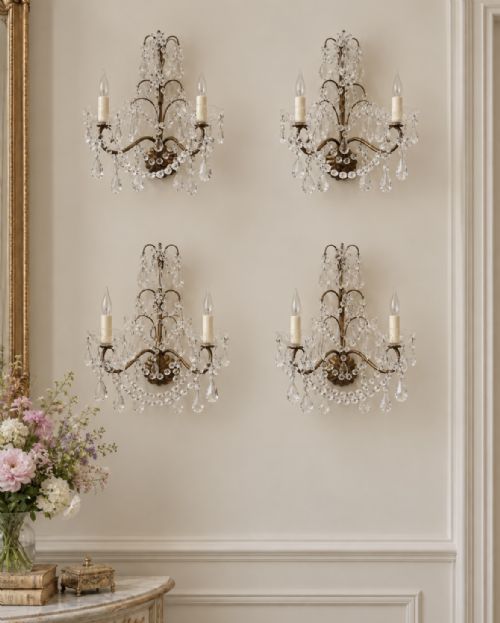
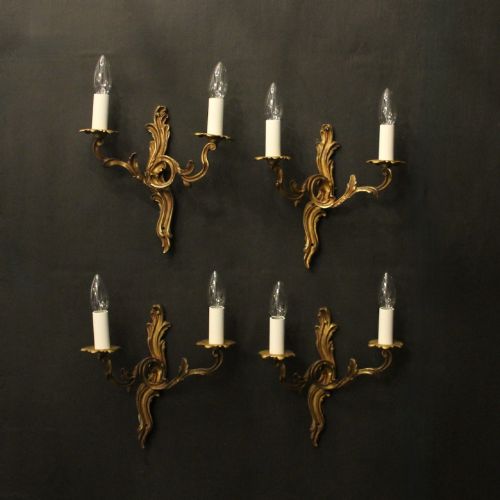
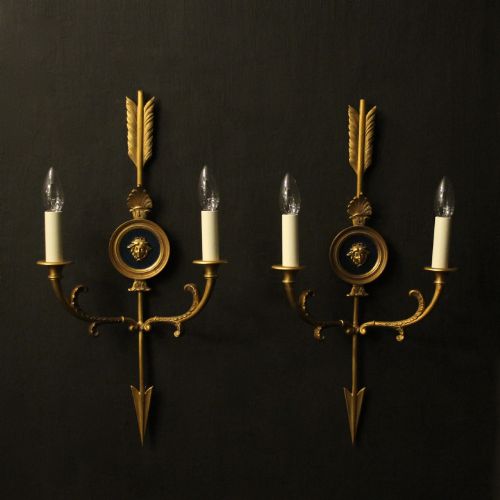

Gilded Brass Sconces
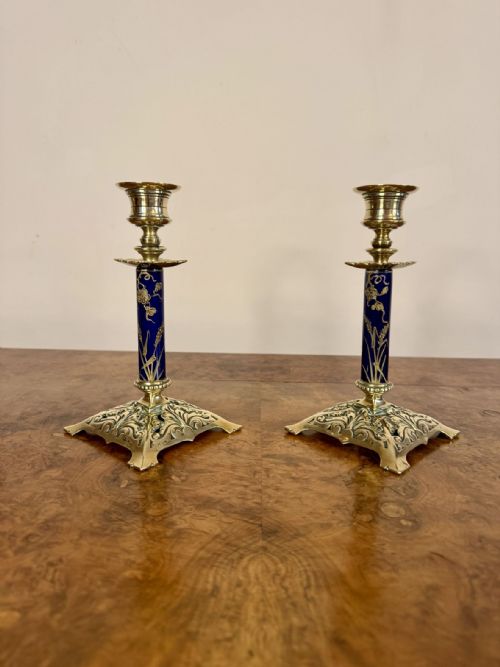
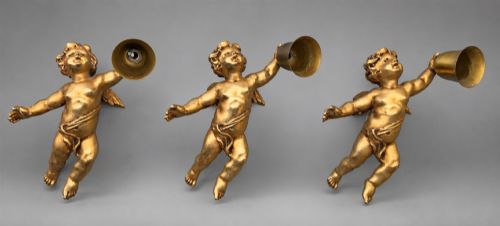
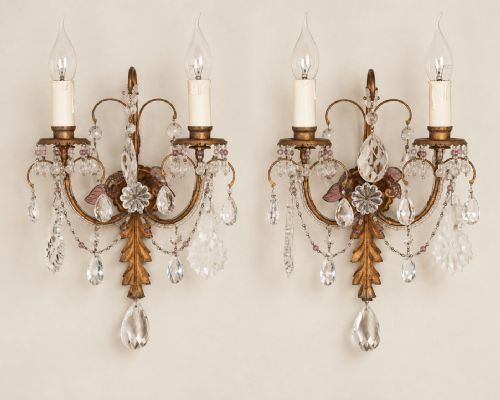
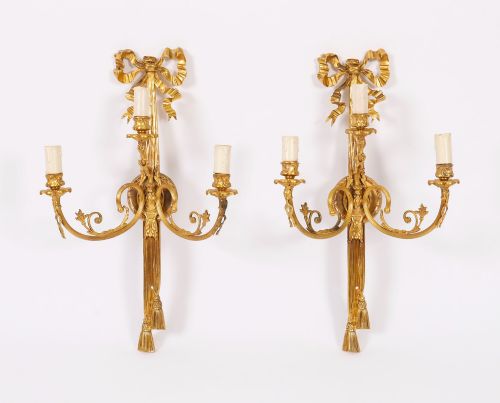
These gilded brass sconces are decorative wall-mounted lighting fixtures that bring period warmth and reflective surface illumination to a room.
Gilded Brass Sconces
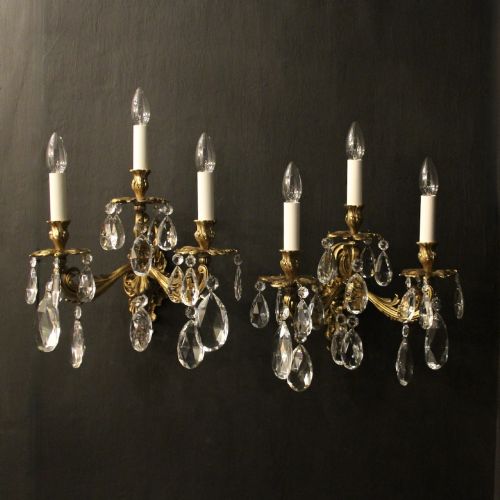
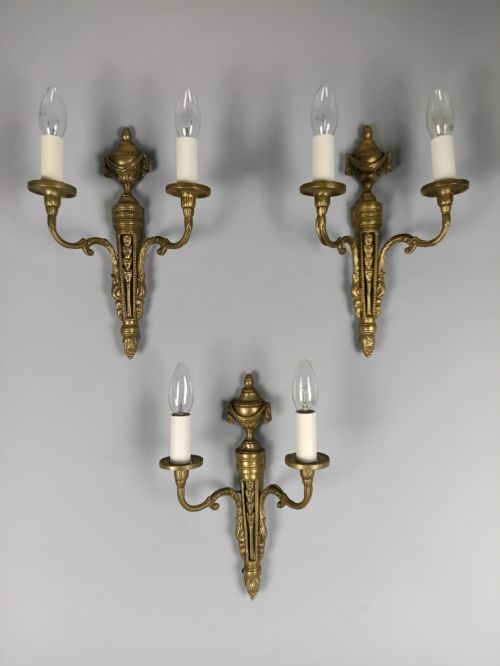
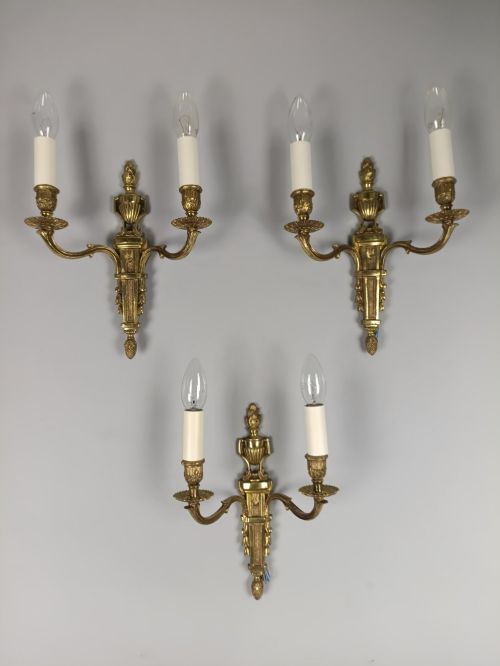
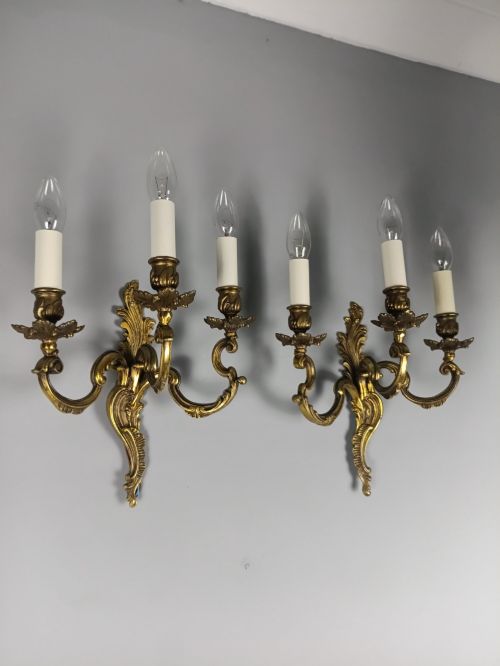
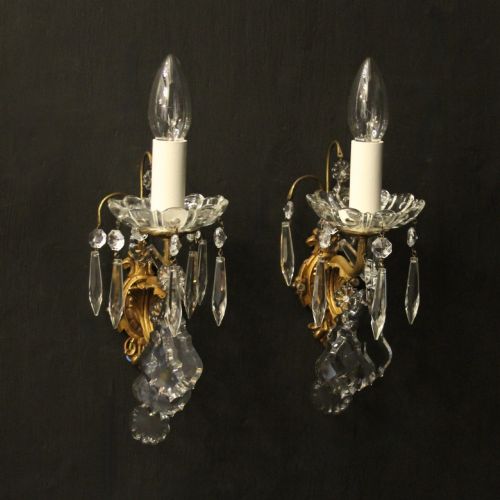
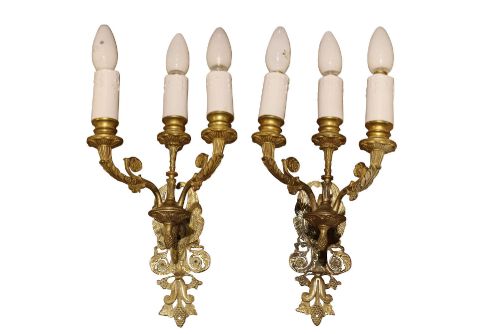
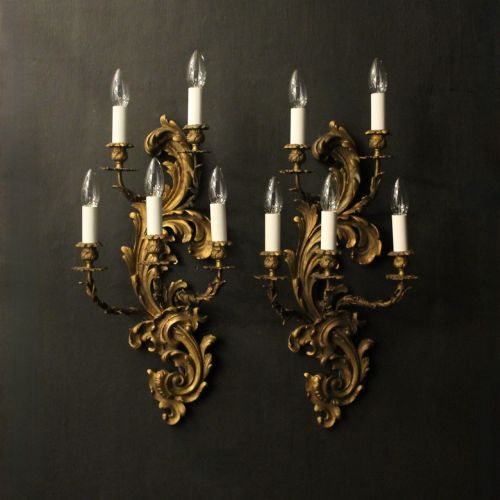
When you search for gilded brass sconces, you encounter wall lights designed to hold candles or electric bulbs, predominantly originating from French workshops across the nineteenth and early twentieth centuries. These pieces appear frequently as pairs or larger sets featuring twin, triple, or single arms configured for domestic interiors.
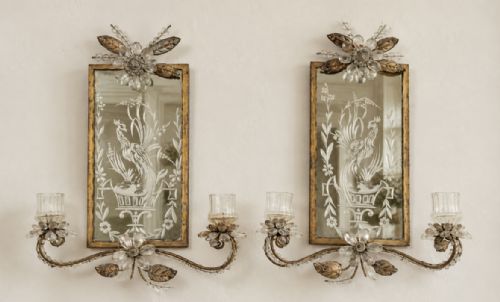
The selection spans various historicist designs, including Louis XVI, Empire, and Rococo revival styles, alongside mid-century interpretations. Common forms include wall lights, appliques, girandoles, and mirror back sconces that incorporate glass or crystal elements to amplify light output.
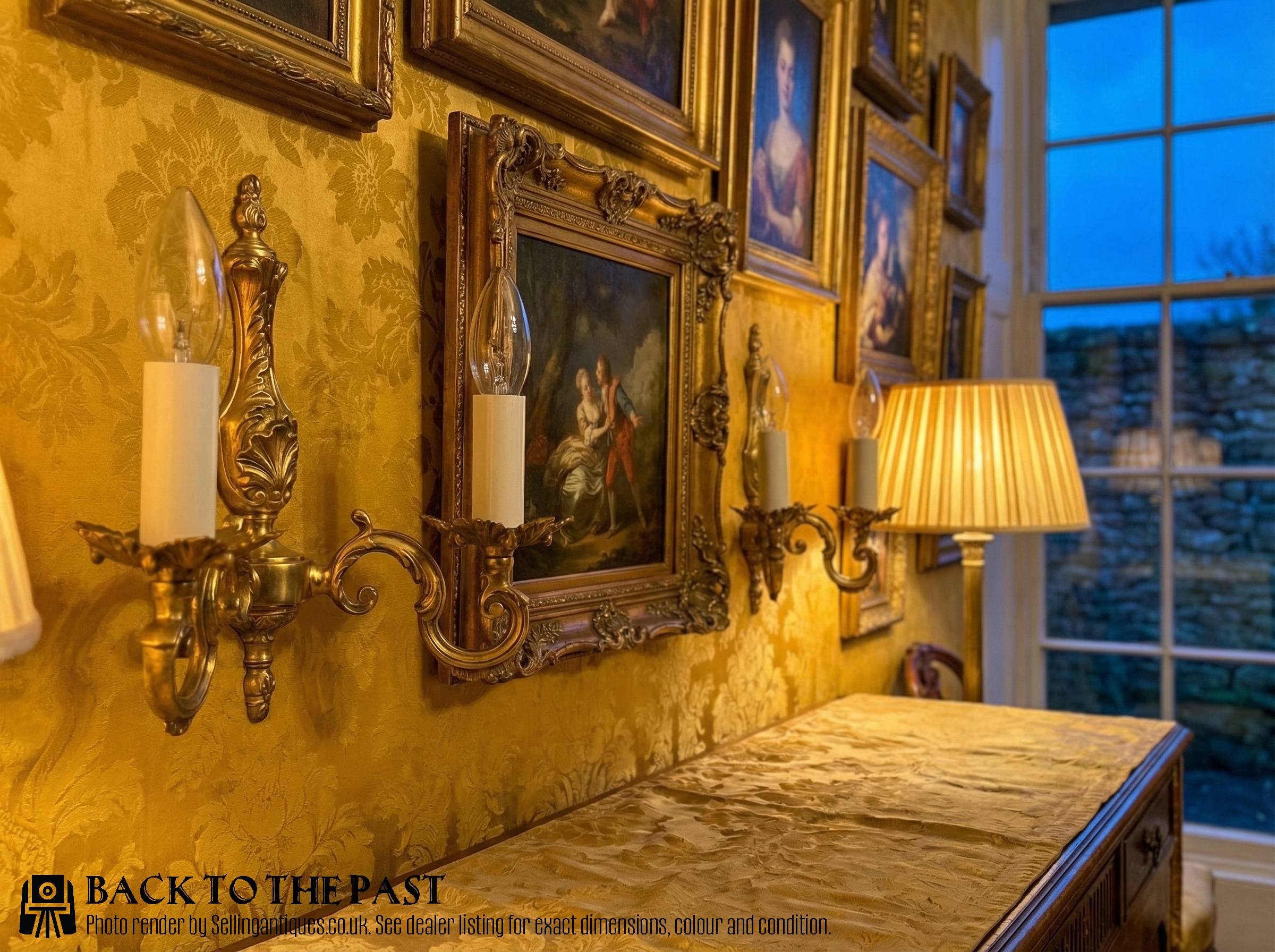
How they were made
Maker construction relies heavily on cast brass, ormolu, and gilt bronze, utilising metal-working techniques to shape intricate backplates and curving candle arms. Many examples incorporate applied gilding processes to achieve a bright, reflective metallic finish across the brass or bronze armature.
Additional materials such as onyx, crystal drops, and mirrored glass panels are integrated into the assemblies to enhance decorative depth. These components are joined mechanically or pinned, supporting multi-branch configurations designed for wall mounting.
Gilded Brass Sconces Retail Price Guide 2026
Typical asking prices for gilded brass sconces among the pieces listed under this phrase on Sellingantiques today, from the lower quarter to the upper quarter. They describe what is for sale here now, not the wider market.
Listings span the nineteenth century through the 1950s, utilising brass, gilt bronze, ormolu, and glass.
What varies in quality
Quality differences emerge in the crispness of the casting and the depth of the chased detail visible on the brass or ormolu surfaces. Finer examples display deeply defined acanthus leaves, ribbon motifs, and rococo scrollwork rather than softened outlines.
The choice of base metal and the preservation of the original gilding further distinguish the tiers of pieces. Heavier cast bronze or brass frames with substantial armatures and intact surface finishes represent the higher end of the range.
The Gilded Brass Sconces Glossary
- Ormolu
- Gilt bronze produced by applying a finely ground high-carat gold-mercury amalgam to a bronze base and heating it. This technique creates a durable, golden metallic surface finish found on many nineteenth-century French fixtures.
- Girandole
- An ornamental branched wall light or sconce featuring a reflective mirror backplate. The glass surface multiplies the illumination cast by the candles or lamps placed before it.
- Applique
- A wall-mounted light fitting designed to be fixed directly to vertical surfaces. The term is frequently used interchangeably with wall sconce in continental European lighting.
- Champleve
- An enamelling technique where troughs or cells are sunk into the surface of a metal object and filled with vitreous enamel. These coloured enamel details appear on decorative elements associated with select nineteenth-century metalwork.
- Louis XVI Style
- A neoclassical design vocabulary characterised by symmetrical arrangements, straight lines, urn motifs, and classical architectural details. This style heavily influences French lighting from the nineteenth and early twentieth centuries.
Gilded Brass Sconces: Frequently Asked Questions
How were gilded brass sconces used historically?
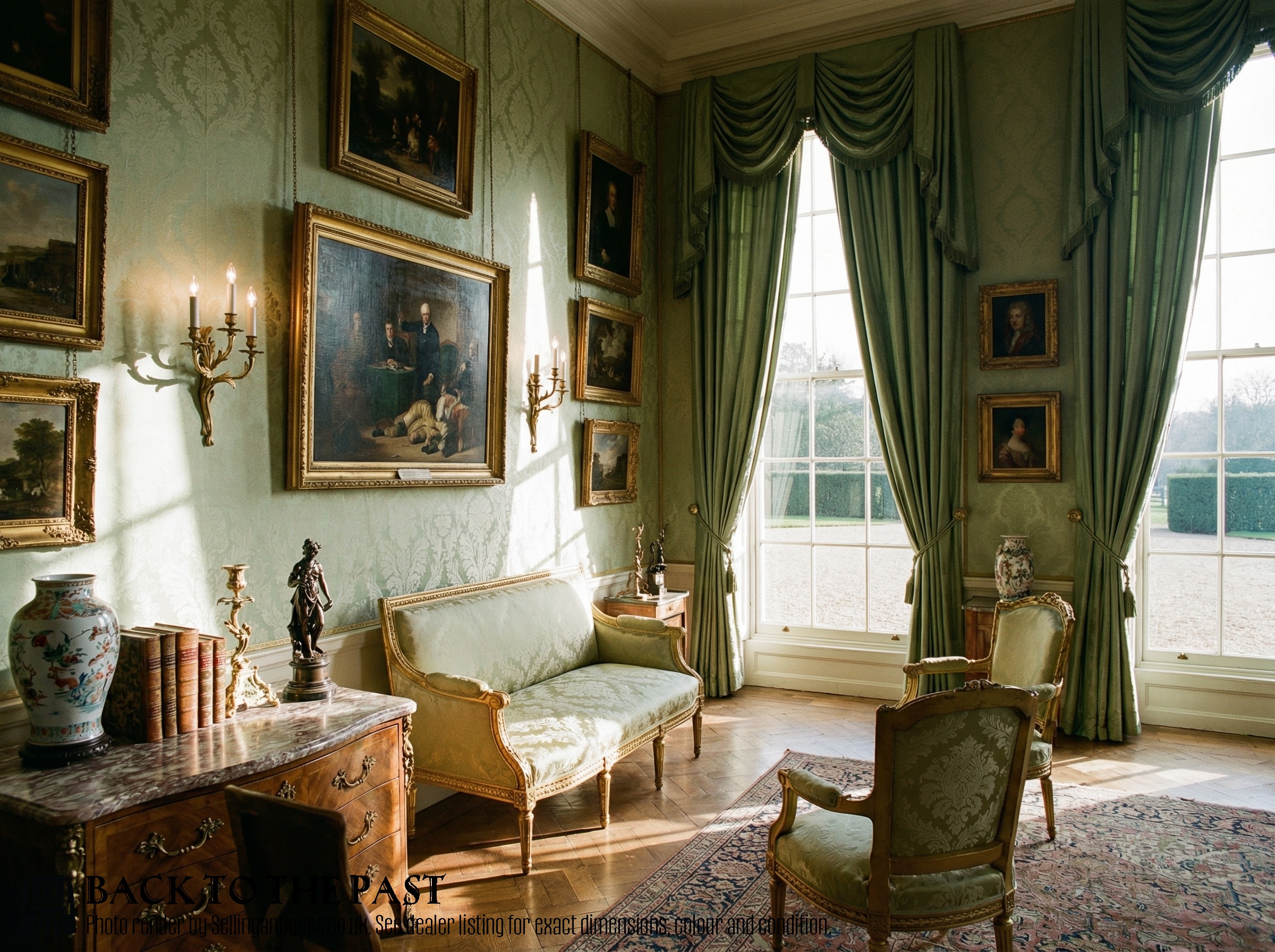
These fixtures were mounted on walls in reception rooms, corridors, and parlours to provide ambient illumination alongside central chandeliers. Mirrors placed behind or between them helped reflect and maximise the candlelight within dimly lit spaces.
Over time, many surviving examples have been adapted to electricity while retaining their original wall-mounting plates and decorative arm configurations.
Are these wall lights wired for modern electricity?
Many listings feature sconces that have been rewired or adapted for contemporary electrical standards, allowing them to function as standard wall lamps. Some pieces retain candle-tubes or sockets suitable for low-voltage or standard bulb types.
Unconverted pieces or those retaining older wiring may require professional rewiring before installation to meet current domestic electrical codes.
How do I identify Louis XVI style sconces?
Louis XVI style wall lights display geometric symmetry, ribbon ties, neoclassical urns, and architectural motifs rather than asymmetrical curves. The frames prioritize straight lines and restrained classical ornamentation over flowing organic shapes.
By contrast, Rococo revival sconces feature asymmetric scrollwork, C-scrolls, and naturalistic leaf motifs inspired by mid-eighteenth-century design.
Can I install antique sconces outdoors?
These interior wall lights are constructed from brass, bronze, and gilt finishes that lack weather-sealing and exterior electrical protection. Exposing them to moisture or outdoor elements will damage the metal surfaces and gilding.
They are intended exclusively for dry interior domestic environments where their delicate materials remain protected.