




Crystal Wall Sconces
Crystal wall sconces are brilliant lighting fixtures that bring genuine sparkle and historical charm to any interior.
What crystal wall sconces are
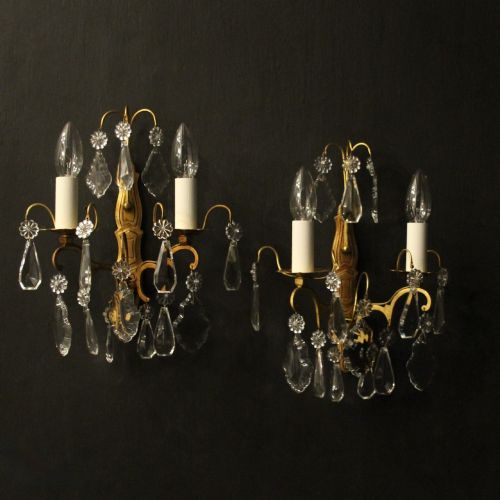
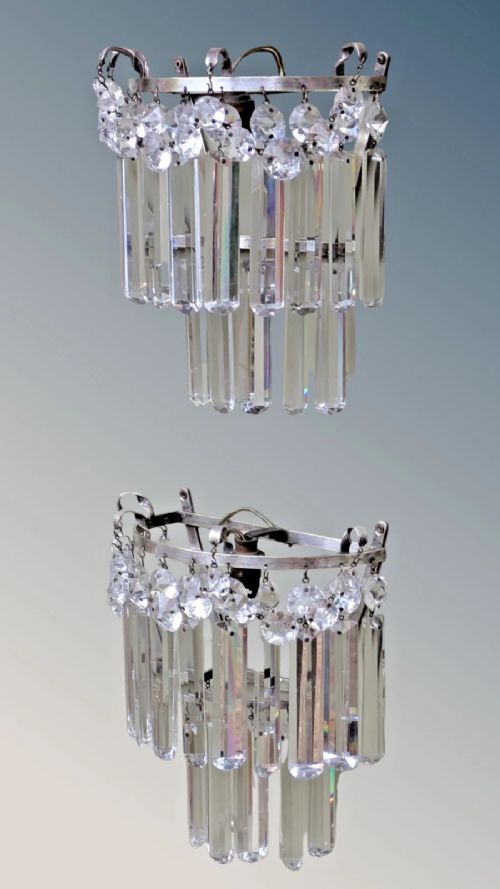
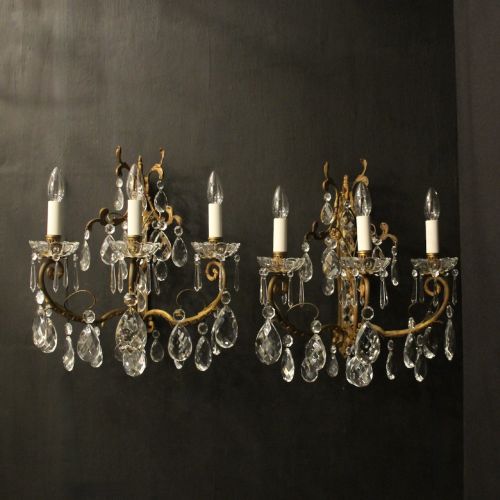
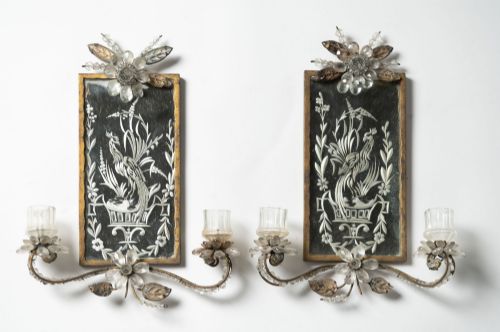
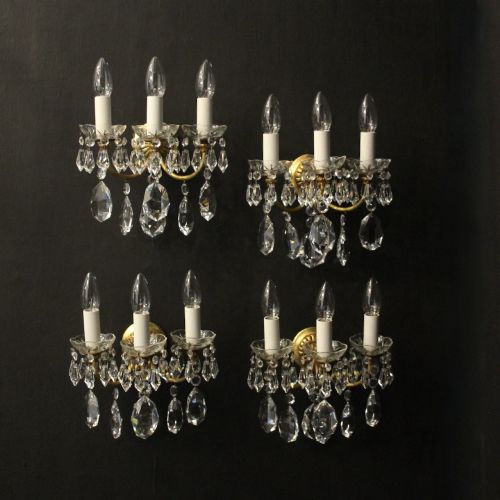
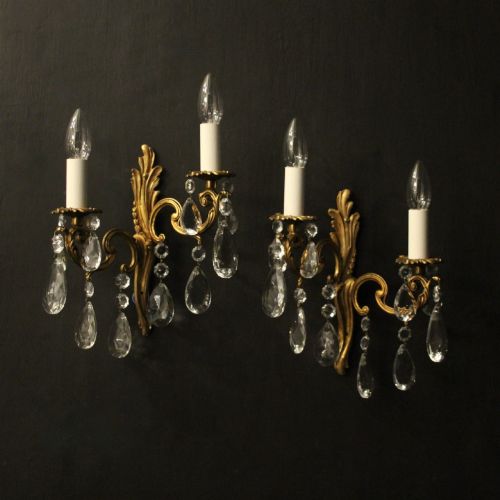
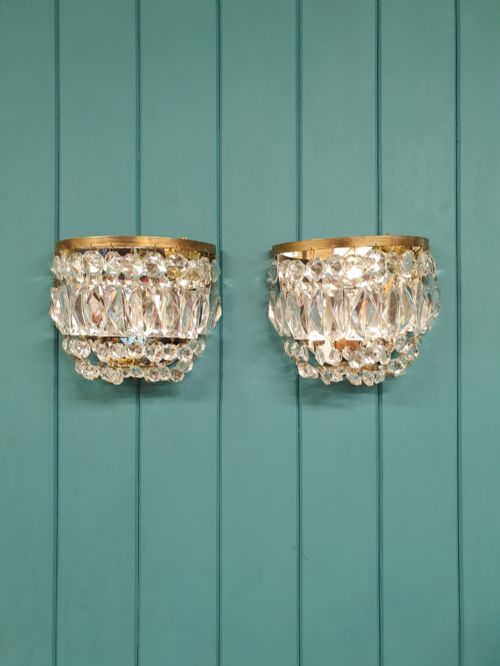
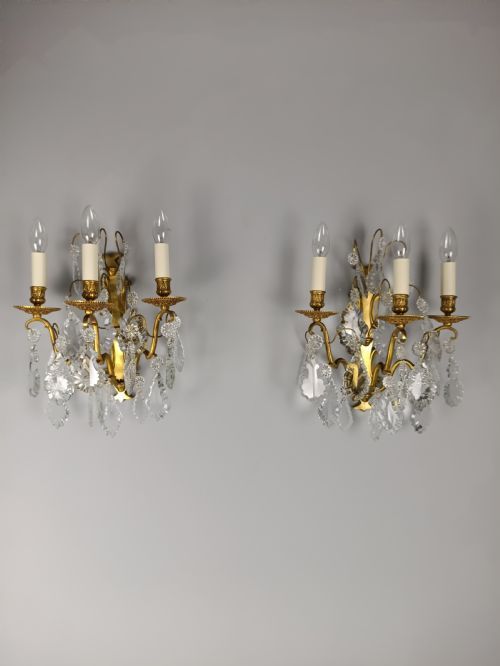
Crystal wall sconces combine reflective glass elements with metallic frames to illuminate interiors while adding distinct decorative presence. When buyers search for crystal wall sconces, they encounter wall lights configured with glass drops, beads, and branching arms designed to catch and refract light.
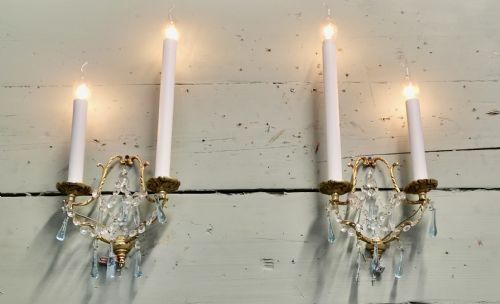
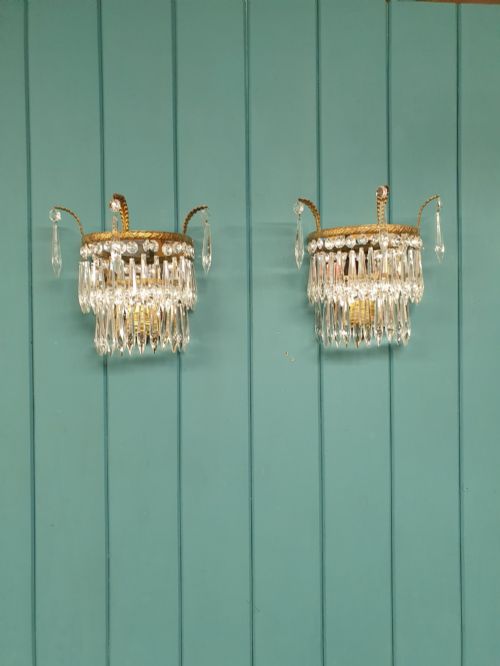
The pieces appearing on this page span the Edwardian era through the nineteen-thirties, incorporating French Chateau, Regency Revival, Gustavian, French Rococo Revival, French Empire, French Art Deco, and Italian Florentine styles. Most examples emerge as pairs, taking forms such as triple arm lights, twin branch sconces, tent designs, and beaded gilt wall lights.
Origins heavily lean towards France and Sweden, alongside Italian Florentine and English Edwardian pieces. Buyers find fixtures built for both candle use and electrical illumination, reflecting domestic lighting shifts across the early twentieth century.
How they were made
Materials recorded across these listings include cut crystal, crystal glass, standard glass, brass, gilt metal, silver gilded metal, bronze, toleware, and fabric. Workshops constructed structural backplates and branching arms from cast or sheet metals before applying gilt or silver finishes.
Cut crystal and glass elements were shaped by hand and faceted to maximise light refraction, then suspended from the metal frames using wire loops or pins. Fabric elements occasionally appear in supporting roles, while metal components provide the rigid skeleton required to bear the weight of glass drops.
Retail Price Guide 2026
Typical UK retail prices for crystal wall sconces, calculated from the Sellingantiques database of over a million retail prices indexed since 2003. This retail price guide relies exclusively on Sellingantiques data; no external sources or auction records are used, so the figures do not describe the wider market.
Listings feature brass, bronze, gilt metal, and toleware paired with cut crystal and standard glass across Edwardian and nineteen-thirties periods.
What varies in quality
Quality in these lighting fixtures rests on the depth of hand-cutting in the crystal and the weight of the metal armature. Superior pieces exhibit crisp faceting on every glass drop and substantial bronze or brass framing rather than thin pressed sheet metal.
Design cohesion also dictates distinction, where finer examples integrate the crystal drops as an architectural component of the silhouette rather than mere surface decoration. The subtlety of gilding and the precision of the casting work separate standard production from exceptional examples.
Baccarat
The Crystal Wall Sconces Glossary
- Crystal
- High-clarity glass containing mineral additives that increase its refractive index. This material allows the faceted drops on wall lights to scatter light effectively.
- Gilt metal
- Base metal treated with a thin layer of gold leaf or gold-coloured paint. It provides a warm metallic sheen that complements transparent crystal elements.
- Toleware
- Painted or lacquered sheet metal items popular in period decorative objects. It frequently appears alongside glass components in continental lighting fixtures.
- Tent and bag
- A specific configuration where crystal beads string upward into a canopy shape above a gathered bag of drops below. This silhouette defines many classic French lighting designs.
Frequently Asked Questions
How were crystal wall sconces used?
These fixtures were mounted beside mirrors, fireplaces, or along hallways to multiply candlelight and gas illumination within formal rooms. The reflective glass drops successfully bounced available light across dark interior spaces.
Over time, many of these historical wall lights underwent rewiring to safely accommodate standard electrical bulbs while retaining their original decorative glass structures.
How do I live with crystal wall sconces?
Mounting these pieces at eye level or slightly above allows the faceted crystal to catch ambient daylight and evening illumination effectively. Pairing them with dimmer switches helps control the intensity of the light passing through the glass drops.
Regular dusting with a soft brush keeps the glass and metal components bright. Careful handling prevents the delicate wire connections holding the crystal drops from bending.
How do I tell periods apart?
Edwardian and early twentieth-century pieces often display restrained brass frames and classic cut crystal drops. Items from the nineteen-thirties lean towards French Art Deco styling with bolder geometric lines or specific maker signatures.
Stylistic markers such as Gustavian pale finishes or Florentine gilt beadwork point clearly to specific regional workshops and design movements.
Are these wall lights electrified?
The lighting fixtures listed here encompass both original candle-holding sconces and examples that have been adapted for electricity. Some antique pieces retain evidence of past candle use alongside modern wiring updates.
Buyers should examine the technical descriptions of individual pieces to confirm whether current wiring suits their installation requirements.