


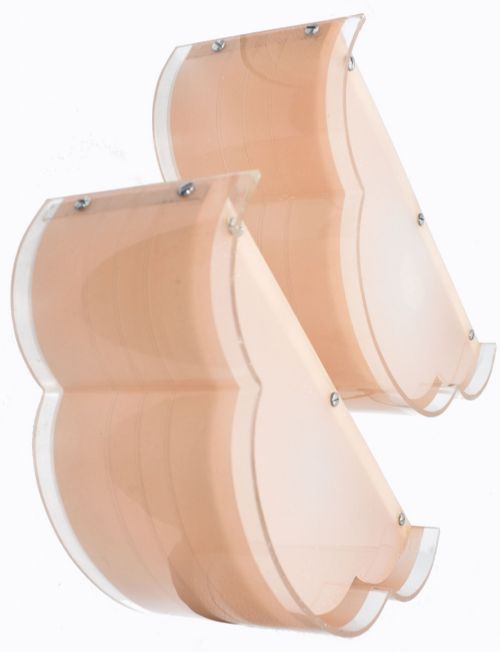

Clear Glass Wall Lights
Clear glass wall lights bring brilliant illumination and timeless elegance to any interior space.
Clear Glass Wall Lights
How they were made
Maker construction relies heavily on combinations of glass and brass, alongside cut crystal, frosted glass, and gilt brass. Artisans shaped metal frames and mounted reflective mirror backs to maximise illumination.
Techniques involve precise glass cutting and moulding to achieve faceted crystal drops, frosted surfaces, and geometric skyscraper profiles. Structural support utilises cast bronze, brass, and gilt metal.
Among the glass and brass sits a mischievous group of gilt metal flying cherubs holding light fittings.
What varies in quality
Quality differences emerge in the clarity of the glass and the precision of the cutting, where superior pieces exhibit sharper facets and greater brilliance. The metalwork also distinguishes output, with finely cast brass and gilt bronze showing superior detail compared to simpler cast forms.
Design complexity further separates standard examples from exceptional ones, particularly in multi-branch configurations, integrated mirror backs, and delicate decorative elements like beaded fringes or moulded cherubs.
Baccarat·Lalique
The Clear Glass Wall Lights Glossary
- Wall sconce
- A decorative wall-mounted lighting fixture designed to hold one or more electric bulbs or candles. These fixtures project light outwards into a room while attached securely to vertical surfaces.
- Cut crystal
- High-clarity glass that has been hand-cut and polished with geometric facets to increase light refraction. This material produces bright sparkles when illuminated.
- Mirror back
- A reflective glass panel positioned behind the light source to amplify illumination within the room. This historic technique enhances the perceived brightness of the fitting.
- Gilt brass
- A brass base covered with a thin layer of gold or gold-coloured finish. This treatment provides a rich decorative surface for metal framing and mounts.
Clear Glass Wall Lights: Frequently Asked Questions
What periods do these wall lights cover?
The pieces span from the 19th century through the Edwardian era into the 1920s and 1930s.
Design influences range from Regency and Art Nouveau to distinct Art Deco styles.
How were mirror-backed wall lights used?
Mirror-backed sconces were positioned on walls to reflect and multiply the illumination from candles or early electric bulbs.
They served both as decorative focal points and practical light enhancers in historic rooms.
How do Art Deco designs differ?
Art Deco pieces often feature geometric silhouettes such as skyscraper profiles and cloud-shaped glass shades.
These contrast with the softer curves found in earlier Edwardian and Art Nouveau styles.