


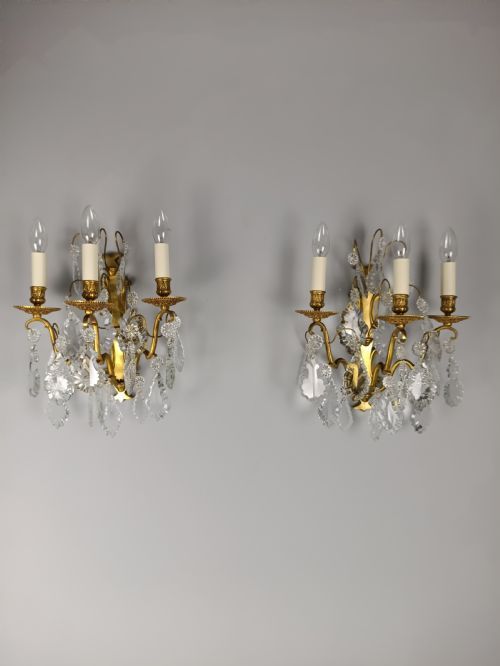


Brass Crystal Wall Lights
Brass crystal wall lights combine gleaming metal with refractive drops, bringing reflective illumination and formal French character to a room.
Brass Crystal Wall Lights
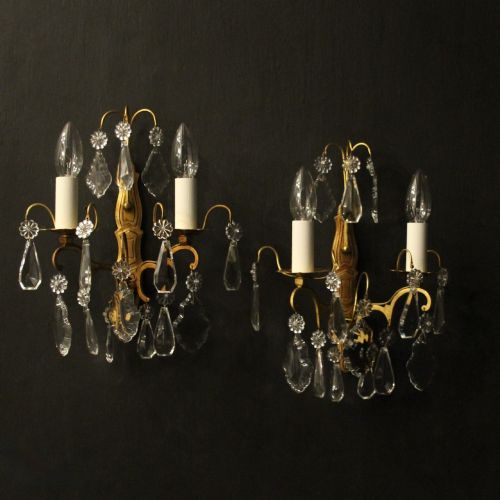
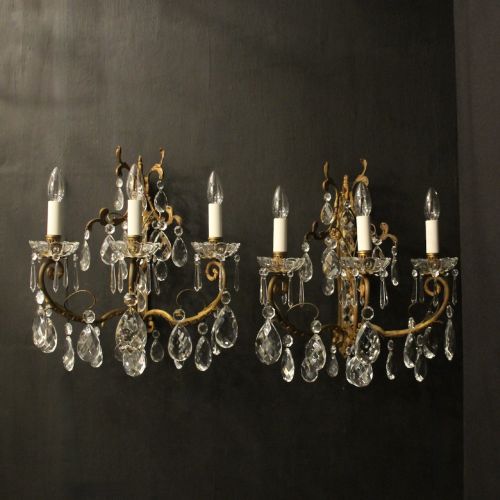
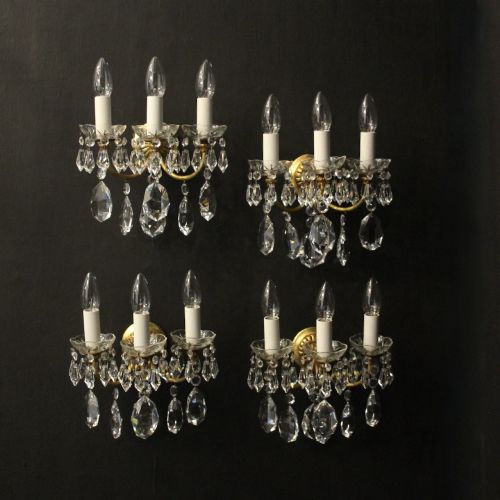
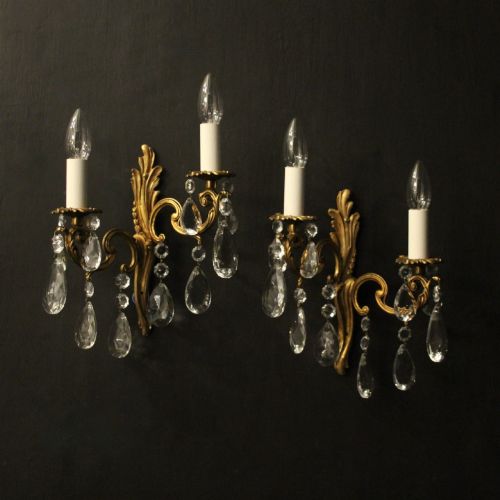
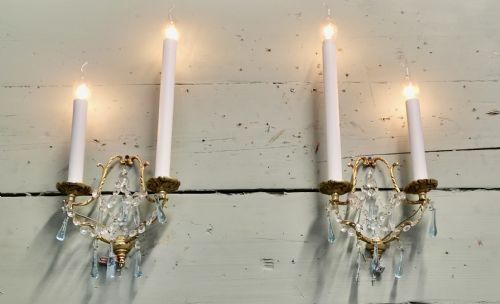
Brass crystal wall lights are decorative fixtures designed to mount directly onto vertical surfaces, combining metal armatures with glass pendants. When people search for brass crystal wall lights, they encounter pairs and sets originating primarily from the early twentieth century and the nineteenth century. French workshops dominate these offerings, producing twin and triple arm sconces alongside tent forms and wall chandeliers.
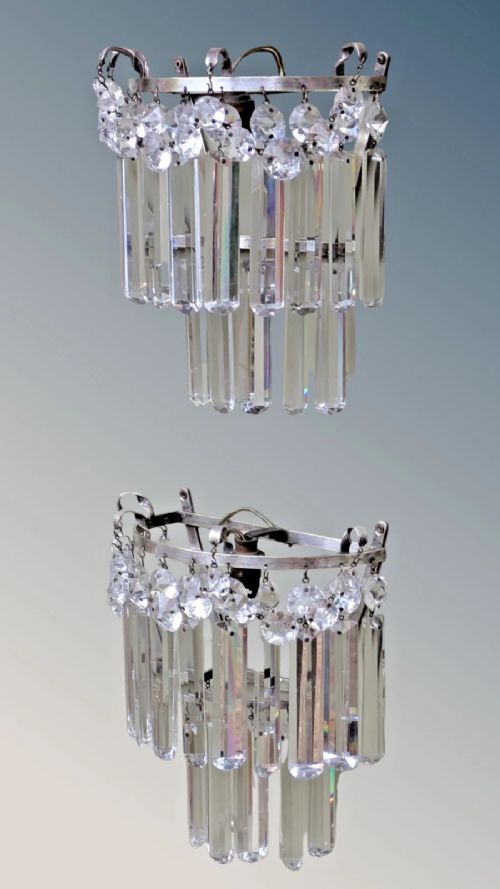
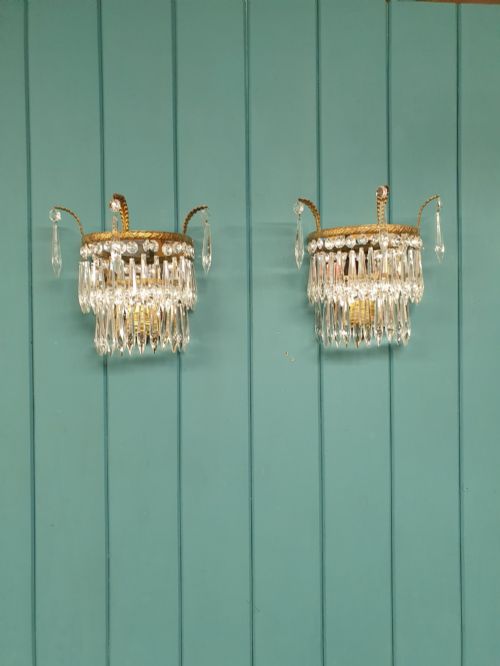
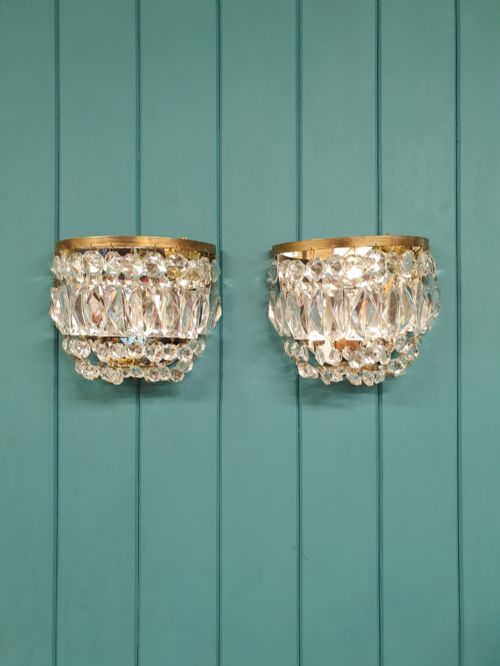
The prevalent formats on this page include gilded brass and bronze frames draped in cut crystal drops and glass beads. Alongside standard twin and triple arm sconces, variations such as bag lights, girandoles, and wall-mounted chandeliers appear across Edwardian and 1920s periods. These fixtures function both as structural lighting and as ornamental wall furniture.
How they were made
The primary construction relies on cast brass, gilt bronze, and ormolu to form the structural arms, backplates, and frames. Metal components are frequently gilded, silvered, or aged to achieve specific surface finishes ranging from bright gold to darkened patinas.
Refractive elements consist of cut crystal, moulded glass, and drop pendants suspended from the metal armature by wire links or pins. Cut glass and crystal components catch and multiply the illumination from candle tubes or electric bulbs, creating the characteristic sparkle associated with these sconces.
Brass Crystal Wall Lights Retail Price Guide 2026
Typical asking prices for brass crystal wall lights among the pieces listed under this phrase on Sellingantiques today, from the lower quarter to the upper quarter. They describe what is for sale here now, not the wider market.
Several Edwardian and 1920s wall lights feature mischievous carved cherubs peering down from the metal branches above the crystal drops.
What varies in quality
Quality differences emerge in the crispness of the metal casting and the depth of the gilding on the brass or bronze frames. Finer pieces display sharply defined botanical or scroll motifs with hand-chased details, whereas simpler examples rely on smoother, mass-produced stampings.
The integrity of the hanging elements further separates standard pieces from finer examples. Hand-cut crystal pendants with sharp facets and complete matching drops provide superior refractive brilliance compared to plain pressed glass replacements.
F. & C. Osler·GEC English
The Brass Crystal Wall Lights Glossary
- Girandole
- A branched wall sconce featuring reflective mirrored glass or polished metal backs. These fixtures maximise candle or electric light output in period interiors.
- Ormolu
- Finely ground high-carat gold mercury-gilded to a bronze or brass base metal. This technique produces a warm, durable metallic lustre found on nineteenth-century pieces.
- Bag light
- A wall fixture featuring a flattened basket or bag shape composed of numerous small glass beads strung together. It hangs close to the wall surface to diffuse light evenly.
- Lustre
- A glass pendant, drop, or prismatic hanging ornament suspended from a light fixture. Lustres refract light into spectral colours when illuminated.
Brass Crystal Wall Lights: Frequently Asked Questions
How were these wall lights originally powered?
Most antique examples were designed for candles before being converted to electricity during subsequent decades. Many surviving pieces retain wiring updates or require modern rewiring for safe domestic installation.
Conversion methods vary, with some fixtures utilising dummy candle sleeves to conceal modern lamp holders while preserving the original aesthetic.
Where should I position brass crystal wall lights?
These fixtures suit hallways, flanking living room fireplaces, or mounted on either side of a dining room mirror. Their reflective glass and polished metal amplify surrounding natural and artificial light in compact spaces.
Pairing multiple sconces along a single wall creates balanced symmetry and balanced illumination throughout larger reception rooms.
How do I clean the crystal drops safely?
Individual crystal pendants are best cleaned by hand using a mild solution of warm water and washing-up liquid. Wiping each drop with a soft cloth prevents moisture damage to the surrounding metal armature.
Leaving fragile glass components attached during cleaning risks scratching the gilt brass frame or snapping delicate suspension wires.
How can I tell a 1920s piece from a 19th-century one?
Nineteenth-century fixtures frequently exhibit heavier cast bronze or ormolu construction with hand-finished chasing on the metal surfaces. Designs from this earlier era often incorporate single or twin candle arms with simpler backplates.
Fixtures from the 1920s tend to feature lighter gilded brass stampings, extensive cut crystal tent arrangements, and larger multi-arm configurations influenced by French revival styles.