


French Crystal Appliques
French crystal appliques bring sparkle and historic charm to interiors as wall lights, sconces, and candle wall sconces.
French Crystal Appliques
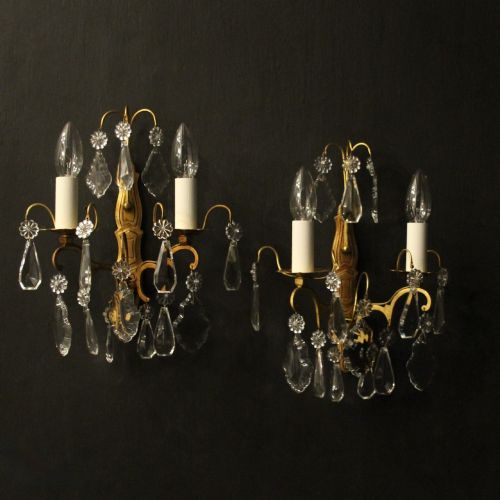
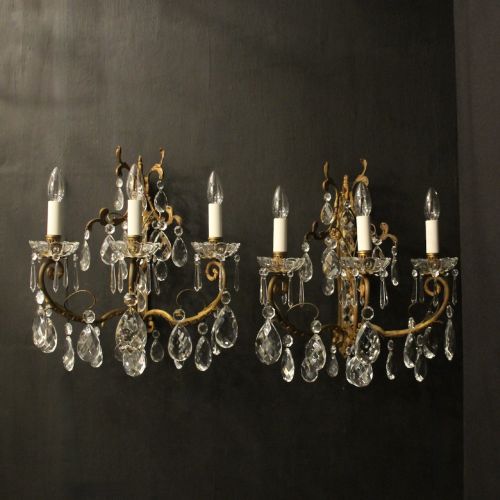
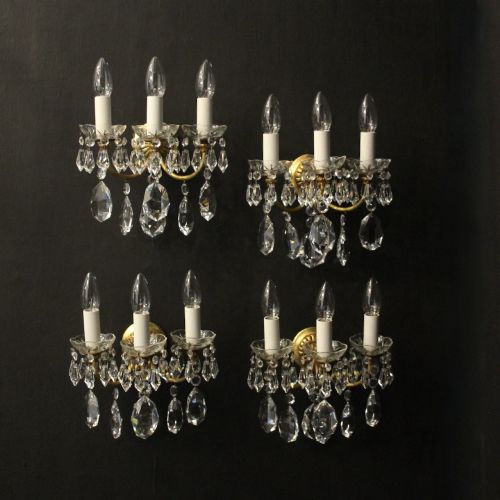
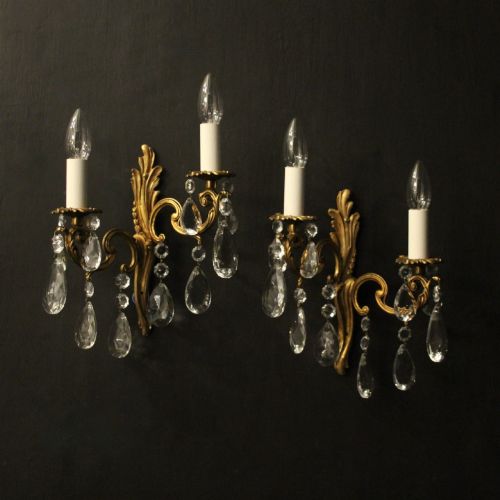
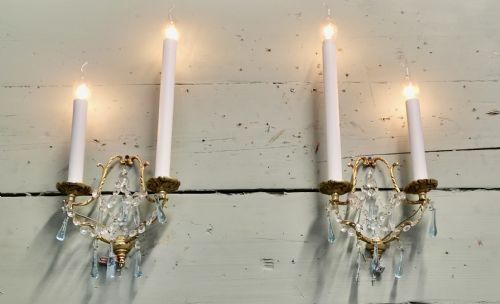
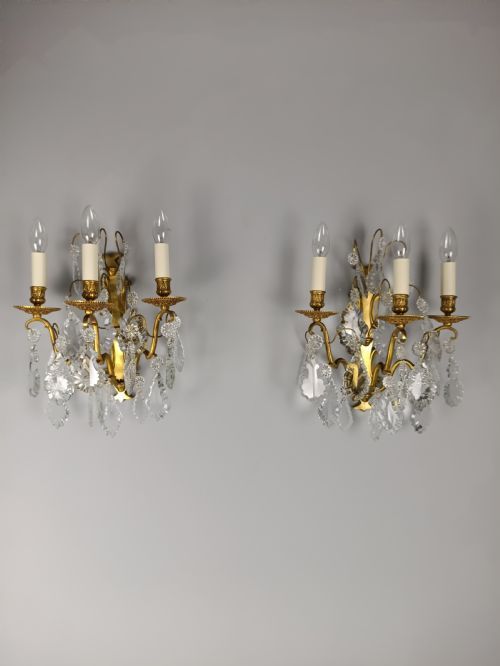
When buyers search for french crystal appliques, they encounter wall lights and wall sconces designed to illuminate interior spaces with decorative elegance. These fixtures typically take the form of twin arm or triple arm wall lights, often configured as pairs.
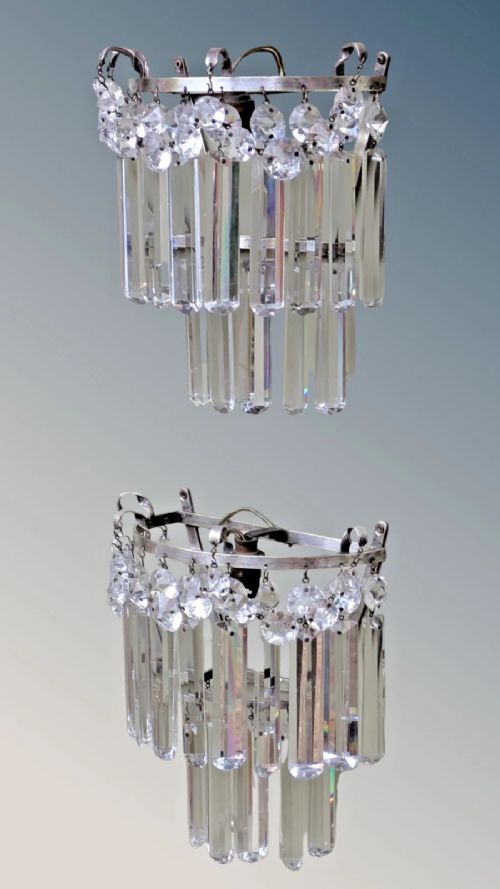
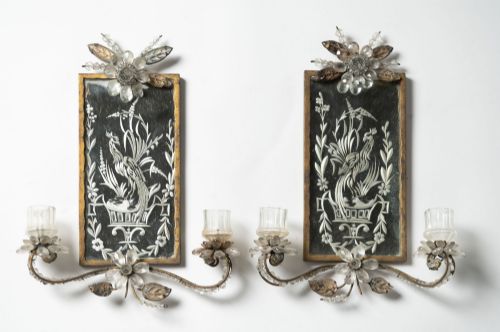
The pieces appearing on this page span several periods, from the mid-nineteenth century through the 1930s, reflecting classical and decorative design traditions. Forms range from simple glass and brass combinations to ornate wall chandeliers featuring multiple branches.
How they were made
The construction of these wall lights relies primarily on metals such as brass, gilt brass, bronze, gilt bronze, ormolu, and gilt toleware to form the structural armatures and backplates. Artisans cast or shaped these metals into complex scrollwork and candle branches.
Cut crystal and cut glass elements are suspended from the metal frames to catch and refract light, often augmented by glass drops and lustres. These transparent components are secured with wire or pins, allowing movement and maximum reflection.
French Crystal Appliques Retail Price Guide 2026
Typical asking prices for french crystal appliques among the pieces listed under this phrase on Sellingantiques today, from the lower quarter to the upper quarter. They describe what is for sale here now, not the wider market.
Listings feature pieces spanning from 1850 through the 1930s, constructed in brass, gilt bronze, and cut crystal.
What varies in quality
Quality in these fixtures is distinguished by the crispness of the metal casting and the depth of the chasing on bronze or ormolu surfaces. Heavier, more substantial metalwork provides a sturdier foundation than lighter pressed alternatives.
The clarity and cutting of the crystal or glass drops dictate the brilliance of the piece when illuminated. Superior examples feature hand-cut facets that diffuse light cleanly rather than uniform moulded glass.
Maison Baguès
The French Crystal Appliques Glossary
- Applique
- A wall-mounted light fixture or sconce designed to hold candles or electric lamps. These decorative items attach directly to vertical surfaces.
- Ormolu
- A technique of applying finely ground high-carat gold to a bronze object using mercury amalgam. This process creates a rich, enduring metallic finish.
- Lustre
- A cut glass or crystal pendant suspended from a light fixture to enhance refraction. Lustres catch and multiply the illumination from candles or bulbs.
- Toleware
- Enamelled and painted sheet metal items utilised for decorative domestic fixtures. This material offers a painted alternative to polished bronze or brass.
- Candelabra
- A branched candlestick or multi-armed light holder designed for several light sources. These fixtures provide both high illumination and decorative presence.
French Crystal Appliques: Frequently Asked Questions
How do I clean crystal wall lights?
Cleaning requires removing dust with a soft brush and wiping glass elements with a mild solution of warm water and vinegar. Each crystal drop should be dried individually with a lint-free cloth to maintain clarity.
Avoid harsh chemical cleaners that can damage the underlying gilt bronze or ormolu surfaces of the metal armature.
Are these wall lights safe for modern wiring?
Many antique fixtures require rewiring to meet contemporary safety standards before installation. Qualified electricians can easily update internal wiring while preserving the historic exterior components.
Several pieces have already been rewired, but professional inspection is recommended prior to mounting on household circuits.
Where should I place wall sconces in a room?
Wall lights look best mounted at eye level, frequently positioned on either side of a fireplace, large mirror, or doorway. This placement provides balanced ambient illumination and highlights architectural focal points.
Spacing should take into account the physical projection of the arms and the width of the backplate.
How do I date a French wall light?
Dating relies on examining the casting techniques, the style of the metalwork, and the assembly methods used on the backplate. Nineteenth-century examples often feature heavy bronze casting and hand-cut glass, while later twentieth-century pieces incorporate different wiring channels and alloy compositions.
Comparing the decorative motifs against known revival periods helps narrow the decade of production.